



Pisa
Pisa is a compact university city on the Arno river, about 10 km inland from the sea. Most visitors know it for one leaning bell tower, and many stay only a few hours. It is worth staying longer. The white marble buildings of Piazza dei Miracoli are among the finest medieval architecture in Italy, and the rest of the old town is calm, walkable and full of students.
Pisa suits a short city break or a base for northern Tuscany. Trains reach Lucca, Florence and the coast quickly, and the airport is only a few minutes from the centre. Galileo Galilei was born here in 1564, and the University of Pisa, founded in 1343, still shapes daily life in the cafés, bookshops and squares.

Pisa – Reis plannen?
Stel je dagelijkse reisroute samen in de Tripomatic-app.


Beste reistijd
Spring and autumn are the best seasons: mild, sunny and less crowded. Summer is hot and humid, and the Piazza dei Miracoli is packed by mid-morning. Winter is cool and often rainy, but it is the quietest time to see the monuments.
June is the month to plan around. On the evening of 16 June the Luminara lights up the riverfront with thousands of candles, the highlight of a month of traditional events. Book accommodation early for mid-June.
Beste reistijd: mei, juni, september, oktober
Topbezienswaardigheden
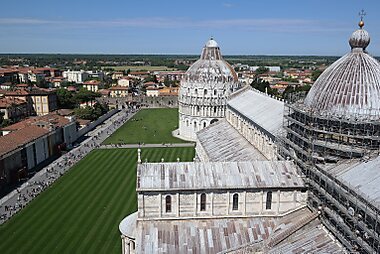
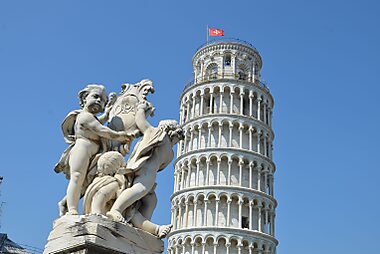
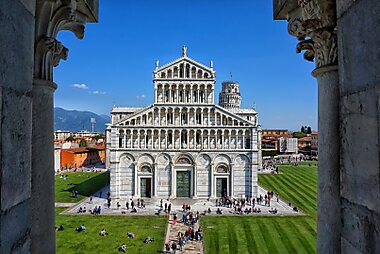
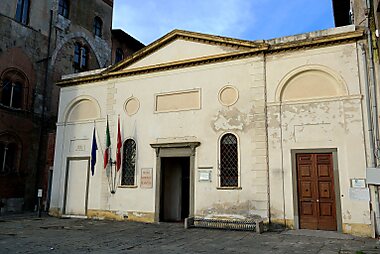
Piazza dei Miracoli is the reason most people come. Its lawn holds four great medieval buildings in white marble, and it is a UNESCO World Heritage Site. Arrive early or late in the day to avoid the tour groups.
Leaning Tower of Pisa is the cathedral's bell tower, started in 1173 and leaning almost from the start. You can climb it with a timed ticket, and bags must be left in the free cloakroom first. Children under 8 may not climb, and older children need ID showing their age.
Pisa Cathedral is the heart of the square, with a bronze door, a carved pulpit by Giovanni Pisano and a golden ceiling. It opens to visitors later in the morning than the other monuments.
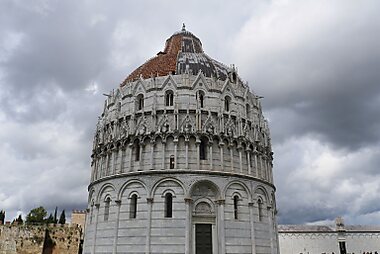
Baptistery of St John is the largest baptistery in Italy. Its dome gives a long, clear echo, and you can climb to the upper gallery for a view of the cathedral.
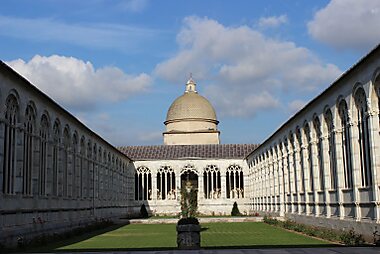
The Camposanto is a long marble cloister, founded in 1277 to gather the graves scattered around the cathedral. Its frescoes, including the Triumph of Death, were badly damaged in a fire in 1944 and have since been restored.
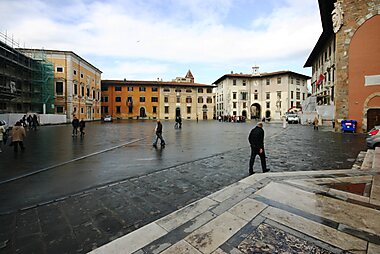
Knights' Square was the political centre of medieval Pisa. Today the Scuola Normale, one of Italy's top universities, uses the palace with the decorated façade.
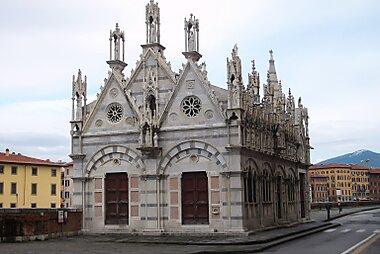
Santa Maria della Spina is a tiny Gothic church on the riverbank, covered in spires and statues. It was taken apart and rebuilt higher up in 1871 to protect it from the river.
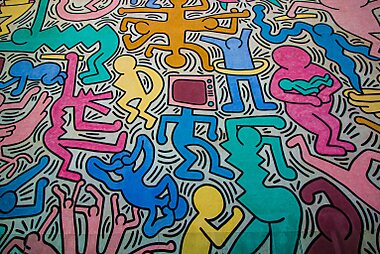
Tuttomondo is a huge, colourful mural by Keith Haring on a church wall near the station. Painted in 1989, it was one of his last public works.
Aanbevolen lijsten


Wat te beleven
A few local traditions and activities are worth planning around.
- Luminara di San Ranieri (16 June): On the evening before the patron saint's day, thousands of small candles outline the palaces and churches along the river. The night ends with fireworks over the Arno.
- Palio di San Ranieri (17 June): A rowing race on the Arno between the city's four historic districts, held the day after the Luminara.
- Gioco del Ponte (last Saturday of June): A costumed parade along the river, then teams from the north and south banks push a heavy cart against each other on the Ponte di Mezzo.
- Walking the walls: A 3 km walkway runs along the top of Mura di Pisa, the 12th-century city walls, starting at the edge of the cathedral square. Go in the late afternoon for soft light on the tower.
- Cycling or walking in San Rossore: San Rossore Estate is a large former royal estate of pine woods and meadows just west of the city, with marked paths, horse riding and wildlife such as deer and wild boar.
- A summer night climb: From mid-June to the end of August the tower and the other monuments stay open late into the evening. A night climb is cooler and quieter than a midday one.
Tours en activiteiten
Pisa — Kaart

 Interactieve kaart openen
Dagtochten
Pisa sits on the main rail lines of northern Tuscany, so most day trips are easy without a car.
- Livorno — about 15 min by train. A working port city with canals, a seafront promenade and very good seafood.
- Viareggio — about 20 min by train. A seaside resort with a long beach promenade and Art Nouveau buildings, famous for its winter carnival.
- Lucca — about 30 min by train. A relaxed walled town where you can walk or cycle the full circuit on top of the Renaissance walls.
- Florence — about 1 hour by train, with frequent departures. The capital of Tuscany and home of Renaissance art; a long but rewarding day.
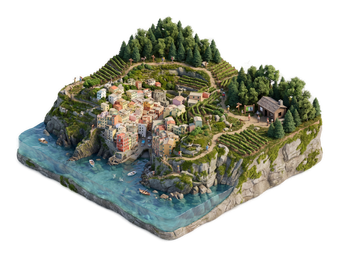
- Cinque Terre National Park — about 1 hour 10 min by train to La Spezia, then local trains to the five coastal villages. Start early in summer.
- Volterra — about 1 hour 15 min by car. A hilltop town with Etruscan walls and alabaster workshops; public transport is slow.
Plaatsen om te ontdekken
Pisa is a good starting point for the rest of Tuscany.
- Walled towns and art cities: Lucca is the closest and easiest. Florence is the region's capital. Volterra and San Gimignano are hill towns best reached by car.
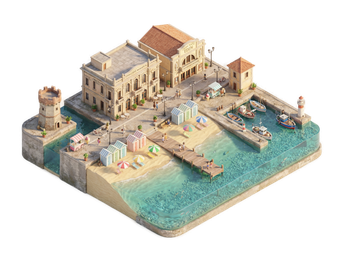
- On the coast: Livorno is a port city to the south. Viareggio and Forte dei Marmi are beach resorts to the north, and Cinque Terre National Park lies further up the coast in Liguria.
Bereikbaarheid
- By air: Pisa International Airport (Galileo Galilei) is the main airport for northern Tuscany, with many European flights. It is only about 2 km from the centre. The PisaMover shuttle train runs to Pisa Centrale station in about 5 minutes, daily from early morning to midnight.
- By train: Pisa Centrale is the main station, a 20-minute walk from the tower. Regional trains run often to Florence (about 1 hour), Lucca and Livorno, and Intercity trains run along the coast towards Genoa and Rome. Pisa San Rossore station is the closest to the tower. Trenitalia
Vervoer ter plaatse
- On foot: The historic centre is small and flat. Walking from Pisa Centrale to the tower takes about 20–25 minutes through the shopping streets and across the river.
- Bus: Local buses are run by Autolinee Toscane. Line 1+ runs from the station to the tower area about every 10 minutes. You can tap a contactless bank card or phone on board to pay, at the normal fare; tap each time you board. Autolinee Toscane
- Cycling: The city is flat and has bike rentals, but traffic and narrow lanes make cycling in the centre less relaxing than walking. Cycling is best in the parkland west of the city.
- Taxi: Taxis wait at the station and the airport. Ride-hailing apps play only a minor role.
Autorijden
- Is a car worth it?: Not for Pisa itself; the centre is walkable and the trains are good. A car helps only if you plan to explore the hill towns and the countryside.
- Parking: The large Pietrasantina car park, just north of the Piazza dei Miracoli, is the easiest choice for a short visit. Many hotels outside the centre have their own parking.
- Restrictions: The historic centre is a ZTL (limited traffic zone) enforced by cameras. Do not drive in without a permit, or you will receive a fine by post, often months later.
Eten en drinken
Pisan cooking is simple Tuscan food with a coastal touch. Look for cecina, a thin, crisp chickpea flatbread eaten hot from the oven, often in a sandwich. Other local dishes include salt cod, wild boar stew and torta co' bischeri, a sweet rice and chocolate tart.
The restaurants right around the tower are mostly tourist traps. Walk 10 minutes south instead. The old market square of Piazza delle Vettovaglie and the small streets around it have simple osterie and wine bars that fill with students in the evening. Borgo Stretto and the streets near Piazza Garibaldi are good for coffee and pastries.
Veiligheid en gezondheid
Pisa is a safe city for visitors. The main risk is pickpocketing in crowds, especially on the Piazza dei Miracoli, on the busy buses between the station and the tower, and at the station itself. Keep bags closed and phones out of back pockets.
Around the tower, street sellers offer selfie sticks and fake designer goods, and some try to tie a "free" bracelet on your wrist and then ask for money. A polite, firm "no, grazie" is enough. Buying counterfeit goods is illegal in Italy, and buyers can be fined.
Geschiedenis
In the Middle Ages Pisa was one of Italy's great sea powers, a maritime republic that traded across the Mediterranean and fought rivals such as Genoa. The wealth from that trade paid for the marble buildings of Piazza dei Miracoli. Work on the Leaning Tower of Pisa started in 1173, and the soft ground made it lean while it was still being built. It took about 200 years to finish. Engineers finally stabilised the tilt between 1990 and 2001.
Pisa's power ended with a heavy naval defeat by Genoa at the Battle of Meloria in 1284. In the early 1400s Florence took control of the city. The Medici rulers later rebuilt Knights' Square as the base of a new knightly order, and the university grew into one of Europe's leading centres of science. Galileo Galilei studied and taught here.
The city was badly damaged in the Second World War. In July 1944 an Allied raid set the roof of the Camposanto on fire, and its frescoes took decades to restore.
Feiten over het land
Quick practical facts for Italy at a glance:
- Valuta
- Euro EUR € · Betalen met kaart · Algemeen geaccepteerd
- Noodnummers
- 112
- Elektriciteit
- 230 V · 50 HzType C / Type F / Type L
- Talen
- Italiaans
- Kraanwater
- Veilig om te drinken
- Rijrichting
- Rechts
- Landnummer
- +39


Pisa – Plan je dagen
Zet de plaatsen uit deze gids om in een echte reisroute, met slimme routes, tijdsinschattingen en alles wat je nodig hebt voor een perfecte reis.


Gerelateerde bestemmingen




Data: © OpenStreetMap contributors, Wikidata, Wikipedia, Tripomatic, Official websites, geoBoundaries (CC BY 4.0). Tours by GetYourGuide. We earn commission from bookings. Travel guide generated with AI.