



Alcalá de Henares
Alcalá de Henares is a historic university city about 35 km northeast of Madrid. It is the birthplace of Miguel de Cervantes, the author of Don Quixote, and its university and historic center are a UNESCO World Heritage Site.
It has a long arcaded main street, a famous university building and a Roman archaeological site. It is an easy half-day or full-day trip from Madrid.

Alcalá de Henares – Planlegger du en reise?
Bygg reiseplanen din dag for dag i Tripomatic-appen.


Beste reisetidspunkt
Spring and autumn are the best seasons, with mild, sunny weather. Summers are hot and dry, and winters are cold.
The Cervantes Prize ceremony takes place on 23 April, and the Cervantes Week (Semana Cervantina) in October brings a market and street theatre. In November, the play Don Juan Tenorio is staged around the town.
Beste tid å besøke: mai, september, oktober
Hovedseverdigheter
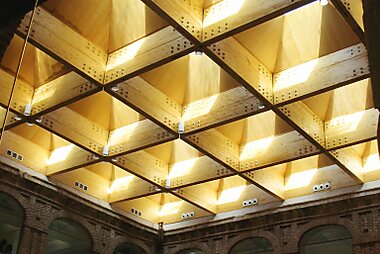
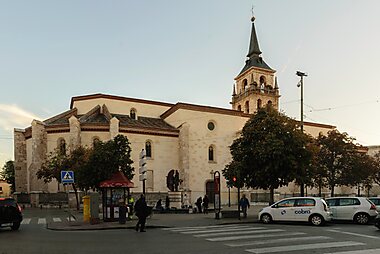
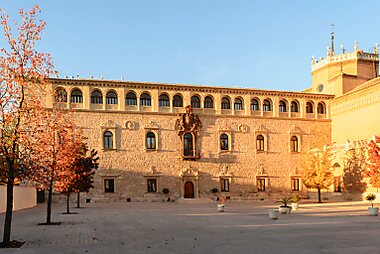
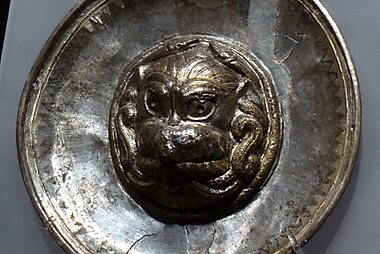
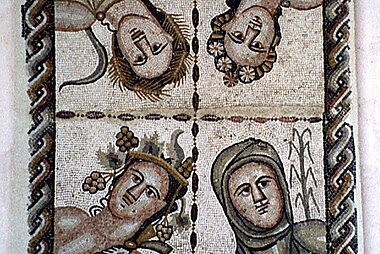
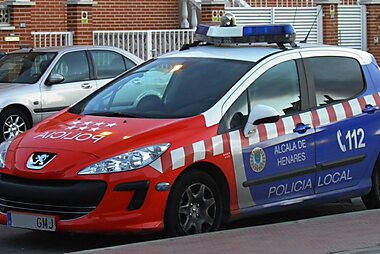
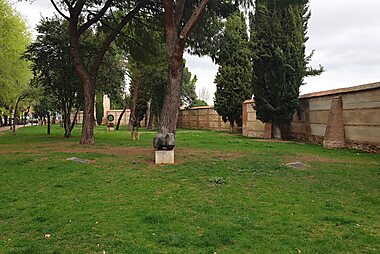
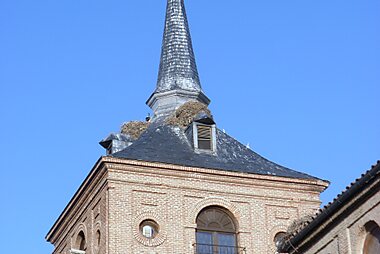
- Universidad de Alcalá de Henares is the historic university founded in 1499 by Cardinal Cisneros, with a Plateresque façade and courtyards. The ceremonial hall hosts the Cervantes Prize.
- Catedral Magistral is the Magisterial Church, which is the city's cathedral.
- Palacio Arzobispal is the Archbishop's Palace, a large building next to the cathedral.
- The Museo Casa Natal de Cervantes is a reconstruction of the house where Cervantes was born, with a museum.
- Calle Mayor is a long, arcaded street with more than 2 km of colonnades, lined with shops and cafés.
- Museo Arqueológico Regional has archaeology of the region, in a former convent.
- Complutum is the site of the Roman town of Complutum, with a house and forum.
- Necrópolis de la Villa Romana del Val is a Roman villa site with a necropolis outside the center.
- Museo de Escultura al Aire Libre is an open-air museum of sculpture on the university campus.
- Colegio de Málaga is another historic college building, next to the university.
Utvalgte lister


Alcalá de Henares Highlights
Alcalá de Henares, a UNESCO World Heritage site, was the world's first planned university city. This list features the historic University of Alcalá, founded in 1499, and the birthplace of Miguel de Cervantes, now a museum dedicated to 16th-century life. The selection includes the Neo-Mudéjar Palace of Laredo, the Regional Archaeological Museum housed in a former convent, and the Edificio Cisneros, illustrating the city's architectural evolution from the Spanish Golden Age to modern academic use.
5 steder
Hidden Gems of Alcalá
Explore the historical depth of Alcalá de Henares through its architectural and literary landmarks. This selection highlights the city's connection to Miguel de Cervantes, featuring his reconstructed 16th-century birthplace and a 19th-century bronze monument. The list also includes significant religious sites like the Capilla de San Ildefonso, which houses Cardinal Cisneros’ Plateresque tomb, and the Ermita del Cristo de los Doctrinos with its 13th-century crucifix. For a unique cultural perspective, the La Fábrica del Humor gallery showcases specialized exhibits on graphic satire.
5 steder
Historic Alcalá de Henares
Alcalá de Henares, a UNESCO World Heritage city, is defined by its deep academic and literary history. The 15th-century University of Alcalá showcases stunning Plateresque facades, while the Museo Casa Natal de Cervantes preserves the 16th-century home of the author of Don Quixote. The city’s architectural landscape includes the Archbishop’s Palace with its fortified walls, the Neo-Mudéjar Palace of Laredo, and the Regional Archaeological Museum housed in a former convent. Many sites, such as the Hospital de Antezana, have operated continuously for over five centuries.
7 steder
Religious Heritage of Alcalá
Alcalá de Henares, a UNESCO World Heritage site, preserves a dense concentration of religious architecture spanning the Gothic, Renaissance, and Baroque periods. This collection features the Magistral Cathedral, one of only two churches in the world holding the 'Magistral' title, alongside the Capilla de San Ildefonso, which houses the ornate tomb of Cardinal Cisneros. The list includes historic convents like the Carmelitas Descalzas and significant chapels such as the Ermita del Cristo de los Doctrinos, reflecting the city’s status as a major Spanish ecclesiastical center.
6 stederOpplevelser verdt å få med seg
- Walk along Calle Mayor and stop for tapas and the local pastry.
- Take a guided visit of the University and the Cervantes birth house.
- Visit the Roman remains of Complutum.
Turer og aktiviteter
Alcalá de Henares – Kart

Dagsturer
- Madrid (about 35 km, 30 minutes by train): the capital.
- Aranjuez (about 80 km, 1 hour by car): a royal town with a palace and gardens.
- Chinchón (about 55 km): a village with a round main square.
- El Escorial (about 80 km): a monastery and royal palace.
- Guadalajara (about 30 km): a nearby historic town with a ducal palace.
Steder å utforske
Other places nearby:
- Madrid area: Madrid, El Escorial, Aranjuez and Chinchón.
- Historic cities: Toledo.
Reise dit
- By air: Madrid-Barajas airport is about 15 km away, and it takes about 30 minutes to reach by taxi or train.
- By train: Commuter trains (Cercanías, lines C-2 and C-7) run from Madrid, in about 30 to 40 minutes. Book on Renfe for long-distance trains.
- By bus: Frequent buses run from Madrid's Avenida de América station.
Komme seg rundt
- On foot: The historic center is compact and flat. The main sights are within a 10 to 15 minute walk of each other.
- Cycling: There are bike lanes, and the city is mostly flat.
- Public transport: City buses reach the Roman sites outside the center.
Kjøring
- Is a car worth it?: Not needed. The trains from Madrid are quick and the center is walkable.
- Parking: Use an underground car park near the center.
- Restrictions: Parts of the historic center are pedestrian only.
Mat og drikke
Alcalá is known for its rosquillas (small ring-shaped sweets) and costrada, a layered custard pastry. Madrid-style dishes such as cocido (chickpea stew) and roast lamb are common in the traditional restaurants.
Tapas bars around the central streets serve a small dish with each drink.
Sikkerhet og helse
Alcalá is a safe city. Summer heat is strong, so wear sun protection and drink water. Pickpocketing is possible on busy streets, so keep an eye on your belongings.
Historie
Alcalá began as the Roman town of Complutum. In the Middle Ages it was ruled by the Moors, and it was later a seat of the archbishops of Toledo.
Cardinal Cisneros founded the university in 1499, and it became one of the leading centers of learning in Spain. Miguel de Cervantes was born here in 1547. The university moved to Madrid in 1836 and returned to Alcalá in the 20th century. The historic precinct was listed by UNESCO in 1998.
Fakta om landet
Quick practical facts for Spain at a glance:
- Valuta
- euro EUR € · Kortbetaling · Allment akseptert
- Nødnumre
- 112
- Elektrisitet
- 230 V · 50 HzType C / Type F
- Språk
- spansk
- Kranvann
- Trygt å drikke
- Kjøreside
- Høyre
- Retningsnummer
- +34


Alcalá de Henares – Planlegg dagene dine
Gjør stedene fra denne guiden om til en ordentlig reiseplan, med smart ruteberegning, tidsestimater og alt du trenger for en perfekt reise.


Lignende destinasjoner



Data: © OpenStreetMap contributors, Wikidata, Wikipedia, Tripomatic, Official websites. Tours by GetYourGuide. We earn commission from bookings. Travel guide generated with AI.
Planlegg reisen din med Tripomatic
- AI-drevet planleggingLa AI bygge reiseplanen din, svare på reisespørsmål og legge inn bestillingsdokumentene dine i reisen.
- ReisevarslerOffisielle reiseråd, ekstremvær, streiker og naturfarer for stedene på hver dag av reisen din.
- Helligdager og arrangementerSe høytidsdager, festivaler og stengte dager under reisen din, og hva de betyr for planene dine.
- KostnadsberegningAI-drevne kostnadsoverslag for reisen, slik at du har oversikt over budsjettet før du drar.
- Turer og billetterBestill turer, forbi-køen-billetter og aktiviteter direkte i reiseplanen din.