


Parma
Parma is a compact, prosperous city in the flat Po Valley, best known for two foods: Parma ham and Parmigiano Reggiano cheese. It is a UNESCO Creative City of Gastronomy, and eating well is a big part of any visit. The historic centre is calm and walkable, and locals get around by bike.
The city also has a rich past as the capital of a small duchy. The Farnese and later the Bourbon dukes left palaces, churches and theatres. Painters Correggio and Parmigianino worked here, and music runs deep: Giuseppe Verdi was born nearby, and conductor Arturo Toscanini was born in the city. Parma suits a relaxed stay of two or three nights, with easy day trips to castles and food producers in the countryside.

Parma – Planlegger du en reise?
Bygg reiseplanen din dag for dag i Tripomatic-appen.


Beste reisetidspunkt
Spring (April to June) and early autumn (September and October) are the best times, with mild days for walking and cycling. July and August are hot and humid, with highs often above 30 °C. Winter is cold, damp and often foggy, but museums and churches are quiet.
The biggest event is the Festival Verdi, held each autumn, mainly in October. It stages Verdi's operas at the Teatro Regio and in the composer's hometown of Busseto, plus concerts across the city. Book tickets and rooms early if you plan to go.
Beste tid å besøke: mai, september, oktober
Hovedseverdigheter




Most sights are in the compact centre, within a 10-minute walk of each other.
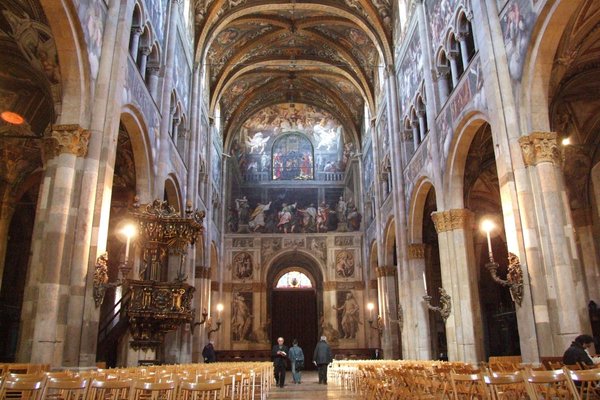
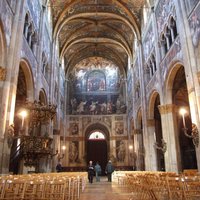
- Parma Cathedral is a Romanesque cathedral from the 11th and 12th centuries. Inside, Correggio's fresco of the Assumption fills the dome with a swirl of figures rising into the sky.
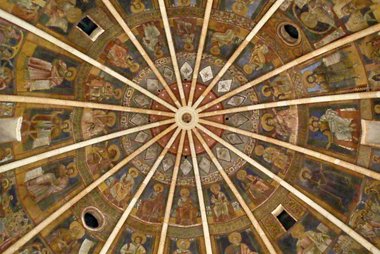
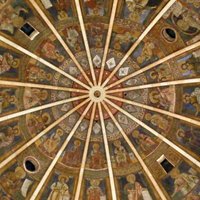
- Parma Baptistery stands next to the cathedral. This octagonal tower of pink Verona marble was begun in 1196 by Benedetto Antelami, and its walls and dome are covered in carvings and medieval frescoes.
- Palazzo della Pilotta is the huge, unfinished palace of the Farnese dukes. One ticket covers its museums. The National Gallery holds works by Correggio and Parmigianino and Leonardo da Vinci's small head of a young woman known as La Scapigliata. The ticket also covers the Teatro Farnese, the Palatine Library, the archaeological museum and the Museo Bodoni.
- Teatro Farnese, inside the Pilotta, is a vast wooden theatre built in 1618. It was almost destroyed by bombing in 1944 and later rebuilt, and walking into it is a highlight of any visit.
- Camera di San Paolo was the private room of a 16th-century abbess. Correggio painted its vaulted ceiling with playful children looking out through a trellis of leaves.
- Abbazia di San Giovanni Evangelista is the Benedictine church just behind the cathedral. Its dome is another Correggio fresco, and the monks' old pharmacy is next door.
- Basilica di Santa Maria della Steccata is a Renaissance church with frescoes by Parmigianino. The Farnese and Bourbon dukes are buried in its crypt.
- Teatro Regio is the city's opera house, opened in 1829. Its audiences are famous for their love of Verdi and their strict judgement of singers.
Utvalgte lister
Parma's Unmissable Treasures
Parma's highlights sit within a short walk of each other. The Romanesque cathedral and Antelami's pink marble baptistery share one square, while the vast Farnese palace of the Pilotta holds a wooden Renaissance theatre and the city's main art gallery. Correggio's frescoes fill the cathedral dome, San Giovanni Evangelista and the Camera di San Paolo, and the Teatro Regio keeps Parma's opera tradition alive.
10 steder
Parma Parks and Gardens
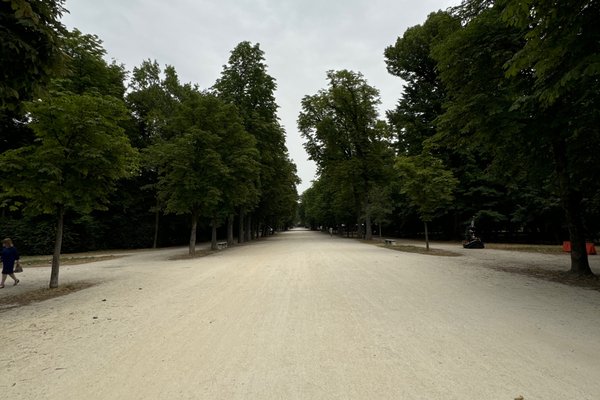
Parma's green spaces are close to the historic centre. The Farnese dukes laid out the Parco Ducale across the river, and their pentagonal Cittadella fortress is now a public park. The university's botanical garden and the lawns of Piazza della Pace next to the Pilotta give quiet breaks between sights.
5 stederOpplevelser verdt å få med seg
Parma's character comes out in its music and its slow, local rhythm.
- See an opera at the Teatro Regio: the season runs mainly from winter into spring, and during the Festival Verdi in autumn. The audience in the upper gallery is known across Italy for cheering or booing singers loudly.
- Tour the opera house: guided visits take you through the auditorium, the boxes and the foyer when there is no rehearsal.
- Ride a bike with the locals: rent a bike and follow the cycle paths along the river and through the Parco Ducale, as residents do.
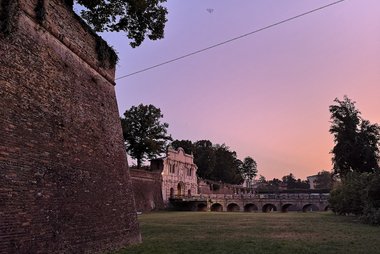
- Walk the walls of the old fortress: Cittadella, the five-sided Farnese fortress, is now a park. Locals come to jog, walk dogs and sit on the grass bastions on summer evenings.
Turer og aktiviteter
Parma – Kart

Dagsturer
The countryside around Parma is full of castles, ducal palaces and the farms that make its famous foods. Most trips are easiest by car. Listed from closest to farthest:
- Colorno (≈20 min by car): the dukes' summer palace, the Reggia di Colorno, with large formal gardens.
- Fontanellato (≈25 min by car): a small town around a moated castle, the Rocca Sanvitale, with a room painted by Parmigianino. The Labirinto della Masone, a huge bamboo maze, is just outside town.
- Torrechiara Castle (≈25 min by car): a 15th-century castle on a hill above the vineyards and ham-curing towns of the Langhirano area. Its rooms are covered in frescoes.
- Modena (≈30 min by train): a city with a UNESCO-listed Romanesque cathedral and museums about Ferrari. Traditional balsamic vinegar is made in the villages around it.
- Busseto (≈40 min by car): Verdi's hometown, with his theatre, his patron's house and, nearby, the farmhouse where he was born.
- Cremona (≈1 hour by train or car; direct trains are few): the home of violin-making, with a violin museum and the Torrazzo, a very tall medieval bell tower.
Steder å utforske
Reise dit
- By train: Parma is on the main line between Milan and Bologna. Regional trains reach Bologna in about 1 hour and Milan in about 1 hour 15 minutes, and some Frecciarossa high-speed trains stop here too. The station is a 15-minute walk from the centre. Book on Trenitalia.
- By air: Parma Airport is small, with a few seasonal flights, mostly to Italian cities, London and a few other European cities. Bus line 6 runs to the station and centre in about 15 minutes. See Parma Airport.
- Main gateways: most international travellers fly to Bologna Airport, then take the Marconi Express shuttle to Bologna station and a train to Parma, about 1.5 hours in total. Milan's Linate and Malpensa airports are about 2 to 3 hours away by train.
- By car: the A1 motorway between Milan and Bologna has a Parma exit a few minutes from the city.
Komme seg rundt
- On foot: the historic centre is flat and compact. You can walk to every main sight.
- By bike: cycling is part of daily life in Parma, and many locals bike everywhere. Bikes are a good way to reach the Cittadella and the parks.
- By bus: city buses are run by TEP. You can tap a contactless bank card or phone on the reader when you board; the €2 fare covers all rides within 80 minutes. Tap separately for each person. Tickets are also sold at tobacconists and in the TESEO app. See TEP.
Kjøring
- Car: not for the city itself, which is small and best on foot or by bike. A car is very useful for the castles, villages and food producers in the countryside, which buses serve poorly.
- Restrictions: the historic centre is a limited traffic zone (ZTL) controlled by cameras, active during the day. Hotel guests may drive in only to drop off luggage, and the hotel must register your plate in advance.
- Parking: use the car parks around the edge of the centre and walk in. Street parking inside the ring of boulevards is mostly paid.
Mat og drikke
Parma's food is the main reason many people come. Try Prosciutto di Parma and Parmigiano Reggiano, and look for culatello, a prized cured ham from the lowlands along the Po. Typical dishes include tortelli d'erbetta (pasta filled with chard and ricotta), anolini served in broth, and torta fritta, puffy fried dough eaten with cured meats. Local wines are sparkling Lambrusco and Malvasia from the nearby hills.
For eating out, head to the streets around Strada Farini, which fill with people for aperitivo in the evening, and to the trattorias of the Oltretorrente district across the river. Many visitors also join a morning tour of a Parmigiano Reggiano dairy or a ham-curing house in the countryside, which usually needs booking in advance.
Sikkerhet og helse
Parma is a safe city with low crime. Take normal care with bags and phones in crowded places and at the railway station. The area around the station can feel quiet and less pleasant late at night.
Bike theft is common, so lock any rented bike to something fixed with a strong lock. Tap water is safe to drink.
Historie
The Romans founded Parma in 183 BC on the Via Emilia. Piazza Garibaldi, the main square, still sits on the site of the Roman forum. In the Middle Ages the city grew rich and built Parma Cathedral and Parma Baptistery, which still dominate the religious centre.
In 1545 Pope Paul III created the Duchy of Parma and Piacenza for his son, from the Farnese family. The Farnese ruled for almost 200 years and built Palazzo della Pilotta and the Cittadella. Later the Spanish Bourbons took over. After Napoleon's fall, his widow Marie Louise of Austria ruled the duchy from 1816 to 1847. She was popular, and she built Teatro Regio. Her life is told in Museo Glauco Lombardi.
Parma joined the new Kingdom of Italy in 1860. In 1922 the working-class Oltretorrente district held barricades against fascist squads for several days. Allied bombs hit the city hard in 1944; the open lawns of Piazza della Pace, next to the Pilotta, cover ground where bombed buildings once stood.
Fakta om landet
Quick practical facts for Italy at a glance:
- Valuta
- euro EUR € · Kortbetaling · Allment akseptert
- Nødnumre
- 112
- Elektrisitet
- 230 V · 50 HzType C / Type F / Type L
- Språk
- italiensk
- Kranvann
- Trygt å drikke
- Kjøreside
- Høyre
- Retningsnummer
- +39
Parma – Planlegg dagene dine
Gjør stedene fra denne guiden om til en ordentlig reiseplan, med smart ruteberegning, tidsestimater og alt du trenger for en perfekt reise.


Lignende destinasjoner


Data: © OpenStreetMap contributors, Wikidata, Wikipedia, Tripomatic, Official websites, geoBoundaries (CC BY 4.0). Tours by GetYourGuide. We earn commission from bookings. Travel guide generated with AI.
Planlegg reisen din med Tripomatic
- AI-drevet planleggingLa AI bygge reiseplanen din, svare på reisespørsmål og legge inn bestillingsdokumentene dine i reisen.
- ReisevarslerOffisielle reiseråd, ekstremvær, streiker og naturfarer for stedene på hver dag av reisen din.
- Helligdager og arrangementerSe høytidsdager, festivaler og stengte dager under reisen din, og hva de betyr for planene dine.
- KostnadsberegningAI-drevne kostnadsoverslag for reisen, slik at du har oversikt over budsjettet før du drar.
- Turer og billetterBestill turer, forbi-køen-billetter og aktiviteter direkte i reiseplanen din.