


Koblencja
Koblenz sits where the Moselle meets the Rhine. The city is the northern gateway to the Upper Middle Rhine Valley, a World Heritage landscape of castles, vineyards and steep river slopes.
It suits a short city break or a base for the Rhine and Moselle valleys. The compact old town is easy to walk. A big fortress stands on the hill across the river, and boats leave from the quays along both rivers.

Koblencja – planujesz wycieczkę?
Stwórz swój plan podróży dzień po dniu w aplikacji Tripomatic.


Kiedy jechać
Late spring and early autumn are the best seasons. Days are mild, the vineyards are green or golden, and boats and the cable car run in good conditions. Summer is warm, with occasional rain. Winter is grey and damp, but the old town has a Christmas market in Advent.
Wine events through the warmer months are worth timing a trip around. The Weinfestival Koblenz is one of them.
Najlepszy czas na wizytę: czerwiec, sierpień, wrzesień
Główne zabytki
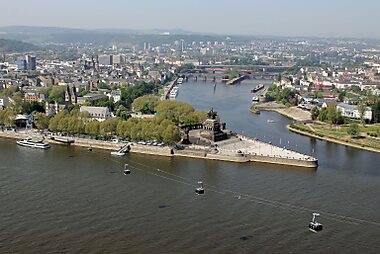

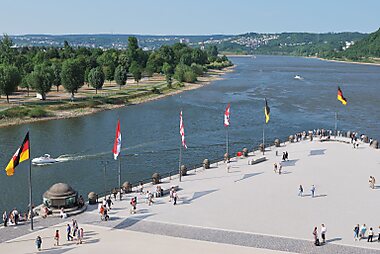
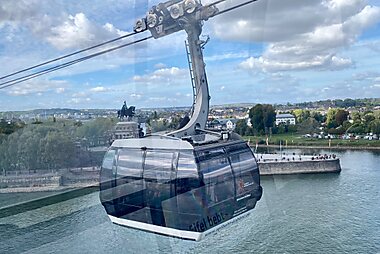
- Deutsches Eck is the point where the Moselle flows into the Rhine. The name comes from the Teutonic Order, which once owned this land. It is the symbol of the city.
- Kaiser-Wilhelm-Denkmal stands on the same spit of land. It shows Emperor Wilhelm I on horseback. A copy was installed in 1993.
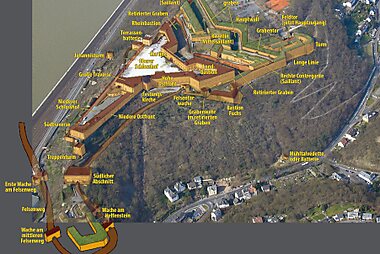
- Festung Ehrenbreitstein is a large Prussian fortress on the hill across the Rhine. It has wide views over both rivers and the city.
- Seilbahn Koblenz crosses the Rhine and takes you up to the fortress. It is the easiest way to reach the top, and the view of the confluence is very good.
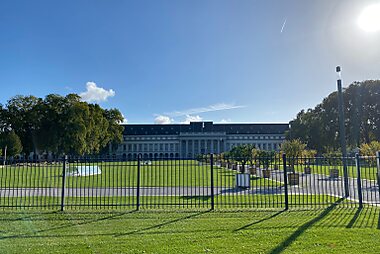
- Kurfürstliches Schloss is the former palace of the archbishop-electors of Trier. It was built in the late 18th century in a plain, classical style. A park runs along the Rhine beside it.
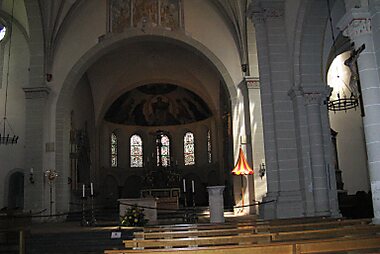
- Basilika Sankt Kastor is a Romanesque church close to the Deutsches Eck. It is one of the oldest churches in the city.
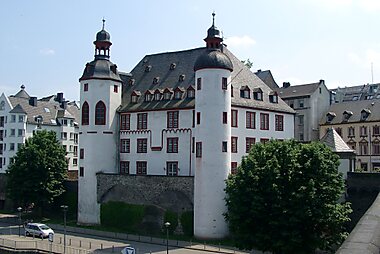
- Alte Burg is a medieval castle beside the Moselle. The archbishops of Trier built it to guard the river crossing.
- Schloss Stolzenfels is a neo-Gothic castle on the Rhine, south of the centre. It was rebuilt in the 19th century on medieval ruins and has river views.
Polecane zestawienia


Religious Sites in Koblenz
Koblenz’s religious landscape spans over a millennium, from the Romanesque foundations of the Basilica of St. Castor to modern 20th-century structures. This collection highlights the city's architectural diversity, featuring the Neo-Gothic spires of the Christuskirche and Sankt Josef, the historic Jewish Cemetery, and the Emir Sultan Camii. Visitors can explore various traditions and styles, including the Romanesque Revival Klosterkirche Herz-Jesu and the post-war modernism of Heilig-Kreuz-Kirche in Ehrenbreitstein.
12 miejscCzego warto doświadczyć
- Take a boat trip on the Rhine or the Moselle. Boats start from the quays in Koblenz.
- Visit the Christmas market in the old town during Advent.
- Join a wine event or a guided wine walk in the warmer months.
- Look for the Schängelbrunnen fountain at the Jesuitenplatz. It spits water at intervals. Schängel is the local nickname for a boy from Koblenz.
- Walk the Rhine promenade at sunset.
Wycieczki i aktywności
Koblencja — Mapa

 Otwórz interaktywną mapę
Wycieczki jednodniowe
Koblenz is a good base for the Rhine and Moselle valleys. Trains run along both rivers.
- Sankt Goar is a small town in the Rhine Gorge, under 1 hour by train.
- Boppard is a Rhine town with a long river promenade and a Roman fort wall, under 1 hour by train.
- Burg Eltz is a medieval castle in a forest valley above the Moselle. Take a regional train to Moselkern and walk, or go by car.
- Cochem is a Moselle wine town below a castle, about 1 hour by train.
- Maria Laach is a Benedictine abbey beside a lake in the volcanic Eifel, a short drive north-west by car.
- Bonn is a Rhine city with museums and a pleasant old town, about 1 hour by train.
- Trier has major Roman ruins, 1 to 2 hours by train. Plan a full day.
Gdzie warto się udać
Jak dotrzeć
- By air: Frankfurt Airport (FRA) is the main gateway. Cologne Bonn Airport (CGN) is the other practical option. From both, take a train to Koblenz.
- By train: Koblenz Hauptbahnhof is on the Rhine valley line between Cologne and Mainz. It is also the start of the Moselle line to Trier. See Deutsche Bahn for timetables and tickets.
- By coach: Long-distance coaches link Koblenz with other German cities.
Poruszanie się na miejscu
- Public transit: Buses cover the city and the nearby valleys. Koblenz is in the VRM regional network. Buy tickets in the VRM app or at ticket machines. See VRM for timetables and fares.
- On foot: The old town, the Deutsches Eck and the Rhine promenade are close together and easy to walk.
- Cycling: The Rhine and Moselle cycle routes both pass through the city. The riverside paths are flat.
Prowadzenie samochodu
- A car is not needed in the city. The old town is small, and trains cover the main valley towns. A car helps for the Eifel and for villages away from the rail lines.
Jedzenie i napoje
Local dishes come from the Rhineland. Try Himmel un Ääd, a plate of black pudding with apple and potato. Döppekooche is a baked potato dish. Moselle and Rhine wines, mostly Riesling, are the local drink.
For eating out, go to the old town squares, such as Münzplatz and Am Plan. The wine taverns in the old town are good for a regional meal.
Bezpieczeństwo i zdrowie
- Pickpockets can work in crowds around the station and at the Christmas market.
Historia
- The Romans built a military camp here around 8 BC. They called it Confluentes, meaning "the confluence". The name became Koblenz.
- Basilika Sankt Kastor and Alte Burg date from the Middle Ages, when the archbishops of Trier ruled the city.
- The last elector built Kurfürstliches Schloss in the 1780s. French troops took the city in 1794.
- Koblenz became Prussian after the Congress of Vienna. The Prussians strengthened Festung Ehrenbreitstein, and the city became the seat of government of the Rhine Province.
- Kaiser-Wilhelm-Denkmal was inaugurated in 1897. American shelling destroyed it in 1945, and a copy was installed in 1993.
Informacje o kraju
Quick practical facts for Germany at a glance:
- Waluta
- euro EUR € · Płatności kartą · Zazwyczaj akceptowane
- Numery alarmowe
- 112 Pogotowie ratunkowe · Straż pożarna
- Elektryczność
- 230 V · 50 HzTyp C / Typ F
- Języki
- niemiecki
- Woda z kranu
- Zdatna do picia
- Ruch drogowy
- Prawostronny
- Numer kierunkowy
- +49


Koblencja – zaplanuj swoje dni
Zmień miejsca z tego przewodnika w prawdziwy plan podróży z inteligentnym wyznaczaniem tras, szacowanym czasem i wszystkim, czego potrzebujesz na udaną wycieczkę.


Powiązane cele podróży



Data: © OpenStreetMap contributors, Wikidata, Wikipedia, Tripomatic, Official websites. Tours by GetYourGuide. We earn commission from bookings. Travel guide generated with AI.
Zaplanuj wycieczkę z Tripomatic
- Planowanie z asystentem AIZyskaj gotowy plan dnia jednym stuknięciem, pozwól AI rozmieścić miejsca z listy życzeń w Twojej wycieczce lub zaplanuj wszystko na czacie.
- Ostrzeżenia podróżneOficjalne komunikaty, trudne warunki pogodowe, strajki i zagrożenia naturalne dla miejsc w każdym dniu wycieczki.
- Dni wolne od pracy i wydarzeniaSprawdzaj święta, festiwale i dni zamknięcia w trakcie wycieczki oraz ich wpływ na Twoje plany.
- Szacowanie kosztówZestawienia kosztów wycieczki oparte na sztucznej inteligencji, dzięki którym poznasz budżet przed wyjazdem.
- Wycieczki i biletyRezerwuj wycieczki z przewodnikiem, bilety wstępu bez kolejki i aktywności bezpośrednio w swoim planie.