


Las Palmas de Gran Canaria
Las Palmas de Gran Canaria is the largest city in the Canary Islands. It has a colonial old quarter, a long city beach and a busy port. The city is warm in all seasons.
It suits a city break with beach time. Many visitors also use it as a base for the island's mountains and villages.

Las Palmas de Gran Canaria – planujesz wycieczkę?
Stwórz swój plan podróży dzień po dniu w aplikacji Tripomatic.


Kiedy jechać
The weather is mild all year, so any season works. Summer is warmest, and winter is a popular escape from colder countries. A dusty haze called calima can arrive from the Sahara on some days.
The biggest event is the Carnival in February or March, one of the largest in Spain, with parades, music and costume contests.
Najlepszy czas na wizytę: styczeń, luty, marzec, kwiecień, maj, czerwiec, lipiec, sierpień, wrzesień, październik, listopad, grudzień
Główne zabytki
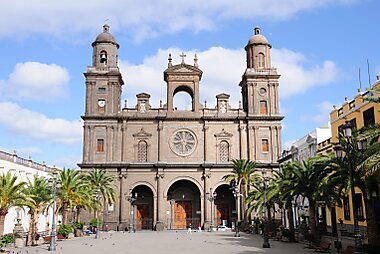

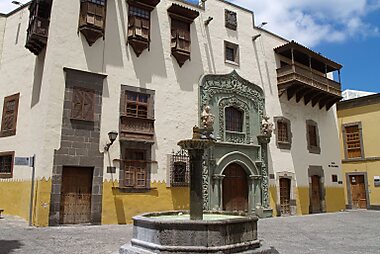
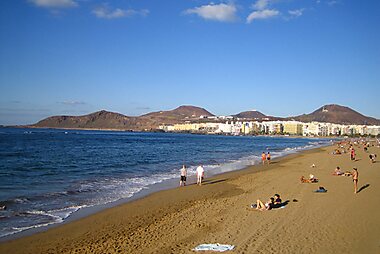

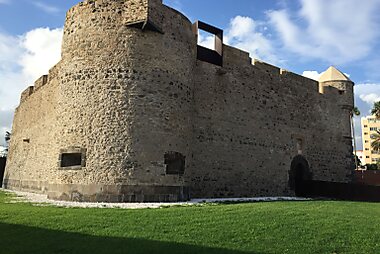

- Vegueta is the old colonial quarter, with narrow streets, squares and colorful houses.
- Catedral de Santa Ana is the cathedral of the Canary Islands, with a neoclassical front.
- Columbus House is a museum in a historic house, about the early links between the Canaries and the Americas.
- The Canarian Museum shows the island's pre-Hispanic culture.
- Calle Mayor de Triana is a long pedestrian shopping street in the Triana district.
- Playa de Las Canteras is a long city beach, sheltered by a natural reef. It is good for swimming and walking.
- Castillo de la Luz is a fortress from the late 15th century at the port end of the peninsula.
Polecane zestawienia


Czego warto doświadczyć
- Swim or surf at Las Canteras. Surf schools offer lessons all year.
- Walk the long beach promenade at sunset, from the south end to the lighthouse area.
Wycieczki i aktywności
Las Palmas de Gran Canaria — Mapa

 Otwórz interaktywną mapę
Wycieczki jednodniowe
- Teror (about 20 km, 30 minutes by bus or car): a hill town with wooden balconies and a large church.
- Agaete (about 35 km, 40 minutes by car): a coastal town with a small port and ferries to Tenerife.
- Maspalomas dunes (about 50 km, 45 minutes by bus or car): a large area of sand dunes on the south coast.
- Tejeda and Roque Nublo (about 50 km, 1 hour 15 minutes by car): mountain villages and a famous rock peak.
Gdzie warto się udać
Other places on Gran Canaria:
- Island: Gran Canaria has the full guide to the island.
- West coast: Agaete.
- South coast: San Bartolomé de Tirajana includes the big beach resorts.
Jak dotrzeć
- By air: Gran Canaria airport (LPA) is about 20 km south of the city. Buses and taxis take about 30 to 40 minutes.
- By ferry and air: Ferries and short flights link Las Palmas with the other Canary Islands.
- There is no train service.
Poruszanie się na miejscu
- On foot: Vegueta and Triana are close together and easy to walk. Las Canteras beach is a short bus ride or a long walk from them.
- Bus: City buses, called guaguas, cover the whole city.
- Cycling: A flat promenade runs along the beach, and cycling is practical there.
Prowadzenie samochodu
- Is a car worth it?: Not for the city. A car is useful for the mountains and the south of the island.
- Parking: Parking in the center is hard. Use an underground car park.
- Restrictions: Few. Some streets in Vegueta are pedestrian only.
Jedzenie i napoje
Canarian food is simple and local. Papas arrugadas are small boiled potatoes served with red and green mojo sauces. Gofio is toasted grain flour used in many dishes. Fresh fish is common.
For local food, go to the Vegueta and Triana districts. Beach restaurants line the Las Canteras promenade.
Bezpieczeństwo i zdrowie
Las Palmas is safe for visitors. Watch your bag in the port area and on the beach. The sun is strong all year, so use sun protection. On Las Canteras, swim inside the reef and follow the flags.
Historia
Spain founded the city in 1478 in the area now called Vegueta. Catedral de Santa Ana was begun around 1500.
Christopher Columbus stopped in the city on his voyages to the Americas, and Columbus House remembers this link. The port later grew into one of the busiest in the Atlantic.
Informacje o kraju
Quick practical facts for Spain at a glance:
- Waluta
- euro EUR € · Płatności kartą · Powszechnie akceptowane
- Numery alarmowe
- 112
- Elektryczność
- 230 V · 50 HzTyp C / Typ F
- Języki
- hiszpański
- Woda z kranu
- Zdatna do picia
- Ruch drogowy
- Prawostronny
- Numer kierunkowy
- +34


Las Palmas de Gran Canaria – zaplanuj swoje dni
Zmień miejsca z tego przewodnika w prawdziwy plan podróży z inteligentnym wyznaczaniem tras, szacowanym czasem i wszystkim, czego potrzebujesz na udaną wycieczkę.


Powiązane cele podróży


Data: © OpenStreetMap contributors, Wikidata, Wikipedia, Tripomatic, Official websites, geoBoundaries (CC BY 4.0). Tours by GetYourGuide. We earn commission from bookings. Travel guide generated with AI.