


Montreal
Montreal sits on an island in the Saint Lawrence River, founded in 1642 as the fur-trading post of Ville-Marie. It is the largest city in Quebec and the cultural capital of French-speaking Canada. French is the everyday language of the street, but most people working in tourism also speak English, so getting around is easy either way.
The city mixes centuries of history with a young, creative energy. Cobblestone lanes and stone churches in the Old Town sit a short walk from glass towers, a huge underground network of shops and restaurants, and neighborhoods built around food, music, and art. Montreal suits travelers who want a European feel without crossing the Atlantic, paired with a packed calendar of summer festivals and a proudly cold, snowy winter that the city embraces rather than hides from.

Montreal – planujesz wycieczkę?
Stwórz swój plan podróży dzień po dniu w aplikacji Tripomatic.


Kiedy jechać
Spring and autumn are mild and good for walking, with fall bringing bright foliage across the city's parks. Summer is warm and often humid, and it is when Montreal comes alive with outdoor festivals. Winter is genuinely cold and snowy, but the city leans into it with skating rinks, an underground network for getting around in comfort, and festive lights downtown.
Plan around the Festival International de Jazz de Montréal in late June and early July if you can — it is one of the largest jazz festivals in the world, filling the streets of the Quartier des Spectacles with free outdoor stages alongside ticketed shows. Early summer generally offers the best balance of good weather and a full events calendar, while February and March suit travelers who want a proper winter visit with fewer crowds.
Najlepszy czas na wizytę: wrzesień
Główne zabytki




Notre-Dame Basilica is the city's most famous church, with a Gothic Revival interior of deep blue, gold stars, and intricate woodcarving that feels far grander than its plain stone exterior suggests.
Vieux-Port is the historic harbor where Montreal began, now a lively waterfront with cycling paths, a Ferris wheel, and river cruises departing right from the old stone quays.
For a break from the streets, Parc du Mont-Royal is the wooded hill at the heart of the city, laid out by the same designer as New York's Central Park, with a lookout that gives the best skyline view in town.
Oratoire St-Joseph crowns the western slope of the mountain with a copper dome second in size only to St. Peter's in Rome, and pilgrims still climb its front steps on their knees.
Out on the river, Habitat '67 is a striking stack of concrete boxes built as a housing experiment for the 1967 World's Fair, and it remains one of the boldest pieces of architecture in the country.
Parc olympique is the leaning tower and stadium built for the 1976 Olympics, and a cable car ride up the tower gives a wide view over the whole city and river.
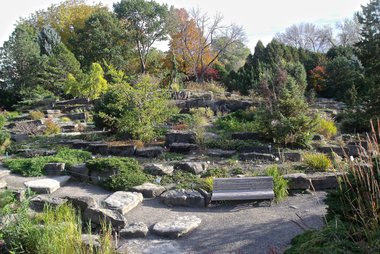
Jardin botanique de Montréal is one of the largest botanical gardens in the world, with themed gardens ranging from a Japanese garden to a First Nations garden, plus a major insect house next door.
Montreal Museum of Fine Arts holds one of Canada's largest art collections, spanning old masters to Quebec and Indigenous art across several connected pavilions.
Polecane zestawienia


Montreal's Historic Landmarks
Montreal’s architectural landscape is shaped by its island geography, featuring a series of essential bridges and civic landmarks. This collection spans centuries of history, from the 17th-century ruins of Fort Senneville to the mid-20th-century cable-stayed Papineau-Leblanc Bridge. It highlights the administrative heritage of the region through various municipal town halls and offers a look at industrial remnants like the historic Moulin ruins along the Rivière des Prairies.
13 miejsc

Czego warto doświadczyć
Montreal's festival culture and its underground city give visitors a few rituals unique to the city, beyond just seeing its landmarks.
- Catch a free outdoor concert during the Jazz Festival in late June and early July, when stages fill the closed-off streets of the Quartier des Spectacles.
- Skate outdoors at an open-air rink such as the Old Port's, with the city skyline as a backdrop.
- Walk part of the RÉSO underground city in winter, moving between shops, cafés, and the metro without ever going back outside.
- Browse a Sunday morning at Jean-Talon Market, one of North America's largest open-air markets, for maple products, local cheese, and seasonal produce straight from Quebec farms.
- Join the crowds for Nuit Blanche, a late-February all-night celebration with free events, art installations, and warming stations across downtown.
Wycieczki i aktywności
Montreal — Mapa

 Otwórz interaktywną mapę
Wycieczki jednodniowe
Montreal makes a good base for day trips, from small towns just outside the city to two flagship destinations further afield.
- Saint-Sauveur — about 45–60 minutes by car in the Laurentian foothills, a small resort town with hiking and mountain-bike trails in summer and ski slopes in winter, plus a lively main street of shops and cafés.
- Eastern Townships wine country — around 1–1.5 hours by car southeast of the city, a rolling countryside of vineyards, orchards, and lakeside towns that is especially good for apple-picking and maple sugar shacks in spring and fall.
- Ottawa — Canada's capital, about 2 hours by train or car, worth a day for Parliament Hill, national museums, and the Rideau Canal.
- Quebec City — a flagship trip of around 3 hours by train, with the only walled old town north of Mexico, cobblestone streets, and the landmark Château Frontenac; it rewards a full day even though it is farther out.
Gdzie warto się udać
Montreal's metropolitan area spreads across the island and beyond, and two neighboring communities are easy to combine with a city stay.
- South Shore: Longueuil sits directly across the Saint Lawrence River, reachable by metro in minutes, and makes a quiet, mostly residential contrast to downtown.
- North of the island: Mirabel is a largely rural municipality best known today for its cargo airport and surrounding farmland, worth knowing about mainly as a geographic landmark rather than a visitor destination in its own right.
Jak dotrzeć
- By air: Montréal–Trudeau International Airport (YUL) is the main gateway, about 20 km from downtown. The 747 express bus runs to downtown around the clock for a single transit fare (about 30–45 minutes); a taxi to downtown runs a fixed flat rate, around $50 by day and a bit more overnight. Montréal–Trudeau Airport (YUL)
- By train: VIA Rail serves Central Station in the heart of downtown, with frequent trains to Ottawa and Toronto and a direct line to Quebec City. VIA Rail Canada
- By bus: Long-distance coaches to Ottawa, Toronto, Quebec City, and towns across Quebec arrive at the downtown bus terminal (Gare d'autocars de Montréal), close to Central Station.
Poruszanie się na miejscu
- Public transit: The STM runs four metro lines and an extensive bus network. Buy a single ticket or day pass from a vending machine at any metro station (cash or card) and tap it at the turnstile or bus reader; a growing number of buses also accept tap-to-pay bank cards, though this is not yet available system-wide. STM – Montreal transit authority
- Cycling: BIXI, the city's bike-share network, has stations across the central neighborhoods, making short rides across downtown easy for much of the year.
Prowadzenie samochodu
- Is a car worth it?: Skip it for a stay focused on downtown and the Old Port — transit and walking cover it well, and parking is expensive. A car becomes useful if you're heading out to the Laurentians or Eastern Townships.
- Parking: Metered street parking and paid downtown garages are the norm; pay-by-app meters (Pay by Phone) are common, and rates run high in the core.
- Restrictions: Some central streets close to cars entirely during summer festivals, and winter parking bans (overnight, for snow clearing) apply on many streets — check posted signs.
Jedzenie i napoje
Montreal takes its food seriously, and a lot of it is proudly local: expect poutine, smoked meat sandwiches, and the city's own dense, hand-rolled bagels, boiled in honey water and baked in wood-fired ovens.
For bagels, head to the bakeries clustered on and around Saint-Viateur and Fairmount streets in Mile End, where two long-running rivals still bake around the clock. For smoked meat, the classic stop is a deli on Boulevard Saint-Laurent that has been slicing it the same way for generations. Beyond those, the food stalls and produce vendors at Jean-Talon Market are the best way to sample Quebec specialties like maple products and local cheese in one place.
Bezpieczeństwo i zdrowie
Montreal is a generally safe city for tourists, with low rates of violent crime in the areas visitors spend time in. Normal city precautions apply: watch for pickpockets in crowded festival crowds and on busy metro trains, and keep bags closed and close to you on the Old Port waterfront at night.
Winter brings its own hazard: sidewalks can turn icy, so wear boots with real tread between December and March. Summer humidity can be intense during heat waves; drink water and take breaks in air-conditioned spaces if you're out walking for long stretches.
Historia
Montreal began in 1642 as Ville-Marie, a small fortified mission and fur-trading post founded by Paul de Chomedey de Maisonneuve on the site of an earlier Indigenous settlement called Hochelaga. The stone streets and buildings of Old Montreal, including Notre-Dame Basilica, still trace that early colonial layout.
The city grew into Canada's commercial and financial capital through the 1800s and early 1900s, and its wealth from that era shows in the grand institutions built along what is now downtown. In the 20th century, Montreal reinvented itself twice on the world stage: first hosting Expo 67, the world's fair that produced Habitat '67, and then the 1976 Olympics, which left behind Parc olympique. Both events pushed the city toward the bold modern architecture and international outlook it is known for today.
Informacje o kraju
Quick practical facts for Canada at a glance:
- Waluta
- dolar kanadyjski CAD $ · Płatności kartą · Powszechnie akceptowane
- Numery alarmowe
- 911
- Elektryczność
- 120 V · 60 HzTyp A / Typ B
- Języki
- angielski, francuski
- Woda z kranu
- Zdatna do picia
- Ruch drogowy
- Prawostronny
- Numer kierunkowy
- +1


Montreal – zaplanuj swoje dni
Zmień miejsca z tego przewodnika w prawdziwy plan podróży z inteligentnym wyznaczaniem tras, szacowanym czasem i wszystkim, czego potrzebujesz na udaną wycieczkę.




