


Port of Spain
Port of Spain is the capital of Trinidad and Tobago and the main city of Trinidad. It is a busy, working port on the Gulf of Paria, with green hills of the Northern Range behind it. The city is the centre of the country's business and government, and also of its music. Calypso, soca and the steelpan all have deep roots here.
Most visitors come for Carnival, for the food, or as a base for nature trips on Trinidad. The city has a large central park, grand colonial mansions and two old cathedrals, but it is not a beach resort. It suits travellers who enjoy local culture, street food and nightlife more than polished sightseeing. Crime is a real issue, so plan your days with some care.

Port of Spain – planujesz wycieczkę?
Stwórz swój plan podróży dzień po dniu w aplikacji Tripomatic.


Kiedy jechać
It is hot and humid all year. The dry season runs from about January to May and is the most pleasant time to visit. From June to December it is wetter, with heavy afternoon showers. Trinidad lies south of the main hurricane belt, so big storms are rare.
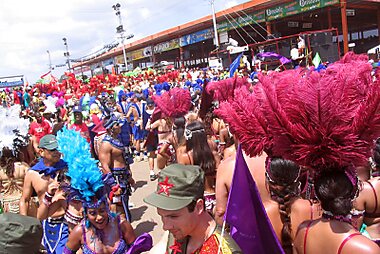
The biggest event of the year is Carnival, on the Monday and Tuesday before Ash Wednesday, in February or early March. Weeks of steelband competitions, calypso shows and fetes lead up to it, and the city fills with costumed bands on the final two days. Book flights and rooms many months ahead.
Główne zabytki


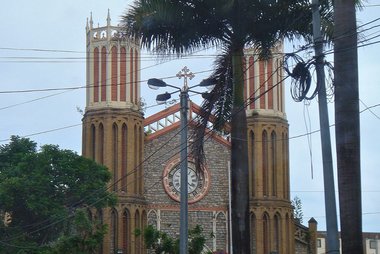
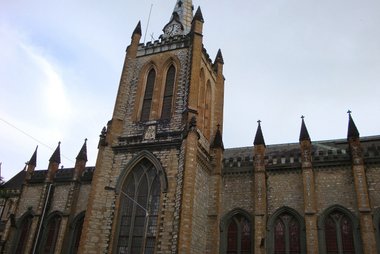

Most sights are in two areas: the old downtown around Independence Square and Woodford Square, and the green north around the Savannah. Visit both in daylight.
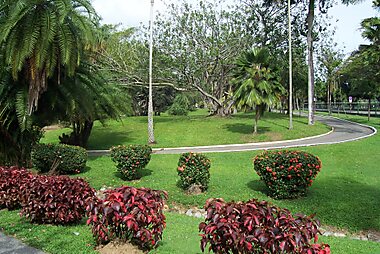
- Queen's Park Savannah is the large open park at the heart of the city, with a road circling it. Locals jog on the path around it and fly kites here, and the Grand Stand on its south side is the main stage of Carnival.
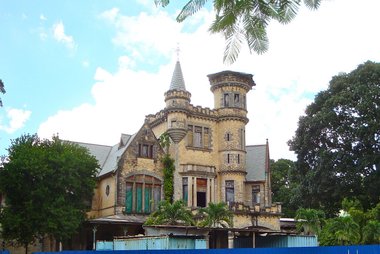
- On the west side of the Savannah stand the Magnificent Seven, grand mansions from the early 1900s in very different styles. The most striking are Stollmeyer's Castle, a Scottish-style castle, the Indian-style Archbishop's House and Queen's Royal College, a school with a clock tower. Most are not open to the public, so view them from the street.
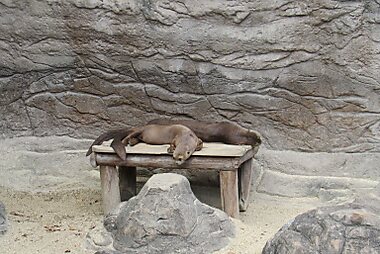
- North of the Savannah, the Royal Botanic Gardens were founded in 1818 and have trees from all over the world. Next door, the small Emperor Valley Zoo is the only zoo in the country.
- The National Museum & Art Gallery covers the country's history, nature and Carnival, and has paintings by the 19th-century local artist Michel-Jean Cazabon.
- The Red House, the seat of Parliament, is a large red building from 1907. It faces Woodford Square, a shady square where people have given public speeches for generations.
- Holy Trinity Cathedral, the Anglican cathedral on Woodford Square, has a fine carved wooden roof and stained glass.
- Immaculate Conception Cathedral Basilica, the Catholic cathedral, stands at the east end of Independence Square. It has been a basilica since 1851.
- Brian Lara Promenade is the wide pedestrian strip in the middle of Independence Square, with benches, food stalls and office workers on their lunch break.
Polecane zestawienia

Czego warto doświadczyć
A few things that make a visit to Port of Spain special:
- Play mas at Carnival: join a costumed band in the Parade of the Bands, or cover yourself in paint and mud at J'ouvert, the street party that starts before dawn on Carnival Monday. Bands sell costumes months in advance.
- Visit a panyard: in the weeks before Carnival, steelbands rehearse in the evenings for the Panorama competition. Visitors are welcome to listen.
- Lime on Ariapita Avenue: in the Woodbrook district, this street of bars and restaurants is the centre of nightlife. Liming means relaxing and chatting with friends, and locals do it every weekend. Take a taxi there and back at night.
- See the city from above: drive up to Fort George, an old British fort in the hills west of the city, for wide views over Port of Spain and the Gulf of Paria. Go in daylight.
- Watch cricket: the Queen's Park Oval, close to the city centre, is one of the most famous cricket grounds in the Caribbean.
Wycieczki i aktywności
Port of Spain — Mapa

Wycieczki jednodniowe
Trinidad is small, and the best nature and beaches are within a few hours of the city. Traffic is heavy, so leave early. A car or a guided tour is the easiest way to go.
- Caroni Swamp (about 30 min by car): take an evening boat tour through the mangroves. At sunset, flocks of bright red scarlet ibis fly in to roost in the trees.
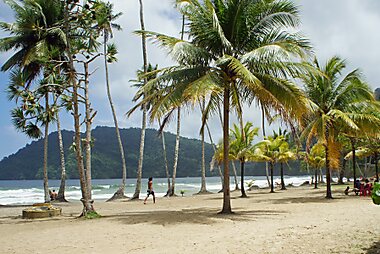
- Maracas Beach (45 min to 1 hour by car): the most popular beach on Trinidad, in a bay with forested hills. The road over the mountains has fine views. Eat bake and shark at the beach stalls.
- Chaguaramas (about 30 min by car): a green peninsula west of the city with marinas, walking trails and boat trips to the Gasparee Caves on a small island offshore.
- Mount St Benedict (about 30 min by car): a hilltop Benedictine monastery above St Augustine, with wide views over the plains of central Trinidad.
- Asa Wright Nature Centre (about 1.5 hours by car): a rainforest reserve in the Arima Valley, famous for birdwatching. Book a guided walk in advance.
- Pitch Lake in La Brea (about 2 hours by car): the largest natural lake of asphalt in the world. Local guides lead short walks across its surface.
- Tobago (about 25 min by plane, or about 3 hours by ferry): the sister island has quiet beaches and coral reefs. It is better for a stay of a few nights than a day trip.
Gdzie warto się udać
Port of Spain is the capital of Trinidad and Tobago.
- Tobago is the smaller, quieter island, with the country's best beaches and reefs.
- San Fernando, the second city, lies in the south of Trinidad, close to the oil and gas industry.
- Chaguanas, in central Trinidad, is a large market town with a strong Indo-Trinidadian culture.
- Caroni Swamp is the mangrove wetland just south of the city, home of the scarlet ibis.
Jak dotrzeć
- By air: Piarco International Airport (POS) is more than 20 km east of the city. It has flights from North America, Europe and many Caribbean islands. The easiest transfer is a taxi; agree the fare first. The drive takes 30 to 45 minutes, and much longer at rush hour.
- From Tobago: Caribbean Airlines flies between Tobago and Piarco many times a day. The ferry from Scarborough arrives at the ferry terminal on Wrightson Road in Port of Spain and takes three hours or more. Book both in advance at busy times.
- By sea: cruise ships dock at the cruise terminal on the downtown waterfront, a short walk from Independence Square.
- From the south: a commuter water taxi links the city with San Fernando in about 45 minutes. It leaves from the terminal on Wrightson Road.
For official visitor information, see Visit Trinbago.
Poruszanie się na miejscu
- Buses: public buses leave from City Gate, the main terminal on South Quay. Buy your ticket before you board, at the terminal or at small shops; drivers do not sell tickets.
- Maxi-taxis: these minibuses run fixed routes and are marked by a coloured band. Yellow goes west, red goes east and green goes south. Pay the driver in cash.
- Route taxis: shared cars with H number plates run set routes from fixed stands. Avoid unmarked private cars that offer rides.
- Taxis: taxis have no meters, so agree on the price first. Use a taxi company your hotel recommends, especially at night.
- On foot: downtown and the Savannah area are walkable by day. Distances are short, but the heat is strong. Do not walk after dark.
Prowadzenie samochodu
- Is a car worth it?: not for the city itself, where traffic is heavy and parking is hard. It is useful for the north coast, the beaches and the nature reserves.
- Driving side: traffic drives on the left.
- Licence: with an International Driving Permit, or a licence from a country such as the US, Canada or the UK, you can drive for up to 90 days.
- Traffic: rush hours are long, roughly early morning and late afternoon, especially on the highways to the east and south.
- Safety: keep doors locked and windows up in town, park in well-lit places and never leave bags in view.
Jedzenie i napoje
Food in Port of Spain mixes African, Indian, Chinese, Spanish and Creole cooking. Street food is the highlight. Try doubles for breakfast, roti with curried meat or vegetables for lunch, and corn soup in the evening. Fresh coconut water is sold from carts, cut open in front of you.
The best areas to eat are the busy food stalls along the edge of Queen's Park Savannah in the early evening, the Western Main Road in St James for late-night street food, and the restaurants and bars along Ariapita Avenue in Woodbrook. Take a taxi there and back. Many restaurants add a service charge to the bill, so check before you tip.
Bezpieczeństwo i zdrowie
Port of Spain has a high rate of violent crime, and visitors need to take real care. Check your government's latest travel advice before you go, because security rules can change quickly. The police sometimes set up checkpoints or close areas at short notice. Follow police instructions and local news.
- Areas: avoid Laventille, Morvant, Beetham, Sea Lots, Cocorite and the east of downtown. Stay on the busy path around the Savannah and avoid its open middle at any time. Do not walk downtown or on beaches after dark.
- Getting around: use taxis recommended by your hotel, and do not accept lifts from strangers.
- Money and phones: use ATMs inside banks or malls by day, carry little cash and keep your phone out of sight in the street.
- Carnival: crowds are huge. Leave valuables at your hotel and stay with your group.
- Health: the sun and heat are strong, so drink plenty of water. Mosquitoes can carry dengue, so use repellent.
Historia
The Spanish moved the capital of Trinidad from St Joseph to Port of Spain in 1757. In 1797, a British fleet under Ralph Abercromby took the island without a fight, and it stayed British for more than 160 years. A fire destroyed most of the wooden town in 1808. Governor Ralph Woodford then rebuilt the centre, and both cathedrals date from his time.
After slavery ended in the 1830s, workers came from India, China and Madeira. Their cultures mixed with African and French Creole traditions. Carnival grew from this mix, and in the 1930s and 1940s people in the hills of Laventille made the first steelpans from oil drums.
The Red House burned during the Water Riots of 1903 and was rebuilt in 1907. Before independence, Eric Williams gave famous public lectures in Woodford Square. He became the first prime minister when the country became independent in 1962. In 1990, armed rebels stormed the Red House and held the prime minister hostage for six days.
Informacje o kraju
Quick practical facts for Trinidad and Tobago at a glance:
- Waluta
- dolar trynidadzki TTD TT$ · Płatności kartą · Zazwyczaj akceptowane
- Elektryczność
- 115 V · 60 HzTyp A / Typ B
- Języki
- angielski
- Woda z kranu
- Zalecana ostrożność
- Ruch drogowy
- Lewostronny
- Numer kierunkowy
- +1868


Port of Spain – zaplanuj swoje dni
Zmień miejsca z tego przewodnika w prawdziwy plan podróży z inteligentnym wyznaczaniem tras, szacowanym czasem i wszystkim, czego potrzebujesz na udaną wycieczkę.


Powiązane cele podróży


Data: © OpenStreetMap contributors, Wikidata, Wikipedia, Tripomatic, Official websites, geoBoundaries (CC BY 4.0). Tours by GetYourGuide. We earn commission from bookings. Travel guide generated with AI.