


Vejle
Vejle sits at the head of Vejle Fjord in southeastern Jutland, where two green river valleys meet the sea. Steep, wooded hills rise on both sides of town. That is unusual in flat Denmark and gives Vejle its walks, viewpoints and cycling climbs.
The town was once called the "Manchester of Denmark" for its cotton mills. Today the old mills hold museums and culture, and the harbour front has some of the country's boldest modern architecture. Vejle is also a practical base for two of Denmark's best-known sights: the Viking-age royal monuments at Jelling and LEGOLAND in Billund. It suits a relaxed stay of two or three nights, with a mix of design, history, family days out and nature.

Vejle – planujesz wycieczkę?
Stwórz swój plan podróży dzień po dniu w aplikacji Tripomatic.


Kiedy jechać
Late May to early September is the best time, with long days, mild temperatures and open-air life on the harbour. Spring and autumn are cooler and often wet but good for forest walks. Winter is dark, damp and quiet, with short daylight hours.
The biggest yearly event is the PostNord Danmark Rundt cycling race, which usually brings a stage to Vejle in late July or early August. The steep climbs around town, such as Kiddesvej, often decide the race, and the roadsides fill with spectators.
Główne zabytki



The Wave is Vejle's best-known landmark: a white apartment complex by Henning Larsen Architects whose five rooftops rise and fall like waves. The apartments are private, so enjoy it from the harbour promenade.
Fjordenhus stands on its own islet in the harbour. The artist Olafur Eliasson designed this round brick office building, and its ground floor is open to the public. Inside, fjord water and light play across his artworks.
Vejle Lystbådehavn is the lively heart of the new waterfront, with boats, a promenade and outdoor terraces. It is the natural place to start a walk past The Wave and Fjordenhus.
Sankt Nicolai Kirke is the oldest building in town, with parts from the 13th century. Look at the outside wall of the north transept: 23 skulls are walled in there, by legend those of robbers beheaded in a nearby forest.
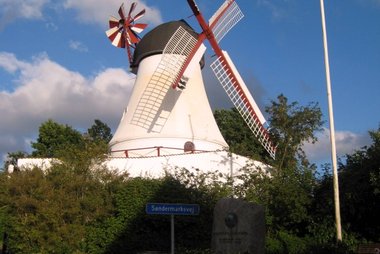
Vejle Vindmølle is a 20-metre Dutch-style windmill on a hill above the centre, and a symbol of the town. Climb up to its surroundings for a wide view over Vejle, the fjord and the river valleys.
Økolariet is a free, hands-on centre about water, climate and recycling, opposite the train station. The Cultural Museum and Vejle Art Museum in town are free too. It works well for families on a rainy day.
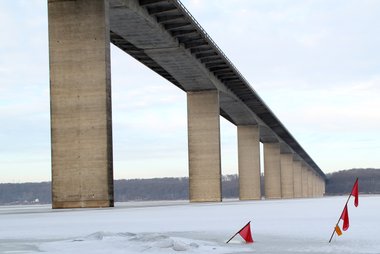
Vejle Fjord Bridge carries the E45 motorway 1.7 km across the fjord on tall concrete piers. It is not a place to visit on foot, but it frames the view from the harbour and the hills.
Polecane zestawienia

Vejle Essentials
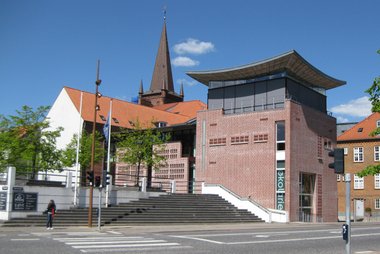
Vejle blends avant-garde Danish design with significant historical sites. The city's waterfront is defined by Olafur Eliasson’s Fjordenhus and the modern marina, while the historic center features the 13th-century St. Nicholas Church and the Neo-Gothic Town Hall. Cultural highlights include the interactive Økolariet center for sustainability and the iconic 19th-century hilltop windmill. Natural vantage points like Tyrelodspynten offer panoramas across the Vejle Fjord and the surrounding forested hills.
8 miejscCzego warto doświadczyć
Vejle's best moments are outdoors, between the fjord and the hills.
- Watch the Danmark Rundt riders on the climbs: when the national cycling race comes to Vejle in summer, crowds line the steep hill streets to cheer the riders.
- Climb the Munkebjerg staircase: walk through beech forest on the fjord's south shore and take the long wooden stairs up to the hotel terrace for the view.
- Birdwatch at Kongens Kær: this restored wetland on the western edge of town has a viewing platform. Look for ospreys, marsh harriers and white-tailed eagles over the meadows.
- Walk the Bindeballe path: follow the green Vejle river valley west out of town along this long-distance trail towards Billund.
Wycieczki i aktywności
Vejle — Mapa

Wycieczki jednodniowe
Vejle's two headline day trips are both short bus or train rides away, and nature starts at the edge of town.
- Jelling (≈12 min by train, about 10 km northwest): the cradle of the Danish kingdom and a UNESCO World Heritage site. Jelling Kirke stands between two huge burial mounds, next to the runestones of King Gorm and Harald Bluetooth. The larger stone carries the oldest image of Christ in Scandinavia. Kongernes Jelling explains the site, and the outdoor monument area is always open.
- Munkebjerg and the fjord's south shore (≈15 min by car or bike): beech forest on steep slopes above the fjord, with marked trails, a long wooden staircase and views from the hotel terrace.
- Givskud Zoo (≈25 min by car, about 20 km northwest): a safari park with more than 700 animals, from lions and giraffes to Asian elephants.
- Billund (≈30–35 min by bus): Legoland Billund, the original LEGOLAND park from 1968, and LEGO House, a brick-shaped experience centre in the town centre. Buses leave from Vejle's bus station.
- Kolding (≈30 min by car or bus): the restored royal castle of Koldinghus, with a striking modern interior inside the old ruin.
- Aarhus (≈45 min by train): Denmark's second city, with the ARoS art museum and its rainbow walkway.
Gdzie warto się udać
Vejle is part of the "Triangle Region" with its close neighbours Fredericia and Kolding, both less than half an hour away.
Heading west, Billund is LEGO country, and the North Sea coast waits at Esbjerg and Denmark's oldest town, Ribe.
To the north, the lake district around Silkeborg and the city of Aarhus make good next stops.
Jak dotrzeć
- By air: Billund Airport is about 30 km west of Vejle. Bus 43 runs to Vejle's bus station (Trafikcenter) in about 30 minutes; pay the driver in cash in Danish kroner (the airport bus also takes euros in cash), or buy a ticket in the Rejsebillet app or at the Rejsekort machine in the terminal. Copenhagen Airport is about 2.5 hours away by train.
- By train: Vejle is on Denmark's main rail line. Intercity trains reach Aarhus in about 45 minutes and Copenhagen in just over 2 hours, via Fredericia and Odense. Book with DSB.
- By bus: Long-distance coaches stop at Vejle Trafikcenter, a 4-minute walk from the train station.
Poruszanie się na miejscu
- Public transport: Sydtrafik runs the city and regional buses from Vejle Trafikcenter next to the station. Buy tickets in the Rejsebillet app (English, takes foreign cards) or use a Rejsekort. Drivers do not take cards, only cash in Danish kroner. See Sydtrafik tickets.
- On foot: The centre, the pedestrian streets, the station and the harbour are all within a 15-minute walk. Expect some steep streets if you head up to the windmill or the hills.
- Cycling: Bike paths run along the harbour and into the river valley, and Kongens Kær wetlands start at the western edge of town. The hills around Vejle are steep, so cycling beyond the centre takes some effort.
Prowadzenie samochodu
- Is a car worth it?: Not for the town itself, which is compact and well served by buses and trains. A car helps for Givskud Zoo, the fjord's south shore and the rural countryside.
- Parking: The central car parks Cronhammar, Tróndur, Albert and Bryggen give 2 hours free. Your number plate is scanned on entry; pay for longer stays at the machine or in the parking app.
- Hills: Roads in and around Vejle are unusually steep for Denmark, so take care in wet or icy weather.
Jedzenie i napoje
Vejle's eating clusters in two areas. The pedestrian streets around Torvet and Nørregade have cafés, bakeries and smørrebrød lunch spots. The new harbour front has restaurants and terraces with fjord views, best on a summer evening.
For a special night out, LYST in Fjordenhus holds a Michelin star and serves creative Nordic menus with a view straight over the water. Book well ahead.
Bezpieczeństwo i zdrowie
Vejle is a very safe town, and serious crime against visitors is rare. Use normal care with bags in busy places such as the station and at large events.
The main risks are physical. Take care near the open harbour edges. The forest paths and staircases at Munkebjerg get slippery after rain. Tap water is safe to drink.
Historia
Vejle grew as a medieval market town at the head of the fjord and received its first known town privileges in 1327. Sankt Nicolai Kirke dates from this early period and is the town's oldest building.
Just inland, Jelling was the seat of Denmark's first kings in the 10th century. There, Harald Bluetooth raised the great runestone that records how he "made the Danes Christians". Many Danes see this as the country's birth certificate.
In the 1800s and 1900s cotton mills made Vejle the "Manchester of Denmark". Vejle's last cotton mill closed in 1993. Spinning had already stopped at the old Spinderihallerne mill in the late 1960s. Its buildings now hold the free Cultural Museum. Here you can see the Haraldskær Woman, an Iron Age body preserved in a bog near Vejle. In recent decades the harbour has turned from industry to homes and culture, with The Wave and Fjordenhus as its symbols.
Informacje o kraju
Quick practical facts for Denmark at a glance:
- Waluta
- korona duńska DKK kr · Płatności kartą · Powszechnie akceptowane
- Numery alarmowe
- 112
- Elektryczność
- 230 V · 50 HzTyp C / Typ E / Typ F / Typ K
- Języki
- duński
- Woda z kranu
- Zdatna do picia
- Ruch drogowy
- Prawostronny
- Numer kierunkowy
- +45


Vejle – zaplanuj swoje dni
Zmień miejsca z tego przewodnika w prawdziwy plan podróży z inteligentnym wyznaczaniem tras, szacowanym czasem i wszystkim, czego potrzebujesz na udaną wycieczkę.


Powiązane cele podróży




Data: © OpenStreetMap contributors, Wikidata, Wikipedia, Tripomatic, Official websites. Tours by GetYourGuide. We earn commission from bookings. Travel guide generated with AI.