



Kraj Vysočina
Vysočina, the Bohemian-Moravian Highlands, fills the rolling countryside between Prague and Brno. Rather than one big city, it offers a scattering of small medieval towns, Gothic castles, and Baroque churches, tied together by forests, fish ponds, and granite hills. It's the quietest of the Czech regions and one of the least visited, which is exactly why travelers who like slow, uncrowded trips are drawn here.
The region has two UNESCO World Heritage Sites away from the crowds of Prague: the Jewish Quarter of Třebíč and the pilgrimage church at Zelená Hora near Žďár nad Sázavou. Composer Gustav Mahler grew up in the regional capital, Jihlava. Vysočina suits a multi-day countryside loop by car more than a single city stay.

Kraj Vysočina – planujesz wycieczkę?
Stwórz swój plan podróży dzień po dniu w aplikacji Tripomatic.


Kiedy jechać
Summers are warm with frequent afternoon showers, spring and autumn are mild and good for hiking, and winters are cold and snowy across the highlands.
Time a visit for early February, when Nové Město na Moravě hosts a biathlon or cross-country skiing World Cup race at the Vysočina Arena — one of the region's biggest annual events.
Najlepszy czas na wizytę: czerwiec, sierpień
Snow can settle on the highland trails from November into March, so pack for it if visiting outside summer.
Główne zabytki
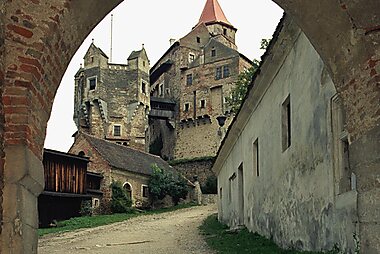


Pernštejn Castle is one of the best-preserved Gothic-Renaissance castles in the country, rising on a rock spur above the river near Bystřice nad Pernštejnem.
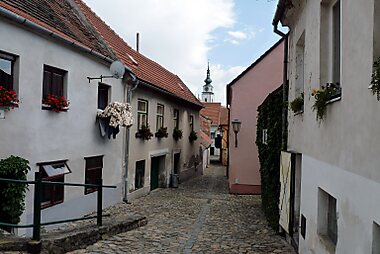
In Třebíč, the Jewish Quarter of Třebíč is one of Central Europe's best-preserved former Jewish ghettos, with narrow lanes, a synagogue, and a hillside cemetery.
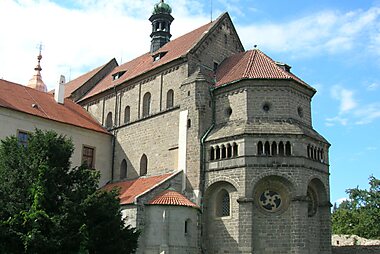
Next to it, the Basilica of St. Procopius blends Romanesque and Gothic architecture and forms a single UNESCO listing together with the Jewish Quarter.
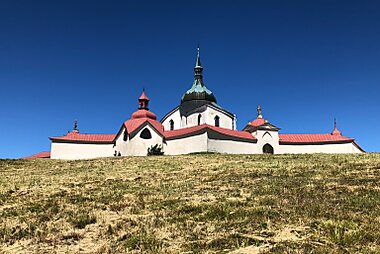
Near Žďár nad Sázavou, Church of St. John of Nepomuk at Zelená Hora is architect Jan Blažej Santini-Aichel's masterpiece — a star-shaped Baroque Gothic church built around the number five, referencing the legend of St. John of Nepomuk.
The adjoining Žďár nad Sázavou Chateau began as a Cistercian monastery and now houses a regional museum.
In Jihlava, the regional capital, Church of St. James the Greater has a 63-metre tower with views over the town's large medieval square.
Below the same square, the Jihlava Underground is a network of tunnels first dug as cellars in the 14th century, now open for guided tours.
Polecane zestawienia


Castles and Ruins
Explore the architectural heritage of the Vysočina region through its preserved fortresses and atmospheric ruins. This collection features the well-preserved Gothic-Renaissance Pernštejn Castle and the Roštejn hunting lodge with its unique heptagonal tower. The list includes significant medieval ruins like Rokštejn and Orlík u Humpolce, alongside remote sites like Holoubek and Lamberk perched above river valleys. Modern observation towers at Kopaniny and Rosička complement the historic sites, providing panoramic views of the Bohemian-Moravian Highlands.
10 miejsc
Historic Religious Sites
This collection highlights the diverse architectural and religious heritage of the Vysočina region. It features the UNESCO-listed Jewish Quarter and St. Procopius Basilica in Třebíč, alongside the medieval "Podlipnické" churches known for their unique Gothic frescoes. The list also includes the historic church in Číhošť, the Baroque splendor of Jaroměřice nad Rokytnou, and significant Jewish heritage sites like the former synagogue in Pacov and the expansive Jewish cemetery in Třebíč.
20 miejsc
Nature's Wonders
This collection features the diverse natural and landscaped sites of the Vysočina region. It includes significant water sources such as the Seč Dam and the headwaters of the Dyje and Rokytná rivers. The list highlights geological formations like the Justinka and Čertův hrádek cliffs, alongside the spiritual forest springs of Křemešník hill. Notable green spaces include the Baroque gardens in Jaroměřice nad Rokytnou and Jihlava's urban park dedicated to composer Gustav Mahler.
10 miejsc
Czego warto doświadczyć
Winter turns the region into the Czech Republic's cross-country skiing hub.
- The Vysočina Arena in Nové Město na Moravě hosts World Cup and championship biathlon and cross-country races most years, and its trails are open to the public between events.
- Hike the granite boulder fields of Žďárské vrchy Protected Landscape Area, including the region's highest point, Devět skal.
- Cycle the quiet lanes between Vysočina's hundreds of fish ponds, a landscape first shaped by medieval monks and still used for carp farming today.
Wycieczki i aktywności
Kraj Vysočina — Mapa

Wycieczki jednodniowe
Vysočina sits between Prague and Brno, so it's easy to combine with a stop in either city, and the region has its own worthwhile day trips too.
- Humpolec — about 30 minutes from Jihlava by car. Home to the independent Bernard brewery, which runs tours and tastings.
- Kutná Hora — around 1 hour from Havlíčkův Brod or Jihlava by car or train. A UNESCO-listed former silver-mining town, famous for the Gothic St. Barbara's Cathedral and the bone-decorated Sedlec Ossuary.
- Brno — about 1 hour from Třebíč or Jihlava by car or train. The Czech Republic's second-largest city offers major museums, nightlife, and Špilberk Castle above the old town.
Telč, with its UNESCO-listed Renaissance square, sits inside Vysočina itself and is worth a full stop rather than a rushed detour — see its own guide for a visit plan.
Gdzie warto się udać
Vysočina's own towns are worth exploring beyond the countryside:
- Jihlava is the regional capital, with a large medieval square, Gothic churches, and the underground tunnel network described above.
- Telč has one of the best-preserved Renaissance town squares in the country, lined with pastel arcaded houses; its historic centre is a UNESCO World Heritage Site. See its own dedicated guide for a full visit plan.
- Třebíč pairs its UNESCO-listed Jewish Quarter with a lively riverside old town.
- Žďár nad Sázavou is the gateway to the Zelená Hora pilgrimage church and to hiking in the Žďárské vrchy highlands.
- Pelhřimov calls itself the "Town of Records," home to a quirky Museum of Records and Curiosities.
- Nové Město na Moravě is the region's winter-sports hub, built around the Vysočina Arena.
- Havlíčkův Brod is a quieter market town on the Prague-Brno railway, named after 19th-century journalist Karel Havlíček Borovský.
Jak dotrzeć
- By air: Vysočina has no commercial airport of its own. Most travelers fly into Prague (PRG) and drive or take the train south-east, around 1.5-2 hours to Jihlava. Brno (BRQ) is closer to the region's eastern towns, such as Třebíč, but has limited scheduled service.
- By train: Fast trains on the Prague-Brno line stop at Havlíčkův Brod and Žďár nad Sázavou. Reaching Jihlava or Třebíč usually means changing to a slower regional line.
- By bus: Long-distance coaches on the Prague-Brno route stop at towns along the D1 motorway, including Jihlava and Humpolec, and can be faster door-to-door than the train for those two towns.
Poruszanie się na miejscu
- Public transit: Regional buses and trains connect the region's towns but run infrequently outside commuting hours — check timetables rather than assuming a frequent service. Tickets are usually bought from the driver on buses; book train tickets at Czech Railways.
- Taxi: Available in the larger towns; ride-hailing apps have limited coverage outside Jihlava.
- On foot / cycling: Town centres are small enough to explore on foot, but distances between them call for a car or bike. The region has a growing network of marked cycling routes through the highlands.
Prowadzenie samochodu
- Is a car worth it? Yes — Vysočina's castles, churches, and small towns are spread across the countryside, and rural bus service is thin. Rent one if you plan to see more than a town or two.
- Parking: Historic squares in Jihlava and Telč have paid parking zones, usually pay-by-phone or a machine at the edge of the square; the centre itself is for pedestrians.
- Winter driving: Winter tyres are legally required from November to March whenever roads are snow-, ice-, or frost-covered — common in the highlands' higher villages.
Jedzenie i napoje
Vysočina's countryside produces the raw ingredients of Czech home cooking: potatoes, trout and carp from its fish ponds, and game from its forests. Bramboráky (potato pancakes) and dumplings show up on most menus, alongside hearty pork dishes.
For something distinctive, look for the independent Humpolec brewery, whose Bernard beer has been made there since 1991, or smoked trout sold at ponds along the road. In Jihlava, cafés around the main square are a reliable spot for a casual meal.
Bezpieczeństwo i zdrowie
Vysočina is one of the safest regions in the country; petty crime is rare even in busy town squares. The usual precautions apply — keep an eye on belongings at markets and festivals.
Mobile signal can be patchy on remote hiking trails and forest roads, so download offline maps before setting out into the Žďárské vrchy highlands.
Historia
Vysočina's medieval wealth came from silver. Jihlava was founded in the mid-13th century around one of Europe's richest silver deposits, and its miners dug a warren of cellars and tunnels beneath the town — you can still walk part of it at Jihlava Underground.
The region's Jewish community, documented in Třebíč since at least the 16th century, left one of Central Europe's best-preserved historic quarters. Its residents were deported and murdered in the Holocaust.
In the 18th century, architect Jan Blažej Santini-Aichel built Church of St. John of Nepomuk at Zelená Hora in a highly unusual style blending Gothic and Baroque forms, designed around the number five in reference to the legend of St. John of Nepomuk.
Informacje o kraju
Quick practical facts for the Czech Republic at a glance:
- Waluta
- korona czeska CZK Kč · Płatności kartą · Zazwyczaj akceptowane
- Numery alarmowe
- 112
- Elektryczność
- 230 V · 50 HzTyp C / Typ E
- Języki
- czeski
- Woda z kranu
- Zdatna do picia
- Ruch drogowy
- Prawostronny
- Numer kierunkowy
- +420
Kraj Vysočina – zaplanuj wycieczkę
Wybierz miejsca, które chcesz zobaczyć, a Tripomatic przekształci je w trasę dzień po dniu – z inteligentnym wyznaczaniem tras, szacowanym czasem i wszystkim, czego potrzebujesz na udaną wycieczkę.




