


Weimar
Weimar is a small city in Thuringia with a big place in German culture. Goethe and Schiller lived and worked here, and so did Bach and Liszt. UNESCO lists both the Classical Weimar sites and the Bauhaus heritage.
The old town is compact and easy to explore on foot. Weimar suits a stay of two or three days that mixes writers' houses, museums and parks. It also has one of Germany's most important memorials, at Buchenwald. Erfurt and Jena make easy day trips.

Weimar – planujesz wycieczkę?
Stwórz swój plan podróży dzień po dniu w aplikacji Tripomatic.


Kiedy jechać
June to September is the best time. Days are long and warm, and the parks are at their best. Rain is common in every season, so pack a light jacket. Spring and early autumn are quieter. Winters are cold and grey, with short days.
The Zwiebelmarkt is a three-day onion market and street festival in October. The Christmas market in Advent is the other busy period.
Najlepszy czas na wizytę: czerwiec, sierpień, wrzesień
Główne zabytki
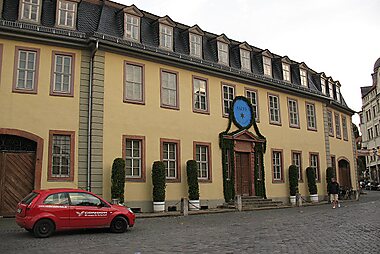
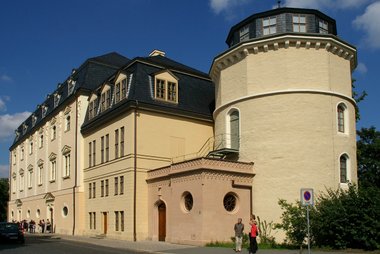

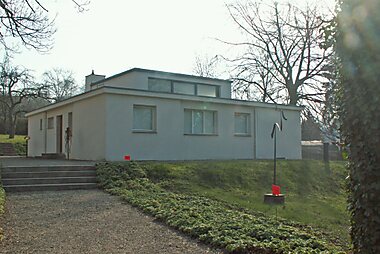
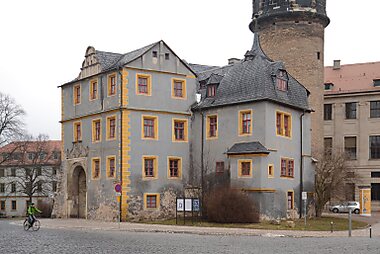
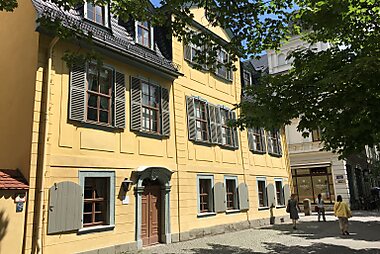

- Goethe-National-Museum/Goethes Wohnhaus is the house on Frauenplan where Goethe lived for most of his time in Weimar. You see his study, his collections and the garden.
- Schillers Wohnhaus is where Friedrich Schiller lived in his last years. He wrote some of his best-known plays here.
- Herzogin-Anna-Amalia-Bibliothek is famous for its Rococo Hall. A fire damaged the library in 2004, and the hall was later restored.
- Stadtschloss was the home of the ruling dukes. It now holds art collections and historic rooms.
- The Bauhaus Museum Weimar on Theaterplatz tells the story of the school's first years. Haus am Horn is a Bauhaus model house near the park.
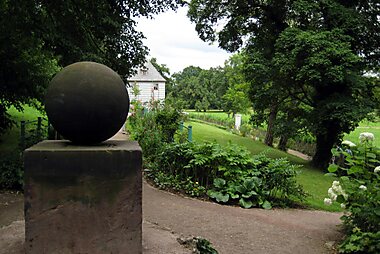
- The Park an der Ilm is the city's main green space. Goethes Gartenhaus stands in the park and was an early home of Goethe.
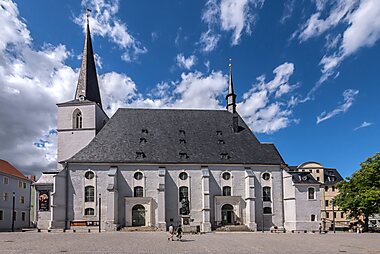
- Stadtkirche St. Peter und Paul is the main church of the old town. It has an altarpiece by Lucas Cranach and the grave of the writer Johann Gottfried Herder.
- Gedenkstätte Buchenwald is a memorial and museum on the former Nazi concentration camp site on the Ettersberg hill. It is about 8 km from the centre and needs at least half a day.
Polecane zestawienia


Czego warto doświadczyć
- Walk the Park an der Ilm on a summer evening. Locals picnic and read on the lawns.
- Book an evening at the Deutsches Nationaltheater. It still stages plays, opera and concerts.
- Visit the Christmas market on the Markt in Advent.
Wycieczki i aktywności
Weimar — Mapa

Wycieczki jednodniowe
Weimar is in the middle of Thuringia, so many good towns are close by.
- Palaces near the city: Schloss Tiefurt is about 4 km from the centre and Schloss Ettersburg is about 7 km away. Both were summer residences of the ducal court.
- Erfurt is under 30 minutes by regional train. It has a medieval old town, a cathedral hill and the Krämerbrücke, a bridge lined with houses.
- Jena is about 30 minutes by train. It is a university town with a strong science tradition.
- Eisenach is about 1 hour by train. Above the town stands the Wartburg, a UNESCO castle where Martin Luther translated the New Testament.
- Naumburg is about 1 hour by train. It is known for its medieval cathedral and its famous statues.
- Leipzig is about 1 to 1.5 hours by train. It is a large city with a rich music history and many museums.
Gdzie warto się udać
Other destinations in Thuringia:
- Erfurt is the state capital, close to Weimar.
- Thuringian Forest is the area for hiking in the hills.
- Saalfeld is a small town in the south-east of the state.
- Suhl is a town on the edge of the Thuringian Forest.
Jak dotrzeć
- By air: Leipzig/Halle (LEJ) is a practical airport with international flights. Berlin (BER) and Frankfurt (FRA) also work. From all of them, take a train. Most routes go via Erfurt or Leipzig.
- By train: Regional trains connect Weimar with Erfurt, Jena and Leipzig. Book on Deutsche Bahn.
- By road: The A4 motorway runs close to the city.
Poruszanie się na miejscu
- On foot: Most sights in the old town are within a 10 to 15 minute walk of each other. Streets are cobbled in many places, so wear comfortable shoes.
- City buses: All lines meet at Goetheplatz. Several lines run from there to the main station. Tickets are sold at ticket points in the centre and at the main station. The Weimar Card includes free rides on city buses. See City bus information.
- Cycling: Cycling is practical for trips outside the centre, such as along the Ilm valley.
Prowadzenie samochodu
- Is a car worth it?: Not for the city. The old town is small and mostly pedestrian. A car helps only for countryside trips.
- Parking: Use a car park at the edge of the old town and walk in.
Jedzenie i napoje
Look for Thuringian bratwurst and Thuringian dumplings, called Klöße.
Cafés and restaurants cluster around the Markt, Frauenplan and Schillerstraße. Choose a place with a menu of regional dishes.
Bezpieczeństwo i zdrowie
Weimar is a safe city for visitors. Keep an eye on your bags in crowds at festivals and on busy trains.
Cobbled streets are uneven. Comfortable shoes help.
Historia
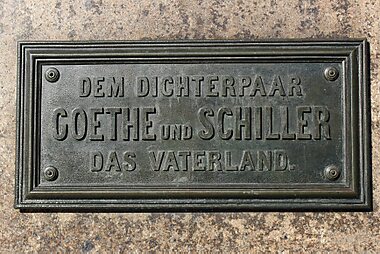
Weimar became a centre of German literature in the late 1700s. Goethe came here in 1775 at the invitation of the duke. Schiller, Herder and Wieland followed. The statue of Goethe and Schiller in front of the theatre, Goethe-Schiller-Denkmal, is a symbol of this period.
In 1919 the German National Assembly met in the Deutsches Nationaltheater and wrote a new constitution. The period that followed is called the Weimar Republic. In the same year, Walter Gropius founded the Bauhaus school. Bauhaus-Universität Weimar still works in buildings of the original school. The Bauhaus later moved to Dessau.
The Nazis built Buchenwald concentration camp on the Ettersberg hill in 1937. Today the memorial is a place for learning and remembrance.
Informacje o kraju
Quick practical facts for Germany at a glance:
- Waluta
- euro EUR € · Płatności kartą · Zazwyczaj akceptowane
- Numery alarmowe
- 112 Pogotowie ratunkowe · Straż pożarna
- Elektryczność
- 230 V · 50 HzTyp C / Typ F
- Języki
- niemiecki
- Woda z kranu
- Zdatna do picia
- Ruch drogowy
- Prawostronny
- Numer kierunkowy
- +49


Weimar – zaplanuj swoje dni
Zmień miejsca z tego przewodnika w prawdziwy plan podróży z inteligentnym wyznaczaniem tras, szacowanym czasem i wszystkim, czego potrzebujesz na udaną wycieczkę.


Powiązane cele podróży

Data: © OpenStreetMap contributors, Wikidata, Wikipedia, Tripomatic, Official websites, geoBoundaries (CC BY 4.0). Tours by GetYourGuide. We earn commission from bookings. Travel guide generated with AI.
Zaplanuj wycieczkę z Tripomatic
- Planowanie z asystentem AIZyskaj gotowy plan dnia jednym stuknięciem, pozwól AI rozmieścić miejsca z listy życzeń w Twojej wycieczce lub zaplanuj wszystko na czacie.
- Ostrzeżenia podróżneOficjalne komunikaty, trudne warunki pogodowe, strajki i zagrożenia naturalne dla miejsc w każdym dniu wycieczki.
- Dni wolne od pracy i wydarzeniaSprawdzaj święta, festiwale i dni zamknięcia w trakcie wycieczki oraz ich wpływ na Twoje plany.
- Szacowanie kosztówZestawienia kosztów wycieczki oparte na sztucznej inteligencji, dzięki którym poznasz budżet przed wyjazdem.
- Wycieczki i biletyRezerwuj wycieczki z przewodnikiem, bilety wstępu bez kolejki i aktywności bezpośrednio w swoim planie.