


Bari
Bari is the capital of Apulia and a large working port on the Adriatic Sea. Most visitors arrive here first, by plane, train or ferry, and many use it as a base for the rest of the region. It deserves a few nights of its own. The compact old town sits on a small peninsula, with Romanesque churches, a Norman castle and lanes where daily life still happens on the street.
Bari is also a major pilgrimage city. The relics of Saint Nicholas have rested here since 1087, and Catholic and Orthodox pilgrims come from all over Europe. Next to the old town, the grid of the 19th-century Murat district holds the main shopping streets, the opera house and a long seafront promenade. Food is a big reason to come: fresh pasta made by hand, raw seafood and cheap street snacks.

Bari – A planear uma viagem?
Cria o teu itinerário dia a dia na app Tripomatic.


Quando visitar
Late spring and early autumn are the best times to visit, with warm days and a sea that is good for swimming from June to October. July and August are hot and humid, and the city beaches get crowded. Winters are mild and fairly wet, and some days are windy.
The biggest event of the year is the Feast of Saint Nicholas (Festa di San Nicola) on 7–9 May. It marks the arrival of the saint's relics in 1087. A historical parade in medieval costume crosses the old town, the saint's statue is taken out to sea on a boat, and the celebrations end with fireworks. Book a room early for these days. A second, smaller feast takes place on 6 December.
Melhor altura para visitar: maio, junho, julho, agosto, setembro, outubro
Principais atrações


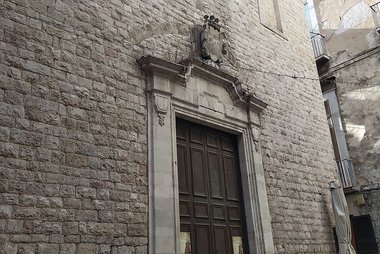

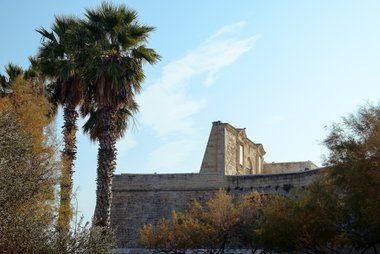

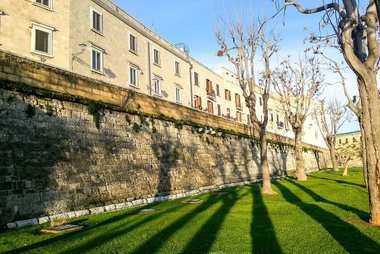
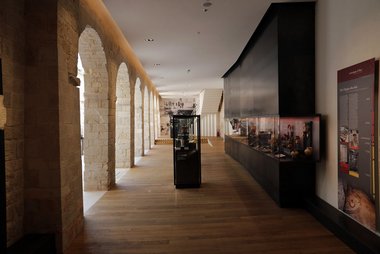
Most of Bari's sights are inside Bari Old Town, a maze of narrow lanes, courtyards and small churches that is easy to explore on foot in a day.
- Basilica of Saint Nicholas is the city's most important church and a model of Apulian Romanesque style. The crypt holds the tomb of Saint Nicholas, and you will often see Orthodox pilgrims praying there.
- Cattedrale di San Sabino is the city's cathedral, plainer and calmer than the basilica. Its crypt holds the relics of Saint Sabinus, and an underground area shows the remains of earlier churches.
- Norman-Swabian Castle of Bari guards the edge of the old town behind a moat. Inside are exhibitions and a large collection of plaster casts of carvings from medieval churches across Apulia.
- Bari City Walls are the old sea walls on the eastern side of the old town. A walkway on top runs from the Fortino to Santa Scolastica, with wide views of the sea.
- Infamous Column stands in Piazza Mercantile, the old town's main square. Debtors were once tied to it and shamed in public.
- Fortino Sant'Antonio is a small fort at the tip of the sea walls, with views back over the old harbour and the seafront.
- Museo Archeologico di Santa Scolastica sits in a bastion at the northern tip of the old town. It shows finds from Bari's past, from prehistory to the Middle Ages.
- Petruzzelli Theatre is Bari's grand opera house on Corso Cavour, in the Murat district. It burned down in 1991 and reopened in 2009 after a long restoration.
- Pinacoteca Metropolitana "Corrado Giaquinto" is the city's main art gallery, on the seafront. It shows art linked to Apulia, from medieval works to 20th-century Italian painting.
Listas em destaque

Bari's Absolute Essentials
Bari combines its maritime heritage with significant religious and artistic landmarks. This selection spans the 12th-century Romanesque architecture of San Sabino and the 19th-century Faro Punta San Cataldo, one of Italy's tallest lighthouses. It highlights the city's dual nature, featuring the modern international airport alongside the historic Porto Vecchio, where traditional fishing practices continue. Cultural sites like the Pinacoteca Giaquinto showcase regional art, while local culinary institutions provide a taste of authentic Apulian pastries and pizza.
12 lugares
Bari's Sacred Sites
Bari's religious landscape spans centuries of architectural evolution, from the 12th-century Apulian Romanesque cathedral in the Old Town to rural chapels and modern parish hubs. This collection highlights the city's diverse spiritual sites, including medieval structures preserved in industrial zones, deconsecrated ruins, and active community centers that serve as landmarks across the metropolitan districts.
20 lugares
Parks and Gardens
Bari's green landscape ranges from the historic 19th-century Piazza Umberto I to the extensive Pineta San Francesco alla Rena pine forest. The University of Bari maintains specialized collections at the Orto Botanico and the Earth Sciences Museum garden. Coastal areas like Pane e Pomodoro offer seaside greenery, while residential districts like Poggiofranco and San Pasquale feature local community parks such as Giardino Michele Campione and Giardini Louis Braille, providing Mediterranean flora and shaded walkways across the city.
20 lugaresO que experienciar
Some of the best moments in Bari happen in its streets and at the water's edge.
- Watch the pasta makers: On Strada Arco Basso, near the castle, local women shape orecchiette by hand at tables outside their front doors. Come in the morning to see them at work.
- Eat raw seafood on the pier: Every morning, fishermen sell sea urchins, octopus and other raw seafood at the small fish market on Molo San Nicola, near Teatro Margherita. People eat standing at the sea wall. Go early, and skip it if you have a sensitive stomach.
- Join the evening walk: In the evening, locals stroll along the shopping streets of the Murat district and the seafront promenade. Join them, then stop for a drink in a square of the old town.
- Take a city swim: In summer, Pane e Pomodoro, a free sandy beach south-east of the centre, is the easiest place for a quick swim without leaving the city.
- Follow the Saint Nicholas feast: If you are here on 7–9 May, follow the costume parade and watch the boats escort the saint's statue out to sea.
Excursões e atividades
Bari — Mapa

Passeios de um dia
Bari has good train links along the coast and inland, so many of Apulia's best places are easy day trips without a car.
By the sea
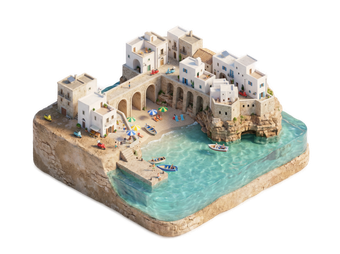
- Polignano a Mare — about 30 minutes by train. A small town with white houses on top of high cliffs and a famous beach in a narrow cove.
- Monopoli — about 30–45 minutes by train. A busy fishing harbour and a pretty old town with sea walls.
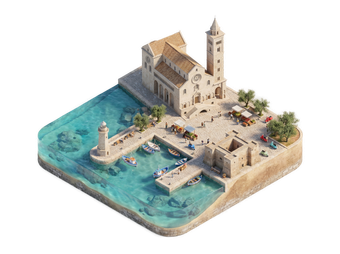
- Trani — about 30–40 minutes by train. Its Romanesque cathedral stands right at the edge of the sea, next to a lively harbour.
Inland
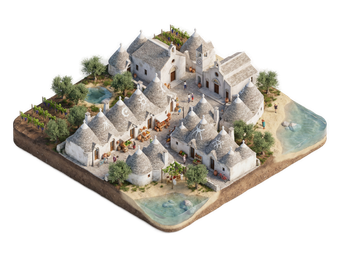
- Alberobello — about 1 hour by car, or about 1.5–2 hours by Ferrovie del Sud Est train, often with a change. A UNESCO town of trulli, the white houses with cone-shaped stone roofs.
- Castellana Grotte — under an hour by car, or by train plus a short bus ride. Large show caves with guided tours, a good stop on the way to Alberobello.
- Matera — about 1.5–2 hours by the Ferrovie Appulo Lucane train, often with a change in Altamura. The train leaves from its own station next to Bari Centrale. The UNESCO cave town of the Sassi, in the neighbouring region of Basilicata.
- Ostuni — about 1 hour by train. The "White City" on a hill above olive groves. The station is about 2 km from the town, so take a bus or taxi up.
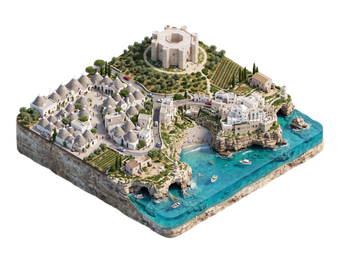
- Castel del Monte — about 1 hour by car. The unusual eight-sided castle of Emperor Frederick II, a UNESCO site. It is hard to reach by public transport, so a car is much easier.
Onde explorar
Bari is the main gateway to Apulia.
- Along the coast: Polignano a Mare and Trani are short train rides away.
- Trulli country and the white towns: Alberobello and Ostuni lie south-east of Bari, in the green hills of the Itria Valley area.
- Further south: the provinces of Brindisi and Lecce cover the Salento peninsula, with Baroque towns and long sandy beaches.
- The Gargano: Vieste and Peschici are seaside towns on the Gargano peninsula in the north of the region, about 3 hours away by car.
Como chegar
- By air: Bari Karol Wojtyła Airport is about 8 km north-west of the centre and has many flights from across Italy and Europe. A train runs from the airport to Bari Centrale in about 20 minutes. The cheaper city bus line 16 takes 45 minutes or more, and a shuttle bus also runs to the centre.
- By train: Bari Centrale is the main station. Direct Frecciarossa and Intercity trains run north along the Adriatic coast to Bologna and Milan, and to Rome. Regional trains continue south to Brindisi and Lecce. Book on Trenitalia.
- By ferry: The port is next to the old town. Ferries sail to Greece (Patras, Igoumenitsa and Corfu), Albania (Durrës), Croatia (Dubrovnik) and Montenegro (Bar). Some routes run only in summer.
- By bus: Long-distance coaches link Bari with Naples, Rome and many towns in southern Italy.
Como se deslocar
- On foot: The old town, the Murat district and the seafront are next to each other and easy to walk. Bari Centrale is about a 15-minute walk from the old town. Cars are restricted in the old town lanes.
- City buses: AMTAB runs the city bus network. Buy tickets in the MUVT app, by text message, or at tobacconists and newsstands. You can also buy one from the driver, but it costs a little more. Validate your ticket when you board. Routes and news are on AMTAB.
- Taxis: Taxis wait at the station and at the airport. Some drivers prefer cash, so check before you get in.
- Cycling: The long seafront promenade is good for an easy ride, but the old town lanes are crowded and paved with smooth stone.
Conduzir
- Is a car worth it?: Not for a stay in the city, which is compact and well served by trains. A car is very useful for exploring the countryside and small towns of the region.
- Restrictions: The whole old town is a limited traffic zone (ZTL) with camera-controlled gates. Do not drive in without a permit, or you will receive a fine. Ask your hotel before you arrive if it is inside the zone.
- Parking: Use a paid car park or a park-and-ride car park on the edge of the centre, then walk or take the bus. Street parking in the centre is paid in marked zones.
Comida e bebida
Bari's food is simple, local and cheap. Look for orecchiette con cime di rapa, ear-shaped pasta with turnip tops, and tiella, a baked dish of rice, potatoes and mussels. Raw seafood, or crudo, is a local passion. Street snacks include focaccia barese topped with tomatoes and olives, fried panzerotti filled with tomato and mozzarella, and sgagliozze, squares of fried polenta.
The old town is the best area to eat. Small trattorias and street-food counters line the lanes around Piazza Mercantile and Piazza del Ferrarese, and bakeries sell focaccia by the slice. For raw seafood, head to the morning fish market on Molo San Nicola, or to a seafood restaurant on the seafront. Many restaurants add a small cover charge (coperto) to the bill.
Segurança e saúde
Bari is generally safe for tourists, and the old town is lively and friendly in the evening. Watch for pickpockets in crowds, on buses and around Bari Centrale station. Keep bags and phones away from the street side, because snatch theft from scooters still happens. Do not leave anything visible in a parked car.
In summer, carry water and avoid long walks in the midday heat.
História
Bari was a Roman town and then, for a short time, the seat of an Arab emirate in the 9th century. Later it became the capital of Byzantine southern Italy. The Normans took the city in 1071 after a long siege.
The key moment came in 1087, when sailors from Bari carried the relics of Saint Nicholas home from Myra, in today's Turkey. The city built Basilica of Saint Nicholas to house them, and it became one of the great pilgrimage churches of Europe. In 1098 Pope Urban II held a church council in Bari. Cattedrale di San Sabino was rebuilt in the late 12th century, in the same Romanesque style.
The Normans built a castle, which was destroyed in 1156. Emperor Frederick II rebuilt it by 1233, and today it is Norman-Swabian Castle of Bari. Centuries later, Queen Bona Sforza of Poland lived there and died in the castle in 1557.
In 1813, Joachim Murat, the French-appointed king of Naples, started a new town outside the old walls. Its straight streets form the Murat district you walk through today. In the 1930s the city built its long seafront promenade. During the Second World War, a German air raid in December 1943 hit Allied ships in the harbour and caused heavy loss of life.
Factos sobre o país
Quick practical facts for Italy at a glance:
- Moeda
- Euro EUR € · Pagamentos com cartão · Amplamente aceite
- Números de emergência
- 112
- Eletricidade
- 230 V · 50 HzTipo C / Tipo F / Tipo L
- Idiomas
- italiano
- Água da torneira
- Própria para beber
- Sentido de condução
- Direita
- Indicativo telefónico
- +39


Bari – Planeia os teus dias
Transforma os lugares deste guia num verdadeiro itinerário, com rotas inteligentes, estimativas de tempo e tudo o que precisas para uma viagem perfeita.


Destinos relacionados

Data: © OpenStreetMap contributors, Wikidata, Wikipedia, Tripomatic, Official websites, geoBoundaries (CC BY 4.0). Tours by GetYourGuide. We earn commission from bookings. Travel guide generated with AI.