


Maribor
Maribor is Slovenia's second-largest city, set on both banks of the Drava River in the north-east of the country. It is the main town of Slovenian Styria, a region of vineyard hills, and the forested Pohorje range rises straight from its southern edge. The compact old town is relaxed and easy to walk, with a lively riverside, wine bars and squares lined with cafés.
Most visitors come for a mix of city sights, wine and outdoor activity. You can see the old town in a day, taste local wine in the evening and take the cable car up Pohorje to ski in winter or ride bike trails in summer. Two or three nights are enough for the city, and more if you want to explore the wine roads or nearby towns. Maribor also works well as a stop between Ljubljana, Graz and Zagreb.

Maribor – Planifici o călătorie?
Creează-ți itinerarul zi de zi în aplicația Tripomatic.


Când să vizitezi
Late spring and September are the most pleasant times to visit, with mild weather for walking and wine tasting. July and August are warm and sometimes hot, with afternoon thunderstorms. Autumn brings the grape harvest and wine events in the hills around the city. Winter is cold and grey in town, but it is ski season on Pohorje.
The biggest annual event is Festival Lent, Slovenia's largest open-air summer festival. For about nine days from late June into early July, concerts, theatre, dance and street performances fill the riverbank and the old town.
Cea mai bună perioadă de vizitare: mai, iunie, septembrie
Obiective turistice de top

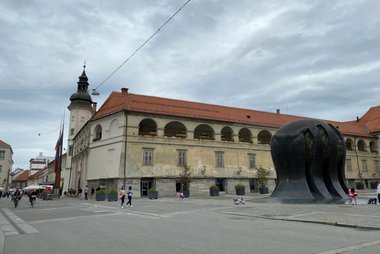



Old Vine grows on the facade of a house on the Lent riverside and is recognised by Guinness World Records as the oldest vine in the world. It is more than 400 years old and still produces Žametovka grapes every autumn. The house behind it is the Old Vine House, a small museum and tasting room for regional wines.
Main Square is the heart of the old town. Its centrepiece is the Baroque plague column from 1743, built to give thanks for the end of a plague, and the Renaissance Town Hall stands on one side.
Maribor Castle was built in the late 15th century as part of the town's defences and later became a Baroque residence. It houses the Maribor Regional Museum, with a knights' hall, a Loreto chapel and collections on the region's history.
Maribor Cathedral is the city's main church and the seat of the Archdiocese of Maribor. Climb its bell tower for a view over the roofs to Pohorje.
Water Tower is a five-sided stone tower from 1555 on the bank of the Drava. It protected the south-east corner of the old town walls and marks the eastern end of the Lent riverside.
Maribor Synagogue is one of the oldest preserved synagogues in Europe, first mentioned in 1354. It stands in the former Jewish quarter and now holds a museum of Jewish history. Next to it, the 15th-century Jewish Tower was part of the town walls and now houses a photography gallery.
City Park is a large 19th-century park north of the centre, with a promenade, ponds and shady paths. From the park, a short climb leads to Piramida Hill, a vineyard hill with a chapel, the remains of the first Maribor castle and a classic view over the city.
Mariborsko Pohorje is the ski and bike resort on the slopes directly above the city. It is Slovenia's largest ski area, and in summer its forest trails attract hikers and mountain bikers.
Liste recomandate

Maribor Must-Sees
Maribor’s historic center features a collection of medieval fortifications, including the Judgement Tower and the 16th-century Water Tower. The city's architectural heritage is anchored by the Baroque Maribor Castle and the 16th-century Town Hall on Main Square. Religious landmarks range from the Gothic Cathedral of St. John the Baptist to the Franciscan Basilica and one of Europe’s oldest preserved synagogues. Crossing the Drava River, the early 20th-century Old Bridge connects the modern city to the historic Lent district, home to the world's oldest fruit-bearing grapevine.
10 locuri


Maribor Parks and Views
Maribor’s green landscape extends from the central Mestni park, established in the late 19th century, to the vine-covered slopes of Piramida. This selection features urban squares like Slomškov trg, the expansive Betnavski forest on the city’s southern edge, and elevated viewpoints such as Mestni vrh. The list also highlights practical transit points and the local Sunday flea market, providing a comprehensive look at the city's outdoor layout and natural surroundings.
10 locuriCe merită experimentat
Many of Maribor's best moments involve wine, the river or the mountain above the city.
- Taste wine at the Old Vine House: Try local Styrian wines next to the world's oldest vine, then continue to the wine bars along the Lent riverside.
- Join the Old Vine harvest: In late September or early October, the grapes of the old vine are picked in a public ceremony with music and wine events.
- Visit a historic wine cellar: The Vinag cellar runs for about 2.5 km below the city centre, and guided tours end with a tasting.
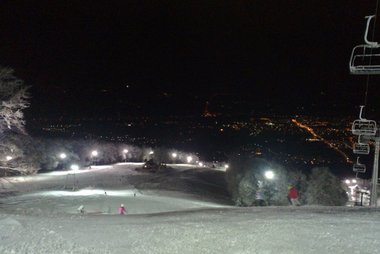
- Ride the bike park or ski on Pohorje: In summer, downhill and flow trails start from the top of the cable car. In winter, the same slopes host ski runs, including night skiing.
- Watch the Golden Fox races: The women's Alpine Ski World Cup slalom and giant slalom, known as the Golden Fox, have been held on Pohorje since 1964. The races usually take place in January.
Tururi și activități
Maribor — Hartă

Excursii de o zi
Maribor is surrounded by wine hills and historic towns, and the best day trips are less than an hour away.
- Ptuj — about 30 minutes by train or car. Slovenia's oldest town, with a castle on a hill above the Drava, old wine cellars and the Kurentovanje carnival in February.
- Jeruzalem wine hills — about 1 hour by car. Steep vineyard slopes, tasting rooms and quiet country roads in the hills near the Croatian border. A car is the practical option here.
- Celje — about 45 minutes to 1 hour by train. A medieval castle ruin above the town, linked to the powerful Counts of Celje.
- Rogaška Slatina — about 1 hour by car. A historic spa town known for its mineral water and its crystal glass.
- Graz — about 1 hour by train across the Austrian border. Austria's second city, with a red-roofed old town and a hill with a clock tower above it.
Ce poți explora
Maribor is the main city of north-eastern Slovenia, and several other destinations in the region are easy to combine with it.
- Historic towns: Ptuj and Celje both have castles and compact old centres.
- Spa towns: Rogaška Slatina is the region's best-known spa.
- Farther east: Prekmurje is the flat, rural region beyond the Mura River, known for its thermal spas and hearty food.
- The capital: Ljubljana is about two hours away by train.
Cum ajungi
- By air: Maribor's own airport has very few scheduled flights. Most travellers fly into Graz Airport in Austria, less than 1 hour away by car, or Ljubljana or Zagreb airports, about 2 hours away.
- By train: Direct trains link Maribor with Ljubljana in about 2 to 2.5 hours, stopping at Celje on the way. Trains from Graz take about 1 hour, with onward connections to Vienna. The main station is a 10–15 minute walk east of the old town. Slovenian Railways
- By bus: Buses from Ljubljana take about 1.5 to 2 hours and are often faster than the train. International coaches also link Maribor with Graz, Vienna and Zagreb. The bus station is a short walk from the railway station.
Cum te deplasezi
- On foot: The old town, the Lent riverside, the castle and the cathedral are all within a 15-minute walk of each other. This is the best way to see the centre.
- City buses: Marprom runs the city bus network. Tap a contactless bank card or phone on the validator when you board. Buses also run to the lower cable car station at the foot of Pohorje. Marprom
- Pohorje cable car: A gondola runs from the lower station on the southern edge of the city up to the ski area and the summer trails.
- Cycling: The city is mostly flat, and riverside paths follow the Drava. Bikes are easy to rent, and the hills around the city have good road and mountain-bike routes.
Condusul
- Is a car worth it?: Not for the city itself, which is compact and walkable. A car is very useful for the wine roads and villages in the hills, where buses are rare.
- Parking: Street parking in the centre is paid and time-limited. For a longer stay, use a public garage near the old town and walk from there.
- Restrictions: Much of the old town is a pedestrian zone closed to general traffic.
- Motorway vignette: Slovenian motorways require an e-vignette. Buy it online before you drive onto a motorway, for example when arriving from Austria.
Mâncare și băutură
Maribor is a wine city first. The hills around it are known for crisp white wines such as Sauvignon Blanc, Welschriesling and Šipon, the local name for Furmint. Many bars along the Lent riverside and in the old town serve wine by the glass, and the Old Vine House offers tastings of wines from the region.
For food, look for Styrian dishes such as pumpkin seed oil on salads, sour soup with pork, and buckwheat or cottage-cheese dumplings. Neighbouring Prekmurje adds gibanica, a rich layered cake with poppy seeds, walnuts, apples and cheese. The best areas to eat are the Lent riverside and the streets around Main Square and Slomšek Square. In the hills, look for a tourist farm or wine tavern with its own food.
Siguranță și sănătate
Maribor is a safe city, and serious crime against visitors is rare. Take normal care with bags and phones in crowds, especially during Festival Lent.
The main risks are outdoors. On Pohorje, weather can change quickly, and some forest trails are poorly marked, so carry a map and start early. Mountain biking on the downhill trails needs proper protective gear. Tap water is safe to drink.
Istorie
Maribor grew up below a castle on Piramida Hill, first built in the 12th century. A market town developed along the Drava and received town rights in 1254. For most of its history it was known by its German name, Marburg, and was part of the Habsburg lands for more than six centuries. The wine trade made it rich.
A Jewish community lived around Maribor Synagogue in the Middle Ages, until the Jews were expelled in the late 15th century. In the same period, Emperor Frederick III built Maribor Castle to strengthen the town against attacks. Towers such as Water Tower and Judicial Tower are what remains of the old walls today.
In November 1918, General Rudolf Maister took control of the city and secured it for the new South Slav state. During the Second World War, Allied bombing destroyed almost half of Maribor. After the collapse of heavy industry in the 1990s, the city turned to culture and tourism, and in 2012 it was a European Capital of Culture.
Date despre țară
Quick practical facts for Slovenia at a glance:
- Monedă
- euro EUR · Plăți cu cardul · Acceptate pe scară largă
- Numere de urgență
- 112
- Electricitate
- 230 V · 50 HzTip C / Tip F
- Limbi vorbite
- slovenă
- Apă de la robinet
- Sigură de băut
- Sens de circulație
- Pe dreapta
- Prefix telefonic
- +386


Maribor – Planifică-ți zilele
Transformă locurile din acest ghid într-un itinerar real, cu trasee inteligente, estimări de timp și tot ce ai nevoie pentru o călătorie perfectă.


Destinații înrudite


Data: © OpenStreetMap contributors, Wikidata, Wikipedia, Tripomatic, Official websites, geoBoundaries (CC BY 4.0). Tours by GetYourGuide. We earn commission from bookings. Travel guide generated with AI.
Planifică-ți călătoria cu Tripomatic
- Planificare susținută de AILasă inteligența artificială să-ți construiască itinerarul, să răspundă la întrebări de călătorie și să-ți organizeze documentele de rezervare în călătorie.
- Alerte de călătorieAvertizări oficiale, fenomene meteo severe, greve și pericole naturale pentru locurile din fiecare zi a călătoriei tale.
- Sărbători legale și evenimenteVezi sărbătorile, festivalurile și închiderile din zilele călătoriei tale și ce înseamnă acestea pentru planurile tale.
- Estimarea costurilorDefalcare a costurilor călătoriei susținută de AI, astfel încât să știi ce buget să aloci înainte de plecare.
- Tururi și bileteRezervă tururi, bilete cu acces prioritar și activități direct în planul tău.