


Гавана
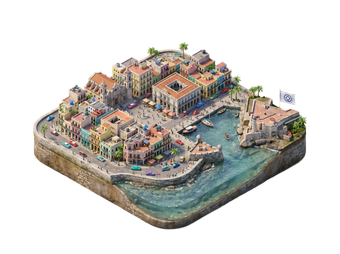
Havana is Cuba's capital and its largest city, set on a deep harbour on the north coast. Its colonial core, the seafront and the old American cars on the streets give the city its character. Many buildings are faded or crumbling, and that is part of what visitors come to see.
The city suits a first visit of three to five nights. You can spend the days on foot in the old squares and museums and the evenings listening to live son, salsa and jazz. Daily life is hard for many Cubans, with shortages and power cuts. Travel here needs more planning and more cash than in most capitals. The writer Ernest Hemingway lived near the city for about 20 years, and his favourite bars and his house are still popular stops.

Гавана — планируешь поездку?
Составь свой маршрут по дням в приложении Tripomatic.


Когда ехать
The best time to visit is from November to April. Days are warm and dry, and the evenings on the Malecón are pleasant. From May to October it is hot, humid and wet, with heavy afternoon showers. This is also the Atlantic hurricane season, and the highest risk is from August to October.
The biggest annual event is the Havana Film Festival in early December. It is the main festival of Latin American cinema, and screenings fill the city's old cinemas. Every two years, the International Ballet Festival also brings major dance companies to the city.
Лучшее время для поездки: январь, февраль, март, апрель, ноябрь, декабрь
Главные достопримечательности
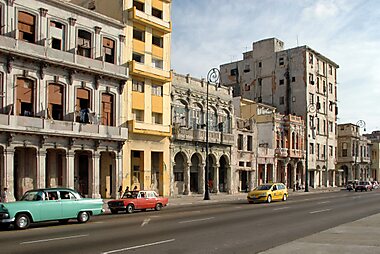
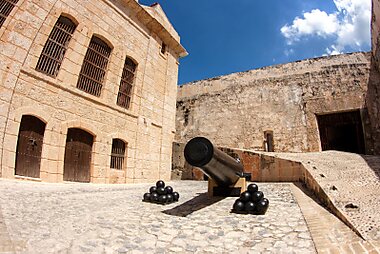
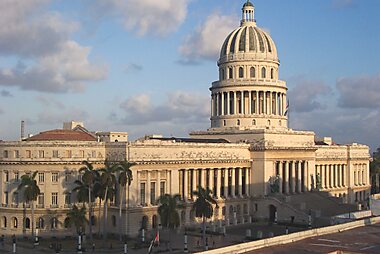
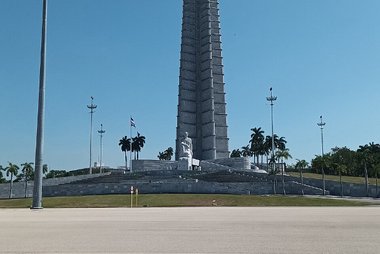

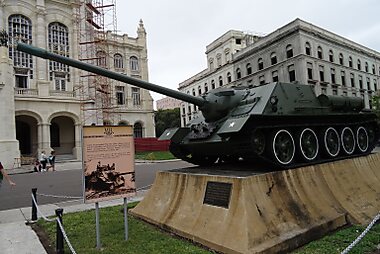
Old Havana is the heart of any visit. Most of the main sights below are within a 30-minute walk of each other.
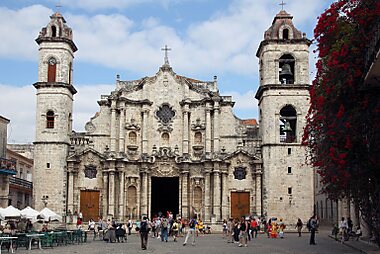
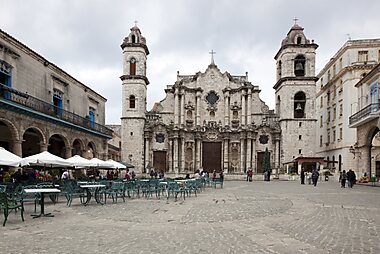
- Cathedral Square is the most beautiful of Old Havana's four main squares. It is framed by the Baroque front of Catedral de San Cristobal de la Habana, which was finished in the 18th century.
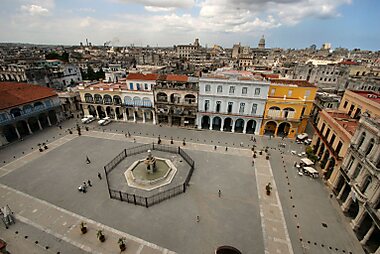
- Plaza Vieja is a wide square lined with restored colonial houses, cafés and balconies. Plaza de Armas and San Francisco Square are a short walk away and complete the classic loop.
- Malecón is the 8 km seafront promenade. Walk it at sunset, when waves break over the wall and local people gather to talk and fish.
- Morro Castle guards the entrance to the harbour. Next to it on the same headland, the huge La Cabaña Fortress has the best view back over the old city.
- Capitolio Nacional is the domed former parliament building from 1929. Guided visits show its grand marble halls.
- Museum of the Revolution fills the former presidential palace. It tells the story of the 1959 revolution from the Cuban government's point of view.
- Museo Nacional de Bellas Artes holds the best collection of Cuban art in the country, from colonial portraits to modern painting.
- Plaza de la Revolución is the huge square where Fidel Castro held mass rallies. The steel portraits of Che Guevara and Camilo Cienfuegos on the ministry buildings are its best-known images.
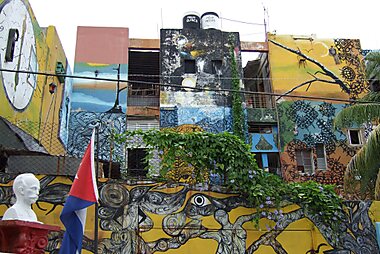
- Callejón de Hamel is a short alley covered in murals and sculptures about Afro-Cuban religion. It is busiest during the Sunday afternoon rumba sessions.
- Hemingway House Havana is the hilltop villa where the writer lived from 1939 to 1960, about 13 km southeast of the centre. His books and hunting trophies are still in place.
Популярные подборки

Havana's Unmissable Icons
Havana’s historic core and coastline showcase a timeline from Spanish colonial rule to revolutionary milestones. This collection features the Baroque grandeur of the Havana Cathedral and the neoclassical National Capitol. Coastal defenses like El Morro and La Cabaña guard the harbor, while the 8-kilometer Malecón seawall serves as the city's social spine. Cultural landmarks include the Afro-Cuban murals of Callejón de Hammel, the legendary mojitos of La Bodeguita del Medio, and the preserved Granma yacht, offering a deep dive into Cuba’s political and artistic heritage.
15 мест


Что обязательно попробовать
- The nine o'clock cannon: every night at 9 pm, soldiers in colonial-style uniforms fire a cannon at La Cabaña Fortress. The shot once marked the closing of the city gates. Arrive by about 8:30 pm for a good place.
- A ride in a classic car: hire an open-top 1950s American car for an hour along the Malecón, through Vedado and to Plaza de la Revolución.
- Sunday rumba: drummers and dancers perform at Callejón de Hamel on Sunday afternoons.
- Live music at night: almost every bar in Old Havana has a band. For a bigger night, Fábrica de Arte Cubano mixes art exhibitions, concerts and a club in an old oil factory in Vedado.
- Ice cream at Coppelia: join local people in the queue at Coppelia, the famous 1966 ice-cream park in Vedado. You pay in Cuban pesos.
- A day with the mosaics: walk the streets of Fusterlandia, where the artist José Fuster covered his house and his neighbours' homes in colourful tiles.
Экскурсии и активности
Гавана — Карта

 Открыть интерактивную карту
Поездки на один день
Most day trips need a taxi or a tour, because public buses are few. Times are one way.
- Cojímar (≈20 min by taxi): a small fishing village east of the city, linked to Hemingway's The Old Man and the Sea.
- Playas del Este (≈30 min by taxi): the nearest long sandy beaches, popular with Havana families at weekends.
- Sierra del Rosario Biosphere Reserve (≈1 h 15 min by car): green hills with the eco-village of Las Terrazas, a river for swimming and old coffee plantation ruins. The waterfall at Soroa is nearby.
- Matanzas (≈1 h 30 min by car): a port city on a bay, known for its many bridges, its Afro-Cuban music and the restored Teatro Sauto.
- Varadero (≈2–2.5 h by car): Cuba's main beach resort, with a very long white-sand beach.
- Viñales (≈2.5 h by car): a valley of tobacco farms and steep limestone hills. It is a long day, so many visitors stay one night.
Куда ещё съездить
Inside the city, Old Havana is the UNESCO-listed colonial centre where most visitors spend their time. Across the bay, Guanabacoa is a quiet old town with strong Afro-Cuban traditions.
For a longer trip around the island:
- Viñales in the west is the place for tobacco farms, hiking and caves.
- Varadero is the classic beach resort east of Havana.
- Cienfuegos is an elegant French-founded city on the south coast.
- Trinidad is a well-preserved colonial town with cobbled streets, a common next stop after Cienfuegos.
Как добраться
- By air: José Martí International Airport (HAV) is about 20 km southwest of the centre, and Terminal 3 handles most international flights. There is no practical bus for visitors. An official taxi takes about 20–30 minutes; agree the fare before you get in and pay in cash.
- Flight changes: Cuba's international airports are without aviation fuel, and only Terminal 3 at Havana's José Martí Airport is operating. Many airlines, including all Canadian carriers, Air France and Iberia, have suspended flights to Cuba. Check that your flight is operating shortly before you travel.
- By bus: intercity buses, including Viazul coaches to Varadero, Trinidad and other cities, have been cut drastically in 2026, and the coach to Viñales has been cancelled. Check whether your route is still running and don't rely on it; a private or shared taxi is the practical alternative.
- By train: long-distance trains are slow and often cancelled, so most visitors use the bus or a shared taxi instead.
- By sea: the few cruise ships that call dock at the Sierra Maestra terminal in Old Havana, next to San Francisco Square.
Транспорт
- On foot: Old Havana and Centro are best seen on foot. Vedado is a longer walk west, or a short taxi ride along the Malecón.
- Taxis: use marked official taxis or the classic American cars that wait near Parque Central and the big hotels. Most taxis do not use a meter, so agree the price before the ride.
- Shared taxis: old cars called almendrones run fixed routes along the main avenues for a small fare in Cuban pesos. They are cheap but crowded, and you need to know where to get off.
- City buses: local buses are very crowded and infrequent, and you pay in Cuban pesos. Most visitors do not use them.
- Ferry: small passenger boats cross the harbour from Old Havana to Regla and to Casablanca, below the Cristo de La Habana statue. Service is irregular.
- Coco-taxis: avoid the small three-wheel scooters. Some are in poor condition, and tourists have been badly injured in them.
Вождение автомобиля
- Is a car worth it?: not for a city stay. Taxis are cheaper than a rental, and fuel shortages make it hard to buy petrol or diesel. A car with a driver is the easier way to do day trips.
- Road conditions: many streets have potholes and poor lighting, and power cuts can switch off traffic lights. Avoid driving at night.
- Parking: there are few car parks. Street attendants watch parked cars for a small tip in pesos. Do not leave anything inside, because thieves also siphon fuel from parked cars.
Еда и напитки
The best food in Havana is in private restaurants called paladares, often in old family homes or on rooftops. They serve Cuban classics such as ropa vieja and roast pork, as well as fresh seafood and more modern dishes. Supplies are irregular, so the menu often has fewer options than it shows. Pay in cash and leave a tip of around 10%.
For drinks, two bars are famous in their own right. Floridita at the end of Calle Obispo is known for its daiquiris, and La Bodeguita del Medio near the cathedral claims to be the home of the mojito. Both are on every tour, so go early in the day. For a wider choice of paladares, look in Old Havana around Plaza Vieja and in the streets of Vedado.
Безопасность и здоровье
Havana is generally safe for visitors, and violent crime against tourists is rare. Petty crime is rising, however, so take normal care at night and in crowds. The UK government currently advises against all but essential travel to Cuba. Check your own government's latest travel advice before you book.
- Scams: friendly English speakers may offer to show you a "cheaper" restaurant, fake cigars or a good exchange rate. Politely say no. Only change money at official CADECA exchange offices; changing money anywhere else is illegal.
- Theft: watch your bag in Old Havana and on the Malecón. Keep valuables locked away, including in private guesthouses (casas particulares).
- Cash: international bank cards, including Visa and Mastercard, do not work in Cuba. Bring enough US dollars or euros in cash for the whole trip, plus some extra for emergencies.
- Power cuts: blackouts can last many hours and leave streets dark. Carry a torch and a power bank.
- Water and health: do not drink tap water; use bottled water. You need travel medical insurance to enter Cuba, and pharmacies often lack basic medicines, so bring what you need.
История
The Spanish moved San Cristóbal de La Habana to this sheltered harbour in 1519. El Templete on Plaza de Armas marks the place of the founding. The city grew rich as the meeting point of the Spanish treasure fleets, and pirate attacks led to the building of Castle of the Royal Force and later Morro Castle.
In 1762 the British captured Havana after a siege. They returned it to Spain a year later in exchange for Florida. Spain then built La Cabaña Fortress, one of the largest colonial fortresses in the Americas, so the city could not be taken again.
After independence in 1902, American money and tourists changed the city. Grand buildings such as Capitolio Nacional and Hotel Nacional de Cuba date from this time, as do the casinos and the classic cars still on the streets. In 1959 Fidel Castro's revolution overthrew the dictator Fulgencio Batista. Most of the city's buildings have changed little since then. In 1982 UNESCO listed Old Havana and its fortifications as a World Heritage Site.
Факты о стране
- Валюта
- кубинский песо CUP · Оплата картой · Предпочтительны наличные
- Электричество
- 110 В · 60 ГцТип A / Тип B
- Языки
- испанский
- Водопроводная вода
- Не пригодна для питья
- Сторона движения
- Правостороннее
- Телефонный код
- +53


Гавана — спланируй свои дни
Преврати места из этого путеводителя в настоящий маршрут с умным расчётом пути, оценкой времени и всем необходимым для отличной поездки.


Похожие направления




Data: © OpenStreetMap contributors, Wikidata, Wikipedia, Tripomatic, Official websites, geoBoundaries (CC BY 4.0). Tours by GetYourGuide. We earn commission from bookings. Travel guide generated with AI.