


Тринидад
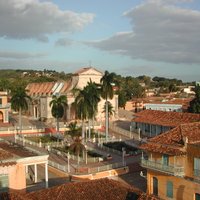
Trinidad is one of the best-preserved colonial towns in the Caribbean. It was founded by the Spanish in 1514 and grew rich from sugar in the 18th and 19th centuries. Today its cobbled streets, pastel houses and red-tiled roofs look much as they did then. Together with the nearby Valle de los Ingenios, the town has been a UNESCO World Heritage Site since 1988.
Two or three nights are enough for most visitors. Spend the days in the old town and the evenings with live music around the main square. Then add a beach afternoon on the coast, a trip into the sugar valley and a waterfall hike in the Escambray mountains. Trinidad sits on the south coast of central Cuba and fits well on a route between Havana, Cienfuegos and the east of the island.

Тринидад — планируешь поездку?
Составь свой маршрут по дням в приложении Tripomatic.


Когда ехать
The dry season from December to April is the best time to visit, with warm, sunny days and cooler nights. From May to October it is hot and humid, with frequent afternoon storms. The hurricane season runs from June to November, with the highest risk from August to October.
In January the town celebrates its founding anniversary with a week of concerts, dance and exhibitions. It is a good time to see local culture at its liveliest.
Лучшее время для поездки: январь, февраль, март, декабрь
Главные достопримечательности



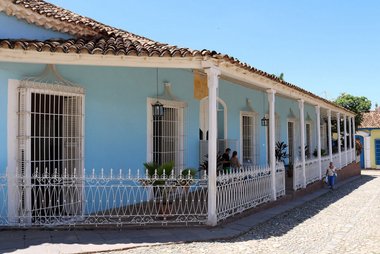
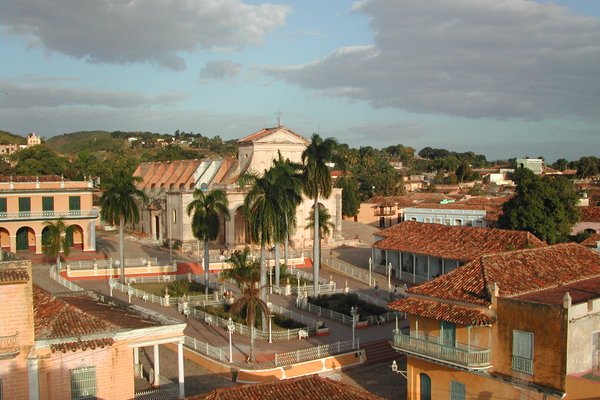
Plaza Mayor is the heart of the old town. Palm trees and small gardens fill the square, and colonial mansions and the town's main church, finished in 1892, stand around it.
Museo Romántico fills the Palacio Brunet on the square, a mansion built in 1812. Its rooms show how Trinidad's sugar families lived, with 19th-century furniture, porcelain and glass.
Museo de Arquitectura Colonial is a short walk away, in the house of the Sánchez Iznaga sugar family. It explains the town's building styles, from carved wooden ceilings to iron window grilles.
The yellow bell tower of the former San Francisco convent is the town's best-known landmark. It now houses the Museo Nacional de la Lucha Contra Bandidos, and its tower gives a view over the roofs to the mountains. The Museo de Historia in the Palacio Cantero also has a lookout tower.
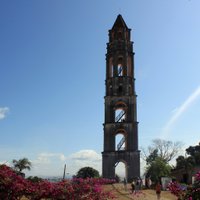
Torre Manaca-Iznaga stands about 15 km east of town in the Valle de los Ingenios. The 45-metre tower was built in the 19th century to watch enslaved people working in the cane fields. Visitors can usually climb it for a wide view over the valley.
Playa Ancón is the main beach of the area, about 13 km south of town. It has white sand and calm water, and a reef offshore for snorkelling and diving.
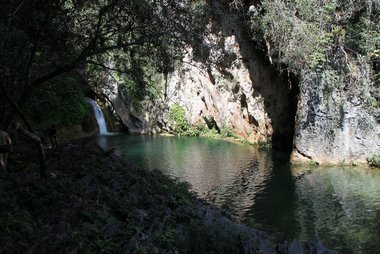
Salto del Caburní is the classic hike in the Topes de Collantes mountains. A forest trail leads down to a tall waterfall and a cold pool where you can swim. The climb back up is steep.
Популярные подборки
Что обязательно попробовать
Trinidad is best known for its music and its slow evenings. These are the things visitors most enjoy doing here.
- Dance on the steps: most evenings, bands play on the wide stone steps next to the church on Plaza Mayor. Order a drink, sit on the steps and join the salsa when you are ready.
- Take a salsa lesson: many local dance teachers give short lessons in their homes or in the music venues of the old town.
- Ride a horse to a waterfall: guided rides through the farmland outside town often stop at a small waterfall with a pool for swimming.
- Snorkel the reef: boat trips from the marina at Playa Ancón visit the reef and small offshore cays for snorkelling and diving. Check locally that trips are running.
Экскурсии и активности
Тринидад — Карта

Поездки на один день
The best trips are close: the coast, the sugar valley and the mountains are all under an hour away. Three cities are worth a longer day out.
- Playa Ancón — about 20 minutes by taxi. Spend a beach day on the peninsula, or stop at La Boca, a small fishing village with a quiet beach about 8 km from town.
- Valle de los Ingenios — about 20 to 30 minutes by car. Visit the Manaca-Iznaga tower and the ruins of old sugar mills and plantation houses across the valley.
- Topes de Collantes — about 45 minutes by car up a steep mountain road, about 20 km away. Hike to waterfalls and natural pools in cool, green forest. Most visitors go with a driver or a tour.
- Cienfuegos — about 1.5 hours by car or bus along the coast. This UNESCO-listed port city has wide streets and French-style buildings on a large bay.
- El Nicho — in the Escambray hills, on the mountain road between Topes de Collantes and Cienfuegos. It has waterfalls and natural pools for swimming.
- Sancti Spíritus — about 1.5 hours by car. The provincial capital is one of Cuba's oldest towns, with a quiet colonial centre and a stone bridge over the Yayabo river.
- Santa Clara — about 2 hours by car. It is known for the memorial and mausoleum of Che Guevara.
Куда ещё съездить
Trinidad's municipality reaches from the coast into the mountains, and two of its areas are destinations of their own.
- Playa Ancón is the beach peninsula south of town, with the area's resort hotels.
- Topes de Collantes is the protected mountain area of the Escambray range, with forest trails and waterfalls.
Further away, Cienfuegos and Sancti Spíritus are the nearest cities, and Havana is the main gateway to Cuba.
Как добраться
- By air: most visitors fly into José Martí Airport in Havana. The drive to Trinidad takes about 4.5 to 5 hours. Santa Clara airport (about 2 hours by car) and Cienfuegos airport (about 1.5 hours) are closer, but check whether they have flights at present.
- Flight changes: Cuba's international airports are without aviation fuel, and only Terminal 3 at Havana's José Martí Airport is operating. Many airlines, including all Canadian carriers, Air France and Iberia, have suspended flights to Cuba. Check that your flight is operating shortly before you travel.
- By bus: Viazul long-distance buses stop in the town centre, but intercity services have been cut drastically in 2026 because of fuel shortages. When they run, the trip from Havana takes about 7 hours, and from Cienfuegos about 1.5 hours. Check whether your route is still running and don't rely on it; a private or shared taxi is the practical alternative.
- By shared or private taxi: shared taxis (colectivos) and private cars are faster than the bus and run on the same routes. Agree the price in advance, pay in cash and confirm the day before.
- Entry: most visitors need a tourist card and must fill in the online D'Viajeros form before arrival. Verify the current rules before travel.
Транспорт
- On foot: the old town is small and best seen on foot. Its streets are made of large, uneven cobblestones, so wear sturdy shoes.
- Bicycle taxis and horse carts: they wait at the edge of the old town and are handy for short rides. Agree the fare first.
- Taxis: use taxis or private drivers for Playa Ancón, the Valle de los Ingenios and Topes de Collantes. Agree the fare in advance and pay in cash.
- Cycling: bicycles can be rented from some guesthouses. The flat ride to the beach is pleasant, but the town's cobbles are hard work.
Вождение автомобиля
- Is a car worth it?: not for the town itself, which is best on foot. For the beach, the valley and the mountains, a taxi or a car with driver is easier than a rental. Rental cars are expensive and often in short supply.
- Fuel: petrol and diesel shortages are severe in 2026, and fuel is rationed. Filling stations may have long queues or no fuel at all, so plan every long drive carefully.
- Mountain road: the road to Topes de Collantes is very steep and winding. Drive slowly and use a low gear on the way down.
- Night driving: avoid it. Roads have little lighting, and you may meet carts, cyclists and animals without lights.
Еда и напитки
The best food is in private restaurants called paladares, many of them in old colonial houses with inner courtyards. Most are in the streets around Plaza Mayor. Look for grilled fish, shrimp and lobster from the coast, as well as Cuban classics with rice and black beans. Supplies are irregular, so menus are often shorter than they look. Pay in cash and leave a tip.
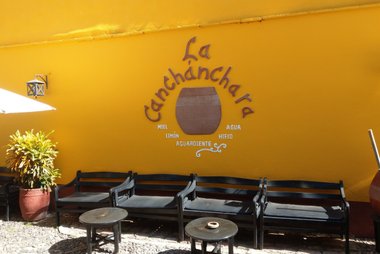
The local drink is the canchánchara, made from cane spirit, honey and lime and served in a small clay cup. Try it at Taberna La Canchánchara, a tavern in a 17th-century house where bands often play in the courtyard.
Безопасность и здоровье
Trinidad is a safe town, and violent crime against visitors is rare. Expect people on the street offering rooms, restaurants, tours or cigars. A polite "no, gracias" is enough. Petty theft does happen, so do not leave bags alone on the beach.
Cuba faces a serious fuel and power crisis in 2026. The national power grid has collapsed several times, and long blackouts affect transport, water, phones and medical care. The UK government advises against all but essential travel to Cuba; check the latest advice before booking.
- Cash: international Visa and Mastercard cards do not work in Cuba, and ATMs do not accept them. Bring enough US dollars or euros in cash for your whole stay, plus a reserve. Change money only at official exchange offices.
- Power cuts: carry a torch and a power bank. Choose a guesthouse with a generator or solar power if you can.
- Water and health: drink bottled water. You need travel medical insurance to enter Cuba; check the current rules before you travel. Pharmacies often lack basic medicines, so bring what you need.
- Mosquitoes: dengue and chikungunya are present in Cuba. Use repellent, especially at dusk.
- Cobblestones: the streets are uneven and slippery after rain. Take care at night, when many streets are dark.
История
The Spanish founded Trinidad in 1514 as one of the first seven towns in Cuba, led by Diego Velázquez. For two centuries it was a small, remote place that lived from cattle and smuggling. Everything changed in the late 18th century, when sugar plantations spread across the Valle de los Ingenios. More than fifty sugar mills worked there at the peak, and enslaved Africans did the work in the fields and mills.
The profits built the mansions around Plaza Mayor, including the Palacio Brunet, now Museo Romántico. In the valley, Torre Manaca-Iznaga is the clearest reminder of how the plantations were controlled. In the second half of the 19th century, wars and falling sugar prices ended the boom. Trinidad became poor and isolated, and little new was built. That is why its colonial streets survived almost unchanged until UNESCO listed the town and valley in 1988.
Факты о стране
- Валюта
- кубинский песо CUP · Оплата картой · Предпочтительны наличные
- Электричество
- 110 В · 60 ГцТип A / Тип B
- Языки
- испанский
- Водопроводная вода
- Не пригодна для питья
- Сторона движения
- Правостороннее
- Телефонный код
- +53

Тринидад — спланируй свои дни
Преврати места из этого путеводителя в настоящий маршрут с умным расчётом пути, оценкой времени и всем необходимым для отличной поездки.


Похожие направления



Data: © OpenStreetMap contributors, Wikidata, Wikipedia, Tripomatic, Official websites, geoBoundaries (CC BY 4.0). Tours by GetYourGuide. We earn commission from bookings. Travel guide generated with AI.