



Dubrovník
Dubrovnik is a walled Adriatic port city built almost entirely from pale limestone. Terracotta roofs pack tightly behind fortifications that still ring the old town. It grew rich for centuries as the independent Republic of Ragusa, a maritime trading power that rivaled Venice. That history is still visible in every marble street and baroque facade. Today it is one of the most visited small cities on the Mediterranean. Travelers come for its intact medieval core, dramatic sea views from the walls, and warm, rocky swimming coves right at the edge of the old streets.
It suits travelers who want a compact, walkable base with a strong sense of history, easy beach access, and day trips to nearby islands and vineyards. The old town is small enough to see on foot in a day, but the surrounding coast, islands, and hills reward staying two or three nights. Summers are hot and crowded with cruise-ship visitors; spring and autumn offer the same views with thinner crowds and gentler weather.

Dubrovník – Plánuješ výlet?
Zostav si itinerár deň po dni v aplikácii Tripomatic.


Kedy navštíviť
Spring (April–May) and autumn (September–October) are mild, sunny, and far less crowded than summer, which is hot and busy with cruise-ship arrivals. Winter is quiet and cool, with many seasonal businesses closed.
Plan around the Dubrovnik Summer Festival, held from mid-July into August, when open-air theater, opera, and classical concerts take over the old town's squares and fortresses, including performances staged inside Tvrđava Lovrijenac.
Najlepší čas na návštevu: máj, jún, júl, september, október
July and August bring the highest heat, with daytime temperatures regularly near 30 °C and little rain; the shoulder months stay warm enough for sightseeing without the midday peak.
Hlavné pamiatky
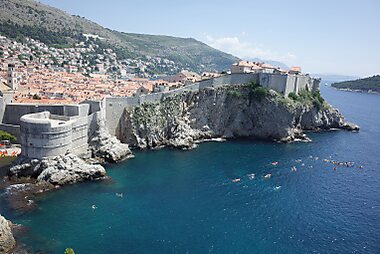
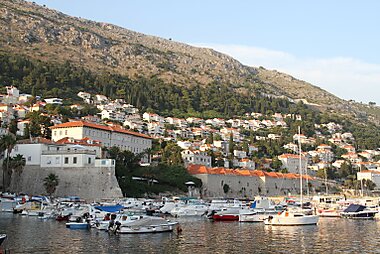

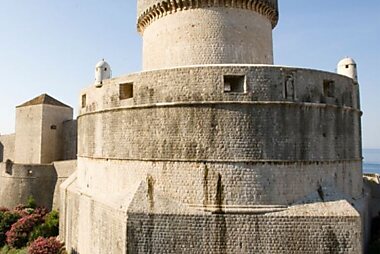

Walls of Dubrovnik form a nearly 2 km loop around the old town and are the city's single best orientation point, with close-up views over terracotta rooftops and the open sea.
Inside the walls, Stari grad Dubrovnik is a dense grid of marble-paved lanes, baroque churches, and stone townhouses that survived a 1667 earthquake and a 1990s siege largely intact.
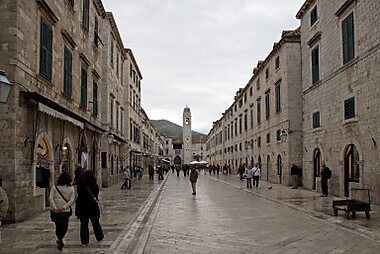
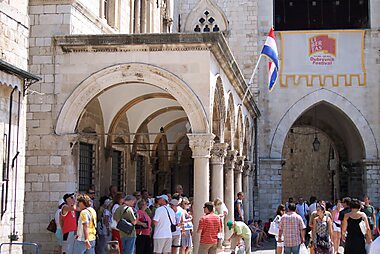
Its spine is Placa - Stradun, the polished limestone main street where locals and visitors both gather, lined with shops, cafes, and the entrances to most of the old town's landmarks.
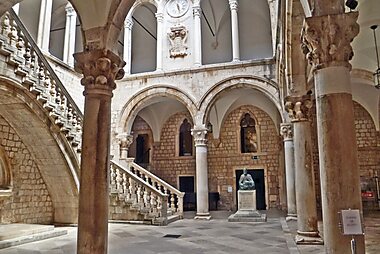
Knežev dvor was the seat of the elected Rector of the old Republic of Ragusa. He governed for just one month at a time and was barred from leaving the building during his term. The palace's Gothic-Renaissance courtyard is one of the city's finest.
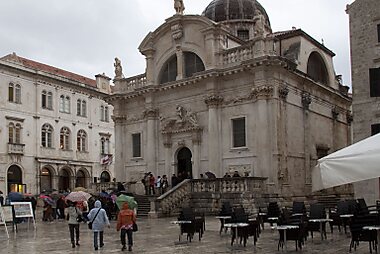
Rebuilt in Baroque style after the same 1667 earthquake, Dubrovnik Cathedral holds a treasury of relics linked to Dubrovnik's patron saint alongside older paintings saved from the original church.
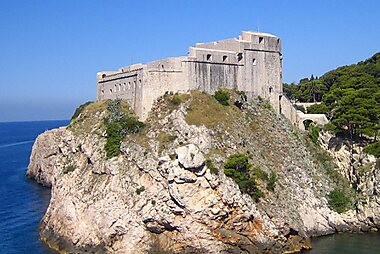
Tvrđava Lovrijenac guards the western approach to the old town from a rocky outcrop outside the walls and doubles as a dramatic open-air stage during the summer festival.
Franciscan Monastery and Old Pharmacy has run a working pharmacy since 1317, one of the oldest in Europe, alongside a small museum of antique medical equipment and a Gothic cloister.
A short ferry ride from the old harbor, Lokrum Island is a forested island nature reserve with a botanical garden, Benedictine monastery ruins, and a shallow saltwater lake known locally as the Dead Sea.
Odporúčané zoznamy


Čo zažiť
- Catch an open-air performance staged inside Tvrđava Lovrijenac during the summer festival, when the fortress becomes a natural amphitheater over the sea.
- Ride the cable car up Žičara Dubrovnik in the late afternoon for sunset views back over the old town and the islands.
- Swim off the flat rocks directly below the city walls, the local alternative to a sand or pebble beach.
- Sea-kayak along the base of the walls in the early morning, before the water fills with tour boats.
Prehliadky a aktivity
Dubrovník — Mapa

 Otvoriť interaktívnu mapu
 Jednodňové výlety
Dubrovnik sits close to islands, wine country, and a neighboring country, so a rental car or a single ferry ticket opens up plenty of one-day options.
- Cavtat — about 30 minutes by bus or car south along the coast, this smaller waterfront town has its own promenade and old cemetery chapel, with far fewer crowds than Dubrovnik.
- Arboretum Trsteno — roughly 30 minutes by car or local bus, a 16th-century noble garden with centuries-old plane trees and an aqueduct-fed fountain; several Game of Thrones scenes were filmed here.
- Elaphiti Islands — car-free islands 20–45 minutes away by ferry, with quiet pine forests, swimming coves, and small fishing villages; Koločep, Lopud, and Šipan can be combined into a single island-hopping day.
- Pelješac Peninsula — about 1.5–2 hours by car, Croatia's main red-wine region, known for Plavac Mali wines, oyster farms, and the walled town of Ston with its own long defensive walls.
- Mostar, Bosnia and Herzegovina — around 2.5 hours by car or organized bus, a flagship cross-border trip to see the rebuilt Ottoman-era Stari Most bridge over the Neretva river; bring a passport for the border crossing.
Kam sa vybrať
Dubrovnik anchors a wider stretch of the Dalmatian coast worth exploring beyond the city itself.
For wine and slower village life, head onto the Pelješac Peninsula, a long, mountainous finger of land planted with vineyards and edged by quiet coves.
For nature and hiking, Mljet is largely covered by a national park built around two saltwater lakes ringed by pine forest.
For another walled historic town, Korčula has its own compact old core, said by local tradition to be the birthplace of Marco Polo.
Closer to home, the island of Koločep makes an easy half-day trip without a car, reachable directly from Dubrovnik's old harbor.
Ako sa tam dostať
- By air: Dubrovnik Airport (DBV), also known as Čilipi, is the main gateway with scheduled flights from across Europe. It sits about 19 km southeast of the old town; the Atlas shuttle bus to the old town takes roughly 30–40 minutes, and a taxi takes about 25–30 minutes.
- By train: Croatia's rail network does not reach Dubrovnik — there is no direct passenger train service. Travelers coming by rail connect to a bus in Split or another coastal city for the final leg.
- By bus: Long-distance coaches connect Dubrovnik to Split (about 3–4.5 hours), Zagreb (around 9–11 hours), and cross-border routes to Mostar and Kotor, arriving at the main bus station near the port.
- By ferry: Jadrolinija and other operators run coastal and island ferries into the Old Port and the Port of Gruž, including seasonal connections along the Dalmatian coast.
Doprava na mieste
- Public transit: Libertas city buses reach the old town, Lapad, and the beaches; buy single tickets from the driver or a nearby kiosk, or use the Libertas mobile app for a lower fare.
- Taxi / ride-hailing: Uber and Bolt both operate in Dubrovnik alongside metered taxis.
- On foot: the old town is closed to cars and walkable in well under an hour end to end, though the streets are steep, stepped, and paved in smooth, slippery limestone.
Šoférovanie
- Is a car worth it?: not for the old town itself, which is car-free and best explored on foot; a car pays off for reaching Pelješac, Konavle, or other coastal villages independently.
- Parking: paid garages and lots cluster near the Pile and Ploče gates outside the walls; street parking in the surrounding neighborhoods is limited and priced by the hour, especially in summer.
- Restrictions: the old town's streets are permanently closed to private vehicles, not just during peak hours.
Jedlo a pitie
Dalmatian coastal cooking dominates the menu here: fresh grilled fish and shellfish, black risotto colored with cuttlefish ink, and pašticada, a slow-braised beef dish served with gnocchi on special occasions. Look out for rozata, a caramel custard dessert particular to Dubrovnik.
For a good meal, head to the konobas (family-run taverns) tucked into the side streets just off Placa - Stradun, or the harborside restaurants around the Old Port for fresh seafood with a water view.
Bezpečnosť a zdravie
Dubrovnik is a safe destination for tourists, with violent crime rare. The main risks are pickpocketing in dense cruise-ship crowds along Stradun and around the cable car queue, and overpriced menus at a handful of tourist-trap restaurants near the main gates — check prices before sitting down.
The old town's polished limestone streets become genuinely slippery when wet, so wear shoes with grip if rain is forecast. Midday heat and crowding peak when several cruise ships are in port at once; visiting the walls and main sights early in the morning avoids both.
História
For over four centuries, Dubrovnik was the independent Republic of Ragusa. This merchant city-state survived through diplomacy and trade rather than military strength, paying tribute to larger powers in turn to keep its autonomy. It was one of the first states in Europe to abolish the slave trade, in 1416.
The republic's wealth built the fortifications still standing today: Walls of Dubrovnik were expanded over centuries into one of the most complete defensive systems in Europe, while Knežev dvor housed a government that deliberately limited any single person's power, electing a new Rector every month.
A massive earthquake in 1667 destroyed much of the city, including the original cathedral, and forced a wholesale baroque rebuilding. Three centuries later, Dubrovnik came under siege during the 1991–92 Croatian War of Independence. Shelling damaged roughly two-thirds of the old town's buildings, since carefully restored using traditional materials and techniques. The old town has been a UNESCO World Heritage Site since 1979.
Fakty o krajine
Quick practical facts for Croatia at a glance:
- Mena
- euro EUR € · Platby kartou · Široko akceptované
- Tiesňové čísla
- 112
- Elektrina
- 230 V · 50 HzTyp C / Typ F
- Jazyky
- chorvátčina
- Voda z vodovodu
- Pitná
- Jazdná strana
- Vpravo
- Predvoľba
- +385


Dubrovník – Naplánuj si jednotlivé dni
Premeň miesta z tohto sprievodcu na skutočný itinerár s inteligentným plánovaním trás, časovými odhadmi a všetkým potrebným pre dokonalý výlet.




