



Vroclav
Wrocław sits on the Oder River in southwestern Poland, spread across a dozen islands and linked by well over a hundred bridges. Centuries of Bohemian, Habsburg, and Prussian rule left a mix of Gothic brick churches, Baroque halls, and grand German-era boulevards, all rebuilt after severe wartime damage and repopulated by Poles resettled from the east. That layered past gives the city a character unlike anywhere else in Poland.
It suits a traveler who wants a compact, walkable old town with real depth: a colorful market square, a cathedral island, and a strong food and student scene, without the crowds of Kraków or Warsaw. Nobel-winning physicist Max Born and philosopher Edith Stein were both born in the city.

Vroclav – Plánuješ výlet?
Zostav si itinerár deň po dni v aplikácii Tripomatic.


Kedy navštíviť
Spring and early autumn are mild and pleasant for walking. Summer is warm with occasional storms. Winter is cold and often snowy, but brings one of Poland's largest and most popular Christmas markets to the Rynek from late November through December.
Najlepší čas na návštevu: jún, august, september
July and August bring the warmest, sunniest days, good for the river paths and the zoo. December's market is worth timing a trip around if you don't mind the cold.
Hlavné pamiatky
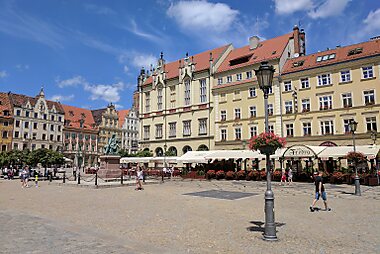
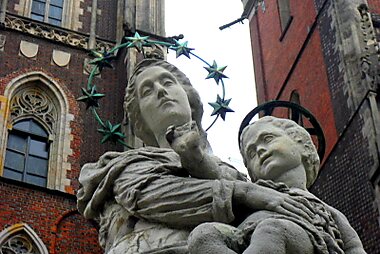



Market Square is one of the largest medieval market squares in Europe, ringed by colorful merchant houses and the Gothic Old Town Hall. Sit at a café here to watch the city go by.
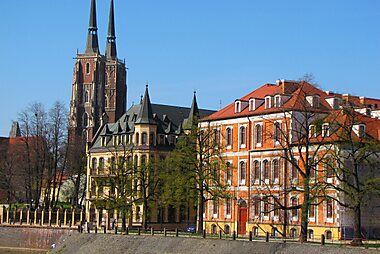
Ostrów Tumski is Wrocław's oldest quarter, a quiet island of cobbled lanes and church spires where the city was founded over a thousand years ago.
On the island, Archikatedra św. Jana Chrzciciela anchors the skyline; climb its tower for a wide view over the Oder and the rooftops of the old town.
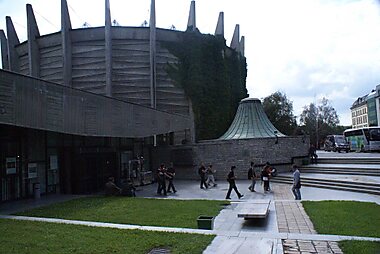
Racławice Panorama houses a vast 360-degree painting of the 1794 Battle of Racławice, displayed in a purpose-built rotunda that makes you feel surrounded by the battle itself.
Centennial Hall is a UNESCO-listed concrete dome from 1913, one of the first large reinforced-concrete buildings in the world, set in parkland with fountains and gardens.
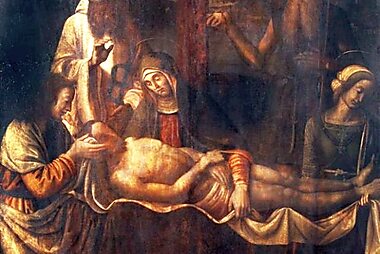
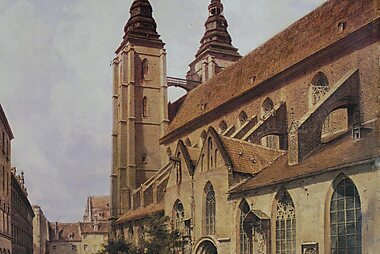
Bazylika św. Elżbiety Węgierskiej is a towering Gothic brick basilica just off the market square, worth a look for its scale and its surviving medieval altarpieces.
National Museum covers Silesian art from medieval altarpieces to 20th-century painting, a good stop for a rainy afternoon.
Wrocław Zoological Garden is one of Poland's oldest and largest zoos, with the Africarium, a large indoor complex dedicated entirely to ocean and African wildlife.
Odporúčané zoznamy


Wrocław's Markets & Top Eats
Wrocław’s culinary landscape centers on the historic Hala Targowa, a 20th-century market hall known for its innovative concrete parabolic arches and local food stalls. This selection includes traditional Polish dining rooms like Pod Fredrą and Konspira, which features 1980s anti-communist themed decor. Explore the Jewish Quarter’s vintage-style cafes, craft beer spots like Szynkarnia, and seasonal riverside beer gardens like ZaZoo. These locations highlight the city's blend of Silesian heritage, international influences, and unique historical settings.
10 miestČo zažiť
- Hunt for the dwarfs. Hundreds of small bronze dwarf statues (krasnale) are hidden along Wrocław's streets, each in its own pose. The tradition began as a symbol of the 1980s Orange Alternative protest movement and has grown into a city-wide scavenger hunt anyone can join.
- Climb the tower for a rooftop view. Katedra Świętej Marii Magdaleny has a small footbridge linking its two Gothic towers, known as the Witches' Bridge — climb up for a close-up view of the old town roofline.
- Browse the restored neon signs. Wrocławskie Neony displays original neon shop signs from Poland's communist era, lit up after dark.
- Punt or paddle the Oder. In summer, rent a kayak or take a short boat cruise around the islands near Ostrów Tumski for a different view of the bridges and church spires.
Prehliadky a aktivity
Vroclav — Mapa

 Otvoriť interaktívnu mapu
 Jednodňové výlety
Lower Silesia has castles, mountains, and one major UNESCO site within easy reach of Wrocław.
- Świdnica — ≈1 h by train. Home to the timber-framed Church of Peace, a UNESCO World Heritage site built in the 17th century.
- Książ Castle — ≈1.5 h by train and bus (via Wałbrzych). One of the largest castles in Poland, set above a wooded gorge, with underground wartime tunnels open to visitors.
- Karpacz — ≈2 h by bus. A base for hiking Śnieżka, the highest peak in the Sudetes, and home to a wooden Norwegian stave church moved here piece by piece in the 19th century.
- Jelenia Góra — ≈2 h by train. A relaxed mountain-valley town and gateway to the Karkonosze National Park and the Palaces and Gardens Valley.
- Klodzko — ≈1.5–2 h by train. A fortress town with an underground tunnel network beneath its citadel, open for tours.
Kam sa vybrať
Wrocław is the gateway to the Sudetes, a low mountain range along the Czech border with spa towns and hiking trails.
Heading southwest into the mountains: Jelenia Góra anchors the Karkonosze foothills, while Karpacz and Szklarska Poręba are the region's main hiking and ski bases.
For a slower, spa-town pace, Ladek-Zdroj is Poland's oldest health resort, and Klodzko combines a hilltop fortress with an old riverside town.
Ako sa tam dostať
- By air: Wrocław Copernicus Airport (WRO) has scheduled flights from across Europe and sits about 10 km west of the centre. Bus 106 (daytime) or 206 (nighttime) reaches the main train station in around 45 minutes; a taxi takes about 20 minutes.
- By train: Wrocław Główny station has frequent connections to Warsaw, Kraków, Poznań, and Łódź, plus direct trains to Berlin and Prague.
- By bus: Long-distance coaches serve most major Polish and nearby German cities from the terminal next to Wrocław Główny station.
Doprava na mieste
- Public transit: Trams and buses run by MPK Wrocław cover the whole city. Buy a ticket through the mobile app before boarding, or from a stop machine; some newer vehicles accept a contactless bank card or phone directly on board. MPK Wrocław
- Taxi / ride-hailing: Bolt and Uber both operate widely.
- On foot / cycling: The old town and Ostrów Tumski are flat and easy to walk. A city bike-share system covers the wider centre well.
Šoférovanie
- Is a car worth it? Not for the city itself — the old town is compact and walkable, and parking is limited. A car is useful if you plan to explore the Sudete mountains or several small towns in one trip.
- Parking: The centre is a paid parking zone, charged by the hour on weekdays via meter or the SkyCash/mPay apps. Cheaper guarded car parks ring the old town just outside the zone.
- Restrictions: Much of the market square and the streets around it are pedestrian-only.
Jedlo a pitie
Wrocław's kitchen leans Silesian: look for kluski śląskie (potato dumplings) with gravy, and pierogi filled every way from ruskie (potato and cheese) to sweet fruit versions.
For where to eat, head to Jatki, a narrow lane of former medieval butcher stalls just off the market square, now packed with small restaurants and grills. The streets around the Rynek itself are dense with cafés and milk bars serving cheap, filling Polish lunches.
Bezpečnosť a zdravie
Wrocław is a safe city for tourists, with crime against visitors rare. Stay alert for pickpockets in crowded spots like the market square and Christmas market, especially during festival crowds.
História
Wrocław began as a fortified settlement on Ostrów Tumski over a thousand years ago, first under Bohemian and Polish rulers, then for centuries as part of the Habsburg and later Prussian and German states, when the city was known as Breslau.
The 20th century brought the sharpest break. In 1945, Nazi Germany declared the city "Festung Breslau" and held it under siege for nearly three months against the advancing Soviet army, destroying much of the historic centre. After the war, the city passed to Poland; its German population was expelled and replaced largely by Poles resettled from the city of Lwów, then annexed by the Soviet Union. Those newcomers brought institutions with them, including the collection now displayed at Racławice Panorama, originally painted for Lwów.
Wrocław was rebuilt from ruins over the following decades and, in 2016, was named a European Capital of Culture.
Fakty o krajine
Quick practical facts for Poland at a glance:
- Mena
- poľský zlotý PLN zł · Platby kartou · Široko akceptované
- Tiesňové čísla
- 112
- Elektrina
- 230 V · 50 HzTyp C / Typ E
- Jazyky
- poľština
- Voda z vodovodu
- Pitná
- Jazdná strana
- Vpravo
- Predvoľba
- +48


Vroclav – Naplánuj si jednotlivé dni
Premeň miesta z tohto sprievodcu na skutočný itinerár s inteligentným plánovaním trás, časovými odhadmi a všetkým potrebným pre dokonalý výlet.




