


Nara
Nara was Japan's first permanent capital, in the 8th century. Today it is a compact city of temples, shrines and gardens, set at the edge of a large park. Wild deer walk freely through the park and the streets nearby. The main sights are close together, which makes Nara one of the easiest places in Japan to see on foot.
It suits first-time visitors, history and architecture fans, and families. Many people come on a day trip from Kyoto or Osaka. A night or two lets you see the main sights without crowds, in the early morning and evening.

Nara – Gezi mi Planlıyorsun?
Tripomatic uygulamasında gün gün güzergahını oluştur.


Ne zaman gidilmeli
Late April to May and October to November are the best times. Days are mild and the park is green or full of autumn colour. June to September is hot, humid and rainy, so start early. Winter is cold, with frost at night and some snow, but crowds are smaller.
Plan around the Wakakusa Yamayaki, when the grass on Mt. Wakakusa is set on fire on the fourth Saturday of January. Bad weather can cancel or postpone it.
Ziyaret etmek için en iyi zaman: Mayıs, Ekim
En popüler turistik yerler
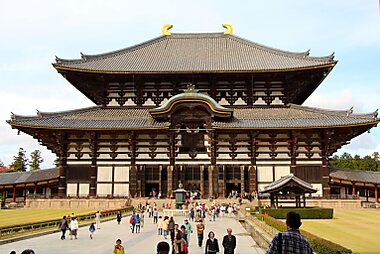
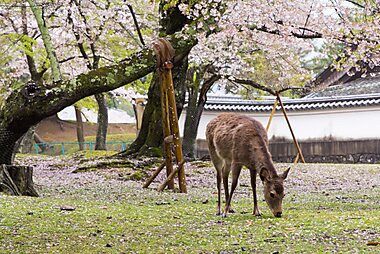
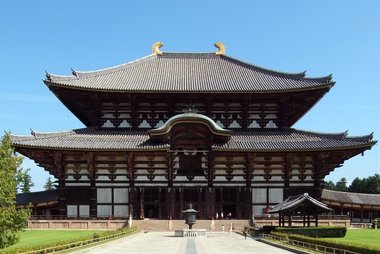
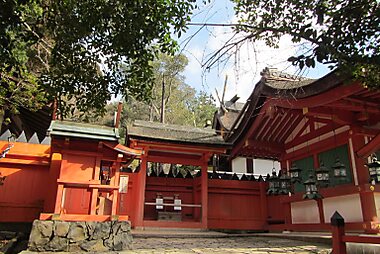
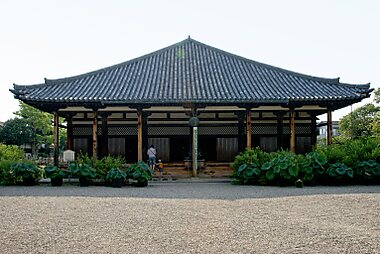
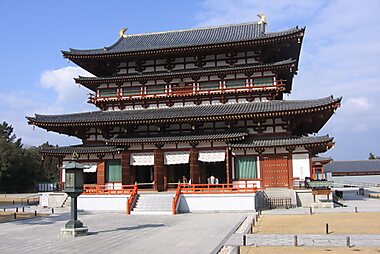
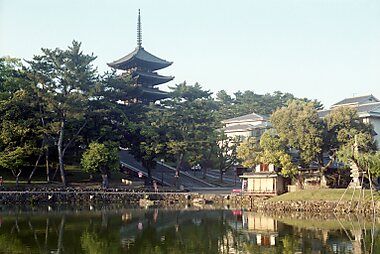
- Todai-ji Temple was founded in the 8th century and is the city's main sight. Its main hall, Great Buddha Hall, was rebuilt in 1709. It holds a bronze Buddha almost 15 m high.
- Nara Park is the large park around the main temples and shrines. Wild deer live here and are part of local folklore. It is free to enter.
- Kasuga Grand Shrine was founded in 768 by the Fujiwara family. Thousands of stone and bronze lanterns line the forest paths.
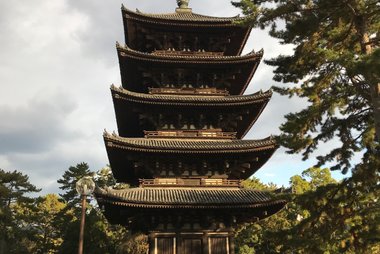
- Kofuku-ji Temple was the Fujiwara family temple. Its 50 m Five-storied Pagoda is the second tallest in Japan, but it is covered for renovation for several more years.
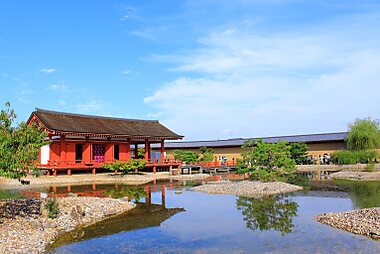
- Heijō Palace is the site of the old imperial palace, west of the centre. The gate and main hall have been rebuilt, and the wide grass site feels very open.
- Gangō-ji sits in the old merchant quarter of Naramachi. It is quieter than the temples in the park.
- Yakushiji Temple and Toshodaiji Temple are two important temples in west Nara. They are close together and easy to visit in one trip.
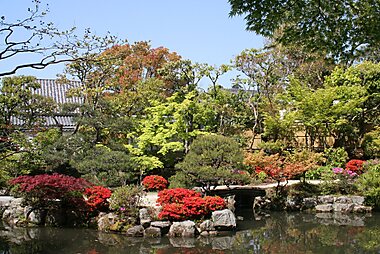
- Isuien Garden is a quiet Japanese garden close to Todai-ji. It is a calm stop after the busy park.
Öne Çıkan Listeler


Neler deneyimlenmeli
- Feed the deer: buy deer crackers (shika senbei) from the stalls in the park. They cost about 200 yen. Deer are wild animals and can push or bite when you hold food, so feed them calmly.
- Omizutori: this Buddhist fire and water ceremony is held from 1 to 14 March at Nigatsu Hall.
- Wakakusa Yamayaki: on the fourth Saturday of January, fireworks and a torch procession end with the grass of Mt. Wakakusa set on fire. The fire is visible from many places in the city.
- Lantern nights in summer: the Nara Tokae festival lights Nara Park with candles on evenings in early August. At Kasuga Grand Shrine, about 3,000 lanterns are lit around 14 and 15 August. The front window of the Great Buddha Hall is also opened for evening viewing in mid-August.
- Early walk in the park: go before the tour groups arrive. The paths are quiet and the deer are calm in the morning.
Turlar ve Aktiviteler
Nara — Harita

 Etkileşimli haritayı aç
Günübirlik geziler
The trips below are listed from closest to farthest, one way from Nara.
- Horyuji and Ikaruga: about 15 minutes by JR Yamatoji Line. Horyuji was founded in 607 and has some of the oldest wooden buildings in the world. It was one of Japan's first two World Heritage Sites.
- Kyoto: under 1 hour by JR or Kintetsu train. Kyoto has the temples, gardens and old streets that most visitors want to see in Japan.
- Osaka: under 1 hour by JR or Kintetsu train. Osaka is a good choice for street food, shopping and nightlife in the evening.
- Asuka: about 1 hour by Kintetsu train and a short ride on the local line. This quiet village was an early capital before Nara. Burial mounds and old temples are spread through the fields, and renting a bicycle is the best way to see them.
- Yoshino: about 2 hours, changing trains. The mountain is famous for thousands of cherry trees, which bloom in April.
Nasıl gidilir
- By air: Nara has no airport. Most visitors use Kansai International Airport or Osaka Itami Airport. From Kansai, a direct bus to Nara takes about 1 hour 45 minutes. By train it takes about 1 hour 30 minutes with a change. Itami is closer, at about 1 hour 15 minutes by bus and train.
- By train from Kyoto and Osaka: both are less than an hour away. Use the JR Nara Line from Kyoto or the Kintetsu line to Kintetsu Nara Station. From Osaka use the JR Yamatoji Line or the Kintetsu Nara Line. Kintetsu rapid express trains also run through from Kobe Sannomiya.
- Which station: Kintetsu Nara Station is closer to the main sights. JR Nara Station is about 1 km to the west. It is about 20 minutes on foot to Kofuku-ji.
- Passes: a Kintetsu Rail Pass covers Osaka, Nara and Kyoto. JR-West also sells rail passes.
Kintetsu Railway (English) and JR-West (English) have timetables and passes.
Ulaşım
- On foot: the main sights are in and around the park. Todai-ji is about a 30-minute walk from Kintetsu Nara Station. Kofuku-ji is a 5-minute walk from Kintetsu Nara Station. Naramachi is about 10 minutes south of Kintetsu Nara Station.
- Bus: Nara Kotsu buses link both stations with Todai-ji, Kasuga Taisha and farther temples. A ride to Kasuga Taisha costs about 250 yen. Touch payment with a Visa, Mastercard, JCB or other contactless card works on some routes only, so keep coins or a day pass ready.
- Day passes: Nara Kotsu sells 1-day passes for the park area and for the west temples, and a wider pass that adds Horyuji. A 2-day pass also covers Asuka.
- Heijo Palace and the west temples: Yakushiji and Toshodaiji are far from the park. Take a bus or train, or rent a bicycle.
Nara City tourism (English) lists sights, events and transport.
Araç kullanımı
- Is a car worth it? No, for the city. Trains and buses reach every main sight, and the roads near the park are busy at weekends.
- Countryside: a car helps only for places such as Asuka and the mountains south of Nara. Traffic drives on the left.
Yeme ve içme
Nara has its own traditional foods. Look for nara-zuke, vegetables pickled for more than 1,300 years in a sweet and salty way. Try kakinoha sushi, pressed sushi wrapped in a persimmon leaf, and Miwa somen, very thin noodles usually eaten cold in summer. Nara is also known for Yamato tea.
For a meal, go to the lanes of Naramachi, near Naramachi Museum. Old merchant houses there now hold small restaurants and cafes. The Higashimuki shopping street, near Kintetsu Nara Station, has many more casual places.
Güvenlik ve sağlık
Nara is very safe for visitors. Serious crime is rare, and petty theft is uncommon.
The deer are the main risk. They are wild animals, and many tourists have been hurt while feeding them. Do not tease them. Avoid touching the deer, as they can carry ticks.
In summer, heat and humidity are strong. Carry water and rest in the shade in the afternoon.
Tarihçe
Nara became Japan's capital in 710, as Heijo-kyo. The court left in 784. The powerful Buddhist temples of Nara were part of the reason. The city then stayed a religious centre, which is why so many temples survive.
You can see the old capital at Heijō Palace, where the main hall was rebuilt and opened in 2010. Kofuku-ji Temple was founded in 710 as the Fujiwara family temple, and Kasuga Grand Shrine was founded in 768 for the same family. Gangō-ji moved here from Asuka after the capital moved. Eight sites in Nara, including these, became a World Heritage Site in 1998.
Ülke bilgileri
Here are the essentials for traveling in Japan:
- Para birimi
- Japon yeni JPY ¥ · Kartla ödeme · Genellikle kabul ediliyor
- Elektrik
- 100 VTip A / Tip B
- Diller
- Japonca
- Musluk suyu
- İçilebilir
- Trafik akış yönü
- Sol
- Ülke kodu
- +81


Nara – Günlerini Planla
Bu rehberdeki yerleri; akıllı rota oluşturma, tahmini süreler ve kusursuz bir gezi için gereken her şeyle gerçek bir güzergaha dönüştür.


İlgili varış noktaları
Data: © OpenStreetMap contributors, Wikidata, Wikipedia, Tripomatic, Official websites, geoBoundaries (CC BY 4.0). Tours by GetYourGuide. We earn commission from bookings. Travel guide generated with AI.
Tripomatic ile gezini planla
- Yapay Zeka Destekli PlanlamaTek bir dokunuşla hazır bir gün planı elde et, yapay zekanın istek listeni gezine dağıtmasını sağla veya sohbet ederek her şeyi planla.
- Seyahat UyarılarıGezinin her günündeki yerler için resmi seyahat tavsiyeleri, şiddetli hava durumu, grevler ve doğal afetler.
- Resmi Tatiller ve EtkinliklerGezinin günlerindeki tatilleri, festivalleri ve kapanışları ve bunların planların için ne anlama geldiğini gör.
- Maliyet TahminiYola çıkmadan önce ne kadar bütçe ayırman gerektiğini bilmen için yapay zeka destekli gezi maliyet dökümleri.
- Turlar ve BiletlerPlanın üzerinden doğrudan turlar, sıra beklemeden giriş biletleri ve aktiviteler için rezervasyon yap.