


나라시
Nara was Japan's first permanent capital, in the 8th century. Today it is a compact city of temples, shrines and gardens, set at the edge of a large park. Wild deer walk freely through the park and the streets nearby. The main sights are close together, which makes Nara one of the easiest places in Japan to see on foot.
It suits first-time visitors, history and architecture fans, and families. Many people come on a day trip from Kyoto or Osaka. A night or two lets you see the main sights without crowds, in the early morning and evening.

나라시 – 여행을 계획 중이신가요?
Tripomatic 앱에서 일자별 일정을 만들어 보세요.


방문 시기
Late April to May and October to November are the best times. Days are mild and the park is green or full of autumn colour. June to September is hot, humid and rainy, so start early. Winter is cold, with frost at night and some snow, but crowds are smaller.
Plan around the Wakakusa Yamayaki, when the grass on Mt. Wakakusa is set on fire on the fourth Saturday of January. Bad weather can cancel or postpone it.
여행하기 가장 좋은 시기: 5월, 10월
주요 명소
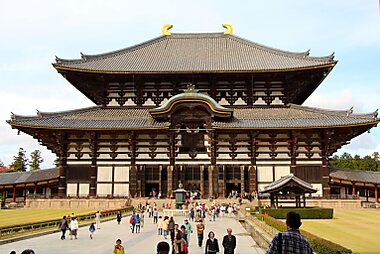
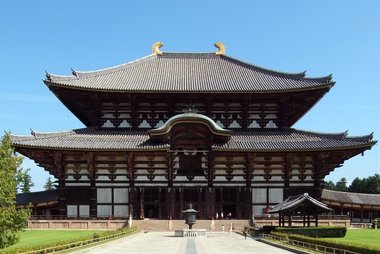
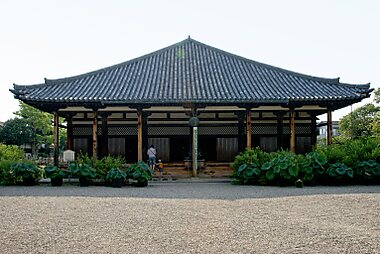
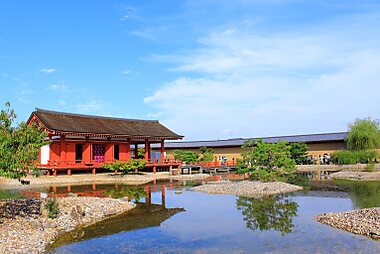
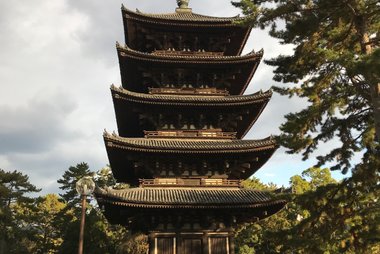
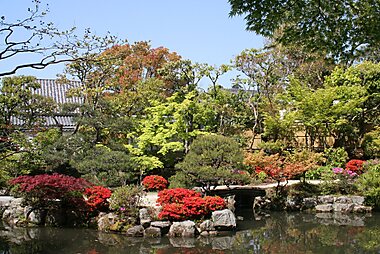
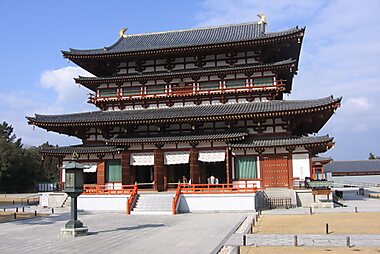
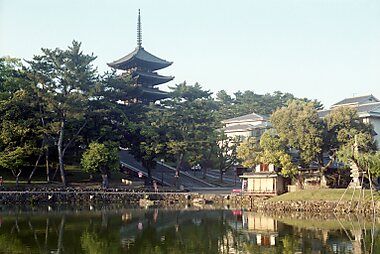
- Todai-ji Temple was founded in the 8th century and is the city's main sight. Its main hall, Great Buddha Hall, was rebuilt in 1709. It holds a bronze Buddha almost 15 m high.
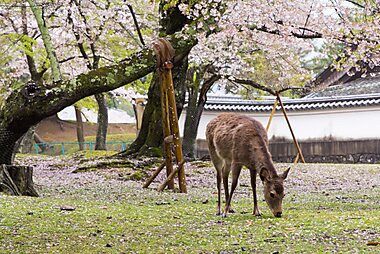
- Nara Park is the large park around the main temples and shrines. Wild deer live here and are part of local folklore. It is free to enter.
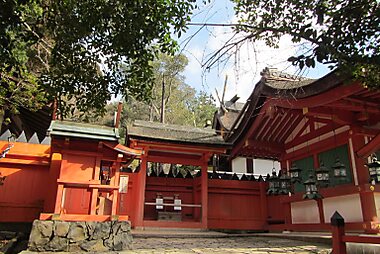
- Kasuga Grand Shrine was founded in 768 by the Fujiwara family. Thousands of stone and bronze lanterns line the forest paths.
- Kofuku-ji Temple was the Fujiwara family temple. Its 50 m Five-storied Pagoda is the second tallest in Japan, but it is covered for renovation for several more years.
- Heijō Palace is the site of the old imperial palace, west of the centre. The gate and main hall have been rebuilt, and the wide grass site feels very open.
- Gangō-ji sits in the old merchant quarter of Naramachi. It is quieter than the temples in the park.
- Yakushiji Temple and Toshodaiji Temple are two important temples in west Nara. They are close together and easy to visit in one trip.
- Isuien Garden is a quiet Japanese garden close to Todai-ji. It is a calm stop after the busy park.
추천 리스트


체험해 볼 것들
- Feed the deer: buy deer crackers (shika senbei) from the stalls in the park. They cost about 200 yen. Deer are wild animals and can push or bite when you hold food, so feed them calmly.
- Omizutori: this Buddhist fire and water ceremony is held from 1 to 14 March at Nigatsu Hall.
- Wakakusa Yamayaki: on the fourth Saturday of January, fireworks and a torch procession end with the grass of Mt. Wakakusa set on fire. The fire is visible from many places in the city.
- Lantern nights in summer: the Nara Tokae festival lights Nara Park with candles on evenings in early August. At Kasuga Grand Shrine, about 3,000 lanterns are lit around 14 and 15 August. The front window of the Great Buddha Hall is also opened for evening viewing in mid-August.
- Early walk in the park: go before the tour groups arrive. The paths are quiet and the deer are calm in the morning.
투어 및 액티비티
나라시 — 지도

 인터랙티브 지도 열기
근교 당일 여행
The trips below are listed from closest to farthest, one way from Nara.
- Horyuji and Ikaruga: about 15 minutes by JR Yamatoji Line. Horyuji was founded in 607 and has some of the oldest wooden buildings in the world. It was one of Japan's first two World Heritage Sites.
- Kyoto: under 1 hour by JR or Kintetsu train. Kyoto has the temples, gardens and old streets that most visitors want to see in Japan.
- Osaka: under 1 hour by JR or Kintetsu train. Osaka is a good choice for street food, shopping and nightlife in the evening.
- Asuka: about 1 hour by Kintetsu train and a short ride on the local line. This quiet village was an early capital before Nara. Burial mounds and old temples are spread through the fields, and renting a bicycle is the best way to see them.
- Yoshino: about 2 hours, changing trains. The mountain is famous for thousands of cherry trees, which bloom in April.
가는 방법
- By air: Nara has no airport. Most visitors use Kansai International Airport or Osaka Itami Airport. From Kansai, a direct bus to Nara takes about 1 hour 45 minutes. By train it takes about 1 hour 30 minutes with a change. Itami is closer, at about 1 hour 15 minutes by bus and train.
- By train from Kyoto and Osaka: both are less than an hour away. Use the JR Nara Line from Kyoto or the Kintetsu line to Kintetsu Nara Station. From Osaka use the JR Yamatoji Line or the Kintetsu Nara Line. Kintetsu rapid express trains also run through from Kobe Sannomiya.
- Which station: Kintetsu Nara Station is closer to the main sights. JR Nara Station is about 1 km to the west. It is about 20 minutes on foot to Kofuku-ji.
- Passes: a Kintetsu Rail Pass covers Osaka, Nara and Kyoto. JR-West also sells rail passes.
Kintetsu Railway (English) and JR-West (English) have timetables and passes.
교통편 및 이동 방법
- On foot: the main sights are in and around the park. Todai-ji is about a 30-minute walk from Kintetsu Nara Station. Kofuku-ji is a 5-minute walk from Kintetsu Nara Station. Naramachi is about 10 minutes south of Kintetsu Nara Station.
- Bus: Nara Kotsu buses link both stations with Todai-ji, Kasuga Taisha and farther temples. A ride to Kasuga Taisha costs about 250 yen. Touch payment with a Visa, Mastercard, JCB or other contactless card works on some routes only, so keep coins or a day pass ready.
- Day passes: Nara Kotsu sells 1-day passes for the park area and for the west temples, and a wider pass that adds Horyuji. A 2-day pass also covers Asuka.
- Heijo Palace and the west temples: Yakushiji and Toshodaiji are far from the park. Take a bus or train, or rent a bicycle.
Nara City tourism (English) lists sights, events and transport.
운전
- Is a car worth it? No, for the city. Trains and buses reach every main sight, and the roads near the park are busy at weekends.
- Countryside: a car helps only for places such as Asuka and the mountains south of Nara. Traffic drives on the left.
음식 및 음료
Nara has its own traditional foods. Look for nara-zuke, vegetables pickled for more than 1,300 years in a sweet and salty way. Try kakinoha sushi, pressed sushi wrapped in a persimmon leaf, and Miwa somen, very thin noodles usually eaten cold in summer. Nara is also known for Yamato tea.
For a meal, go to the lanes of Naramachi, near Naramachi Museum. Old merchant houses there now hold small restaurants and cafes. The Higashimuki shopping street, near Kintetsu Nara Station, has many more casual places.
안전 및 건강
Nara is very safe for visitors. Serious crime is rare, and petty theft is uncommon.
The deer are the main risk. They are wild animals, and many tourists have been hurt while feeding them. Do not tease them. Avoid touching the deer, as they can carry ticks.
In summer, heat and humidity are strong. Carry water and rest in the shade in the afternoon.
역사
Nara became Japan's capital in 710, as Heijo-kyo. The court left in 784. The powerful Buddhist temples of Nara were part of the reason. The city then stayed a religious centre, which is why so many temples survive.
You can see the old capital at Heijō Palace, where the main hall was rebuilt and opened in 2010. Kofuku-ji Temple was founded in 710 as the Fujiwara family temple, and Kasuga Grand Shrine was founded in 768 for the same family. Gangō-ji moved here from Asuka after the capital moved. Eight sites in Nara, including these, became a World Heritage Site in 1998.
국가 정보
Here are the essentials for traveling in Japan:
- 통화
- 일본 엔화 JPY ¥ · 카드 결제 · 대체로 사용 가능
- 전압 및 전원
- 100 V플러그 타입 A / 플러그 타입 B
- 언어
- 일본어
- 수돗물 음용
- 음용 가능
- 주행 방향
- 좌측통행
- 국가 번호
- +81


나라시 – 일자별 계획 세우기
이 가이드에 소개된 장소들을 스마트 경로 및 소요 시간 예측이 포함된 실질적인 일정으로 바꿔보세요. 완벽한 여행을 위한 모든 것이 준비되어 있습니다.


관련 목적지
Data: © OpenStreetMap contributors, Wikidata, Wikipedia, Tripomatic, Official websites, geoBoundaries (CC BY 4.0). Tours by GetYourGuide. We earn commission from bookings. Travel guide generated with AI.
Tripomatic과 함께 여행을 계획해 보세요
- AI 기반 일정 계획한 번의 탭으로 완성된 하루 일정을 확인하고, AI가 위시리스트를 여행 일정 전체에 배분하게 하거나, 대화를 통해 모든 것을 계획해 보세요.
- 여행 경보여행 일정의 각 날짜별 방문 장소에 대한 공식 여행 경보, 악천후, 파업 및 자연재해 정보를 확인하세요.
- 공휴일 및 이벤트여행 일정 중의 공휴일, 축제, 휴무일과 이것이 여행 계획에 미치는 영향을 확인하세요.
- 비용 예측출발 전 예산을 가늠해 볼 수 있도록 AI가 여행 비용을 항목별로 분석해 드립니다.
- 투어 및 티켓투어, 줄 서지 않는 패스트트랙 티켓, 다양한 활동을 일정 내에서 바로 예약하세요.