


Alicante
Alicante is a port city on Spain's Costa Blanca. It has a castle on a hill, a palm-lined seafront and a compact old town. The city is easy to walk, and the beach is close to the centre.
It suits a relaxed trip of two to four nights. Visitors come for sun, sea, tapas and rice dishes. Many also use Alicante as a base for trips along the coast. The city is lively at night, and busiest in summer.

Alicante – Planst du eine Reise?
Erstelle deine Reiseroute Tag für Tag in der Tripomatic-App.


Beste Reisezeit
Spring and autumn are warm and pleasant for sightseeing. Summer is hot and best for the beach, but the middle of the day is tiring. Winter is mild and sunny, though some days are cool and wet.
The biggest event is the Hogueras de San Juan, in the days before 24 June. Streets fill with large satirical sculptures, and there are parades, loud daytime fireworks and night fireworks. The sculptures burn on the night of 24 June. Book a room well ahead if you plan to come.
Beste Reisezeit: März, April, Mai, Juni, Juli, August, September, Oktober, November
Top-Sehenswürdigkeiten


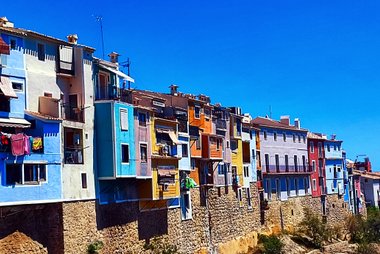
- Castell de Santa Bàrbara stands on a hill 166 m above the sea and gives the best view of the city. Reach it by the lift opposite the beach, by shuttle bus, or on foot.
- Barrio Santa Cruz is the old quarter below the castle. Its narrow, steep streets have small white and colourful houses with flowers.
- Paseo de la Explanada de España is the palm-lined seafront promenade, paved with a wave pattern of marble tiles. It is the traditional place for an evening walk.
- El Postiguet Beach is the city beach, a short walk from the old town. It is the easiest place for a swim.
- Basílica de Santa María is the oldest active church in the city. It stands in the old town, near the town hall.
- Concatedral de San Nicolás de Bari is the city's co-cathedral, a short walk from the town hall.
- Alicante Central Market is a market hall with fresh fish, meat, fruit and vegetables. It is a good place to see local food.
- MARQ - Museo Arqueológico de Alicante covers the history of the region from prehistory to the modern age. It won the European Museum of the Year award in 2004.
- Ciudad Ibero Romana de Lucentum is the ruin of an Iberian and Roman town on the north side of the city. It is a quiet stop for history lovers.
Empfohlene Listen


Museums of Alicante
Alicante’s museum scene spans from antiquity to modern art. The MARQ Archaeological Museum offers award-winning displays of local history, while Lucentum preserves the ruins of a Roman city. MACA houses 20th-century masterpieces in a 17th-century granary. Unique specialized sites include the Volvo Ocean Race Museum, documenting world-class sailing, and the Museo del Agua, set within 19th-century cisterns carved into Mount Benacantil. The MUSA, located within Santa Barbara Castle, explores the city's evolution, and the Lonja del Pescado serves as a cultural space in a former fish market.
7 Orte
Historic churches and cathedrals
Alicante’s religious architecture spans centuries, from the 14th-century Gothic Basilica of Santa María, built atop a former mosque, to the 17th-century Renaissance-style San Nicolás Cathedral. This collection includes hilltop hermitages like Santa Cruz and San Roque in the historic old town, as well as the Monasterio de la Santísima Faz, which houses a sacred relic believed to be the veil used to wipe Christ’s face. These sites showcase diverse styles from Baroque altarpieces to austere stone facades across the city's traditional neighborhoods.
7 Orte
Parks & Gardens of Alicante
Alicantes Grünflächen reichen von der Küstenpromenade Explanada de España, gepflastert mit über sechs Millionen Marmorfliesen, bis zum historischen Parque de Canalejas, dem ältesten Garten der Stadt. Diese Parks beherbergen monumentale Ficusbäume aus dem 19. Jahrhundert, romantische Plätze wie die Plaza Gabriel Miró und die terrassenförmigen Hänge des Parque La Ereta auf dem Berg Benacantil. Die Auswahl umfasst städtische Wahrzeichen wie die Plaza de los Luceros und die thematischen Installationen des Parque el Tossal, die die architektonischen Monumente der Stadt und die mediterrane Landschaftsgestaltung zeigen.
14 Orte
Erlebnisse & Aktivitäten
Alicante is known for its festivals. These are the ones worth timing a trip around.
- Hogueras de San Juan: Join the street life in late June, with fireworks, parades and the burning of large sculptures on 24 June.
- Semana Santa: In spring, processions with religious statues pass through the streets at night.
- Romería de la Santa Faz: In spring, locals walk about 8 km to the Santa Faz monastery.
- Moros y Cristianos: Parades with costumes and staged battles take place in several neighbourhoods. Dates vary.
Touren & Aktivitäten
Alicante — Karte

Tagesausflüge
Alicante is a good base for short trips by train, tram, bus or boat. Times below are one way.
- Elche: about 30 minutes by train or bus. It is famous for its large palm grove, a UNESCO World Heritage site.
- Tabarca island: about 1 hour by boat from the port. It is a small walled island with clear water, a marine reserve and fish restaurants. Boats run more often in summer.
- Altea: about 1 hour 15 minutes by bus. The tram needs a change at Benidorm and takes longer. It is a white hillside town with a blue-domed church and a pebble beach.
- Benidorm: about 1 hour by bus, 1 hour 10 minutes by tram. It is known for its high-rise skyline, long beaches and nightlife.
- Valencia: about 2 hours by train. It is a large city with a historic centre and modern architecture.
Orte zum Entdecken
Anreise
- By air: Alicante-Elche airport (ALC) is about 9 km southwest of the centre. Bus line C6 runs to the centre every 15 minutes in the day and costs about 5 €. Buy the ticket on the bus. A taxi is faster and costs more.
- By train: Trains arrive at Alicante Terminal station, near the centre. High-speed AVE trains reach Madrid in about 2 hours 30 minutes. There are also direct trains to Valencia and Barcelona. Book on Renfe.
- By bus: The long-distance bus station is near the port. Coaches run to other cities in Spain and to towns along the coast.
- By sea: The port has ferries to Algeria and boats to Tabarca island, and cruise ships call here.
For visitor information, see the Alicante tourism office.
Unterwegs vor Ort
- On foot: The old town, the seafront and the market are all within walking distance. Streets near the castle are steep.
- Buses: Urban buses cover the city. Buy a single ticket from the driver and bring small change. A shuttle bus goes to the castle from Plaza Puerta del Mar.
- Tram: The TRAM links the city with the coast. It serves El Campello, Benidorm and Dénia, and it stops near the MARQ museum. Details are on the TRAM Alicante site.
- Taxis: There are ranks at the train station, the bus station and the Explanada.
- Cycling: The centre is flat, and cycling is practical along the seafront.
Autofahren
- Is a car worth it?: Not for the city. The centre is compact and the old town has pedestrian streets. A car is useful for visiting inland villages and small coves.
- Parking: Street parking in the centre is limited and often paid. Underground car parks are easier. Parking at the castle is limited. The lift or shuttle bus is easier.
Essen & Trinken
Rice is the main local food. Look for arroz a banda (rice cooked in fish stock) and other rice dishes at lunch. Dishes with fresh fish and seafood are common. On Tabarca island, the local dish is caldero, a fish and rice meal. Turrón, a sweet nougat, is the traditional local dessert.
Eating areas matter more than single restaurants. Tapas bars cluster around the old town and the streets near the town hall. Alicante Central Market is the best place to see local produce. Lunch is the main meal, and many places serve a set lunch menu on weekdays. Dinner starts late.
Sicherheit & Gesundheit
Alicante is a safe city for visitors. The main risk is petty crime, such as pickpocketing and bag theft. Be careful on crowded beaches, in busy streets and at festivals. Do not leave valuables in a parked car.
In summer, drink water often and avoid the midday sun. The sea can have strong currents on windy days, so follow beach flags.
Geschichte
People have lived here for thousands of years. Ciudad Ibero Romana de Lucentum shows the Iberian and Roman town of Lucentum.
The Moors ruled the area for centuries, and Christian kings took it in the 13th century. Castell de Santa Bàrbara grew over time, and its three levels show different periods. The top level has the oldest parts. The lowest level dates from the 18th century.
Alicante was a major Republican port in the Spanish Civil War. It was one of the last cities to fall to Franco's forces, on 1 April 1939.
Länderfakten
Quick practical facts for Spain at a glance:
- Währung
- Euro EUR € · Kartenzahlung · Weitgehend akzeptiert
- Notrufnummern
- 112
- Stromnetz
- 230 V · 50 HzSteckertyp C / Steckertyp F
- Sprachen
- Spanisch
- Leitungswasser
- Trinkbar
- Fahrseite
- Rechtsverkehr
- Telefonvorwahl
- +34


Alicante – Plane deine Tage
Verwandle die Orte aus diesem Reiseführer in eine echte Reiseroute mit intelligenter Routenführung, Zeitschätzungen und allem für eine perfekte Reise.


Ähnliche Reiseziele


Data: © OpenStreetMap contributors, Wikidata, Wikipedia, Tripomatic, Official websites. Tours by GetYourGuide. We earn commission from bookings. Travel guide generated with AI.