


Estland
Estonia is a small Baltic country known for its well-preserved medieval old town in Tallinn, dense forests, and a famously advanced digital society — most public services here can be done entirely online. It borders the Baltic Sea, Latvia, and Russia, and includes over 2,000 islands, the largest being Saaremaa and Hiiumaa.
Estonia suits travelers interested in history, nature, and design. It works well as a short city break, or combined with a wider Baltic trip. Summers are short and bright with very long daylight hours; winters are cold, dark, and snowy.


Estland – Planst du eine Reise?
Erstelle deine Reiseroute Tag für Tag in der Tripomatic-App.


Geld & Bezahlen
Estonia uses the euro, as a member of the eurozone.
Estonia is one of the most cashless societies in Europe — card and phone payment work almost everywhere, including small cafés, markets, and public transport. Carrying cash is rarely necessary, even in small towns.
Empfohlene Listen


Viewpoints and Towers
Explore Estonia's diverse topography through its highest peaks, coastal cliffs, and specialized observation structures. This collection features Suure Munamägi, the highest point in the Baltic States, alongside the unique 'Bird's Nest' architecture of the Rõuge Pesapuu tower. From the medieval Red Tower in Pärnu to bird-watching platforms in Matsalu National Park and the 21-meter limestone cliffs of Panga Pank, these sites offer specific insights into the region's geological history and migratory bird paths.
10 OrteTouren & Aktivitäten
Estland — Karte

 Interaktive Karte öffnen
Trinkgeld
Tipping is not required in Estonia, since a tip may not legally be added to the bill and service staff are paid a standard wage. Rounding up the bill or adding around 10% for good service in a restaurant is common and appreciated, especially in Tallinn's more tourist-facing restaurants, but locals often just round up.
round up or add ~10% for good service
round up the fare
Strom & Stecker
Estonia uses Type C and Type F plugs (the standard two-round-pin sockets used across most of continental Europe) at 230 V / 50 Hz.
Sprache
Estonian is the official language and is unrelated to its Latvian or Russian neighbors' languages — it belongs to the Finnic language family, closely related to Finnish. English is widely spoken in Tallinn and among younger people nationwide; Russian is also common, especially in the northeast.
Internet & Mobilfunk
Prepaid SIM and eSIM plans from Telia, Elisa, or Tele2 are easy to buy at the airport or phone shops. As one of the most digitally connected countries in the world, mobile coverage and free public Wi-Fi are strong even outside major cities.
Sicherheit & Notfälle
Estonia is a very safe country for tourists, with low rates of violent crime. The main risks are minor: pickpocketing in busy tourist areas of Tallinn's Old Town, and icy pavements in winter. Online scams and phishing attempts are worth being alert to, given how much daily life runs through digital services.
Gesundheit
Tap water is safe to drink throughout the country. Pharmacies (apteek) are common in towns and cities, with at least one open late in most larger towns. No special vaccinations are required for entry.
Visum & Einreise
Estonia is part of the Schengen Area. Citizens of the EU/EEA, the United States, Canada, Australia, and many other countries can enter for tourism without a visa for stays of up to 90 days within a 180-day period. Travelers from countries without a visa-waiver agreement need a Schengen visa, applied for through an Estonian embassy or consulate before travel.
Visa and entry requirements change frequently. Verify current requirements with the official immigration authority or your country's embassy before travel.
Knigge & Bräuche
Estonians tend to be reserved with strangers at first, and personal space is valued; this is a cultural norm, not unfriendliness. Shoes are almost always removed when entering someone's home. Estonians take saunas seriously as a regular part of life, not just a spa treat, and a traditional sauna is often taken without swimwear among people of the same sex.
Feiertage & Öffnungszeiten
Public holidays can affect opening hours in smaller towns more than in Tallinn. Midsummer (Jaanipäev), in late June, is one of the most widely celebrated holidays, with many businesses closing as people head to the countryside.
Unterwegs vor Ort
- By train: Elron operates modern trains connecting Tallinn with Tartu and other main towns; book tickets on Elron's official website.
- By bus: Long-distance coaches reach almost every town and are often faster than trains for cross-country routes.
- By ferry: Regular ferries connect the mainland with the islands of Saaremaa and Hiiumaa, and also link Tallinn with Helsinki across the Gulf of Finland.
- In Tallinn: The Old Town is compact and walkable; trams and buses cover the rest of the city well.
Autofahren
- Winter tires: Mandatory from December 1 to March 1; studded tires are allowed from October 15 to March 31 under normal conditions, sometimes extended to April 30 in poor weather years, with a lower speed limit for vehicles using them.
- Speed limits: 50 km/h in towns, 90 km/h on rural roads, up to 110 km/h on some divided highways in summer.
- Headlights: Must be on at all times, day and night, year-round.
- Rural roads: Some minor roads are unpaved gravel, especially outside the main highways; reduce speed accordingly.
- Fuel: Stations are self-service, with card payment standard at the pump.
Essen & Trinken
Rye bread (leib) is a staple at almost every meal, alongside potatoes, pork, and fish, especially herring. Black bread with butter and cheese is a common breakfast or snack, and hearty soups are popular through the colder months.
Estonia has a strong café culture, with pastries and dark rye-based desserts common alongside coffee. Kama, a traditional mix of roasted ground grains blended into yogurt or buttermilk, is a distinctive local specialty. Craft beer and cider have grown quickly in recent years alongside more traditional drinks.
Orte zum Entdecken
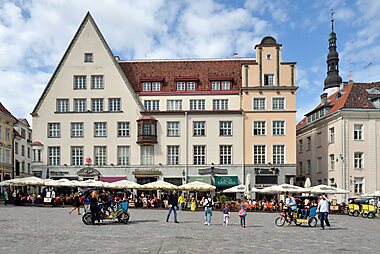
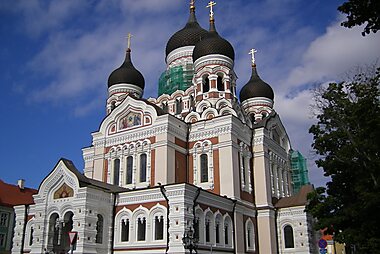
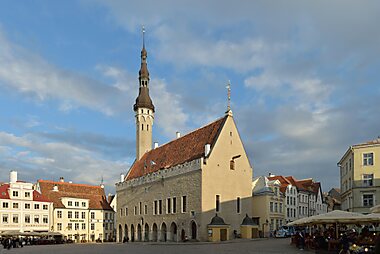
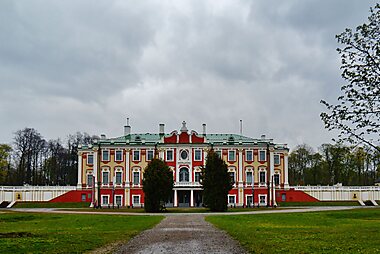
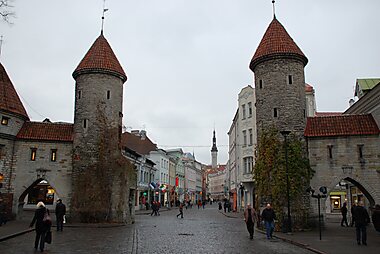
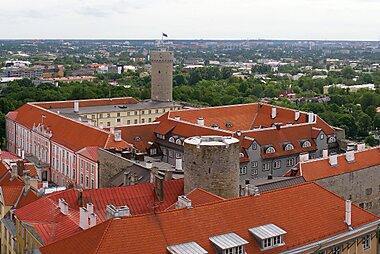
Tallinn is the capital, with a UNESCO-listed medieval Old Town, a growing tech and startup scene, and easy ferry access to Helsinki. Tartu, in the south, is Estonia's second city and university town, with a historic center and a strong student atmosphere.
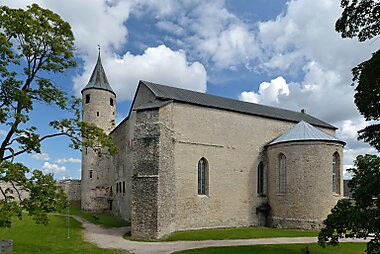
Pärnu, on the west coast, is Estonia's main seaside resort town, popular in summer for its beach and spa hotels. Kuressaare, on the island of Saaremaa, is known for its well-preserved medieval castle, and Haapsalu, on the west coast, is known for its own castle ruins and a long-standing reputation as a mud-spa health resort town.
Estland – Plane deine Reise
Wähle die Orte aus, die du sehen möchtest, und Tripomatic erstellt daraus eine Route Tag für Tag – mit intelligenter Wegführung, Zeitschätzungen und allem für die perfekte Reise.




