Tripomatic

Estonia

Country ·🇪🇪 Estonia

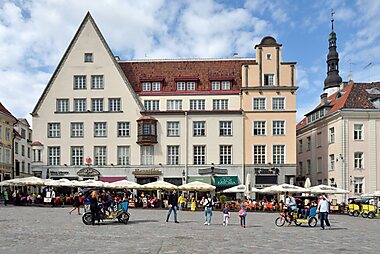
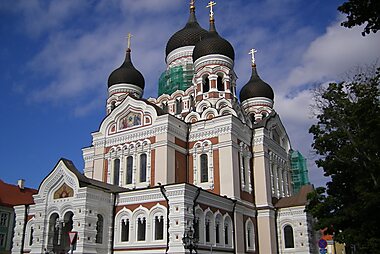
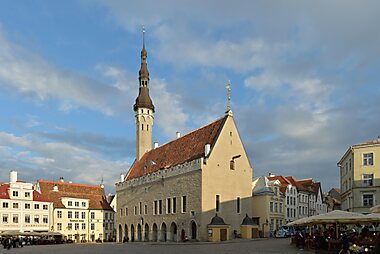
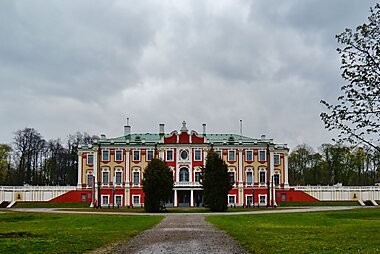
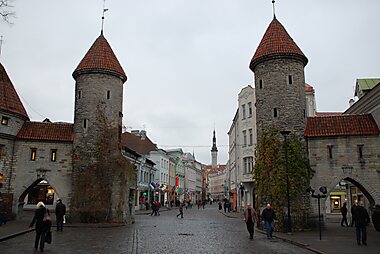
Estonia is a small Baltic country known for its well-preserved medieval old town in Tallinn, dense forests, and a famously advanced digital society — most public services here can be done entirely online. It borders the Baltic Sea, Latvia, and Russia, and includes over 2,000 islands, the largest being Saaremaa and Hiiumaa.

Estonia suits travelers interested in history, nature, and design. It works well as a short city break, or combined with a wider Baltic trip. Summers are short and bright with very long daylight hours; winters are cold, dark, and snowy.

Estonia

Planning a Trip to Estonia?

Build your day-by-day itinerary in the Tripomatic app.

Money & payments

Estonia uses the euro, as a member of the eurozone.

EUR · €
Widely accepted
1 EUR ≈ 1.157 USD 1 USD ≈ 0.8645 EUR

Estonia is one of the most cashless societies in Europe — card and phone payment work almost everywhere, including small cafés, markets, and public transport. Carrying cash is rarely necessary, even in small towns.

Hotel (double room, per night)mid-range hotel, room for two per night
60 – 120 €$69.41 – $138.81
Dinner (mid-range restaurant)mid-range restaurant, one person, no drinks
15 – 25 €$17.35 – $28.92
Inexpensive mealcasual eatery or lunch special, one person
8 – 12 €$9.25 – $13.88
Local beer0.5L draught
3.5 – 5 €$4.05 – $5.78
Coffeeespresso or cappuccino in a café
2.5 – 3.5 €$2.89 – $4.05
Water0.5L, shop
1 – 2 €$1.16 – $2.31
Transit ticketsingle, Tallinn
1.5 – 2 €$1.74 – $2.31
Taxi (per km)per km
0.7 – 1 €$0.81 – $1.16

Explore Estonia

Estonia's Absolute Essentials

Estonia's Absolute Essentials

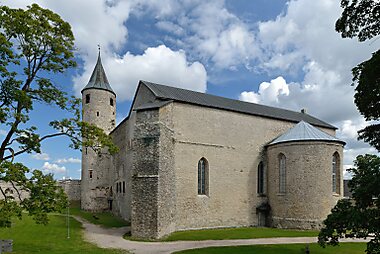
Estonia's Absolute Essentials features a range of historic and natural landmarks across the country. Key sites include the medieval Haapsalu and Kuressaare castles, the modern Estonian National Museum in Tartu, and the 314-meter Tallinn TV Tower. The selection also highlights the unique white sandstone walls of Hinni Canyon and several significant maritime structures, such as the leaning Kiipsaare Lighthouse and the 52-meter Sõrve Lighthouse on Saaremaa island.

19 places
Editor's Choice Estonia

Editor's Choice Estonia

This selection highlights Estonia’s diverse heritage and landscape. In Tallinn, the 1980s TV Tower offers panoramic views, while Tartu serves as a cultural hub with the AHHAA Science Centre, the Estonian National Museum, and the unique Brick Gothic architecture of St. John's Church. Historical landmarks include the 13th-century Haapsalu Episcopal Castle and the somber KGB Cells Museum. Natural highlights feature the 30-meter Türisalu Cliff, the vibrant Saula Blue Springs, and Valaste Waterfall, the country's highest fall.

15 places
Estonia's Hidden Gems

Estonia's Hidden Gems

Explore Estonia through five distinct sites, ranging from the UNESCO-listed Tartu Old Observatory to the 14th-century Kuressaare Episcopal Castle on Saaremaa island. Natural landmarks include the Tori Hell sandstone cave and the leaning Kiipsaare Lighthouse, which stands in the Baltic Sea due to coastal erosion. Cultural highlights include Tartu Uus Teater, an independent venue focusing on Estonian and European cinema and performing arts.

5 places
Estonian Museums & Galleries

Estonian Museums & Galleries

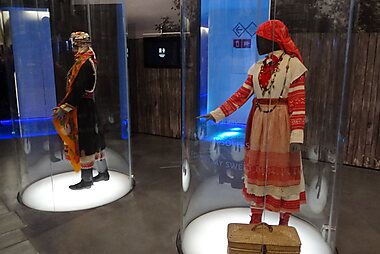
Estonia’s museum landscape spans from the ultra-modern Estonian National Museum in Tartu, focusing on Finno-Ugric ethnography, to the UNESCO-listed Old Observatory. The collection includes the Baltics' largest science center, AHHAA, and specialized institutions like the Tartu Toy Museum and the Estonian Sports and Olympic Museum. Regional history is preserved at the Mulgi Village Museum and Saaremaa Museum, while the KGB Cells Museum offers insights into Soviet-era history. These sites showcase the nation's scientific achievements, artistic evolution, and agricultural heritage.

12 places
Estonia's Churches and Monasteries

Estonia's Churches and Monasteries

Estonia’s religious architecture reflects a complex history of Lutheran, Catholic, and Orthodox traditions. This collection features the unique Brick Gothic terra-cotta sculptures of St. John’s Church in Tartu, the sprawling Pühtitsa Convent, and the ruins of Tartu Cathedral. It also highlights the distinct cultural heritage of the Old Believers along Lake Peipus and numerous rural Orthodox churches across Saaremaa and Pärnu County, showcasing styles ranging from medieval stone to 18th-century Baroque.

20 places
Estonian Historic Sites and Ruins

Estonian Historic Sites and Ruins

Estonia’s landscape is shaped by the strategic fortifications of the Livonian Order and the medieval Bishoprics of Ösel-Wiek and Dorpat. This selection spans 13th-century episcopal castles in Haapsalu and Kuressaare to the massive brick ruins of Tartu Cathedral. It also features 18th-century Baroque manors like Palmse, the Neo-Gothic remains of Ungru, and ancient hillforts like Soontagana, offering a comprehensive look at the country's military and aristocratic architectural history.

15 places
Estonia's Natural Wonders

Estonia's Natural Wonders

Estonia’s landscape is defined by deep primeval valleys, glacial lakes, and expansive peat bogs. This collection includes Rõuge Suurjärv, the country's deepest lake at 38 meters, and Lake Viljandi, situated in a scenic ancient valley. The list also features historical urban green spaces like Tartu’s Toome Hill and Pärnu’s Rannapark, alongside several significant wetland ecosystems such as Mukri and Meenikunno bogs, which represent the region's ancient post-glacial terrain.

11 places
Camping and Nature Shelters

Camping and Nature Shelters

This collection features a variety of Estonian camping locations, ranging from basic tent sites to managed forest huts. These sites typically provide essential facilities such as designated fire pits with firewood, dry toilets, and covered shelters. Many locations, including the Pähni and Uuejõe sites, are situated along regional hiking routes and offer proximity to lakes or coastal areas, with some providing access to drinking water.

7 places
Viewpoints and Towers

Viewpoints and Towers

Explore Estonia's diverse topography through its highest peaks, coastal cliffs, and specialized observation structures. This collection features Suure Munamägi, the highest point in the Baltic States, alongside the unique 'Bird's Nest' architecture of the Rõuge Pesapuu tower. From the medieval Red Tower in Pärnu to bird-watching platforms in Matsalu National Park and the 21-meter limestone cliffs of Panga Pank, these sites offer specific insights into the region's geological history and migratory bird paths.

10 places

Tours & Activities

Map of Estonia

Tipping

Tipping is not required in Estonia, since a tip may not legally be added to the bill and service staff are paid a standard wage. Rounding up the bill or adding around 10% for good service in a restaurant is common and appreciated, especially in Tallinn's more tourist-facing restaurants, but locals often just round up.

RestaurantOptional

round up or add ~10% for good service

TaxiOptional

round up the fare

Electricity

Estonia uses Type C and Type F plugs (the standard two-round-pin sockets used across most of continental Europe) at 230 V / 50 Hz.

Type C
Type F
230 V · 50 Hz

Language

Estonian is the official language and is unrelated to its Latvian or Russian neighbors' languages — it belongs to the Finnic language family, closely related to Finnish. English is widely spoken in Tallinn and among younger people nationwide; Russian is also common, especially in the northeast.

HelloTere
Thank youAitäh
PleasePalun
Excuse meVabandust
YesJah
NoEi
How much?Kui palju see maksab?
CheersTerviseks!
HelpAppi!
GoodbyeHead aega
Do you speak English?Kas te räägite inglise keelt?
SorryVabandage
Where is…?Kus on...?
I don't understandMa ei saa aru
The menu, pleaseMenüü, palun
The bill, pleaseArve, palun

Staying connected

Prepaid SIM and eSIM plans from Telia, Elisa, or Tele2 are easy to buy at the airport or phone shops. As one of the most digitally connected countries in the world, mobile coverage and free public Wi-Fi are strong even outside major cities.

Safety & emergencies

Estonia is a very safe country for tourists, with low rates of violent crime. The main risks are minor: pickpocketing in busy tourist areas of Tallinn's Old Town, and icy pavements in winter. Online scams and phishing attempts are worth being alert to, given how much daily life runs through digital services.

General emergency112
Police112
Ambulance112
Fire brigade112

Health

Tap water is safe to drink throughout the country. Pharmacies (apteek) are common in towns and cities, with at least one open late in most larger towns. No special vaccinations are required for entry.

Visas & entry

Estonia is part of the Schengen Area. Citizens of the EU/EEA, the United States, Canada, Australia, and many other countries can enter for tourism without a visa for stays of up to 90 days within a 180-day period. Travelers from countries without a visa-waiver agreement need a Schengen visa, applied for through an Estonian embassy or consulate before travel.

Visa and entry requirements change frequently. Verify current requirements with the official immigration authority or your country's embassy before travel.

Etiquette

Estonians tend to be reserved with strangers at first, and personal space is valued; this is a cultural norm, not unfriendliness. Shoes are almost always removed when entering someone's home. Estonians take saunas seriously as a regular part of life, not just a spa treat, and a traditional sauna is often taken without swimwear among people of the same sex.

Holidays & opening hours

Public holidays can affect opening hours in smaller towns more than in Tallinn. Midsummer (Jaanipäev), in late June, is one of the most widely celebrated holidays, with many businesses closing as people head to the countryside.

Jan 1New Year's Day
Feb 24Independence Day
May 1Spring Day
Jun 23Victory Day
Jun 24Midsummer Day
Aug 20Day of Restoration of Independence
Dec 24Christmas Eve
Dec 25Christmas Day
Dec 26St. Stephen's Day
movable — Mar/AprEaster Sunday
movable — Mar/AprGood Friday
movable — May/JunPentecost

Getting around

  • By train: Elron operates modern trains connecting Tallinn with Tartu and other main towns; book tickets on Elron's official website.
  • By bus: Long-distance coaches reach almost every town and are often faster than trains for cross-country routes.
  • By ferry: Regular ferries connect the mainland with the islands of Saaremaa and Hiiumaa, and also link Tallinn with Helsinki across the Gulf of Finland.
  • In Tallinn: The Old Town is compact and walkable; trams and buses cover the rest of the city well.

Driving

  • Winter tires: Mandatory from December 1 to March 1; studded tires are allowed from October 15 to March 31 under normal conditions, sometimes extended to April 30 in poor weather years, with a lower speed limit for vehicles using them.
  • Speed limits: 50 km/h in towns, 90 km/h on rural roads, up to 110 km/h on some divided highways in summer.
  • Headlights: Must be on at all times, day and night, year-round.
  • Rural roads: Some minor roads are unpaved gravel, especially outside the main highways; reduce speed accordingly.
  • Fuel: Stations are self-service, with card payment standard at the pump.
Drive on the right
Urban50 km/h
Rural90 km/h
Motorway110 km/h
No motorway vignette needed
Estonia has no motorway tolls or vignettes; all roads are free to use.
Petrol: Bensiin 95, Bensiin 98Diesel: Diisel

Food & drink

Rye bread (leib) is a staple at almost every meal, alongside potatoes, pork, and fish, especially herring. Black bread with butter and cheese is a common breakfast or snack, and hearty soups are popular through the colder months.

Estonia has a strong café culture, with pastries and dark rye-based desserts common alongside coffee. Kama, a traditional mix of roasted ground grains blended into yogurt or buttermilk, is a distinctive local specialty. Craft beer and cider have grown quickly in recent years alongside more traditional drinks.

Breakfast
KamaA roasted grain-and-pea flour mix stirred into kefir or milk, a traditional Estonian breakfast or dessert.
Dinner
Blood Sausage  VerivorstSausage made with barley and pork blood, a traditional Christmas dish now eaten year-round.
Sauerkraut Stew  MulgikapsadA hearty stew of sauerkraut and pork, a South Estonian specialty.
Snacks & street food
Black Bread  LeibDense, dark rye bread that anchors most Estonian meals, often eaten with butter or garlic.
Sprats  KiluSmall Baltic Sea fish, salted or smoked, typically served on dark bread.
Sweets & desserts
Curd Snack  KohukeA chocolate-coated sweet curd cheese bar, a beloved everyday snack found in every corner shop.
Drinks
Vana TallinnA sweet, spiced rum-based liqueur and Estonia's best-known export spirit.
Craft Beer  ÕluEstonia has a strong small-brewery scene, especially on the island of Saaremaa.

Where to explore

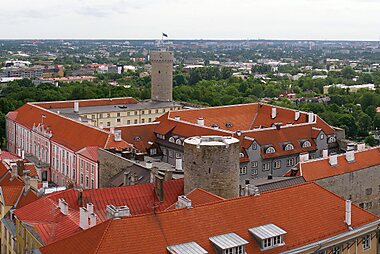
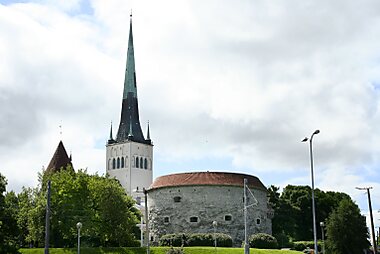
Tallinn is the capital, with a UNESCO-listed medieval Old Town, a growing tech and startup scene, and easy ferry access to Helsinki. Tartu, in the south, is Estonia's second city and university town, with a historic center and a strong student atmosphere.

Pärnu, on the west coast, is Estonia's main seaside resort town, popular in summer for its beach and spa hotels. Kuressaare, on the island of Saaremaa, is known for its well-preserved medieval castle, and Haapsalu, on the west coast, is known for its own castle ruins and a long-standing reputation as a mud-spa health resort town.

Tallinn
Drive
Tartu linn
Drive
Parnu

Plan Your Trip to Estonia

Pick the places you want to see and Tripomatic turns them into a day-by-day route, with smart routing, time estimates, and everything you need for a perfect trip.


3M+ downloads · 4.6 stars · 15 years of trip planning
QR code
Scan to download the app

Related destinations