


Regionaler Naturpark Luberon
The Luberon is a long limestone ridge in Provence, in southeast France. Most of it is a regional nature park. It is also a UNESCO biosphere reserve and a UNESCO Global Geopark. The landscape mixes forest, lavender fields, vineyards and orchards. Hilltop villages made of pale stone sit on the slopes. Old stone huts and Cistercian abbeys are scattered through the hills.
The area suits a slow trip of three to five days. It works well for travelers who like villages, walks, cycling and local food. Gordes, Roussillon, Bonnieux and Lourmarin are popular bases. Apt is the main town in the eastern park and has the park's main office. The English writer Peter Mayle made the region famous with his books about life in Ménerbes.

Regionaler Naturpark Luberon – Planst du eine Reise?
Erstelle deine Reiseroute Tag für Tag in der Tripomatic-App.


Beste Reisezeit
Late spring and early autumn are the best times. Days are warm, walking is easy and the villages are less crowded. Summer is hot and dry, and midday heat is strong. In winter, the days are cool and some small shops, hotels and restaurants close.
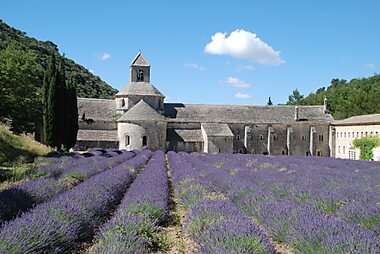
The biggest seasonal draw is the lavender bloom. It usually peaks from late June to late July. The fields near Abbaye Notre-Dame de Sénanque are the most photographed. Expect crowds and book rooms early for this period.
Beste Reisezeit: Mai, Juni, September, Oktober
Top-Sehenswürdigkeiten
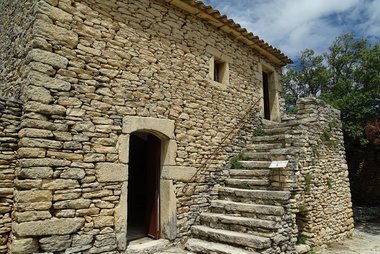
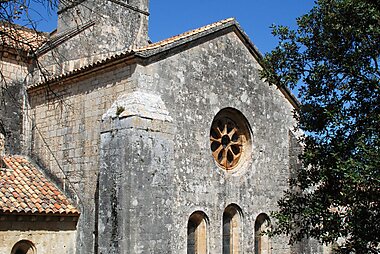
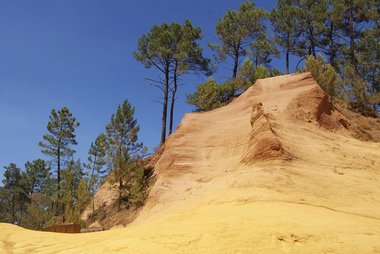
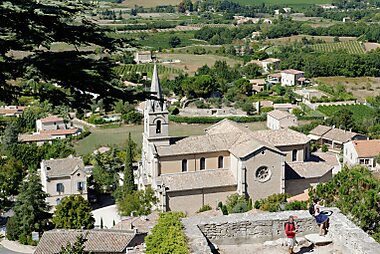
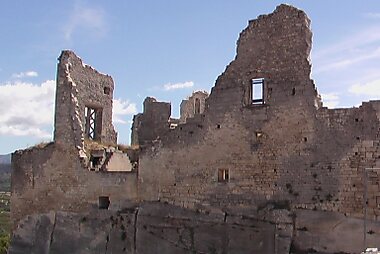
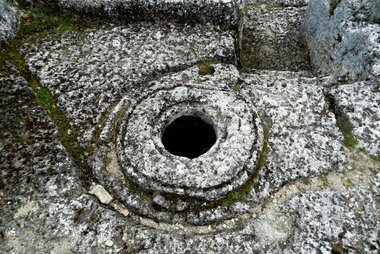
The sights are spread across villages and valleys. Plan one area per day and use a car for most of them.
- Abbaye Notre-Dame de Sénanque is a Cistercian abbey founded in 1148. It stands in a quiet valley near Gordes. A small monastic community lives there again, and lavender grows in front of it.
- Gordes is a hilltop village of pale stone houses and steep lanes. A Renaissance château stands in the centre. The best views are from the road below the village.
- Village des Bories is an open-air museum of about 20 round stone huts, called bories. They are built without mortar. A short loop path passes through them.
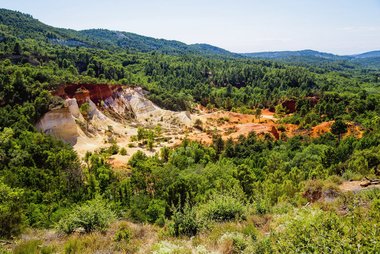
- Sentier des Ocres is a short trail through red and yellow cliffs above Roussillon. These are old ochre quarries. Wear shoes you do not mind getting dusty.
- Le Colorado Provençal is a larger ochre quarry area at Rustrel, on the eastern side of the park. Marked trails cross red cliffs and white canyons.
- Château de Lourmarin is a Renaissance château in the village of Lourmarin, on the south side. It is open for visits and has a peaceful courtyard.
- Abbaye de Silvacane is a 12th-century Cistercian abbey near the Durance river. Its plain stone church is very well preserved.
- Vaucluse Spring is the source of the Sorgue river, at the foot of a tall cliff. It lies on the park's northwest edge. Water levels are highest in late winter and spring.
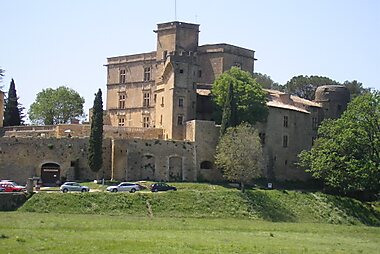
- Bonnieux and Château de Lacoste are quiet hill villages on the north slope of the Petit Luberon. Lacoste has a ruined château above the village.
- Fort de Buoux is a ruined fortress on a rock above the Aiguebrun valley. The site is wild and often empty.
Empfohlene Listen


Erlebnisse & Aktivitäten
Things to do in the Luberon, beyond visiting the sights.
- See the lavender bloom: Walk or drive between fields in late June and July. Go early in the morning for fewer people.
- Visit a village market: Apt holds a large market on Saturday mornings. Gordes holds one on Tuesday mornings.
- Walk in the cedar forest: Cedar trees grow on the Petit Luberon near Bonnieux. A shaded walk there is a good choice on a hot day.
- Cycle the Calavon valley: Ride part of the cycleway along the old railway line, then stop in a village for lunch.
- Hike a ridge: Marked paths follow the Grand Luberon ridge, with views to the Alps on clear days.
Touren & Aktivitäten
Regionaler Naturpark Luberon — Karte

 Interaktive Karte öffnen
Tagesausflüge
Most visitors stay in the park. These places are outside it and make a good day out. Times are one way by car.
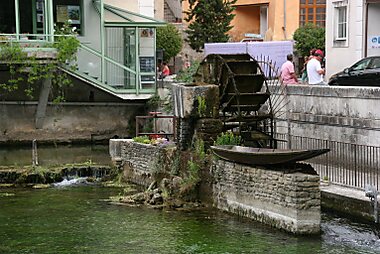
- L'Isle-sur-la-Sorgue: about 30 to 40 minutes from Gordes. It is a town built on canals, with a large Sunday market and many antique shops.
- Avignon: about 45 minutes from Gordes. The city has the Palais des Papes and medieval walls. Trains from Paris stop here.
- Aix-en-Provence: about 40 to 60 minutes from Lourmarin or Apt. It is an elegant city with fountains, markets and the Cézanne trail.
- Mont Ventoux: about 1 hour from Gordes or Apt. It is a bare mountain popular with cyclists and hikers.
- Marseille: about 1 hour 15 minutes from Lourmarin. It is a big port city with an old harbour and coastal hiking.
Orte zum Entdecken
The park lies between the Rhône valley and the Durance river.
- Village base: Gordes is the best-known village in the park.
- West: Avignon is the main rail hub and gateway.
- South: Aix-en-Provence and Marseille are the nearest large cities.
Anreise
- By air: The nearest large airport is Marseille Provence (MRS). From there, drive about 1 hour to the southern villages. Avignon has a small airport with limited service. Many visitors also fly to Paris and continue by train.
- By train: High-speed TGV trains run from Paris to Avignon in about 2 hours 40 minutes. There is no train line through the park. Local trains also stop at Cavaillon, on the western edge. Book on SNCF Connect.
- By bus: Regional buses link Avignon and Cavaillon with Apt and some villages. Service is limited, especially on Sundays and in winter.
- Rental car: Most visitors collect a car at the Avignon TGV station or at Marseille airport.
Unterwegs vor Ort
- Car: A car is by far the easiest way to see the villages and sights. See the driving section.
- Public transport: Buses connect the main towns, but they are infrequent. Check the timetable the day before, and do not plan tight schedules around them.
- Taxis: Taxis are few and best booked in advance. They are useful for a one-way walk or a late dinner.
- Cycling: Quiet roads and a cycleway along the Calavon valley suit cyclists. The hills are steep. E-bikes are easy to hire in the larger villages. Planning information is on the Luberon Regional Nature Park website.
- On foot: The villages are small and walkable, but many are on steep hills. Walking trails link some of them.
Autofahren
- Is a car worth it?: Yes. Villages, abbeys and trails are far apart, and public transport is limited.
- Roads: Roads are narrow and winding. In summer they are busy near Gordes and Roussillon. Drive slowly and allow extra time.
- Parking: Village centres are small and many are closed to cars. Use the signed car parks at the edge, which are often paid in summer. Arrive early at Abbaye Notre-Dame de Sénanque and Sentier des Ocres in July.
- Fuel: Fill up in the larger towns. Small villages have no petrol station.
Essen & Trinken
Luberon cooking is simple and based on local produce. Look for goat cheese, olive oil, honey, and lavender honey in particular. Apt is known for candied fruit. Cavaillon, nearby, is known for its melons in summer. Luberon wines are mostly rosé and red, and many estates offer tastings.
For eating, choose the village squares in Lourmarin, Bonnieux, Gordes and Apt. Lunch is the main meal, and the best tables fill quickly in summer, so book ahead. Village markets are a good place for picnic food.
Sicherheit & Gesundheit
The Luberon is very safe for visitors. Petty theft is rare, but it can happen at busy car parks.
- Cars: Do not leave bags or valuables visible in a parked car, especially at trailheads.
- Wildfire: In dry summers, access to forest areas can be closed on high-risk days. Check local notices before you hike.
- Heat: Summer afternoons are hot and shade is limited on many trails. Carry plenty of water and start early.
- Wind: The mistral is a strong, cold wind that can blow for days. It makes exposed ridges unpleasant.
Geschichte
People have lived in these hills since ancient times. The Romans built roads and bridges through the valley, and a Roman bridge, the Pont Julien, still stands near Bonnieux. In the Middle Ages, monks founded abbeys such as Abbaye Notre-Dame de Sénanque and Abbaye de Silvacane. Villages grew on hilltops for protection.
In the 16th century, the Luberon was a refuge for Waldensians, a Protestant group. Soldiers attacked their villages in 1545. Later, Louis XIV ordered fortresses such as Fort de Buoux to be taken apart in 1660.
The hills were poor and half empty by the 20th century. Artists, writers and later visitors brought new life. The ochre quarries near Sentier des Ocres made red and yellow pigment for many years. The French writer Albert Camus lived in Lourmarin, and he is buried there.
Länderfakten
Quick practical facts for France at a glance:
- Währung
- Euro EUR € · Kartenzahlung · Weitgehend akzeptiert
- Notrufnummern
- 112
- Stromnetz
- 230 V · 50 HzSteckertyp C / Steckertyp E
- Sprachen
- Französisch
- Leitungswasser
- Trinkbar
- Fahrseite
- Rechtsverkehr
- Telefonvorwahl
- +33


Regionaler Naturpark Luberon – Plane deine Tage
Verwandle die Orte aus diesem Reiseführer in eine echte Reiseroute mit intelligenter Routenführung, Zeitschätzungen und allem für eine perfekte Reise.


Ähnliche Reiseziele
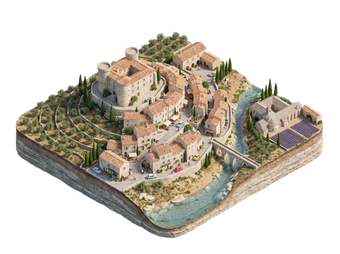


Data: © OpenStreetMap contributors, Wikidata, Wikipedia, Tripomatic, Official websites. Tours by GetYourGuide. We earn commission from bookings. Travel guide generated with AI.
Plane deine Reise mit Tripomatic
- KI-gestützte PlanungErhalte mit einem Fingertipp einen fertigen Tag, lass die KI deine Merkliste über deine Reise verteilen oder plane alles im Chat.
- ReisewarnungenOffizielle Hinweise, Unwetter, Streiks und Naturgefahren für die Orte an jedem Tag deiner Reise.
- Feiertage & EventsSieh Feiertage, Festivals und Schließungen an den Tagen deiner Reise und erfahre, was sie für deine Pläne bedeuten.
- KostenschätzungKI-gestützte Reisekostenübersichten, damit du dein Budget schon vor der Abreise genau kennst.
- Touren & TicketsBuche geführte Touren, Tickets ohne Anstehen und Aktivitäten direkt in deinem Reiseplan.