


Périgord central
Périgord Central is the heart of the Dordogne, in southwest France. It is a green, gentle area of river valleys, limestone hills and small stone towns. The old Roman city of Périgueux is the main base. Brantôme, on the Dronne river, is the best-known small town.
The area suits a slow trip of three to five nights. Visitors come for Roman ruins, a famous domed cathedral, Renaissance châteaux, a prehistoric painted cave and the food of the Périgord. Duck, foie gras and truffles are the local pride. Distances are short, but a car makes the trip much easier.

Périgord central – Planst du eine Reise?
Erstelle deine Reiseroute Tag für Tag in der Tripomatic-App.


Beste Reisezeit
May, June and September are the best months. Days are warm and sunny, and the crowds are smaller than in midsummer. July and August are hot and busy, but all sights are open and there are many events.
Winter is cool and wet. Some châteaux and small sites close or have short hours from November to March. This is also the foie gras and truffle season, with markets in Périgueux and a truffle festival in Sorges in January.
The biggest event is Mimos, an international mime festival in Périgueux. It takes place in early July and also has circus, dance and puppetry shows.
Beste Reisezeit: Mai, Juni, Juli, September
Top-Sehenswürdigkeiten
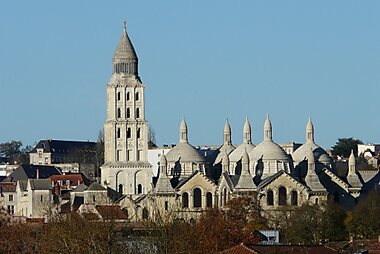
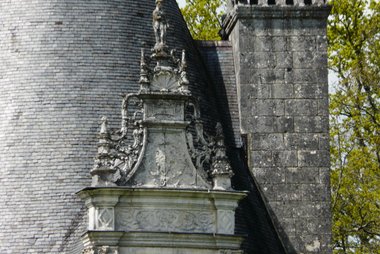
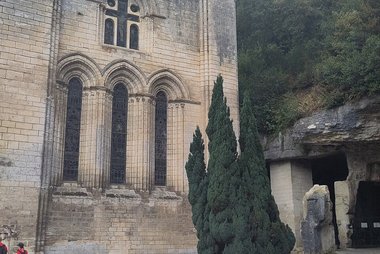
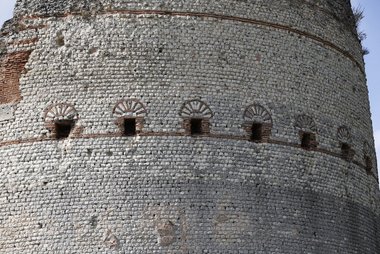
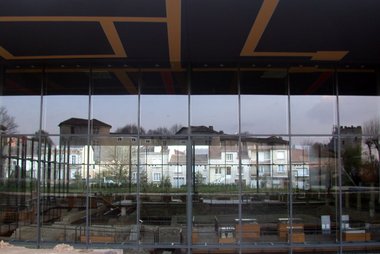
- Cathédrale Saint-Front stands in the old town of Périgueux. This large domed church was built after 1120. It is part of the UNESCO listing for the Santiago de Compostela pilgrim routes in France.
- Vesunna Site-musée gallo-romain is a modern museum built over the remains of a Roman house. It explains daily life in the Roman town of Vesunna. The building was designed by the architect Jean Nouvel.
- Tower of Vesunna is a round tower about 24 m high, in a public garden. It is all that remains of a large Gallo-Roman temple.
- Abbaye Saint-Pierre de Brantôme is the abbey church in Brantôme. It is known for its Romanesque bell tower. The Dronne river curves around the town centre, so Brantôme is often called the Venice of the Périgord.
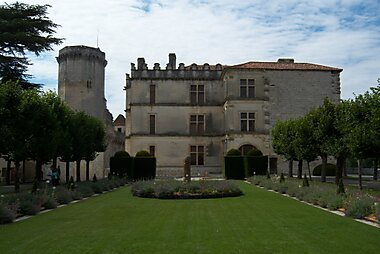
- Château de Bourdeilles is really two buildings side by side. A medieval castle with a keep stands next to a Renaissance palace from the late 16th century. The palace keeps much of its old decoration.
- Château de Puyguilhem is a small Renaissance château begun in the early 16th century. Its hexagonal stair turret and carved details look like the Loire Valley châteaux. The state now runs it as a monument.
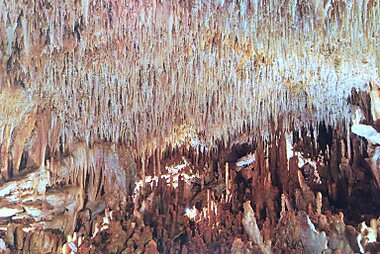
- Grotte préhistorique du Cluzeau is a prehistoric cave near Villars. It is about 13 °C inside all year, so bring a jacket. It has Paleolithic paintings, including a small blue horse. It has been open to visitors since 1959.
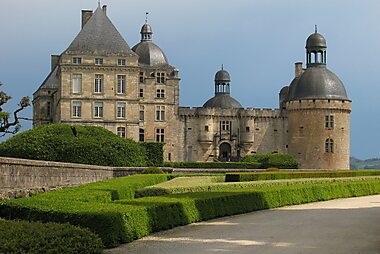
- Château d'Hautefort is a large château at the eastern edge of the area. A fire in 1968 destroyed much of it, and it was rebuilt. The terraced French gardens with clipped box hedges are the highlight.
Empfohlene Listen


Erlebnisse & Aktivitäten
- Go to Mimos in early July. This international mime festival also has circus, dance and puppetry shows.
- Take a canoe on the Dronne at Brantôme and paddle past the abbey. In July and August the town also holds water jousting contests on the river.
- Join the truffle festival at Sorges in January, and visit the truffle museum and orchards there.
- Browse the potters' market in Brantôme, held in early August.
- Walk or cycle the Voie verte near Saint-Jean-de-Côle, then visit the village.
Touren & Aktivitäten
Périgord central — Karte

Tagesausflüge
These trips start from Périgueux. Times are by car, one way.
- Vézère Valley (about 50 to 60 min): This is the centre of French prehistory. Les Eyzies has the National Museum of Prehistory, and Montignac has the Lascaux IV replica cave. Book Lascaux IV in advance in summer.
- Sarlat-la-Canéda (about 1 h): A very well-preserved medieval town with golden stone houses. Its Saturday market is popular.
- Bergerac and Monbazillac (about 1 h): A river town with a pretty old centre. The nearby Monbazillac vineyards make sweet white wine.
- Dordogne river castles (about 1 h 15 min): Beynac and Castelnaud face each other across the river. Both are good for views.
Orte zum Entdecken
Other places to explore from here:
- For the city and its Roman and medieval sights, see Périgueux.
- For a medieval town and the Périgord Noir, see Sarlat-la-Canéda.
- For the wider department with its rivers, caves and castles, see Dordogne.
Anreise
- By air: The nearest airport with scheduled flights is Bergerac Dordogne Périgord (EGC), about 50 km south of Périgueux. It has seasonal flights from several UK cities and from Rotterdam. Bordeaux-Mérignac (BOD) is about 145 km away and has many more routes. Périgueux's own airfield has no scheduled flights. Plan to hire a car at the airport.
- By train: Périgueux station has regular trains to Bordeaux, about 1 h 10 min to 1 h 30 min. Trains also run to Limoges and Brive-la-Gaillarde. From Paris, allow about 4 to 4.5 hours. Book on SNCF Connect.
- By car: Périgueux is the main road hub of the Dordogne. Bordeaux is about 1 h 30 min away by road. Brantôme and the other towns in this guide have no train station.
Visitor information: Grand Périgueux Tourist Office.
Unterwegs vor Ort
- By car: A car is the best way to see the châteaux, caves and villages. Most are in the countryside with no regular public transport.
- Public transport: Trains serve Périgueux, but the smaller towns are reached by car or taxi.
- On foot: The old town of Périgueux and the centre of Brantôme are small and easy to walk. In Brantôme you can also rent a canoe on the Dronne.
- By bike: The Voie verte from Saint-Pardoux-la-Rivière to Thiviers (about 19 km) follows an old railway line and passes close to Saint-Jean-de-Côle. It has a gravel surface and gentle gradients. Other roads are hilly and shared with cars.
Autofahren
- Is a car worth it?: Yes. A car is the practical way to visit the châteaux, caves and villages. You can base yourself in Périgueux and drive out each day.
- Parking: Périgueux has paid car parks near the old town. Small towns like Brantôme have central car parks that fill up on market days and in July and August.
- Roads: Country roads are narrow and winding. Allow more time than the map shows.
Essen & Trinken
The Périgord is one of the best-known food regions of France. Look for duck and goose dishes, foie gras, confit de canard and walnuts. Black truffles are a winter speciality, and the village of Sorges is known for them. Vergt, to the south, is known for strawberries.
For the best food, go to the markets. The Périgueux market is on Place Saint-Louis on Wednesdays and Saturdays, and it focuses on foie gras from November to March. Restaurants in the old town of Périgueux and along the river in Brantôme serve regional menus. Lunch menus at fixed prices are usually the best value.
Sicherheit & Gesundheit
The area is very safe for visitors. Petty theft is uncommon, but do not leave bags visible in parked cars at châteaux, caves and trailheads.
Tap water is safe to drink. Summer afternoons can be hot, so carry water. Pharmacies in Périgueux and Brantôme can give advice, and many shops close at midday and on Sundays.
Geschichte
Périgueux began as the Gallo-Roman town of Vesunna, home of the Petrocorii people. The Roman town had temples, baths, an amphitheatre and a forum. Today you can see the amphitheatre ruins, Tower of Vesunna and the Roman house inside Vesunna Site-musée gallo-romain.
In the Middle Ages a second town grew around an abbey on the hill of Puy-Saint-Front. Its church became Cathédrale Saint-Front. Pilgrims on the way to Santiago de Compostela passed through the area.
The Dronne valley has an old Benedictine abbey at Brantôme, now Abbaye Saint-Pierre de Brantôme. Lords in this region built strong castles during the Middle Ages. The troubadour Bertran de Born is linked to the early history of Château d'Hautefort, which he fought over with his brother in the 12th century. The oldest parts of Château de Bourdeilles date from the early 14th century.
In the 16th century local nobles built more comfortable homes, such as Château de Puyguilhem. People have lived here much longer than that. Grotte préhistorique du Cluzeau was found in 1953 and holds paintings from the Paleolithic period.
Länderfakten
Quick practical facts for France at a glance:
- Währung
- Euro EUR € · Kartenzahlung · Weitgehend akzeptiert
- Notrufnummern
- 112
- Stromnetz
- 230 V · 50 HzSteckertyp C / Steckertyp E
- Sprachen
- Französisch
- Leitungswasser
- Trinkbar
- Fahrseite
- Rechtsverkehr
- Telefonvorwahl
- +33


Périgord central – Plane deine Tage
Verwandle die Orte aus diesem Reiseführer in eine echte Reiseroute mit intelligenter Routenführung, Zeitschätzungen und allem für eine perfekte Reise.


Ähnliche Reiseziele
Data: © OpenStreetMap contributors, Wikidata, Wikipedia, Tripomatic, Official websites. Tours by GetYourGuide. We earn commission from bookings. Travel guide generated with AI.
Plane deine Reise mit Tripomatic
- KI-gestützte PlanungErhalte mit einem Fingertipp einen fertigen Tag, lass die KI deine Merkliste über deine Reise verteilen oder plane alles im Chat.
- ReisewarnungenOffizielle Hinweise, Unwetter, Streiks und Naturgefahren für die Orte an jedem Tag deiner Reise.
- Feiertage & EventsSieh Feiertage, Festivals und Schließungen an den Tagen deiner Reise und erfahre, was sie für deine Pläne bedeuten.
- KostenschätzungKI-gestützte Reisekostenübersichten, damit du dein Budget schon vor der Abreise genau kennst.
- Touren & TicketsBuche geführte Touren, Tickets ohne Anstehen und Aktivitäten direkt in deinem Reiseplan.