


Tivoli
Tivoli is a hill town about 30 km east of Rome. It sits on the slopes of the Tiburtine Hills, where the Aniene river drops into a deep gorge before it reaches the plain. Wealthy Romans built country villas here for more than two thousand years, and their gardens, temples and ruins are the reason to come.
The town has two UNESCO World Heritage Sites: a Renaissance villa famous for its fountains, and the vast country palace of Emperor Hadrian on the plain below. A wooded park with waterfalls and Roman temples completes the set. Most visitors come on a day trip from Rome, but one night lets you see both villas without rushing. Tivoli suits travellers who like gardens, ancient history and easy trips out of the capital.

Tivoli – Planst du eine Reise?
Erstelle deine Reiseroute Tag für Tag in der Tripomatic-App.


Beste Reisezeit
April to June and September to October are the best months. The gardens are green, the fountains run strongly and walking is comfortable. July and August are hot, and the ruins of Hadrian's Villa have very little shade. Winter is cool and quiet, and the waterfall park is closed from late December to mid-February.
The biggest local event is the Inchinata religious procession on 14 and 15 August.
Beste Reisezeit: April, Mai, Juni, September, Oktober
Top-Sehenswürdigkeiten
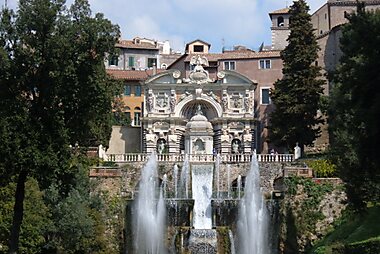

Villa d'Este was created from the 1550s for Cardinal Ippolito II d'Este, with gardens designed by Pirro Ligorio. Terraces step down the hillside past dozens of fountains and hundreds of water jets, all fed by gravity alone. On Mondays it opens only in the afternoon.
Inside the gardens, Fontana dell'Organo is a Renaissance water organ that still plays music, powered only by falling water.
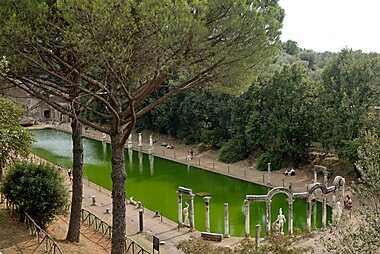
Hadrian's Villa lies on the plain about 5 km below the town. Emperor Hadrian built this huge country palace in the 2nd century AD, with baths, libraries, pools and temples spread over a wide area. Allow at least three hours and wear good shoes.
Teatro Marittimo is one of the best-loved corners of Hadrian's Villa: a small round palace on an island, surrounded by a ring of water.
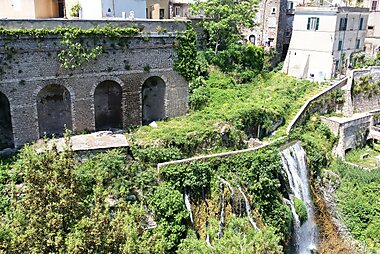
Parco di Villa Gregoriana is a wooded park in the gorge of the Aniene. Paths lead down past caves and Roman ruins to the foot of a tall waterfall, then climb back up to the town. Expect many steps.
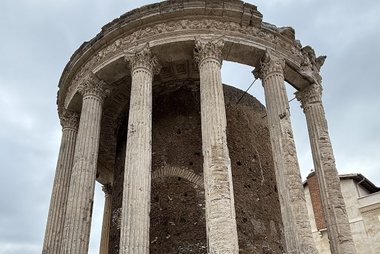
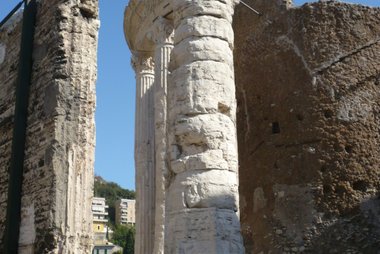
Temple of Vesta stands on the edge of the gorge at the top of the park. This small round temple from the 1st century BC was a favourite subject of painters on the Grand Tour. The rectangular Tempio della Sibilla stands right next to it.
Santuario di Ercole Vincitore is a huge Roman sanctuary from the 2nd and 1st centuries BC, built on high arched terraces with its own theatre. Check its opening days before you go.
Rocca Pia is a castle with round towers, built for Pope Pius II in the 1460s to control the town.
Empfohlene Listen

Tivoli Essentials
Located on the Aniene River, Tivoli contains two UNESCO World Heritage sites: the 16th-century Villa d'Este, famous for its Mannerist gardens and hydraulic fountains, and the sprawling 2nd-century Hadrian's Villa, which once served as the imperial retreat for Emperor Hadrian. The town also features the Parco di Villa Gregoriana, known for its 120-meter Great Waterfall and Roman ruins, alongside the 15th-century Rocca Pia fortress and the massive Santuario di Ercole Vincitore, a significant example of Roman Republican architecture.
10 Orte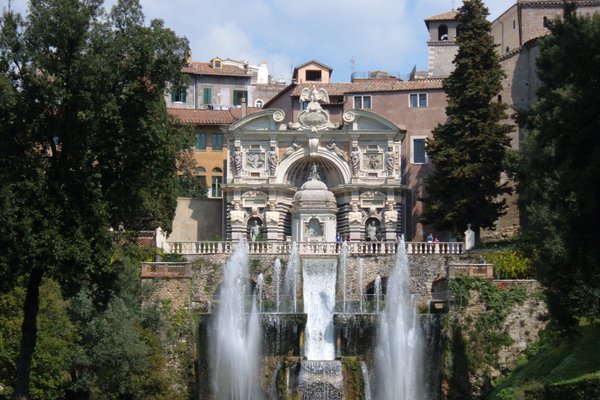

Erlebnisse & Aktivitäten
Water is the theme of Tivoli, and the best moments here are tied to it.
- Hear the water organ play: Fontana dell'Organo plays daily every two hours, starting at 10:30. Arrive a few minutes early to get a good spot.
- Visit the gardens after dark: on some summer evenings, Villa d'Este stays open late with events, and the waterfall park opens on Friday and Saturday nights from July to early September.
- Swim in sulphur pools: the Terme di Roma spa at Tivoli Terme, on the plain below the town, has large outdoor pools of natural sulphur water at about 23 °C. They open from June to September.
- Watch the Inchinata: on 14 and 15 August, two processions leave Cattedrale di San Lorenzo and Chiesa di Santa Maria Maggiore. They meet in Piazza Trento, where their sacred images bow to each other three times.
Touren & Aktivitäten
Tivoli — Karte

 Interaktive Karte öffnen
Tagesausflüge
Tivoli makes a good base for the hills and small towns east and south-east of Rome.
- Palestrina: about 35 minutes by car. An old hill town built over a huge Roman sanctuary, with a museum known for its large Nile mosaic.
- Frascati: about 35 minutes by car. A Castelli Romani town known for its hillside villas and local white wine.
- Rome: about 1 hour by regional train to Roma Tiburtina, or 35 to 60 minutes by car, depending on traffic.
- Subiaco: about 40 minutes by car, deeper in the Aniene valley. Two Benedictine monasteries cling to the cliffs, one built around the cave where Saint Benedict lived.
- Castel Gandolfo: about 45 minutes by car. A lakeside town above Lake Albano, with the papal summer palace and its gardens.
Orte zum Entdecken
Tivoli is part of the area around Rome, and it combines well with the capital and the hills south of it.
- The capital: Rome is less than an hour away, and most visitors stay there.
- The region: Lazio also has Etruscan towns, volcanic lakes and beaches.
- The Alban Hills: Castel Gandolfo, the lakeside town of the popes' summer residence.
Anreise
- By air: Rome Ciampino is the closest airport, about 40 km away (35 to 45 minutes by car). Rome Fiumicino is about 75 km away (about 1 hour by car). By public transport, go into Rome first and change at Roma Tiburtina.
- By train: regional trains run from Roma Tiburtina to Tivoli in about 1 hour. Tivoli station is across the river from the old town, about a 15-minute uphill walk from the centre. Trenitalia
- By bus: Cotral buses run from Ponte Mammolo station on Rome's metro line B to Tivoli in about 50 minutes to 1 hour. Some stop near Hadrian's Villa on the way. Buy your ticket before boarding, online or at a ticket office or tobacconist. A ticket bought from the driver costs more and needs exact change. Cotral
Unterwegs vor Ort
- On foot: the old town, Villa d'Este and the waterfall park are all within a 10-minute walk of each other. Streets are steep, and there are many steps.
- To Hadrian's Villa: it is about 5 km below the town. Local CAT buses (line 4 and 4X) run from the town centre to the villa entrance, and some Cotral buses stop nearby. Buy CAT tickets at bars and tobacconists before boarding. A taxi takes about 15 minutes.
- Waterfall park: the entrance is at Largo Sant'Angelo and the exit is near Temple of Vesta, so you do not need to walk back the same way.
- Cycling: not practical. The town is on a steep hillside, and the roads to the plain are busy.
Autofahren
- Is a car worth it? Not for the town itself, which is best on foot. A car helps if you want to see Hadrian's Villa and the town in one day, or explore the hills nearby.
- Getting here: the A24 motorway from Rome has a Tivoli exit, but the old Via Tiburtina is often slow with traffic.
- Parking: use the paid car parks and street spaces on the edge of the old town. Hadrian's Villa has its own paid car park.
- Restrictions: the lanes of the old town are narrow and partly closed to visitor traffic. Park outside and walk.
Essen & Trinken
Tivoli eats like Rome, with pasta such as cacio e pepe and amatriciana, roast meats and artichokes in spring. The local specialty is the pizzutello, a long, pointed table grape grown on the terraces around the town. It ripens in late summer and has its own local festival. Olive oil from the surrounding hills is also good.
The best area to eat is the old town between Cattedrale di San Lorenzo and Temple of Vesta. Several restaurants here have terraces above the gorge, with views of the temple and the waterfall park. Near Hadrian's Villa there is little choice, so bring water and a snack for a long visit.
Sicherheit & Gesundheit
Tivoli is a safe town. The main risk is pickpockets on crowded buses from Rome and at busy villa entrances in high season.
Take care on the steps and paths. The waterfall park has steep, uneven paths with many steps, and the stone in the villa gardens can be wet and slippery near the fountains. In summer, Hadrian's Villa is very hot and open, so bring water, a hat and sunscreen.
Geschichte
The Romans called the town Tibur. It began as an independent Latin town and a rival of early Rome, then became a favourite Roman country retreat. Generals, poets and emperors built villas on the cool hillside. Santuario di Ercole Vincitore, a huge terraced sanctuary, shows how rich the town was in the last centuries BC. Pale travertine stone from the quarries below Tivoli was used to build the Colosseum and, much later, St Peter's.
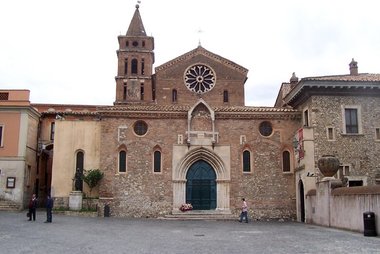
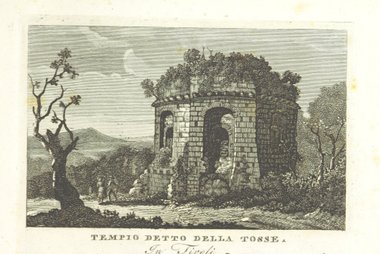
In the 2nd century AD, Emperor Hadrian built his huge palace at Hadrian's Villa, where he copied buildings he had seen on his travels. After Rome fell, the town shrank and the villa was stripped for its marble and statues. In the Middle Ages, a Roman building on the old road became a church, which you can still see as Tempio della Tosse.
The popes later ruled Tivoli. Pius II built Rocca Pia in the 1460s, and Cardinal Ippolito II d'Este created Villa d'Este a century later, using statues and marble taken from Hadrian's Villa. In 1826 a flood of the Aniene destroyed part of the town. Pope Gregory XVI then had the river diverted through tunnels, which created the great waterfall in Parco di Villa Gregoriana. Painters and writers on the Grand Tour came to draw the temples and cascades.
Länderfakten
Quick practical facts for Italy at a glance:
- Währung
- Euro EUR € · Kartenzahlung · Weitgehend akzeptiert
- Notrufnummern
- 112
- Stromnetz
- 230 V · 50 HzSteckertyp C / Steckertyp F / Steckertyp L
- Sprachen
- Italienisch
- Leitungswasser
- Trinkbar
- Fahrseite
- Rechtsverkehr
- Telefonvorwahl
- +39


Tivoli – Plane deine Tage
Verwandle die Orte aus diesem Reiseführer in eine echte Reiseroute mit intelligenter Routenführung, Zeitschätzungen und allem für eine perfekte Reise.


Ähnliche Reiseziele


Data: © OpenStreetMap contributors, Wikidata, Wikipedia, Tripomatic, Official websites, geoBoundaries (CC BY 4.0). Tours by GetYourGuide. We earn commission from bookings. Travel guide generated with AI.
Plane deine Reise mit Tripomatic
- KI-gestützte PlanungErhalte mit einem Fingertipp einen fertigen Tag, lass die KI deine Merkliste über deine Reise verteilen oder plane alles im Chat.
- ReisewarnungenOffizielle Hinweise, Unwetter, Streiks und Naturgefahren für die Orte an jedem Tag deiner Reise.
- Feiertage & EventsSieh Feiertage, Festivals und Schließungen an den Tagen deiner Reise und erfahre, was sie für deine Pläne bedeuten.
- KostenschätzungKI-gestützte Reisekostenübersichten, damit du dein Budget schon vor der Abreise genau kennst.
- Touren & TicketsBuche geführte Touren, Tickets ohne Anstehen und Aktivitäten direkt in deinem Reiseplan.