Tripomatic

Úbeda

Kleinstadt · Andalusien, 🇪🇸 Spanien

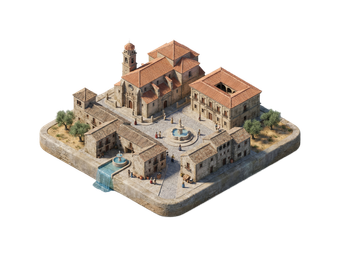
Úbeda is a hill town in the province of Jaén, in eastern Andalusia, surrounded by olive groves. Together with nearby Baeza, it is a UNESCO World Heritage Site for its Renaissance architecture, which was built in the 16th century by wealthy noble families.

The old town is compact and made of golden stone, with palaces, churches and squares close together. It is a calm place that rewards a slow walk, and a base for the Sierra de Cazorla natural park.

Úbeda

Úbeda – Planst du eine Reise?

Erstelle deine Reiseroute Tag für Tag in der Tripomatic-App.

Beste Reisezeit

Spring and autumn are the best seasons, with mild weather. Summers are very hot, and winters can be cold. Holy Week (Semana Santa) has long processions. The Fiestas de San Miguel in late September are the town's main festival.

Beste Reisezeit: April, Mai, September, Oktober

Monat auswählen

Typisches Wetter im Januar

Mäßig
  • 12° (gefühlt 8°) · Extreme -3°–18°
  • 2° nachts
  • 7 Regentage
  • 14 Sonnentage
  • 6 Sonnenstunden pro Tag
  • Trockene Luft
  • Windstill
  • UV-Index 2 · niedrig

Typisches Wetter im Februar

Mäßig
  • 14° (gefühlt 10°) · Extreme -3°–20°
  • 2° nachts
  • 6 Regentage
  • 14 Sonnentage
  • 7 Sonnenstunden pro Tag
  • Trockene Luft
  • Leichte Brise
  • UV-Index 3 · mäßig

Typisches Wetter im März

Gut
  • 17° (gefühlt 13°) · Extreme -1°–24°
  • 5° nachts
  • 8 Regentage
  • 15 Sonnentage
  • 7 Sonnenstunden pro Tag
  • Trockene Luft
  • Leichte Brise
  • UV-Index 4 · mäßig

Typisches Wetter im April

Sehr gut
  • 20° (gefühlt 17°) · Extreme 2°–27°
  • 7° nachts
  • 8 Regentage
  • 16 Sonnentage
  • 9 Sonnenstunden pro Tag
  • Trockene Luft
  • Leichte Brise
  • UV-Index 6 · hoch

Typisches Wetter im Mai

Sehr gut
  • 25° (gefühlt 23°) · Extreme 5°–33°
  • 11° nachts
  • 6 Regentage
  • 19 Sonnentage
  • 10 Sonnenstunden pro Tag
  • Trockene Luft
  • Windstill
  • UV-Index 7 · hoch

Typisches Wetter im Juni

Gut
  • 32° (gefühlt 30°) · Extreme 11°–39°
  • 16° nachts
  • 3 Regentage
  • 24 Sonnentage
  • 12 Sonnenstunden pro Tag
  • Trockene Luft
  • Windstill
  • UV-Index 9 · sehr hoch
Bis zu 8 Tage über 35°

Typisches Wetter im Juli

Schlecht
  • 36° (gefühlt 33°) · Extreme 15°–40°
  • 19° nachts
  • 1 Regentag
  • 29 Sonnentage
  • 13 Sonnenstunden pro Tag
  • Trockene Luft
  • Windstill
  • UV-Index 9 · sehr hoch
Bis zu 21 Tage über 35°

Typisches Wetter im August

Schlecht
  • 35° (gefühlt 33°) · Extreme 15°–40°
  • 20° nachts
  • 2 Regentage
  • 27 Sonnentage
  • 12 Sonnenstunden pro Tag
  • Trockene Luft
  • Windstill
  • UV-Index 8 · sehr hoch
Bis zu 18 Tage über 35°

Typisches Wetter im September

Sehr gut
  • 29° (gefühlt 27°) · Extreme 11°–35°
  • 16° nachts
  • 5 Regentage
  • 21 Sonnentage
  • 9 Sonnenstunden pro Tag
  • Trockene Luft
  • Windstill
  • UV-Index 6 · hoch

Typisches Wetter im Oktober

Sehr gut
  • 24° (gefühlt 21°) · Extreme 6°–30°
  • 11° nachts
  • 7 Regentage
  • 16 Sonnentage
  • 7 Sonnenstunden pro Tag
  • Trockene Luft
  • Windstill
  • UV-Index 4 · mäßig

Typisches Wetter im November

Gut
  • 16° (gefühlt 13°) · Extreme -1°–23°
  • 5° nachts
  • 8 Regentage
  • 14 Sonnentage
  • 6 Sonnenstunden pro Tag
  • Trockene Luft
  • Windstill
  • UV-Index 2 · niedrig

Typisches Wetter im Dezember

Mäßig
  • 13° (gefühlt 10°) · Extreme -2°–19°
  • 3° nachts
  • 7 Regentage
  • 14 Sonnentage
  • 5 Sonnenstunden pro Tag
  • Trockene Luft
  • Windstill
  • UV-Index 2 · niedrig

Klimadaten: NASA POWER (MERRA-2) · 1996–2025

Top-Sehenswürdigkeiten

  • Úbeda City Centre is the heart of the old town, with the Plaza Vázquez de Molina, the main monumental square.
  • Palacio Juan Vázquez de Molina is a Renaissance palace on the main square, built in the 16th century and used as the town hall.
  • The Sacra Capilla del Salvador del Mundo is a chapel with a grand Renaissance façade, one of the best examples of Spanish Renaissance architecture.
  • The Hospital de Santiago is a large 16th-century hospital, now a cultural center, with a patio.
  • The Iglesia de San Pablo is a church with Gothic and Renaissance elements, on a small square.
  • The Sinagoga del Agua is a rediscovered synagogue with a water cistern, in the Jewish quarter.
  • The Casa de las Torres is a Renaissance palace with towers and a decorated portal.
  • The old walls and gates, such as the Puerta de Santa Lucía, and the viewpoints at the edge of town look over the olive groves.

Empfohlene Listen

Erlebnisse & Aktivitäten

  • Walk the Plaza Vázquez de Molina at sunset, when the stone glows.
  • Visit the chapel, the hospital and the synagogue.
  • Shop for the local ceramics, a craft of the town.
  • Take a day trip to Cazorla.
  • Sample olive oil from the local mills.

Touren & Aktivitäten

Úbeda — Karte

Úbeda — Karte

Tagesausflüge

  • Baeza (about 9 km): the sister town in the UNESCO listing, with a cathedral and plazas.
  • Sierra de Cazorla, Segura y las Villas (about 50 km): Spain's largest protected natural area, with forests and walking trails.
  • Granada (about 120 km): the Alhambra and a university city.
  • Córdoba (about 140 km): a mosque-cathedral and old Jewish quarter.

Orte zum Entdecken

Other places nearby:

Anreise

  • By train: The nearest station is Linares-Baeza, about 25 km away, with trains to Madrid and Córdoba. Book on Renfe. A bus or taxi links the station and the town.
  • By bus: Buses run from Jaén, Granada, Córdoba and Madrid.
  • By air: Granada, Córdoba and Jaén have no major airports nearby. Granada airport is about 130 km away, and Madrid about 330 km.
  • By car: The A-316 and A-32 roads.

Unterwegs vor Ort

  • On foot: The monumental area is compact and mostly flat. The lanes can be steep and cobbled.
  • Taxi and local bus: Available, and useful for Baeza and the station.

Autofahren

  • Is a car worth it?: Useful for Cazorla and the olive-oil estates. The old town is on foot.
  • Parking: Paid car parks are at the edge of the old town.
  • Roads: Roads are good and uncrowded.

Essen & Trinken

Jaén province is the world's largest producer of olive oil, and aceite de oliva is central to the food. Try ajo de harina, andrajos (a stew with flatbread), pipirrana (a salad), lomo de orza (marinated pork) and espinacas con garbanzos. Many tapas bars give a free tapa with a drink.

Frühstück
Churros  Churros con ChocolateFrittiertes Brandteiggebäck, das mit einer dicken, dunklen heißen Schokolade zum Dippen serviert wird – ein klassisches spanisches Frühstück oder ein Snack für späte Stunden.
Mittagessen
Paella ValencianaEin mit Safran gewürztes Reisgericht, das in einer breiten, flachen Pfanne zubereitet wird. Die traditionelle valencianische Variante enthält Huhn, Kaninchen und grüne Bohnen – am besten mittags zu genießen.
GazpachoEine kalte, pürierte Suppe aus rohen Tomaten, Gurken, Paprika, Knoblauch, Olivenöl und Essig, die ursprünglich aus Andalusien stammt. Besonders im Sommer als Getränk oder Vorspeise serviert.
Abendessen
Pulpo a la GallegaGekochter Oktopus, der auf einem Holzbrett serviert und mit Olivenöl, grobem Salz und geräuchertem Paprikapulver gewürzt wird – ein typisches Gericht aus Galicien.
Snacks & Streetfood
Jamón IbéricoLuftgetrockneter Schinken vom Eichel-schwein, hauchdünn aufgeschnitten und pur oder mit Brot genossen. Die höchste Qualitätsstufe, Jamón Ibérico de Bellota, zählt zu den wertvollsten Produkten Spaniens.
Tortilla EspañolaEin dickes Kartoffel-Ei-Omelett, das warm oder bei Zimmertemperatur serviert wird und in fast jeder Bar in Spanien zu finden ist. Wird oft als Tapa oder schnelle Mahlzeit gegessen.
Patatas BravasFrittierte Kartoffelstücke, die mit einer scharfen Tomatensauce oder Aioli serviert werden – eine der verbreitetsten Tapas im ganzen Land.
PintxosKleine Snacks, die mit einem Zahnstocher auf Brotscheiben befestigt sind; die baskische Antwort auf Tapas. Sie sind in den Bars von San Sebastián und Bilbao zu finden und oft kunstvoll garniert.
CroquetasKnusprig panierte Röllchen mit einer cremigen Béchamelfüllung, die typischerweise mit Jamón, Bacalà (Stockfisch) oder Pilzen zubereitet werden.
Getränke
Rioja-Wein  Vino de RiojaSpaniens bekannteste Weinregion produziert körperreiche Rotweine aus Tempranillo-Trauben, die in Eichenfässern reifen. Die Bezeichnungen Crianza, Reserva und Gran Reserva stehen für zunehmendes Alter und Komplexität.

Sicherheit & Gesundheit

Úbeda is a safe town. Summer heat can be extreme, so visit in the morning and evening. Cobbled lanes can be slippery when wet.

Geschichte

Úbeda was reconquered from the Moors in 1233. In the 16th century, nobles and clergy built palaces and churches in the Renaissance style, notably under the influence of Andrés de Vandelvira, the architect of the Sacra Capilla and the Hospital de Santiago.

Decline followed in the 17th century, which helped preserve the buildings. In 2003, Úbeda and Baeza were added to the UNESCO World Heritage List.

Länderfakten

Quick practical facts for Spain at a glance:

Währung
Euro EUR € · Kartenzahlung · Weitgehend akzeptiert
Notrufnummern
112
Stromnetz
Steckertyp C / Steckertyp F
230 V · 50 Hz
Sprachen
Spanisch
Leitungswasser
Trinkbar
Fahrseite
Rechtsverkehr
Telefonvorwahl
+34
Mehr erfahren
Úbeda City Centre
Zu Fuß
Vázquez de Molina Palace
Zu Fuß
San Pablo

Úbeda – Plane deine Tage

Verwandle die Orte aus diesem Reiseführer in eine echte Reiseroute mit intelligenter Routenführung, Zeitschätzungen und allem für eine perfekte Reise.


3 Mio.+ Downloads · 4,6 Sterne · 15 Jahre Reiseplanung
QR code
Scannen, um die App herunterzuladen

Ähnliche Reiseziele

Data: © OpenStreetMap contributors, Wikidata, Wikipedia, Tripomatic, Official websites. Travel guide generated with AI.