



Aarhus
Aarhus is Denmark's second-largest city, but it stays compact and easy to explore on foot. The centre mixes cobbled medieval lanes with bold modern architecture, wrapped around a working harbour and a large university that keep the streets young and busy.
What draws most visitors is the city's recent transformation: an art museum crowned with a circular rainbow-colored walkway, a redeveloped harbour with a floating public bath, and one of Denmark's best open-air history museums, all within walking distance of each other. Aarhus suits travelers who want strong city culture and food without the size or cost of Copenhagen, plus easy access to forests, beaches, and lakes just outside town.

Aarhus – Planning a Trip?
Build your day-by-day itinerary in the Tripomatic app.


When to visit
Summer (June to August) is the best time to visit, with long daylight hours and outdoor life along the harbour. Spring and autumn are cooler and quieter, and winter is cold and dark but brings Christmas markets and outdoor skating in the old town squares.
Plan around the Aarhus Festival (Aarhus Festuge), held over ten days in late August, when concerts, theatre, and art events take over streets and squares across the city.
Best time to visit: July, August
June through August are also the best months for a swim at the harbour bath or the beaches south of the city.
Top sights
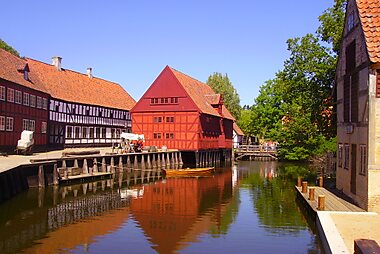

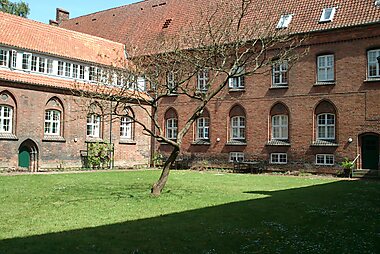
Den Gamle By is a full-scale open-air town assembled from more than 70 historic buildings moved here from across Denmark, with costumed staff and period shops that recreate life from the 1500s to the 1970s.
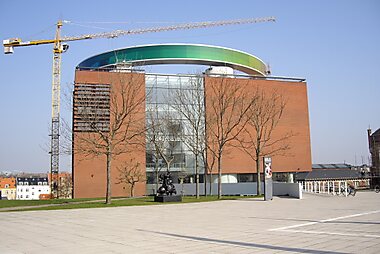
ARoS Aarhus Kunstmuseum is Aarhus's flagship art museum, best known for the circular rainbow-glass walkway on its roof, which offers 360-degree views over the city in every color of the spectrum.
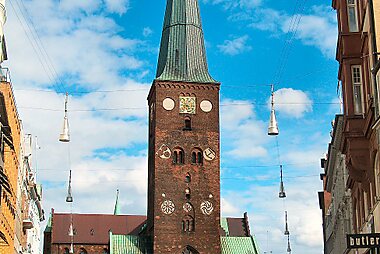
Rising above the old town centre, Aarhus Cathedral is Denmark's longest and tallest church, with parts of the building dating back to the 12th century.
South of the centre, Moesgaard Museum covers Danish and world archaeology inside a striking turf-roofed building; its best-known exhibit is the Grauballe Man, an Iron Age body preserved in a peat bog.
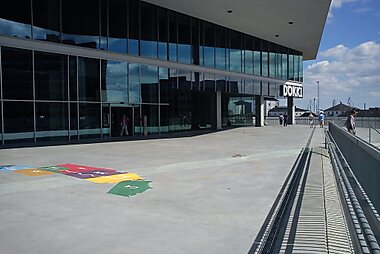
On the harbour, Dokk1 combines Aarhus's main public library with a cultural centre and a bell that rings to mark every new birth registered in the city.
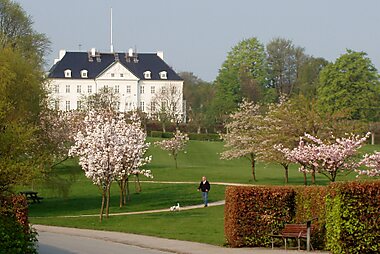
South of downtown, Marselisborg Palace is a royal summer residence with public gardens; walk on to the neighboring Marselisborg Deer Park to see free-roaming deer up close.
Just south along the coast, The Infinite Bridge is a circular wooden pier that loops out over the water and back, built as a piece of public art and now a favorite spot for a short walk with sea views.
Featured Lists


What to experience
- Swim and sauna at Aarhus Harbour Bath, a floating harbour pool built into the modern docks, popular with locals year-round, including winter dips.
- Browse the Christmas market and skate on the outdoor rink in the old town squares each December.
- Rent a bike and ride the waterfront path from the harbour out to the beaches and forest south of the city.
- Join the free outdoor concerts and street performances during the Aarhus Festival (Aarhus Festuge) in late August.
Tours & Activities
Aarhus — Map

 Open the interactive map
 Day trips
Aarhus sits close to some of Jutland's best lakes, forests, and coastline, plus one flagship family attraction farther out.
- Skanderborg – around 25 minutes by train. A lakeside town with forest trails and a large open-air music festival each August.
- Silkeborg – around 45 minutes by train or car. Base for exploring the Danish Lake District; take a historic paddle steamer across the lakes or climb Himmelbjerget, one of Denmark's highest points, for views over the forest and water.
- Ebeltoft and the Djursland peninsula – around 45 minutes by car. A well-preserved half-timbered old town with a glass museum and a historic frigate, plus the heath and coastal trails of Mols Bjerge National Park nearby.
- Legoland Billund – around 1 hour 15 minutes by car or direct bus. Denmark's original Lego theme park, best for families with young children.
Getting there
- By air: Billund Airport (BLL), about 1 hour 15 minutes away by car or direct bus, is the main gateway for international flights to the region. Copenhagen Airport (CPH) has more global connections; a direct train from Copenhagen to Aarhus takes around 3 hours. Aarhus Airport (AAR), near Tirstrup, has only limited seasonal and charter flights.
- By train: Aarhus Central Station has InterCity connections from Copenhagen (about 3 hours) and Aalborg, regional trains across Jutland, and international trains to Hamburg and Berlin. Book tickets via DSB.
- By bus: Long-distance coaches arrive at Aarhus Bus Station, next to the train station, with routes across Denmark and to nearby German cities.
Getting around
- Public transit: Buses and the Aarhus Letbane light rail cover the city and nearby towns. Buy tickets in the Midttrafik app before boarding, or use a Rejsekort travel card at the yellow readers. Midttrafik has route planning and tickets.
- On foot / cycling: The centre is compact, flat, and easy to explore on foot. Cycling is how most locals get around; bike lanes run throughout the city and rental bikes are widely available.
Driving
- Is a car worth it?: Not for the city centre — it is compact and easy on foot or by bike. A car becomes useful for reaching the lakes, coast, or countryside beyond the bus and train network.
- Parking: Paid parking applies across the centre; pay by app or at ticket machines. Park-and-ride options near the outer ring road are a cheaper alternative to central car parks.
- Restrictions: Aarhus has a low-emission zone covering the city centre that restricts older diesel vehicles — check your vehicle meets the requirements before driving in.
Food & drink
Aarhus has a strong food-hall and street-food scene: head to Aarhus Street Food, set in a former bus garage, for a wide mix of cuisines under one roof.
For a sit-down meal, the Latin Quarter (Latinerkvarteret), the tangle of narrow streets around Møllestien, is packed with small cafés, bakeries, and restaurants in historic buildings — a good area to wander and pick something that looks good.
Safety & health
Aarhus is a safe city for travelers, with low rates of violent crime. The main risks are bike theft and opportunistic pickpocketing around the train station and nightlife areas late at night — lock bikes securely and keep an eye on bags in crowded venues.
Emergency services are reliable, and English is widely spoken, including by police and hospital staff, if you need help.
History
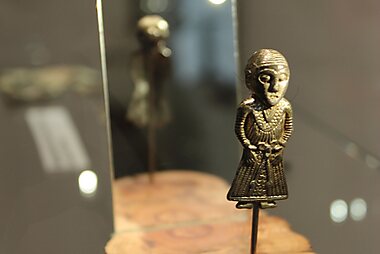
Aarhus was founded by the Vikings more than 1,000 years ago, at the mouth of the river that still runs through the city centre. Remains of the original Viking-age settlement, including part of the old rampart, are on display at The Viking Museum, just beneath the streets of the modern centre.
Construction of Aarhus Cathedral began in the 12th century, when Aarhus was already an important trading town and the seat of a bishopric. The city grew steadily as a harbour and market town over the following centuries, and much of that history survives in the buildings gathered at Den Gamle By, an open-air museum built from relocated houses and shops spanning several centuries of Danish town life.
Aarhus, like the rest of Denmark, was occupied by Germany from 1940 to 1945. Since the early 2000s the city has invested heavily in culture and architecture, redeveloping its old industrial harbour into the museums, libraries, and public baths that define it today.
Country facts
Quick practical facts for Denmark at a glance:
- Currency
- Danish Krone DKK kr · Card payments · Widely accepted
- Emergency numbers
- 112
- Electricity
- 230 V · 50 HzType C / Type E / Type F / Type K
- Languages
- Danish
- Tap water
- Safe to drink
- Driving side
- Right
- Calling code
- +45


Aarhus – Plan Your Days
Turn the places from this guide into a real itinerary, with smart routing, time estimates, and everything you need for a perfect trip.




