


Silkeborg
Silkeborg sits at the heart of Denmark's Lake District, where the Gudenå river widens into a chain of lakes surrounded by forested hills. The town grew up around a 19th-century paper mill on the riverbank, and today its identity is built on the water and the woods around it: canoes and kayaks line the lakeshore, and forest and lake trails start a few minutes from the main square. It suits travelers who want a mix of nature and culture rather than a big-city itinerary — paddling or hiking by day, museums by evening.
The painter Asger Jorn, a founding member of the international CoBrA art movement, grew up in the region and later donated the collection that anchors the town's leading art museum. Silkeborg is also home to one of the best-preserved Iron Age bog bodies ever found, a discovery that put the town on the international archaeological map.

Silkeborg – Planning a Trip?
Build your day-by-day itinerary in the Tripomatic app.


When to visit
Summers are mild with long days; winters are cold and often grey, though rarely severe. Spring and early autumn are quieter and good for hiking without summer crowds.
Time a visit for the Riverboat Jazz Festival in June, running every year since 1966, when bands play on boats and around the lakeshore in the town centre.
June and August are the most reliable months for lake activities; pack a rain jacket regardless of season.
Top sights
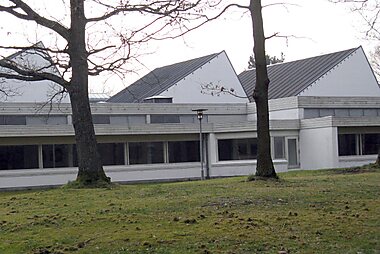




Museum Silkeborg is Silkeborg's most important sight: it houses the Tollund Man, an Iron Age bog body so well preserved that his face is still recognizable, found in a peat bog outside town in 1950.
Museum Jorn, by the lake, holds the collection donated by the CoBrA painter Asger Jorn alongside works by other 20th-century artists he collected.
Silkeborg Castle is now the low brick remains of a 14th-century riverside fortress on a small island — a quiet, atmospheric spot to see how the town began.
Paper Museum, inside the old riverside paper mill that once employed much of the town, explains the industry that gave Silkeborg its start and still shapes its skyline.
Art Centre Silkeborg Bad, a former 19th-century spa building west of the centre, shows changing contemporary art exhibitions in a sculpture garden overlooking a lake.
AQUA Akvarium & Dyrepark is a hands-on nature and wildlife centre with otters, beavers and native fish — a good stop with children.
Silkeborg Langsø is the lake right in front of the town centre; a paved path along its northern shore makes an easy evening walk.
Dronningestolen is a forest viewpoint above Silkeborg with a wide view over the lakes — a short walk from the centre and a good spot for sunset.
Featured Lists

What to experience
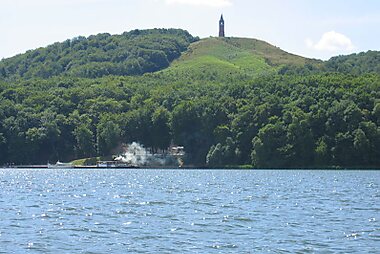
- Ride the historic paddle steamer Hjejlen — one of the world's oldest coal-fired paddle steamers still in service — from the harbour across the lakes to Himmelbjerget, then climb the tower at the top for the best view in the Lake District. The ship has sailed this route since 1861.
- Rent a canoe or kayak and paddle a stretch of the Gudenå or the connected lakes — canoe touring here is a Danish institution, and outfitters rent by the hour or for multi-day trips downstream.
- In summer, swim from one of the lake beaches a short walk from the centre along Silkeborg Langsø.
- Silkeborg's forests have some of Denmark's best mountain-biking trails, including the country's longest easy (blue) descent; bike rental shops in town can set visitors up for a few hours on the trails.
Tours & Activities
Silkeborg — Map

 Open the interactive map
 Day trips
Denmark's Lake District rewards a full day out on the water and in the hills around Silkeborg.
- Himmelbjerget and the lakes — about 2 hours round trip by the historic paddle steamer Hjejlen, sailing from the Silkeborg harbour across the lakes to the foot of the hill. Climb the tower on top for a view over the whole Lake District.
- Ry — about 20 minutes by train, a small lakeside town with its own beaches and canoe rental, a quieter alternative base in the Lake District.
- Skanderborg — about 30 minutes by train, a lakeside town best known for hosting a major summer music festival and for its lakeside castle park.
- Aarhus — about 45 minutes by train, Denmark's second city, with major art and open-air museums; worth the longer trip for a full day.
Getting there
- By air: The nearest airports are Aarhus Airport (AAR) at Tirstrup, about 80 km away, and Billund Airport (BLL), about 60 km away with more international routes; both are roughly 50 minutes by car, but public transport from either takes 2 hours or more, so a rental car or pre-booked transfer is the practical option. From Copenhagen Airport, the train to Silkeborg takes around 3.5 hours, with at least one change en route.
- By train: Silkeborg sits on the Skanderborg–Skjern line to Herning, with direct trains running east to Aarhus and a change there for InterCity trains toward Copenhagen. Book and check timetables with DSB, the national rail operator.
- By bus: Regional and long-distance coaches connect Silkeborg with Aarhus, Herning and other Jutland towns.
Getting around
- Public transit: Local buses (Midttrafik) connect the centre with outlying neighbourhoods; single tickets can be bought with cash directly from the driver, or in advance with the regional transport app or a Rejsekort travel card. Plan a route with Midttrafik.
- Taxi: Local taxi companies operate app- and phone-based booking; ride-hailing apps have little presence outside Copenhagen.
- On foot / cycling: The centre is compact and walkable, and cycling is easy on flat, well-marked paths along the lakes; bike rental is available in town.
Driving
- Car needed?: The centre is small and walkable; a car pays off mainly for reaching Himmelbjerget, Ry, and forest trailheads outside town, not for downtown sightseeing.
- Parking: Metered car parks and street spaces cluster around the town centre; pay by parking app or ticket machine.
- Restrictions: None apply to a standard rental car; Denmark's low-emission zones cover only Copenhagen, Frederiksberg, Odense, Aarhus and Aalborg, not Silkeborg.
Food & drink
Look for good, casual eating along the harbour promenade by Silkeborg Langsø and the pedestrian streets through the centre, where cafés and bakeries cluster — a lakeside café terrace is a good place to try smørrebrød with a view of the water.
There is no standout fine-dining scene here; Silkeborg's food culture is casual, and a picnic by the lake or on a canoe trip is as typical as sitting down in a restaurant.
Safety & health
Silkeborg is a small, low-crime town, and violent crime against tourists is essentially unheard of. The main things to watch are ordinary opportunistic theft — an unattended bag on a café terrace or an unlocked bike — rather than anything specific to the town.
Lake swimming is generally safe at supervised beaches, but currents and cold water can catch out inexperienced swimmers away from marked areas; check local signage before swimming in the Gudenå itself, where flow can be stronger than it looks.
History
Silkeborg Castle marks where the story began: a fortress built in 1385 on a small island in the river, later the seat of a bishop's estate, and demolished in 1726 after falling into disrepair. For a long time afterward, the site was little more than a crossing point on the Gudenå.
The modern town dates to 1844, when the industrialist Michael Drewsen built a paper mill on the riverbank to take advantage of the river's water power. The mill became the town's largest employer for well over a century, and the settlement around it was granted market-town status in 1900 — young by Danish standards. Paper Museum now occupies part of the old mill complex.
In 1950, workers cutting peat in a bog outside town uncovered the Tollund Man, an Iron Age body so well preserved that he was mistaken for a recent murder victim. Radiocarbon dating later placed his death around 400 BC. He is now on display at Museum Silkeborg, one of Denmark's most visited archaeological exhibits.
Country facts
Quick practical facts for Denmark at a glance:
- Currency
- Danish Krone DKK kr · Card payments · Widely accepted
- Emergency numbers
- 112
- Electricity
- 230 V · 50 HzType C / Type E / Type F / Type K
- Languages
- Danish
- Tap water
- Safe to drink
- Driving side
- Right
- Calling code
- +45


Silkeborg – Plan Your Days
Turn the places from this guide into a real itinerary, with smart routing, time estimates, and everything you need for a perfect trip.