



Albania
Albania sits on the Balkan Peninsula across the Adriatic and Ionian seas from Italy, with a coastline that runs from quiet fishing towns to the cliffs of the Albanian Riviera. Decades of isolation under a communist regime kept the country off the tourist map until the 1990s, so its Ottoman-era old towns, Greek and Roman ruins, and mountain villages feel far less visited than similar sights elsewhere in Europe.
The country rewards travelers who like a mix of history, coast, and mountains in a small area: a UNESCO old town like Berat or Gjirokastër is a few hours' drive from beaches, and the Albanian Alps in the north are one of Europe's least-developed hiking regions. Albania suits independent travelers who don't mind a few rough edges — English is not universal outside Tirana and the coast, and infrastructure varies — more than those wanting a fully packaged trip.


Albania – Planning a Trip?
Build your day-by-day itinerary in the Tripomatic app.


Money & payments
The local currency is the Albanian lek. Cash still matters outside Tirana and the main resort towns — smaller guesthouses, local restaurants, and rural areas often don't take cards, so carry enough lek for a day or two at a time. ATMs are common in cities and larger towns but scarce in villages and mountain areas.
Featured Lists


Castles & Forts
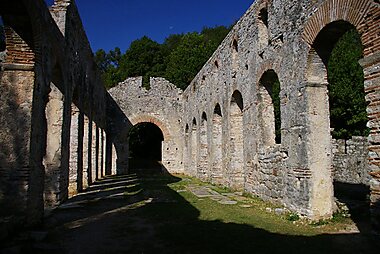
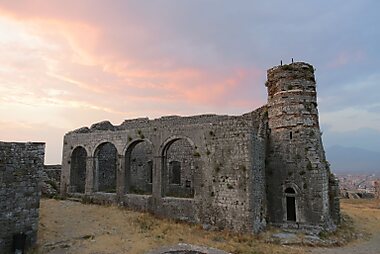
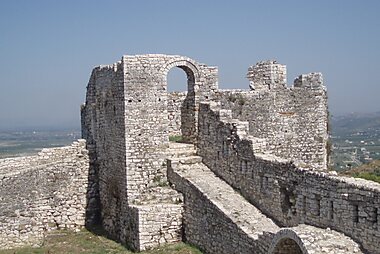
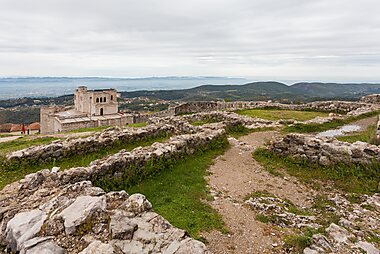
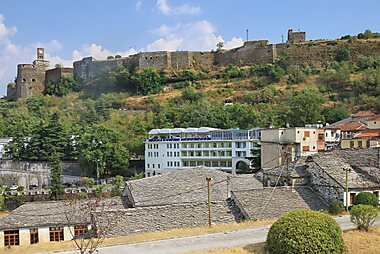
Albania's strategic location at the crossroads of empires is reflected in its diverse fortifications. These sites span from ancient Illyrian foundations to Byzantine city walls and expansive Ottoman citadels. Significant landmarks include Krujë Castle, the center of Skanderbeg’s 15th-century resistance, and the UNESCO-listed fortresses of Berat and Gjirokastër, which still house residential quarters. Coastal defenses like Porto Palermo and the Venetian Tower in Durrës showcase the influence of Mediterranean powers on the country's defensive architecture.
15 places


Tours & Activities
Albania — Map

 Open the interactive map
 Tipping
Tipping isn't a deep-rooted custom in Albania, but it's increasingly common in places used to tourists. In restaurants, rounding up or leaving around 10% is appreciated but not expected. For taxis, rounding up the fare is normal. Tour guides and drivers on multi-day trips are usually tipped a small amount at the end.
round up or ~10%
round up
small amount for porters/housekeeping
a few euros per day
Electricity
Albania uses Type C and Type F plugs at 230 V / 50 Hz — standard continental European sockets, so most non-European chargers need an adapter.
Language
Albanian is the official language, and it's unrelated to most other European languages, which can make menus and signs hard to guess at. English is widely spoken by younger people in Tirana and along the coast, but less so in rural areas and the north — a translation app helps outside the main tourist spots. Italian is also fairly widely understood, a legacy of Italian television being watched across the country for decades.
Safety & emergencies
Albania is generally safe for visitors, with low rates of violent crime against tourists. The main risks are petty theft in crowded areas and unlicensed taxi drivers overcharging at the Tirana airport — use official taxi ranks or a ride app instead. Road safety is a bigger concern than crime: driving can be erratic and mountain roads are narrow, so take extra care as a pedestrian or cyclist.
Health
Tap water is generally treated in Tirana and other larger cities, but bottled water is the safer choice in smaller towns and rural areas, and it's cheap and widely sold everywhere. Pharmacies (farmaci) are easy to find in cities and marked with a green cross; stock and opening hours are more limited in remote areas. No special vaccinations are required for most travelers beyond being up to date on routine immunizations — check with a doctor or travel clinic before your trip for personal advice.
Visas & entry
Citizens of the EU/Schengen area, UK, Canada, and Australia can enter Albania without a visa for stays of up to 90 days within a 180-day period; EU/EEA citizens can travel on a national ID card instead of a passport. US citizens get a notably longer allowance: under a bilateral agreement, they can stay visa-free for up to one year, though border officers sometimes default to stamping the standard 90 days, so US travelers planning a longer stay should mention the agreement at entry. Travelers from many other countries can also enter visa-free for shorter periods or need a visa in advance, depending on nationality.
Visa and entry requirements change frequently. Verify current requirements with the official immigration authority or your country's embassy before travel.
Etiquette
Albanian hospitality runs deep — being invited for coffee or a meal is common and it's polite to accept. A well-known quirk: traditionally, Albanians nod the head up and down for "no" and shake it side to side for "yes" — the reverse of most of the world — though many people, especially in cities, have shifted to the international convention, so don't rely on this alone. Dress modestly when visiting mosques and Orthodox or Catholic churches, and remove shoes before entering a mosque. Coffee culture is central to social life; lingering over a coffee for an hour is normal and not rushed.
Holidays & opening hours
Public holidays can close shops, banks, and government offices, especially in smaller towns, though restaurants and cafés in tourist areas usually stay open. Many shops keep long hours seven days a week in cities and resort towns, while smaller-town shops may close for a midday break and on Sundays.
Getting around
- By furgon (shared minibus): the backbone of intercity travel — furgons run frequently between cities and towns, leave when full rather than on a fixed timetable, and are cheap. Ask locally for the current departure point, since they don't always use a formal bus station.
- By bus: larger coaches run the busiest routes (Tirana–Durrës, Tirana–Shkodër, Tirana–Vlorë) on more predictable schedules than furgons.
- By train: Albania's passenger rail network is very limited and slow, and not a practical way to get around for most visitors.
- By air: domestic flights aren't really an option — the country is small enough that road travel between any two major towns rarely takes more than a few hours.
Driving
- Key rules: seatbelts are mandatory in front and back seats, headlights must stay on at all times (even in daylight), and mobile phone use while driving is illegal without hands-free.
- Tolls: Albania has no windscreen vignette, but a few specific roads charge a toll paid in cash at the booth — notably the Kalimash tunnel on the A1 near the Kosovo border, and the Llogara tunnel on the coastal route to the Riviera.
- Parking: paid street parking is common in city centers, usually via a parking attendant or SMS payment system rather than machines.
- Fuel: stations are staffed rather than self-service on the whole, and most take cards as well as cash. Look for "Benzinë" for petrol and "Naftë" for diesel.
- Mountain driving: roads like the Llogara Pass and routes into the Albanian Alps are narrow and winding, with sheer drops and minimal barriers — drive cautiously and expect slow going.
Food & drink
Albanian food blends Mediterranean, Balkan, and Ottoman influences. Breakfast is often light — coffee and a pastry — while lunch is traditionally the main meal of the day, though this has loosened in cities. Dinner tends to be eaten later in the evening, especially in summer.
Look out for byrek (a flaky savory pastry filled with cheese, spinach, or meat), tavë kosi (baked lamb or veal in a tangy yogurt sauce), and fërgesë (peppers, tomatoes, and cheese cooked together). On the coast, fresh grilled fish and seafood are a highlight. Raki, a strong grape or fruit brandy, is the traditional welcome drink and aperitif, while Albanian coffee culture — often Turkish-style or espresso — is central to daily life. Locals eat out often, from simple family-run restaurants to street stalls selling byrek and grilled meats.
Where to explore
Tirana, the capital, is the country's main transport hub and a good base with its museums, communist-era bunkers turned attractions, and lively café scene.
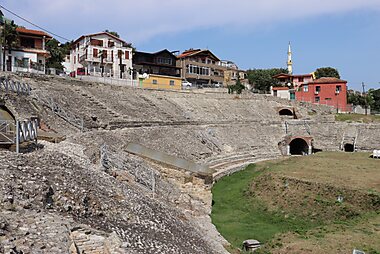
On the coast, Durrës is the main port city with a Roman amphitheatre and long beaches, while further south the Albanian Riviera stretches through Vlorë to Sarandë and the turquoise coves of Ksamil, near the Butrint ruins.
Inland, the UNESCO-listed old towns of Berat, known for its stacked Ottoman-era houses, and Gjirokastër, with its stone-roofed old quarter, are among Albania's most rewarding stops. Krujë draws visitors for its hilltop castle tied to national hero Skanderbeg, and Elbasan anchors central Albania.
In the southeast, Korçë is known for its Ottoman-era old bazaar and cooler mountain climate, and Pogradec sits on the shore of Lake Ohrid, shared with North Macedonia.
Albania – Plan Your Trip
Pick the places you want to see and Tripomatic turns them into a day-by-day route, with smart routing, time estimates, and everything you need for a perfect trip.


Related destinations


Data: © OpenStreetMap contributors, Wikidata, Wikipedia, Tripomatic, Official websites, geoBoundaries (CC BY 4.0). Tours by GetYourGuide. We earn commission from bookings. Travel guide generated with AI.