



Belarus
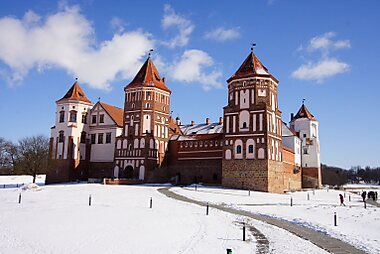
Belarus sits landlocked between Poland, Lithuania, Latvia, Russia, and Ukraine. Its flat, heavily forested landscape reflects a history as a crossroads rather than a single well-known destination. The country holds two UNESCO World Heritage castles, Mir Castle and Nesvizh Castle, both former seats of the Radziwill noble family. It also holds one of Europe's last fragments of primeval forest, Belovezhskaya Pushcha National Park, home to free-roaming European bison. Soviet-era monuments, Orthodox churches, and Baroque palaces sit close together, especially in the rebuilt capital, Minsk.
Belarus suits travelers interested in history, architecture, and quiet countryside more than nightlife or beach resorts. Tourist infrastructure outside Minsk is thinner than in neighboring Poland or Lithuania, so a trip here rewards some advance planning. Distances between towns are short, and a week is enough to combine the capital with a couple of historic towns and a nature reserve.





Belarus – Planning a Trip?
Build your day-by-day itinerary in the Tripomatic app.


Money & payments
Foreign cards from non-sanctioned banks generally work at hotels, larger shops, and restaurants, but occasional refusals happen at individual card terminals for reasons outside a traveler's control. Carry some cash in euros or US dollars as a backup, and expect to exchange it for Belarusian rubles rather than spend it directly. ATMs at major banks accept foreign cards, though a single withdrawal is usually capped at 2,000-4,000 BYN, so a large cash need may take more than one transaction.
Featured Lists

Belarus Must-Sees
Belarus features diverse architectural landmarks, from the 11th-century foundations of Saint Sophia Cathedral in Polotsk to the Baroque grandeur of St. Francis Xavier Cathedral in Grodno. This collection includes the oldest operating theatre in the country, the UNESCO-listed Struve Geodetic Arc, and the Neo-Gothic ruins of the Pusłowski Palace. These sites represent centuries of history, including the influence of the Radziwiłł dynasty and the resilient restoration of Minsk’s historic City Hall and Holy Spirit Cathedral.
15 places
Belarusian Religious Heritage
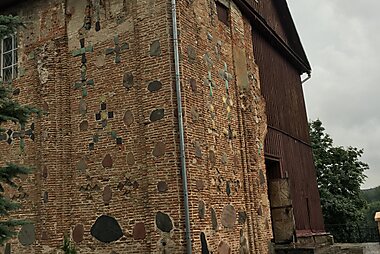
Belarusian religious architecture reflects a complex history of shifting borders and intersecting faiths. This collection spans from the 11th-century foundations of Polotsk's Saint Sophia Cathedral to the 15th-century Gothic brickwork of Ishkold. Highlights include the ornate Baroque interiors of Grodno’s Jesuit cathedral and the 12th-century Kalozha Church, one of Eastern Europe's oldest structures. These sites showcase the evolution of Orthodox and Catholic traditions through diverse styles like Vilnius Baroque, Neo-Russian, and Renaissance architecture.
17 places


Tours & Activities
Belarus — Map

 Open the interactive map
 Tipping
5-10%, round up the bill
round up to the nearest whole amount
a few euros/dollars for a private guide
Tipping is appreciated but never expected. In restaurants, rounding up the bill or leaving 5-10% for good service is common in Minsk; smaller towns see it less often. Taxi drivers are usually tipped by rounding the fare up to a convenient amount rather than a fixed percentage.
Electricity
Belarus uses Type C and F plugs at 220 V / 50 Hz, the standard continental European sockets, so most travelers from mainland Europe need no adapter.
Language
Belarusian and Russian are both official languages, and in practice most people, especially in cities, speak Russian day to day. English is spoken at hotels and major sights in Minsk, but far less so outside the capital, on public transport, or with older people. Signage is in Cyrillic script, which makes independent navigation harder than in Latin-script countries; a translation app or offline map with Cyrillic place names is worth preparing in advance.
Staying connected
Buying a local prepaid SIM requires showing a passport for registration; kiosks at Minsk National Airport and city phone-operator stores handle this in a few minutes. Coverage is solid in cities and along main roads, weaker in rural areas.
Internet access is monitored, and some Western social media platforms and independent news sites are periodically blocked or slowed. A VPN, installed and tested before arrival, is worth having if staying connected to these services matters.
Safety & emergencies
Everyday street crime against tourists is low by regional standards. The larger concern for visitors is political: several governments, including the United States and the United Kingdom, currently advise against all travel to Belarus, citing the risk of arrest for anyone connected, even loosely or in the past, to activity the authorities consider illegal, and the country's proximity to the war in Ukraine. Belarus does not recognize dual citizenship, which can limit consular help for dual nationals. Avoid photographing government buildings, military sites, and border areas, and avoid public political discussion or displaying protest symbols. Check your own government's current travel advice before booking, and confirm that your travel insurance remains valid given any official advisory in place.
Health
Pharmacies (аптека) are common in cities and stock most everyday medicines; look for a green cross sign. They are sparser in small towns and villages. No special vaccinations are required for entry, but routine vaccines should be up to date, and a tick-borne encephalitis vaccination is worth considering for anyone spending extended time hiking or camping in forests between spring and autumn. Tap water is treated and safe in Minsk; in other towns, bottled water is the more comfortable choice.
Visas & entry
Citizens of 76 countries can enter Belarus visa-free for up to 30 days through Minsk National Airport or the airports at Brest, Gomel, Grodno, Mogilev, and Vitebsk, provided entry and exit both happen through one of these airports. This route requires a passport valid at least 90 days past departure, proof of sufficient funds, and medical insurance valid in Belarus with at least €10,000 of coverage. Travelers who need a visa can apply at a Belarusian embassy or consulate in advance. A stay longer than 10 working days requires registration with local authorities, which hotels normally handle automatically at check-in.
Visa and entry requirements change frequently. Verify current requirements with the official immigration authority or your country's embassy before travel.
Etiquette
A firm handshake is the standard greeting; close friends may greet with a light cheek kiss. Cover shoulders and knees when visiting an Orthodox or Catholic church, and women are often expected to cover their heads inside an Orthodox church, especially outside Minsk. Ask before photographing people, and avoid photographing government buildings, military installations, checkpoints, or anything near the borders with Ukraine or the EU. Public political discussion is best avoided with people you don't know well, given the current climate.
Holidays & opening hours
Public holidays combine Soviet-era dates, Orthodox and Catholic Christmas, and national commemorations, so expect closures around both January 7 and December 25. Shops in cities generally keep long hours seven days a week; smaller-town shops and offices often close on Sundays and take a midday break.
Getting around
- By train: Belarusian Railway (Belaruskaja čyhunka) connects all regional capitals and most historic towns; trains are reliable and inexpensive. Book through Belarusian Railway – ticket booking.
- By bus: Intercity coaches cover routes trains don't reach, including smaller towns like Niasvizh and villages near Belovezhskaya Pushcha National Park.
- By air: International flight options into Belarus are limited, since most European and North American carriers no longer fly there and EU airspace is closed to Belarusian aircraft; most travelers arrive overland from a neighboring country or connect through Russia, Turkey, or the Gulf. Domestic flights are not worth using given the country's small size.
Minsk has a small, efficient metro plus buses and trams; a rechargeable transit card or contactless bank card works across the system.
Driving
- Key rules: Headlights must stay on at all times, even in daylight. Winter tires are mandatory from December through February. The alcohol limit is effectively zero.
- Tolls: The BelToll electronic system covers roughly 1,500 km of national highways, including the main Brest-Minsk route. Foreign cars need an e-vignette or a prepaid on-board unit bought in advance; there's no cash option and no way to avoid it on these roads.
- Parking: Paid street parking in city centers is usually metered or app-based; free parking is easy to find outside the center.
- Fuel: Stations are self-service or attended and take cards. Petrol is sold by octane rating (АИ-92, АИ-95, АИ-98); diesel is labeled ДТ.
- Electric vehicles: Charging infrastructure is limited to a handful of stations in Minsk and along the M1 motorway; renting an EV for a road trip beyond the capital isn't practical yet.
Food & drink
Belarusian food is hearty and built around potatoes, rye bread, and slow-cooked meat. Breakfast is often syrniki (fried curd-cheese patties) or bread with cold cuts; lunch and dinner center on soups, stews, and potato dishes, eaten later than in Western Europe. The best-known dish is draniki, fried potato pancakes usually served with sour cream. They appear on nearly every menu, often alongside machanka, a thick meat gravy meant for dipping bread or pancakes into.
Markets and canteen-style cafeterias (stalovaya) are a cheap, filling way to eat like a local, especially outside Minsk. Kvass, a lightly fermented rye drink, is sold from street tanks in summer, and Belarusian craft beer has grown popular in Minsk in recent years alongside the more traditional vodka.
Where to explore
The capital, Minsk, is a rebuilt Soviet showcase city with wide boulevards, and the natural base for a first visit.
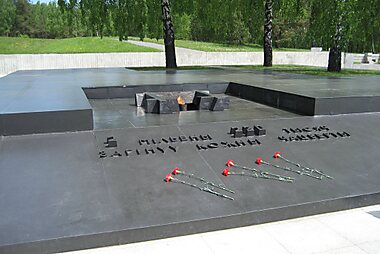
West of Minsk, Brest sits on the Polish border and is best known for its World War II fortress, while Grodno keeps the country's best-preserved historic center and closest ties to its Polish-Lithuanian past. The small town of Niasvizh, between the two, holds one of Belarus's UNESCO castles.
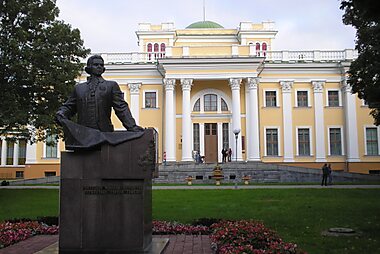
In the east, Gomel and Mogilev are the country's second- and third-largest cities, each built around a grand riverside palace or historic center. In the north, Vitebsk is known as the hometown of painter Marc Chagall, and nearby Polotsk is Belarus's oldest city, home to the country's oldest stone church.
Belarus – Plan Your Trip
Pick the places you want to see and Tripomatic turns them into a day-by-day route, with smart routing, time estimates, and everything you need for a perfect trip.




