



Bergen
Bergen sits among seven mountains on Norway's west coast, wrapped around a natural harbor that has drawn traders and fishermen for nearly a thousand years. Wooden Hanseatic warehouses still line the wharf, funiculars and cable cars carry visitors up into the surrounding peaks, and ferries and express boats fan out from the harbor toward some of Norway's most famous fjords. It suits travelers who want a compact, walkable city with real history, paired with easy access to fjord scenery without renting a car.
The composer Edvard Grieg and the violinist Ole Bull both grew up here, and their homes outside the city are now open to visitors. Expect rain — Bergen is one of Europe's wettest cities — so plan for a mix of museums, waterfront walks, and mountain views between showers.

Bergen – Planning a Trip?
Build your day-by-day itinerary in the Tripomatic app.


When to visit
Summers (June-August) are mild, with long daylight and the best chance of dry weather, though rain is possible any day of the year. Winters are cold but rarely freezing, with short days and a chance of snow on the surrounding peaks.
Plan around the Bergen International Festival (Festspillene i Bergen), Norway's leading festival of music, opera, theater, and dance, running from late May into early June and drawing more than 70,000 visitors each year.
Rain is the defining feature of Bergen's weather — pack a waterproof jacket no matter the season.
Top sights
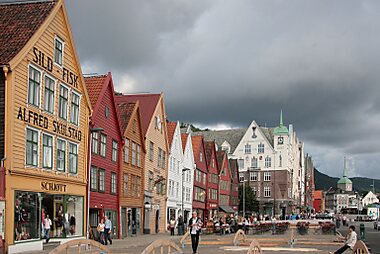




Bryggen Hanseatic Wharf is Bergen's most photographed sight, a row of colorful wooden Hanseatic trading houses on the harbor that has stood, in various rebuilt forms, since the Middle Ages, and is now a UNESCO World Heritage Site.
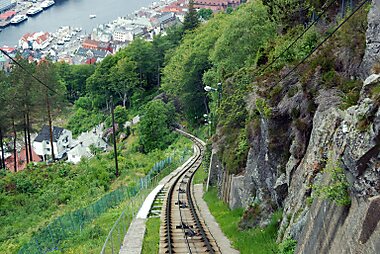
For a view over the city and the surrounding fjords, ride Fløibanen Funicular up to Mount Fløyen, one of two funicular and cable-car rides locals treat as everyday transport rather than tourist novelties.
Ulriksbanen climbs even higher, to the summit of Mount Ulriken, the tallest of the seven mountains ringing Bergen, with hiking trails leading off from the top.
At the harbor entrance, Rosenkrantz Tower and Haakon's Hall are the two great medieval survivors of Bergenhus Fortress: a defensive tower and a royal banqueting hall, both open as museums.
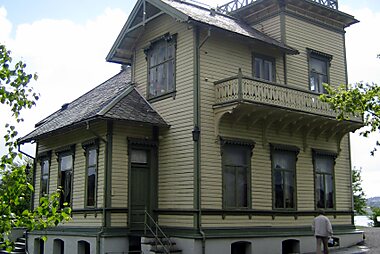
South of the center, Troldhaugen - Edvard Grieg Museum was the lakeside home of composer Edvard Grieg, kept much as he left it, with his hillside composing hut and gravesite nearby.
Families gravitate to Bergen Aquarium on the Nordnes peninsula, a small aquarium with penguins and local marine life a short walk from the center.
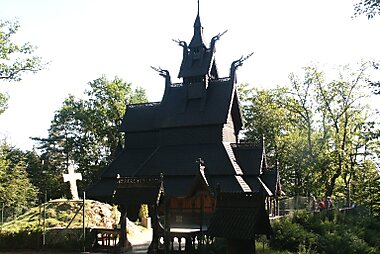
Fantoft Stave Church is a faithful reconstruction of a 12th-century stave church, rebuilt after a 1992 arson fire, and one of the best places nearby to see traditional Norwegian wooden church architecture.
Featured Lists


Historic Churches of Bergen
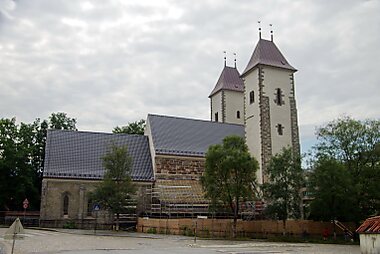
Bergen’s religious architecture spans nearly a millennium, from the Romanesque stone arches of St. Mary’s Church—the city's oldest remaining building—to the 13th-century ruins of Nonneseter Abbey. This collection features significant sites like the historic St. George’s Church, linked to the city's leprosy hospital, and Nykirken, rebuilt several times on medieval foundations. The list also includes modern landmarks like the 1989 Bergen Deaf Church, illustrating the evolution of the city's parish life and architectural styles from the Middle Ages to the present day.
6 places
What to experience
- Join a RIB boat or fjord safari from the harbor near Bryggen Hanseatic Wharf for a fast trip out to nearby islands, sometimes with seals or porpoises along the way.
- Hike the Vidden trail, a marked route across the ridge connecting Fløyen and Ulriken, for a half-day walk between Bergen's two highest viewpoints.
- Take a cold dip at one of Bergen's open-air sea pools, a local ritual practiced year-round, not just in summer.
- Browse Bergen's Christmas market in December, with stalls, mulled wine, and an ice rink set up around the harbor.
Tours & Activities
Bergen — Map

 Open the interactive map
 Day trips
Bergen is Norway's gateway to the western fjords, and several of the country's best-known landscapes are within a day's reach.
- Osterøy — Norway's largest inland island, under an hour by car or bus, with quiet fjord-side roads and hiking trails away from the tourist crowds.
- Voss — about 1 hour by train, a lake and mountain town known for rafting, paragliding, and skiing in winter.
- Hardangerfjord — around 2 hours by car or bus, Norway's "fruit garden" fjord, with orchards, the Steinsdalsfossen waterfall you can walk behind, and the Trolltunga hike further inland.
- Flåm and the Nærøyfjord — about 3.5-4 hours one-way by train, the classic "Norway in a Nutshell" route: a scenic rail journey down to Flåm, then a cruise on the narrow, UNESCO-listed Nærøyfjord. Most travelers make it a long round trip in a single day.
Getting there
- By air: Bergen Airport Flesland (BGO) is about 19 km south of the center. The Bybanen light rail runs directly from the airport to downtown in around 45 minutes, or take the Flybussen airport coach, which is faster but costs more.
- By train: The Bergen Railway (Bergensbanen) from Oslo is one of Norway's most scenic routes, crossing the Hardangervidda plateau; the trip takes about 6.5-7 hours.
- By bus: Long-distance coaches connect Bergen to Oslo and other Norwegian cities, generally slower than the train but cheaper.
Getting around
- Public transit: Skyss operates Bergen's buses and the Bybanen light rail. Buy tickets in advance through the Skyss app — the light rail requires a ticket bought before boarding. Skyss
- Taxi / ride-hailing: Uber and Bolt both operate in Bergen alongside metered local taxis.
- On foot / cycling: The historic center is compact and walkable, though steep in places as the city climbs toward the surrounding hills. A seasonal city bike-share scheme covers the flatter parts of downtown.
Driving
- Is a car worth it?: Not for the city itself — the center is walkable and parking is limited. A car is useful for reaching Hardangerfjord, Voss, or other day trips at your own pace.
- Parking: Multi-story car parks in the center charge by the hour; on-street spaces are metered and often full. Pay via the EasyPark app or at machines.
- Restrictions: Bergen has an automatic toll ring (Bomring) on roads into the center — cameras read the license plate and bill the charge automatically, no need to stop.
Food & drink
Bergen's signature dish is fiskesuppe, a creamy fish soup thick with cod, salmon, and root vegetables, found on menus across the city. For the freshest seafood, head to Bergen Fish Market, where market stalls and the indoor Mathallen food hall sell fish, shellfish, and other local produce.
Beyond the market, good eating clusters around Bryggen and the streets near Nordnes, where restaurants range from casual harborside spots to higher-end dining.
Safety & health
Bergen is a safe city for travelers, with low rates of violent crime. The main risk is pickpocketing in crowded spots like the fish market and the Bryggen wharf during peak summer season — keep bags zipped and valuables out of back pockets. Norway is not a high-scam destination, and taxis are metered and reliable.
History
Bergen was founded around 1070 and grew into Norway's largest city, a title it held for centuries until Oslo overtook it in the 1830s. It also briefly served as the country's royal capital in the 13th century, before that role passed to Oslo under King Haakon V. St. Mary's Church, begun in the 1130s, is the oldest building still standing in the city, predating even the harbor's famous Hanseatic warehouses.
In the 14th century, German merchants of the Hanseatic League established a trading post at what is now Bryggen Hanseatic Wharf, and Bergen became northern Europe's hub for dried-fish exports for the next 400 years. Nearby, Haakon's Hall was built in the 1240s as a royal banqueting hall and still hosts state occasions today.
Bergen Cathedral, rebuilt several times after fires, has served as the city's cathedral since the Middle Ages and still bears a cannonball lodged in its wall from a 17th-century naval battle in the harbor.
Country facts
Quick practical facts for Norway at a glance:
- Currency
- Norwegian Krone NOK kr · Card payments · Widely accepted
- Electricity
- 230 V · 50 HzType C / Type F
- Languages
- Norwegian Bokmål, Norwegian Nynorsk
- Tap water
- Safe to drink
- Driving side
- Right
- Calling code
- +47


Bergen – Plan Your Days
Turn the places from this guide into a real itinerary, with smart routing, time estimates, and everything you need for a perfect trip.




