



Delhi
Delhi is India's capital and one of the world's oldest continuously inhabited cities. Mughal forts, colonial-era avenues, and modern shopping districts sit close together. A short visit can move through many centuries in a single day. Old Delhi, the walled city built in the 17th century, holds the busiest markets and the oldest mosques. New Delhi, built by the British in the early 20th century, holds the government buildings, wide avenues, and most of the city's museums.
Narrow lanes packed with spice stalls sit a short ride from broad avenues built for ceremony. That contrast is part of what makes Delhi worth visiting. The Urdu poet Mirza Ghalib spent most of his life in Old Delhi, and the city remains a major center of Urdu and Hindi literature and film.

Delhi – Planning a Trip?
Build your day-by-day itinerary in the Tripomatic app.


When to visit
Winters (November to February) are mild, dry, and the best time to visit, though November mornings often bring heavy smog. Summers (April to June) are extremely hot, often above 40°C. The monsoon (July to September) brings heavy rain and high humidity.
Plan around January 26, when Delhi hosts the Republic Day parade, a large military and cultural procession along Kartavya Path and one of India's biggest annual events.
Best time to visit: January, February, November, December
Top sights


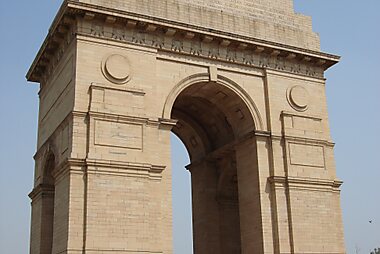


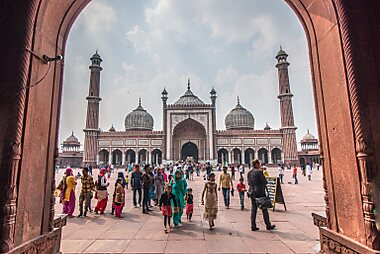
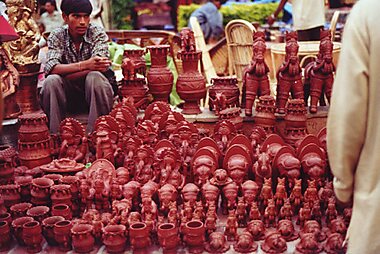
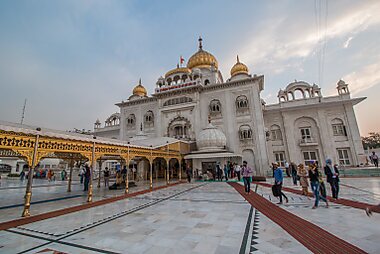
Shah Jahan built Red Fort in the 17th century as the seat of Mughal power, and its red sandstone walls and pavilions are a UNESCO World Heritage Site. The fort hosts an evening sound-and-light show that tells its history using the walls themselves as a backdrop.
A short walk away, Jama Masjid is India's largest mosque, built by the same emperor and still an active place of worship. Dress modestly, and expect it to close briefly during prayer times.
Humayun's Tomb is the tomb of the Mughal emperor Humayun, built in the 16th century in a garden setting that later influenced the design of the Taj Mahal.
South of the center, Qutb Minar is a 73-meter minaret begun in the 12th century, one of the tallest brick minarets in the world.
India Gate is a war memorial modeled on Paris's Arc de Triomphe. It honors soldiers who died fighting for British India, and is especially striking lit up after sunset.
At the far end of the same avenue stands Rashtrapati Bhavan, the official residence of India's president, completed in 1929. The building and gardens are open to the public only on advance-booked tours, but the view from the avenue is free.
Lotus Temple is a Bahá'í house of worship shaped like a lotus flower, open to visitors of any faith or none for quiet reflection.
Akshardham is a vast modern temple complex with a musical fountain and landscaped gardens. Allow at least half a day, since bags and electronics must be checked at the entrance.
Featured Lists

Delhi's Unmissable Icons
Delhi’s landscape is defined by architectural evolution, from the 13th-century Qutub Minar to the red sandstone Mughal grandeur of the Red Fort and Humayun’s Tomb. Spiritual landmarks range from the 17th-century Jama Masjid to the modern, lotus-shaped Bahai Temple and the sprawling Akshardham complex. The list features solemn memorials like Raj Ghat and India Gate alongside the sensory intensity of Khari Baoli, Asia’s largest wholesale spice market. These sites represent the city's transition from the seat of ancient dynasties to vibrant commercial centers like Connaught Place.
14 places


What to experience
A few things to do in Delhi, not just see:
- Take an evening cycle-rickshaw ride through the narrow lanes of Chandni Chowk, weaving past spice traders and street-food stalls that have operated for generations.
- Listen to live Sufi qawwali singing on a Thursday evening at Nizamuddin Dargah, a tradition that has continued at the shrine for centuries.
- Browse the craft stalls at Dilli Haat, a market built to showcase traditional textiles, pottery, and woodwork from across India.
- Join the crowds for a free community meal (langar) at Gurdwara Bangla Sahib, one of the city's most active Sikh temples. Anyone is welcome regardless of religion.
Tours & Activities
Delhi — Map

 Open the interactive map
 Day trips
Delhi sits within reach of both quiet nature spots and some of India's most famous monuments. Here are the best options, roughly closest first:
- Sultanpur National Park — about 45 km / 1 hour by car. A small wetland reserve popular with birdwatchers, especially from October to February when migratory birds arrive.
- Agra — about 1 hour 40 minutes by the fastest train (Gatimaan or Vande Bharat Express), or 3–4 hours by road. Home to the Taj Mahal and Agra Fort, both UNESCO World Heritage Sites. The fast train makes this flagship trip realistic in a single day.
- Neemrana Fort-Palace — about 2 hours by car. A restored 15th-century fort palace in Rajasthan, now a heritage hotel that welcomes day visitors for lunch and a tour.
- Mathura and Vrindavan — about 1.5 hours by train to Mathura, then a short local ride to Vrindavan. Twin pilgrimage towns linked to the god Krishna's birth, with dozens of temples and, in Vrindavan, an active devotional music scene.
- Jaipur — about 3.5 hours by the fastest train, or roughly 5 hours by road. Rajasthan's "Pink City," with the City Palace, Amber Fort, and Hawa Mahal. It is a long day trip, so consider staying overnight if your schedule allows.
Getting there
- By air: Indira Gandhi International Airport (DEL) is Delhi's main gateway. The Delhi Metro Airport Express Line connects Terminal 3 to New Delhi Railway Station in about 25 minutes. Prepaid taxis and app-based cabs are also available from all terminals.
- By train: New Delhi, Old Delhi, and Hazrat Nizamuddin railway stations are the city's three main hubs. Check which station serves your train, since long-distance trains from different regions arrive at different stations. Book on the national railway's official site, IRCTC.
- By bus: Kashmere Gate Inter State Bus Terminal (ISBT) is the main hub for long-distance coaches from neighboring states.
Getting around
- Public transit: The Delhi Metro is the easiest way to reach most sights. Buy a token for a single trip or a rechargeable travel card at any station counter or ticket machine, and tap it at the entry and exit gates. See Delhi Metro for route maps and fares.
- Taxi / ride-hailing: Uber and Ola operate throughout the city. For short hops, auto-rickshaws are common. Agree on the fare or insist on the meter before you get in.
- On foot / cycling: Delhi's sights are spread across a large area, too far apart to visit on foot alone. Combine metro rides with short walks instead. Cycling is not practical given the traffic.
Driving
- Is a car worth it? No. Traffic congestion, aggressive driving, and scarce parking make a car a burden within the city. Use the metro and taxis instead, and consider a car with driver only for trips outside Delhi.
- Traffic drives on the left.
- Parking: Multi-level car parks serve major markets and malls. Street parking in the center is scarce and often informally managed by attendants who expect a small cash tip.
- Restrictions: During periods of severe winter smog, authorities sometimes restrict cars by license-plate number (the "odd-even" scheme). Check local news before driving if visiting in November or December.
Food & drink
Delhi's street food is one of its main draws. Visit the lanes around Chandni Chowk in Old Delhi for parathas, chaat, and kebabs sold from stalls that have run for generations. Just west of there, Khari Baoli is widely known as Asia's largest spice market and is worth a walk even if you are not buying.
For a sit-down meal, Dilli Haat groups food stalls from across India's states in one place, useful for trying regional dishes side by side.
Safety & health
Delhi is generally safe for tourists who take normal precautions, but petty scams targeting visitors are common. Unlicensed taxi and rickshaw drivers sometimes claim a hotel is closed to redirect you to one that pays them commission. Book through an app or agree on the fare before you set off. Near major sights, buy tickets only at the official counter or online, not from unofficial sellers.
Women traveling alone should take extra care, especially after dark, and stick to well-lit, busy areas. Tap water is not safe to drink. Use bottled or filtered water, including for brushing teeth.
History
Delhi has been a capital city under multiple empires for more than a thousand years, and each left visible traces. The Delhi Sultanate built Qutb Minar in the 12th century. The Mughals later built Humayun's Tomb, and after moving their capital here in the 17th century, built Red Fort and Jama Masjid.
The British announced New Delhi as the site of their new capital in 1911 and formally inaugurated it in 1931. The ceremonial avenues and government buildings, including Rashtrapati Bhavan, were completed in 1929. After independence in 1947, Mahatma Gandhi spent his final months in Delhi and was assassinated here on January 30, 1948. He was cremated the next day at Raj Ghat, now a memorial park.
Country facts
Quick practical facts for India at a glance:
- Currency
- Indian Rupee INR ₹ · Card payments · Commonly accepted
- Emergency numbers
- 112
- Electricity
- 230 V · 50 HzType C / Type D
- Languages
- English, Hindi
- Tap water
- Not safe to drink
- Driving side
- Left
- Calling code
- +91


Delhi – Plan Your Days
Turn the places from this guide into a real itinerary, with smart routing, time estimates, and everything you need for a perfect trip.




