



India
India is a vast country that changes character every few hundred kilometres. In the north, snow-capped Himalayan peaks give way to the Mughal monuments of Delhi and Agra and the desert forts of Rajasthan. The west coast runs from the nightlife of Mumbai to the palm-lined beaches of Goa, while the south holds ancient temple towns, tea-covered hills, and the backwaters of Kerala. Language, food, and architecture shift from state to state, so a trip across India can feel like visiting several countries in one.
This makes India best suited to travelers who enjoy contrasts and don't mind some chaos along the way. Cities are crowded and loud, distances between sights are long, and plans often need to flex around delays. In return, visitors get some of the world's most recognisable landmarks, religious and historical traditions still very much alive today, and food that varies dramatically by region. First-time visitors usually do best picking one or two regions rather than trying to cover the whole country in a single trip.





India – Planning a Trip?
Build your day-by-day itinerary in the Tripomatic app.


Money & payments
India's currency is used everywhere, but cash still matters outside the big cities.
ATMs are common in cities and tourist towns, though it's worth carrying some cash for rural areas, local markets, and small vendors. UPI-based mobile payments, made by scanning a QR code, have become the default way most Indians pay day to day, and many shops and even street stalls now accept them; a card and cash still work everywhere that matters for a visitor. Budget travelers can get by on modest daily spending, while mid-range travelers who want private transport, air-conditioned hotels, and restaurant meals should budget more.
Featured Lists


Tours & Activities
India — Map

 Open the interactive map
 Tipping
Tipping in India is appreciated but rarely mandatory. Restaurants in cities often add a service charge to the bill, in which case an extra tip isn't expected; where none is added, rounding up or leaving 5-10% is common. Hotel porters, drivers, and tour guides are usually tipped a small amount in cash at the end of their service. Taxi and rickshaw drivers don't expect a tip, though rounding up the fare is normal.
5-10 %, unless a service charge is already included
50-100 INR for porters/bellhops
round up the fare
200-500 INR per day
round up or ~10 %
Electricity
India uses Type C and D plugs at 230 V and 50 Hz; travelers from North America will need a plug adapter and, unless their device supports dual voltage, a converter too.
Language
Hindi and English are the two languages used for national government business, but India recognizes over twenty other official languages, and most people's everyday language is a regional one such as Bengali, Tamil, Telugu, Marathi, or Punjabi. English is widely spoken in tourist areas, hotels, and by anyone in a service role in the bigger cities, so getting by without any Hindi is entirely possible. Road signs in most states are written in both the local script and Latin letters, though smaller towns may only use the local script.
Staying connected
Prepaid SIM cards are cheap and widely available, but foreign visitors need to buy one in person at a shop with their passport and a passport photo; some networks also ask for a local address or a sponsoring hotel, so it's worth checking at the airport counter if this applies. eSIMs from international providers are a simpler option that skips this process entirely. Mobile data coverage is strong in cities and most towns, though it can drop out in remote mountain areas like Ladakh.
Safety & emergencies
India is generally safe for tourists, though petty crime like pickpocketing and scams targeting visitors happen in crowded tourist areas, train stations, and markets. Common scams include overcharging by taxi and rickshaw drivers, fake travel agents, and unofficial "guides" at popular sights; agreeing on a price in advance and using official ticket counters avoids most of these. Women travelling alone should take normal precautions: avoid walking alone late at night, and prefer registered taxis or ride-hailing apps over unmarked vehicles.
Health
Tap water isn't safe to drink; stick to bottled or filtered water, and be cautious with ice in smaller towns. Pharmacies, called chemists, are widely available in cities, many open late or around the clock, and can fill most prescriptions without one. Street food and casual restaurants are part of the experience, but choosing busy stalls with high turnover reduces the risk of an upset stomach. Talk to a doctor or travel clinic a few weeks before the trip about recommended vaccinations, since these vary by region and season of travel.
Visas & entry
Most foreign visitors need a visa to enter India; a small number of nationalities, mainly from neighbouring countries, can enter visa-free. The e-Visa is the most common option for tourists: it's applied for online before arrival and covers stays of 30 days, one year, or five years depending on the type chosen, with entry only permitted through designated airports and seaports. A regular visa obtained through an Indian embassy or consulate is the alternative, required for some nationalities and for longer or more complex trips.
Visa and entry requirements change frequently. Verify current requirements with the official immigration authority or your country's embassy before travel.
Etiquette
Modest dress is expected at religious sites: shoulders and knees covered, shoes removed before entering temples, mosques, and gurdwaras, and a head covering for Sikh gurdwaras (scarves are usually available at the entrance). Namaste, said with palms pressed together, is a common greeting alongside handshakes, especially in business settings. Use the right hand for eating, giving, or receiving items; the left hand is considered unclean for these purposes. Bargaining is expected in markets and with rickshaw or taxi drivers who don't use a meter, but not in shops with fixed price tags. Ask before photographing people, particularly in villages and at religious ceremonies, and note that some temple inner sanctums are closed to non-Hindus.
Holidays & opening hours
Major festivals like Diwali and Holi can shut down shops, offices, and transport for a day or more with little notice, and hotel and train prices rise sharply around them, so it's worth checking the calendar before booking a trip. Outside festival periods, most shops in cities stay open seven days a week, typically from mid-morning until late evening; a long afternoon break is common in smaller towns and in the heat of the south.
Getting around
- By train: Indian Railways connects almost every town, and long-distance journeys are often best done overnight in a sleeper or air-conditioned class. Book on IRCTC, the official booking site, well in advance for popular routes and during festival season.
- By air: Domestic flights are cheap and frequent between major cities, and often save a full day of travel compared to trains on long routes such as Delhi to Chennai or Mumbai to Kolkata.
- By bus: State-run and private coaches reach places trains don't, including hill towns and smaller cities; overnight sleeper buses are common on medium-distance routes.
India drives on the left, which affects how traffic flows and how to read road signs when getting around on foot or by car.
Driving
- Speed limits: typically 50 km/h in urban areas, 70-80 km/h on state highways, and up to 100-120 km/h on expressways.
- Key rules: helmets are mandatory for anyone on a two-wheeler, seatbelts are mandatory in the front seats, and constant horn use is normal, not a sign of aggression. Traffic can be dense and unpredictable; most visitors hire a car with a driver rather than self-drive.
- Tolls: national highways and expressways charge tolls, collected electronically through a FASTag sticker on the windshield; rental cars usually come with one fitted, and a hired car with a driver has the toll built into the fare.
- Congestion: city traffic is heavy at most hours, and Delhi periodically restricts private cars by license plate number during high-pollution periods.
- Parking: malls and hotels have paid parking; street parking in city centres is informal and often watched by an attendant for a small fee.
- Fuel: petrol and diesel stations are attendant-operated, not self-service, and accept cash, card, and UPI payments.
- Electric vehicles: public charging is expanding fast in major cities but still thin on highways and in smaller towns; check a charging-station app before a long inter-city drive.
Food & drink
Food in India varies enormously by region, and there's no single "Indian cuisine" the way visitors sometimes expect. Breakfast might be idli and sambar in the south, poha or paratha in the north, or a simple cup of chai with biscuits. Lunch and dinner are often built around a thali, a plate with rice or bread alongside several small dishes of vegetables, lentils, and curry, refilled as needed. A large share of the population eats vegetarian, particularly in states like Gujarat and Rajasthan, so vegetarian options are the default rather than an afterthought almost everywhere.
Street food is a genuine part of the culture, not just a tourist activity: chaat, samosas, and pani puri are eaten by locals daily, usually from stalls with a visible line and high turnover. Sweets (mithai) made from milk, sugar, and nuts are given as gifts and eaten during festivals. To drink, chai, spiced milk tea, is everywhere in the north, filter coffee is the equivalent in the south, and lassi, a yogurt drink, is common alongside meals in warmer regions.
Meals are traditionally eaten with the right hand rather than cutlery, especially with bread like roti or naan used to scoop up curries; restaurants that cater to tourists will usually offer cutlery on request. Family-run canteens and thali restaurants remain the most common way locals eat out, alongside a growing number of modern cafes and restaurants in the bigger cities.
Where to explore
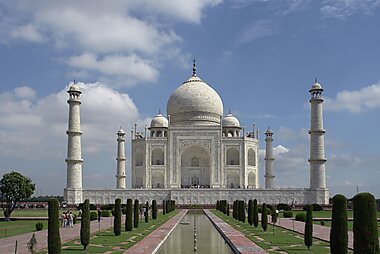
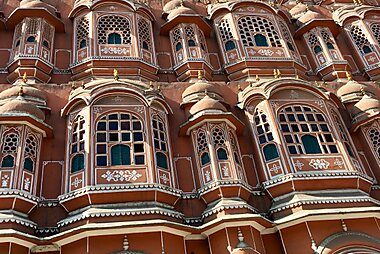
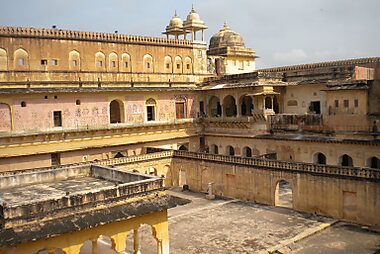
India's classic first trip links Delhi, the capital, with Agra, home to Taj Mahal, and the pink-walled city of Jaipur — together known as the Golden Triangle. From Jaipur, Rajasthan's desert region continues to Jodhpur, with its hilltop Mehrangarh, Udaipur, built around a chain of lakes, and the fortified desert city of Jaisalmer, home to the sandstone Jaisalmer Fort.
In the northwest, Amritsar draws visitors of all faiths to its Golden Temple. Along the Ganges, the ancient city of Varanasi is one of the holiest sites in Hinduism, with cremation and bathing rituals taking place daily on its riverside ghats.
On the west coast, Mumbai is India's largest city and financial capital, anchored by the Gateway of India on the harbour. South of it, Goa mixes former Portuguese colonial towns, including the Basilica of Bom Jesus, with some of India's best-known beaches.
The south holds a different India again: Kochi, on the Kerala coast, blends Chinese fishing nets, colonial architecture, and the Paradesi Synagogue; Mysuru is home to the ornate Mysore Palace; and the ruined temple city of Hampi sits among boulder-strewn landscapes once the capital of the Vijayanagara Empire.
In the east and the Himalaya, Kolkata centres on the Victoria Memorial and its long literary and artistic history; the hill station of Darjeeling is famous for its tea gardens and views of the Himalaya; and Leh, high in Ladakh, is the gateway to Buddhist monasteries and some of the highest motorable roads in the world.
India – Plan Your Trip
Pick the places you want to see and Tripomatic turns them into a day-by-day route, with smart routing, time estimates, and everything you need for a perfect trip.




