



Doha
Doha is Qatar's capital and the country's only real city, sitting on the Arabian Gulf coast. Almost everything a visitor sees was built within the last few decades on wealth from oil and gas, and the skyline of glass towers along West Bay looks almost futuristic. Just across the bay, restored 20th-century souqs, heritage houses, and waterfront promenades give a much older, human-scale feel.
The city works well as a short stopover on the way to Asia or Africa, or as a base for two or three nights. Its museums are a highlight, the Corniche is made for an evening stroll, and the desert and coast beyond the city are an easy day trip away.

Doha – Planning a Trip?
Build your day-by-day itinerary in the Tripomatic app.


When to visit
Winter (November–April) is warm, dry, and the best time to visit, with plenty of sunshine and pleasant evenings. Summer (May–October) is extremely hot and humid, and most outdoor activity is impractical during the day.
Qatar's National Day, 18 December, is the city's biggest annual event, with a parade along the Doha Corniche and fireworks over the bay — a good date to build a winter trip around.
Best time to visit: January, February, March, November, December
Even in the cooler months, save outdoor sightseeing for morning or evening and rest indoors around midday.
Top sights


Museum of Islamic Art is Doha's signature building, a geometric limestone landmark on its own island designed by I. M. Pei. Inside are 1,400 years of Islamic art from three continents, and the waterfront park behind it is a popular spot to watch the sunset.
Souq Waqif is a rebuilt historic market of mud-colored buildings and narrow lanes, packed with spice stalls, textile shops, falconry gear, and restaurants. It gets busiest — and most atmospheric — after dark.
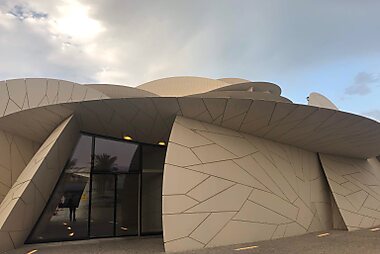
Qatar National Museum traces Qatar's story from its geology to the present day inside a swirling, desert-rose-shaped building by Jean Nouvel. It wraps around the restored early-20th-century palace of Sheikh Abdullah bin Jassim Al Thani.
Doha Corniche is a seven-kilometer bayfront promenade linking the old town to the glass towers of West Bay, with views of docked wooden dhows and the skyline across the water.
Katara Cultural Village is a cultural complex built to resemble a traditional village, with galleries, theaters, mosques, and a small beach spread around pedestrian lanes.
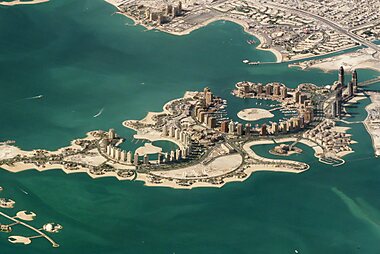
The Pearl-Qatar is an artificial island of marinas, cafes, and apartment blocks built in a mix of Mediterranean and Gulf styles, popular for a waterfront walk or dinner.
Mushayrib Museum is a set of four restored heritage houses in the old commercial quarter, with exhibits on the pearling era, the slave trade, and family life before oil wealth transformed the city.
Al Koot Fort is Doha's last standing historic fort, built to guard the town before the city grew up around it; today it sits quietly just behind Souq Waqif.
Featured Lists

Doha Essentials
Doha’s landscape blends heritage-focused design with avant-garde architecture. This collection features Jean Nouvel’s desert rose-inspired National Museum and I.M. Pei’s Museum of Islamic Art, housing 1,400 years of history. Cultural hubs like Souq Waqif and Katara Cultural Village offer traditional markets and performance spaces, while the Msheireb Museums explore national social history. Modern engineering is showcased through The Pearl-Qatar’s artificial island, the modular Stadium 974 built from shipping containers, and the seven-kilometer Doha Corniche promenade overlooking the Persian Gulf.
10 places


Best Shopping in Doha
Doha’s retail landscape spans from restored heritage sites to contemporary luxury complexes. Souq Waqif provides a traditional marketplace experience with its labyrinth of spice and textile stalls, while the specialized Falcon Souq showcases Qatar’s falconry culture. Modern venues like Doha Oasis and The Gate Mall house international designer brands and indoor entertainment. The selection includes the Gold Souq’s concentrated jewelry trade and expansive suburban centers like Tawar Mall and Landmark Shopping Mall, which feature unique architectural elements and diverse retail categories.
10 places

What to experience
- Take a sunset dhow cruise around the bay — wooden boats moor along the Corniche each evening and cross to the West Bay skyline and back.
- Browse the Falcon Souq near Souq Waqif, where falconers groom, trade, and show off hunting birds.
- Join the evening crowds in Souq Waqif's lantern-lit alleys, smoking shisha and browsing stalls once the heat breaks after dark.
- Catch a concert or cultural performance at Katara Amphitheatre, an open-air venue that blends Greek and Islamic design.
Tours & Activities
Doha — Map

 Open the interactive map
 Day trips
Doha makes a good base for exploring the rest of Qatar, most of which is reachable in a few hours or less.
- Al Wakra — ≈25 min by car south of Doha. A former pearling and fishing port with a restored waterfront corniche and old souq, much quieter than the capital.
- Sheikh Faisal Bin Qassim Al Thani Museum — ≈30 min by car west of Doha. A private museum with an eclectic collection spanning vintage cars, Islamic art, and archaeology.
- Al Khor — ≈40 min by car north of Doha. A fishing town with mangrove creeks and a small heritage corniche, quieter and greener than the capital.
- Khor Al Adaid (the Inland Sea) — ≈1.5–2 hours by car south of Doha, usually with a 4x4 tour operator. A natural reserve where the desert dunes meet the sea, reached by dune driving.
- Al Zubarah archaeological site, in Al Shamal — ≈1.5 hours by car north of Doha. A UNESCO World Heritage site and the best-preserved example of a historic Gulf pearling town, with a restored fort you can also visit.
Where to explore
Beyond the day trips above, several of Qatar's other municipalities are worth knowing about if you're spending longer in the country.
- Al Rayyan, west of Doha, is home to Education City's university campuses and the desert routes toward the Inland Sea.
- Al Daayen, northeast of Doha, includes the newly built Lusail district, with its stadium and waterfront towers.
- Al Wakra and Al Khor are the coastal fishing towns described above.
- Al Shamal, at the northern tip of the peninsula, holds the Zubarah UNESCO site and Qatar's quietest beaches.
Getting there
- By air: Hamad International Airport (DOH) is Qatar's only international gateway, about 15 km southeast of downtown Doha and the main hub for Qatar Airways, so most visitors arrive on a direct long-haul or connecting flight. A taxi into the center takes roughly 20–30 minutes; the Doha Metro's Red Line also connects the airport to downtown stations.
- By land: Qatar's only land border is with Saudi Arabia, reachable by private car or occasional long-distance coach — a route that mainly suits regional travelers already in the Gulf, not first-time international visitors.
Getting around
- Public transit: The Doha Metro (Red, Green, and Gold lines) covers the main tourist areas, including West Bay, Msheireb, and Education City, with free shuttle buses feeding areas the metro doesn't reach directly. Buy a rechargeable Karwa card from any station, or tap a contactless bank card or phone directly at the gates. Check Qatar Rail for routes and times.
- Taxi and ride-hailing: Karwa taxis can be hailed at ranks or booked by app; Uber and Careem also operate citywide.
- On foot: The Corniche, Souq Waqif, and Msheireb are walkable and pleasant outside the summer heat, but Doha's wider road network is built for cars, and most other sights are a taxi or metro ride apart.
Driving
- Is a car worth it?: Not for the city itself — the metro, taxis, and ride-hailing apps cover downtown Doha well. A rental car becomes useful only if you're heading out to the day trips above, especially the Inland Sea or Zubarah.
- Parking: Malls and hotels offer free parking; metered street parking downtown is paid via a parking app.
Food & drink
Qatari home cooking centers on machbous, spiced rice with meat or fish, alongside dishes like harees (a slow-cooked wheat and meat porridge) and sweet luqaimat dumplings. Strong, spiced karak tea is sold from small stalls all over the city.
For a first taste, head to the restaurant rows inside Souq Waqif, where Qatari, Levantine, and Iranian kitchens sit side by side around the market's courtyards — a better bet than any single restaurant for sampling a range of Gulf cooking in one evening.
Safety & health
Doha is very safe for visitors, with low rates of violent crime and only occasional petty theft — normal city precautions are enough. Qatar is a conservative, largely dry country: alcohol is served only inside licensed hotel restaurants and bars, and dress modestly away from the beach or pool, especially at mosques and government buildings.
Tap water is treated and safe by international standards, though most people drink bottled water out of habit. The bigger risk is heat, not crime: summer temperatures and humidity can cause heat exhaustion quickly, so limit outdoor time in the middle of the day from May to October and stay well hydrated.
History
Doha grew from a small pearling and fishing village on the Gulf coast, known in the early 19th century as Al Bidda. Al Koot Fort was built around 1880 and rebuilt in 1927 under Sheikh Abdullah bin Jassim Al Thani to defend the growing pearling town, and is one of the few historic structures still standing in central Doha today. The town went on to become the seat of the ruling Al Thani family and capital of the British-protected state of Qatar; Qatar National Museum now wraps around that same ruler's restored palace.
Oil revenue from the 1950s, and later vast natural gas wealth, funded Doha's transformation from a low-rise trading port into today's skyline. The old commercial quarter around Mushayrib Museum and Souq Waqif is what remains of the pre-oil city, restored rather than demolished as the rest of Doha modernized around it.
Hosting the 2022 FIFA World Cup accelerated that growth once more, funding a new metro system and renovated stadiums, including Khalifa International Stadium, in use since 1976 and one of the oldest venues in the tournament.
Country facts
Here are the essentials for traveling in Qatar:
- Currency
- Qatari Riyal QAR · Card payments · Widely accepted
- Emergency numbers
- 999
- Electricity
- 240 V · 50 HzType G
- Languages
- Arabic
- Tap water
- Drink with caution
- Driving side
- Right
- Calling code
- +974


Doha – Plan Your Days
Turn the places from this guide into a real itinerary, with smart routing, time estimates, and everything you need for a perfect trip.




