



Guyana
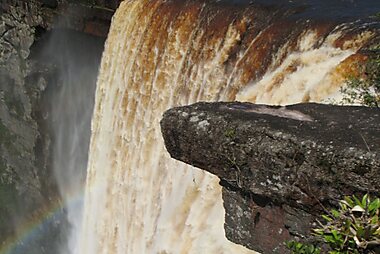
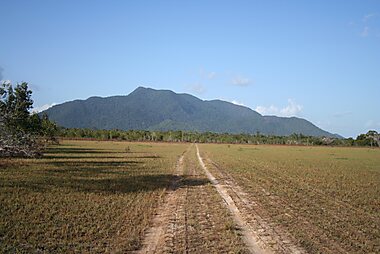
Guyana sits on South America's northern coast, between Venezuela, Brazil, and Suriname. It is the continent's only English-speaking country, a legacy of British rule that ended in 1966. A thin coastal strip lies below sea level, held back by a sea wall. Behind it, the interior holds one of the world's largest expanses of untouched rainforest. That interior hides Kaieteur Falls, the world's largest single-drop waterfall by volume. It also holds the open grasslands of the Rupununi savannah, where jaguars, giant otters, and harpy eagles still roam.
The population blends Indian, African, Indigenous, Portuguese, and Chinese heritage, visible in the food and festivals of Georgetown, the low-rise wooden capital built by Dutch and British colonizers. Guyana suits travelers drawn to wildlife and remote nature more than beach resorts or nightlife. A typical trip mixes a few days in the capital with a boat or small-plane journey into the interior, often staying at eco-lodges run by local and Indigenous communities.





Guyana – Planning a Trip?
Build your day-by-day itinerary in the Tripomatic app.
Money & payments
ATMs are common in Georgetown and larger coastal towns but scarce once you head inland, so withdraw enough cash before a trip upriver or into the rainforest. Card payments work at hotels, larger restaurants, and shops in the capital, but many small eateries, minibuses, and interior lodges expect cash only. Carry enough cash for a multi-day interior trip, since there is often nowhere to withdraw more once you leave the coast.


Featured Lists

Guyana Essentials
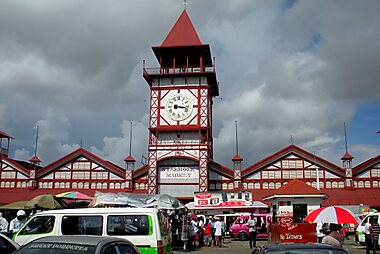
Guyana’s landscape is defined by the massive Kaieteur Falls, the world’s largest single-drop waterfall, and the biodiversity of the Rupununi Savannah and Iwokrama rainforest. In Georgetown, colonial-era architecture stands out through the Victorian-era Stabroek Market and St. George’s Cathedral, one of the tallest wooden structures globally. Cultural heritage is preserved at the Wai-Wai-style Umana Yana and the National Museum, while the coast offers the historic Demerara Harbour Bridge and the critical turtle nesting grounds of Shell Beach.
10 places
Hidden Gems of Guyana
This collection showcases Guyana's remote waterfalls situated within the Potaro-Siparuni and Cuyuni-Mazaruni regions. It features Kaieteur Falls, the world's largest single-drop waterfall by volume, and the 260-meter King Edward VIII Falls on the Semang River. The selection includes the multi-tiered jasper steps of Orinduik Falls on the Brazilian border and the secluded King George VI Falls on the Oshi River. These geological landmarks are primarily located on tributaries of the Potaro and Ireng rivers deep within the Guiana Highlands.
5 places
Tours & Activities
Guyana — Map

Tipping
Tipping is not deeply rooted in Guyanese culture, but it is increasingly common in tourist-facing restaurants, hotels, and interior tour operations. In everyday local eateries, rounding up the bill is enough. Tour guides on multi-day interior trips, who often work long hours at remote camps, appreciate a tip at the end of the trip.
~10%, mainly at tourist-oriented restaurants
small tip for porters or housekeeping
round up the fare
tip interior tour guides at the end of a multi-day trip
Electricity
Guyana mixes American-style two-pin and British three-pin outlets, so pack a versatile adapter or check with your accommodation in advance. The voltage runs higher than most of the Caribbean, closer to European levels, so most modern phone and laptop chargers work fine without a converter.
Language
English is Guyana's only official language, the sole one in South America. Most Guyanese speak Guyanese Creole, locally called Creolese, among themselves; it uses English vocabulary but its own grammar and rhythm, and can be hard to follow at conversational speed. Visitors who speak standard English will have no trouble getting by anywhere in the country.
Staying connected
Digicel and GTT are Guyana's two mobile networks, and prepaid SIM cards are cheap and easy to find at the airport or in central Georgetown. Coverage is reliable along the coast but drops out completely once you leave the paved road network — expect no signal for days on trips to Kaieteur Falls, the Rupununi savannah, or the Iwokrama rainforest. Some interior lodges rely on satellite internet, so confirm connectivity with your lodge before counting on being reachable.
Safety & emergencies
Guyana is generally safe for visitors, and violent crime rarely targets tourists directly. Georgetown has a higher rate of street crime than the interior — pickpocketing and opportunistic theft happen, especially after dark and around Stabroek Market. Use a registered taxi at night, keep valuables out of sight, and avoid walking alone in the city center late in the evening. The interior carries a different kind of risk: it is remote, with limited phone signal and few medical facilities, so most travelers explore it with a licensed tour operator or guide rather than independently.
Health
Tap water in Georgetown is treated, but bottled or filtered water is the safer choice, especially outside the capital and in the interior. Pharmacies are easy to find in the capital and stock familiar over-the-counter medication, but they thin out quickly once you leave the coast, so bring a basic medical kit for interior trips. Malaria risk exists in the rainforest interior, so travelers heading to Kaieteur Falls, Iwokrama, or the Rupununi should discuss antimalarial medication with a travel clinic before departure. Dengue fever is present nationwide, so pack mosquito repellent. Travelers arriving from a country with risk of yellow fever transmission need a valid yellow fever vaccination certificate to enter.
Visas & entry
Visitors from the United States and Canada can enter Guyana without a visa for up to 90 days, while UK citizens get 30 days visa-free; most EU passport holders can also enter without a visa, though the allowed stay varies by nationality. Travelers from many other countries can apply for an e-visa or a visa on arrival, backed by an approval letter from Guyana's immigration authorities. A passport valid for at least six months beyond your arrival date is required for everyone.
Visa and entry requirements change frequently. Verify current requirements with the official immigration authority or your country's embassy before travel.
Etiquette
Greetings are warm and unhurried, and a little small talk before getting to business is normal. Dress modestly when visiting Hindu temples and mosques: cover shoulders and knees, and remove your shoes before entering. Ask permission before photographing people, and be especially considerate in Indigenous villages in the interior, where a guide can advise on local customs. Bargaining is not the norm at Stabroek Market or in shops — prices are usually fixed, though there is sometimes room to negotiate with informal vendors.
Holidays & opening hours
Guyana's public holidays reflect its mix of Christian, Hindu, Muslim, and national commemorations, and several move each year with the lunar or religious calendar. Many shops, offices, and transport services close or run a reduced schedule on public holidays. Shops in Georgetown typically open Monday to Saturday, with shorter hours or closures on Sunday, and Stabroek Market and most markets are quieter on Sundays.
Getting around
- By air: Small charter flights from Eugene F. Correia International Airport (Ogle), just outside Georgetown, are the practical way to reach Kaieteur Falls, the Rupununi savannah, and most interior eco-lodges — there is no road to many of these places.
- By road: A paved coastal road links the capital with New Amsterdam and the Suriname border. The road south to Lethem and the Brazilian border is paved only as far as Linden. Past that it's unpaved laterite, so this overland route is long and rough — best done with an experienced driver or organized tour. Shared minibuses cover the coastal towns cheaply and often, though they can be crowded and only leave once full.
- By river: Rivers are a major transport route in the interior. Speedboats and ferries connect river towns such as Bartica and Parika, and some interior lodges are reachable only by boat.
Guyana drives on the left, a legacy of British rule — unusual for South America, where nearly every other country drives on the right.
Driving
- Key rules: seat belts are mandatory, phone use while driving must be hands-free, and the drink-driving limit is 0.08% blood alcohol.
- Foreign licenses: a valid foreign driver's license is accepted for up to 60 days from arrival; an International Driving Permit is recommended for longer stays.
- Fuel: stations are staffed, not self-service, and take cash or card.
- Parking: mostly informal on-street parking in towns; dedicated car parks are rare outside Georgetown.
Food & drink
Guyanese food mixes Indian, African, Indigenous, Chinese, and Portuguese influences into something distinct from the rest of the Caribbean. The national dish is pepperpot, meat slow-cooked in cassareep, a dark, slightly bitter sauce made from cassava root, traditionally served at Christmas but available in Georgetown year-round. Cook-up rice, a one-pot dish of rice, beans or peas, and coconut milk, is an everyday staple, alongside roti served with curried chicken, goat, or vegetables.
Street food includes plantain chips, cassava bread, and Chinese-Guyanese fried rice and chow mein stalls found throughout Georgetown. For something sweet, look for pine tart, a pastry filled with sweetened pineapple. To drink, try mauby, a bittersweet bark-based drink common across the Caribbean, or sorrel, made from hibiscus flowers and spices. Guyana is also known internationally for its Demerara rum, aged and exported under labels such as El Dorado.


Guyana – Add to Your Trip
Create a detailed travel itinerary with smart routing, time estimates, and everything you need for a perfect trip.

