



Jerusalem
Jerusalem is one of the world's oldest and most sacred cities, holy to Judaism, Christianity, and Islam alike. Its walled Old City packs sites central to all three faiths into a few hundred meters of narrow stone streets, and millions of pilgrims and travelers come each year to walk them.
Beyond the Old City, Jerusalem is a modern hill city of markets, museums, and neighborhoods that range from ultra-Orthodox to leafy and cosmopolitan. A visit here suits travelers drawn to history, religion, and archaeology more than nightlife or beaches. Plan for several unhurried days on foot, and expect the experience to feel intense even if you are not religious.

Jerusalem – Planning a Trip?
Build your day-by-day itinerary in the Tripomatic app.


When to visit
Spring and autumn are the most comfortable seasons, with mild days and little rain. Summers are hot and dry, and winters are cool, occasionally bringing a light snow flurry over the hills.
Passover and Easter usually fall within the same few weeks each spring and draw the largest crowds of the year to the Old City — book accommodation well ahead if visiting then.
Best time to visit: March, April, May, June, July, August, September, October, November
Top sights
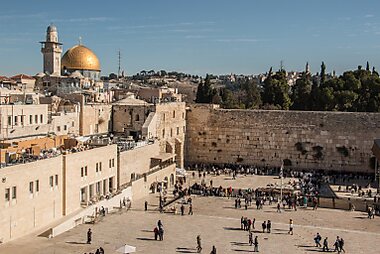
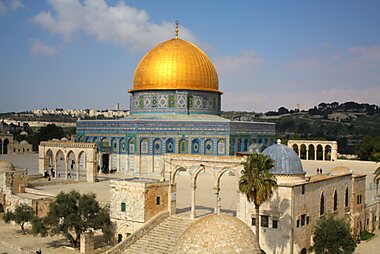
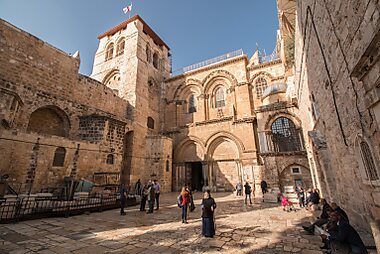
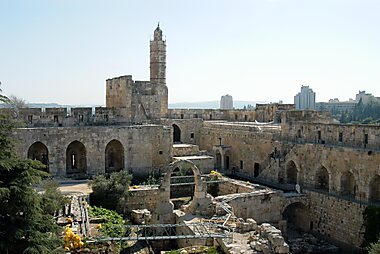
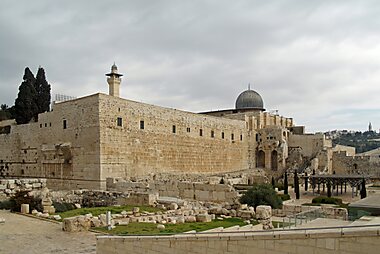
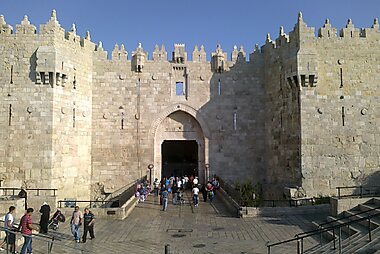
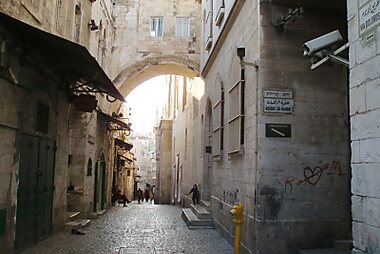
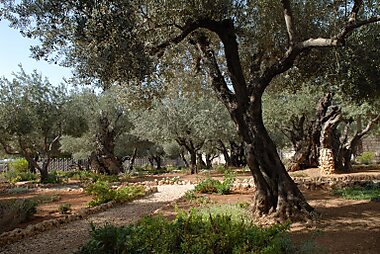
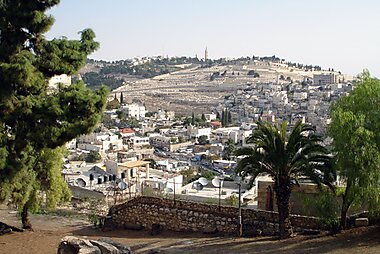
Jerusalem's Old City holds an unusual concentration of sacred sites within walking distance of each other.
Western Wall Plaza is the closest point Jewish tradition allows to the site of the ancient Temple, and the holiest place in the world for Jewish prayer. Pilgrims tuck written prayers into the cracks between its stones day and night.
Above the plaza, on the Temple Mount, Dome of the Rock is the gold-domed shrine that has marked the Jerusalem skyline since the 7th century, built over the rock where Muslim tradition holds that Muhammad ascended to heaven. Next to it, Al-Aqsa Mosque is the compound's main mosque and the third-holiest site in Islam.
A short walk away, Church of the Holy Sepulchre marks the traditional site of Jesus's crucifixion and burial, and has drawn Christian pilgrims since the 4th century.
Tower of David, the city's ancient citadel by Jaffa Gate, now houses a museum tracing more than two thousand years of Jerusalem's history inside its medieval walls.
Outside the Old City walls, Garden of Gethsemane is where Christian tradition says Jesus prayed the night before his crucifixion, among olive trees that are centuries old.
Damascus Gate, the grandest of the Old City's gates, opens onto the busy Arab market of the Muslim Quarter.
South of the Old City walls, City of David is the oldest excavated part of Jerusalem, where archaeologists have uncovered remains from the time of the biblical kings.
Yad Va'Shem is the world's largest memorial to the Jewish victims of the Holocaust, with exhibits and testimonies that leave most visitors needing several hours.
Israel Museum holds Israel's largest collection of archaeology and art, including the Dead Sea Scrolls in its Shrine of the Book wing.
Featured Lists


What to experience
A handful of Jerusalem rituals are worth building an evening or morning around.
- Join the Friday-evening Kabbalat Shabbat prayers and singing at Western Wall Plaza, as crowds gather to welcome the start of the Sabbath.
- Walk the Via Dolorosa, the traditional route of the Stations of the Cross through the Old City's markets and alleys, most atmospheric on a Friday when a procession follows it.
- Climb onto the Old City's Ramparts Walk near Jaffa Gate for a raised view along the ancient walls, over both the Old City and modern Jerusalem.
- Catch sunrise over the Old City from Mount of Olives, when the first light hits the golden dome of the Temple Mount.
Tours & Activities
Jerusalem — Map

 Open the interactive map
 Day trips
Several worthwhile destinations sit within a couple of hours of Jerusalem, from a biblical hill town to the lowest point on Earth.
- Bethlehem — about 30 minutes by taxi or organized tour. Home to the Church of the Nativity, built over the traditional birthplace of Jesus. Bethlehem is in the Palestinian Territories, reached through a checkpoint; going with a guide or taxi that handles the crossing is the easiest option, and it is worth checking current entry conditions before you go.
- Tel Aviv — about 30 to 40 minutes by train, or about an hour by bus. A complete change of pace from Jerusalem, with Mediterranean beaches, a lively food scene, and the old port town of Jaffa.
- Dead Sea — about 1 to 1.5 hours by car or bus to Ein Gedi Nature Reserve or the resort strip at Ein Bokek. Float in the famously salty water and, at Ein Gedi, hike to freshwater waterfalls in the reserve above the shore.
- Masada National Park — about 1.5 to 2 hours by car or bus. A UNESCO World Heritage desert fortress overlooking the Dead Sea, reachable by cable car or a steep sunrise hike up the Snake Path.
Where to explore
Two notable neighborhoods sit within Jerusalem's own city limits and reward a half-day visit.
Ein Kerem is a quiet stone-built village on the city's southwestern edge, traditionally linked to the birth of John the Baptist and now known for its churches, art studios, and cafes.
Mount of Olives, on the eastern ridge overlooking the Old City, is covered in ancient Jewish, Christian, and Muslim cemeteries and gives the best panoramic view of the Temple Mount and the walled city below.
Getting there
- By air: Ben Gurion Airport, Israel's main international gateway, is near Tel Aviv about 50 km from Jerusalem. The Israel Railways express train runs directly from the airport to Jerusalem's Yitzhak Navon station in about 25 minutes; buses and shared taxis ("sherut") also make the trip in roughly an hour.
- By train: Israel Railways connects Yitzhak Navon station with Tel Aviv in around 35 minutes and with other major cities along the coast.
- By bus: Egged and other intercity operators run frequent buses from the Central Bus Station to Tel Aviv, Haifa, and towns across the country.
Getting around
- Public transit: the Jerusalem Light Rail and city buses cover most tourist areas and run on the same ticketing system. Tap a contactless bank card or phone directly on the light rail and most buses, or buy a rechargeable Rav-Kav card for discounted fares. Jerusalem Light Rail
- Taxi and ride-hailing: metered taxis are common; Gett is the main local ride-hailing app. Buses and the light rail stop running for Shabbat, from before sunset Friday to after nightfall Saturday, when taxis are the main way to get around.
- On foot: the Old City is walkable but hilly, with cobbled and often stepped streets, and private cars are barred for most of the day — wear sturdy shoes. Cycling is limited by the terrain and traffic outside a few dedicated paths.
Driving
- Is a car worth it? No. The Old City is pedestrian-only and hilly, and traffic and parking in the modern center are difficult. A car is only useful for day trips such as the Dead Sea or Masada, and can be rented for just those days.
- Parking: several paid garages sit near Mamilla and Damascus Gate; expect to pay by the hour and to circle for street parking elsewhere.
- Restrictions: private cars are barred from the Old City's quarters for most of the day. Plan to park outside the walls and walk in.
Food & drink
Jerusalem's food reflects its mix of Jewish, Palestinian, and Armenian communities. Look for Jerusalem mixed grill (me'orav yerushalmi) — a peppery pan of chicken offal and onions served in pita — alongside the hummus, falafel, and freshly baked kanafeh sold throughout the Old City's markets.
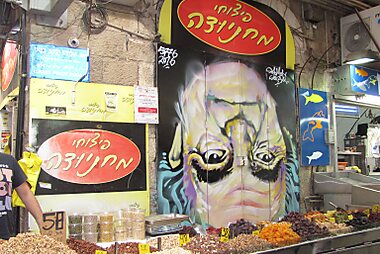
For the widest choice, head to Machane Yehuda Market, where stalls sell produce and street food by day and give way to bars and small restaurants by night. Emek Refaim street, in the German Colony neighborhood, is a quieter alternative lined with cafes and restaurants.
Safety & health
Jerusalem is generally safe for tourists, with petty crime such as pickpocketing the main everyday risk in crowded markets and at religious sites. Use the same caution with belongings that you would in any busy tourist city.
Dress modestly to enter religious sites — shoulders and knees covered for both men and women, and a head covering for men at some sites and for women at others. Security checks are routine at the Old City's gates and religious sites, and access to the Temple Mount and other sites can change or close on short notice, so it is worth checking the current situation before you go.
The wider region can see periods of heightened tension that affect travel; check your government's current travel advisory before and during your trip.
History
Jerusalem's history stretches back roughly 3,000 years. City of David preserves the oldest excavated part of the city, dated to the time of the biblical Israelite kings.
The Second Temple, which stood on the Temple Mount, was destroyed by the Romans in 70 CE; the Western Wall Plaza that survives today is a retaining wall from that temple complex and became Judaism's holiest prayer site. In the 4th century, the Roman emperor Constantine's mother had Church of the Holy Sepulchre built over the traditional site of the crucifixion and burial of Jesus, and it has drawn Christian pilgrims ever since. The Dome of the Rock followed in the 7th century, after the Muslim conquest of the city.
Over the following centuries the city changed hands repeatedly — Byzantine, Umayyad, Crusader, Ayyubid, Mamluk, and Ottoman rulers each left their mark, including the current Old City walls, built by the Ottoman sultan Suleiman the Magnificent in the 16th century. In the 20th century, Jerusalem was divided between Jordanian control in the east and Israeli control in the west from 1948 to 1967, when Israel took control of the eastern part of the city, including the Old City, during the Six-Day War.
Country facts
Quick practical facts for Israel at a glance:
- Currency
- Israeli New Shekel ILS · Card payments · Widely accepted
- Emergency numbers
- 101
- Electricity
- 230 V · 50 HzType C / Type H
- Languages
- Hebrew
- Tap water
- Safe to drink
- Driving side
- Right
- Calling code
- +972


Jerusalem – Plan Your Days
Turn the places from this guide into a real itinerary, with smart routing, time estimates, and everything you need for a perfect trip.