



Israel
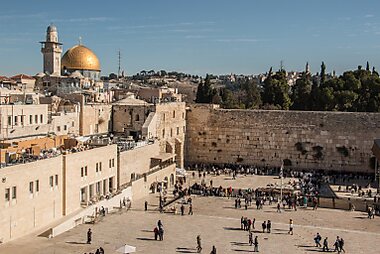
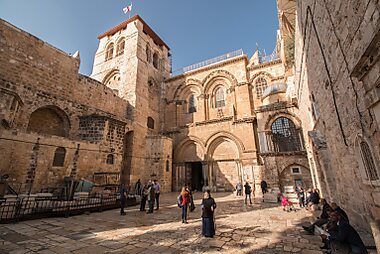
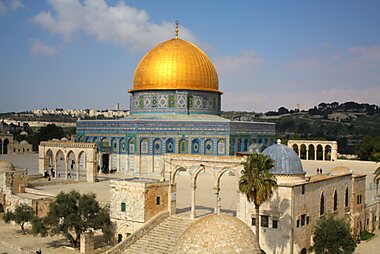
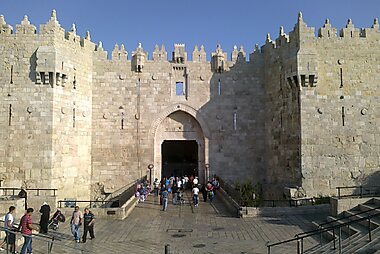
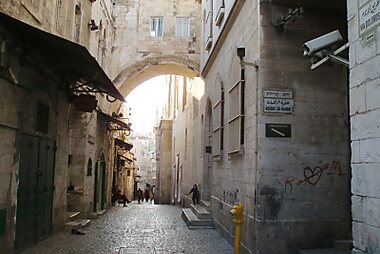
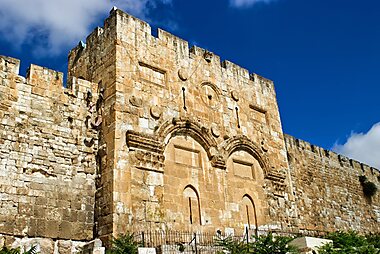
Israel is a small country with an outsized list of things to see. Jerusalem's Old City packs sites sacred to Judaism, Christianity and Islam into a single walled square kilometer — Western Wall Plaza, Church of the Holy Sepulchre and Dome of the Rock all sit a short walk apart. An hour or two away, Tel Aviv offers Mediterranean beaches, all-night cafes and a dense collection of Bauhaus buildings, while the Dead Sea and the desert fortress of Masada lie to the east.
The country suits travelers who want history, food and nature in one trip. Distances are short — most major sights sit within a few hours' drive of each other — so a week can realistically combine a holy city, a beach break and a hike in the Galilee or the Negev desert.

Israel – Planning a Trip?
Build your day-by-day itinerary in the Tripomatic app.


Money & payments
Card and phone payments cover most purchases in Israel, from restaurants to shops. Taxis and market stalls are two notable exceptions where cash is still often expected, alongside small kiosks, some Old City vendors and rural buses. ATMs are common in every city and tourist town.
Prices in Tel Aviv and Jerusalem run close to Western European levels; smaller towns and the Negev are cheaper. Restaurant meals, hotels and car rental are the biggest costs for most visitors.
Featured Lists


Tours & Activities
Israel — Map

 Open the interactive map
 Tipping
Tipping follows a fairly standard restaurant-and-service model. A service charge is not automatically added to most restaurant bills, so check before tipping twice.
10-12%
round up
round up
a few shekels per bag or per day for housekeeping
around $5-10 per person per day
Round up for taxis rather than calculating a percentage, and tip hotel housekeeping and tour guides directly in cash.
Electricity
Israel uses Type C and H plugs at 230 V / 50 Hz. Type H is the local three-pin standard; older Type C-only chargers usually still fit, but a basic travel adapter is worth packing just in case.
Language
Hebrew is the official language, written right to left in its own script. Arabic is widely spoken and appears on road signs and official documents alongside Hebrew. English is common in Tel Aviv, Jerusalem and other tourist areas, especially among younger Israelis and in hotels, shops and restaurants.
Street and place names are usually transliterated into Latin letters as well as Hebrew and Arabic, so navigation is manageable even without reading the local scripts.
Staying connected
Prepaid SIM cards from Israeli carriers are sold at kiosks inside Ben Gurion Airport and at phone shops in every city; buying one requires a passport for registration. eSIMs from international providers are a simpler option if your phone supports one, since they can be activated before arrival.
Android phones from outside the region occasionally miss a local 4G/5G band — check compatibility before relying on one as your only connection.
Safety & emergencies
Israel is generally safe for tourists day to day, with petty theft the most common issue in busy markets and tourist areas. The security situation can change quickly in border regions and around Gaza and the West Bank, so check your government's current travel advisory before finalizing an itinerary and follow instructions from local authorities, hotel staff and tour operators once there.
Security checks are routine at malls, bus and train stations, and major sites — expect a bag check or metal detector at the entrance.
Health
Tap water is safe to drink throughout the country. Pharmacies are widely available in cities and larger towns, with some open late or on a rotating on-call basis for after-hours emergencies — a schedule is usually posted in the pharmacy window.
No special vaccinations are required for most travelers; check with a travel clinic a few weeks before departure for personal recommendations. Sun exposure and heat are the biggest everyday health risks, especially around the Dead Sea, the Negev and Eilat — carry water and sun protection even in cooler months.
Visas & entry
Passport holders from the United States, the United Kingdom, the European Union, Canada, Australia and many other countries can enter Israel without a visa for tourist stays of up to 90 days. Entry is recorded electronically rather than with a passport stamp.
Visa-exempt travelers must also apply online for an ETA-IL (electronic travel authorization) before departure — a separate step from the visa-free entry itself, usually approved within a day or two.
Travelers from countries without visa-free access need to apply for a visa in advance through an Israeli embassy or consulate. Some nationalities may also be asked about their travel plans or previous visits to certain countries during border screening.
Visa and entry requirements change frequently. Verify current requirements with the official immigration authority or your country's embassy before travel.
Etiquette
Dress modestly at religious sites: shoulders and knees covered for everyone, and a head covering for men entering synagogues or the northern section of Western Wall Plaza, which keeps separate prayer areas for men and women.
Friday evening through Saturday evening is Shabbat, the Jewish day of rest — many businesses close, and some neighborhoods, notably ultra-Orthodox areas, expect visitors to dress conservatively and avoid photographing people without asking first.
Greetings are generally informal — a handshake is standard, though some religious Jews and Muslims avoid physical contact with the opposite sex and may decline a handshake without it being personal.
Holidays & opening hours
Shabbat affects opening hours more than any single public holiday: from Friday afternoon until Saturday evening, most shops, banks and government offices close, and public transport stops or runs a reduced schedule in most Jewish-majority areas — Haifa and Arab towns are the main exceptions. Restaurants and bars in Tel Aviv and other secular areas mostly stay open.
Jewish holidays follow the Hebrew calendar and shift each year, with several bringing Shabbat-like closures for one or two days. Muslim and Christian holidays affect hours locally in Arab and Christian towns rather than nationwide.
Getting around
- By train: Israel Railways connects Jerusalem, Tel Aviv, Haifa, Ben Gurion Airport and most coastal cities; trains are frequent, air-conditioned and a comfortable way to skip traffic. Book and check schedules through Israel Railways.
- By bus: Egged and other operators reach towns the railway doesn't, including Tiberias, Safed and the Negev. A Rav-Kav smart card covers buses and trains nationwide and is worth buying if you're making more than a couple of trips.
- By air: A domestic flight between Tel Aviv and Eilat takes about an hour, against a five-hour drive — worth it if Eilat is a short add-on to the trip rather than the main stop.
Driving
- Key rules: rental cars must carry a reflective vest and a warning triangle; seatbelt and phone-use laws are strictly enforced, and speed cameras are common on motorways.
- Tolls: Highway 6 and a few tunnels charge tolls electronically with no barrier — see the details below.
- Congestion: Tel Aviv and Jerusalem have heavy traffic at rush hour; central Tel Aviv has paid, metered street parking almost everywhere.
- Parking: blue-and-white curb markings mean paid parking (pay by app or meter); red-and-white means no parking at all.
- Fuel: stations are typically full-service, with an attendant pumping the fuel; card payment at the pump is standard.
- Electric vehicles: charging points are growing in number in and around the main cities, though still sparser than fuel stations outside them — check an app like PlugShare before a longer trip.
Food & drink
Breakfast is often the biggest meal of the day, especially at hotels: a spread of chopped salads, cheeses, eggs, olives, bread and fish. Lunch and dinner lean toward small shared plates — hummus, grilled vegetables and salads — alongside a main of grilled meat or fish.
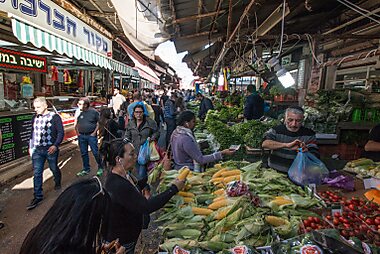
Street food is a highlight: falafel and shawarma stuffed into pita or laffa bread, and bourekas from bakery windows for a quick snack. Markets like Machane Yehuda Market in Jerusalem and Carmel Market in Tel Aviv are as much a food destination as a place to shop, with stalls selling everything from fresh juice to spice blends.
Coffee culture runs strong, with small espresso bars on nearly every corner. Local wine, particularly from the Golan Heights and Judean Hills, has developed a serious reputation over the past two decades.
Where to explore
Jerusalem is the country's spiritual center, home to the Old City and its holy sites. Tel Aviv is the commercial and nightlife hub on the Mediterranean coast, with Netanya and Herzliya offering quieter beach towns nearby.
In the north, Haifa climbs Mount Carmel above Baha'i Gardens, Acre keeps an Ottoman-era old city and harbor, and Nazareth draws Christian pilgrims to the sites of Jesus's childhood. Tiberias and the Sea of Galilee shoreline make a good base for the Galilee, while the hillside town of Safed is a center of Jewish mysticism with an old artists' quarter.
To the south, Ein Bokek is the main resort strip on the Dead Sea, and Beersheba is the gateway to the Negev desert. Eilat, on the Red Sea coast at the country's southern tip, is the base for diving, snorkeling and desert day trips.
Israel – Plan Your Trip
Pick the places you want to see and Tripomatic turns them into a day-by-day route, with smart routing, time estimates, and everything you need for a perfect trip.




