



Tel Aviv
Tel Aviv is Israel's commercial and cultural center, a compact Mediterranean city built almost entirely in the 20th century next to the ancient port town of Jaffa. It pairs sandy beaches and café culture with one of the largest collections of Bauhaus buildings in the world, which earned central Tel Aviv UNESCO World Heritage status as the White City.
Founded in 1909 as a new Hebrew neighborhood, the city has grown into a young, fast-paced hub known for its startup scene, food and a beach-first daily rhythm. It suits travelers who want sun, nightlife and modern city life alongside history — many pair a stay here with a trip to nearby Jerusalem.

Tel Aviv – Planning a Trip?
Build your day-by-day itinerary in the Tripomatic app.


When to visit
Spring (March–May) and autumn (October–November) are the most comfortable seasons, with warm days and little rain. Summer runs long, hot and humid from June to September, while winter is mild with occasional rain showers.
Plan around Tel Aviv Pride in June if the timing works — it draws hundreds of thousands of visitors and is one of the largest Pride celebrations outside North America, with a beach party and a parade down the main boulevards.
Best time to visit: March, April, May, June, July, September, October, November, December
Midsummer afternoons are hot and humid enough that most visitors shift sightseeing to the morning or evening and spend midday at the beach.
Top sights
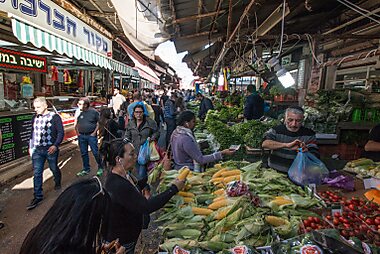
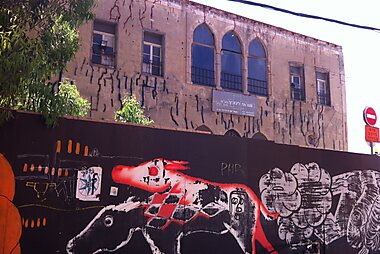
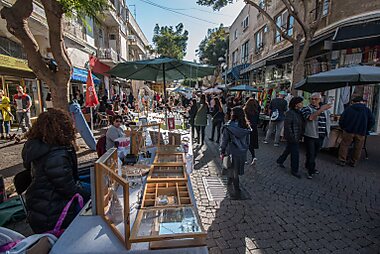
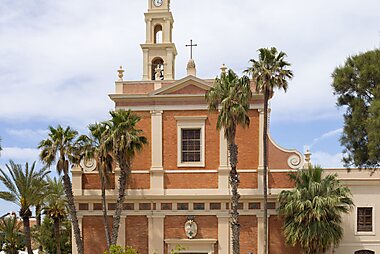


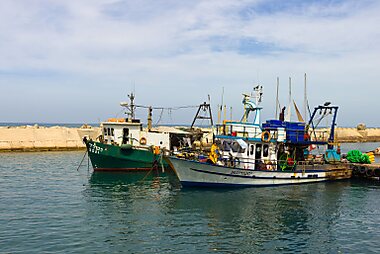
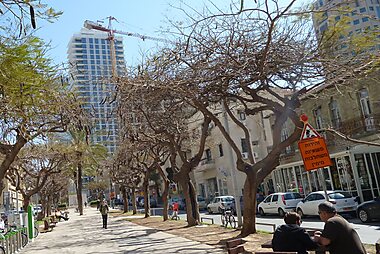
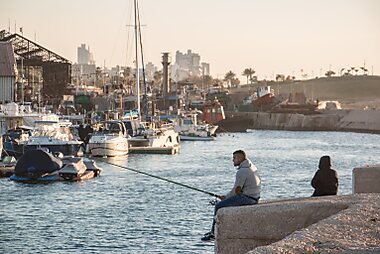
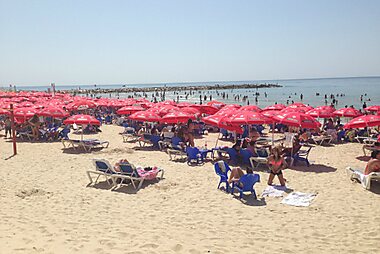
Tel Aviv's sights cluster into a few walkable areas: the beachfront, the old town of Jaffa, and the Bauhaus streets of the city center.
- The alleys of Old Jaffa center on Jaffa Port and the Jaffa Clock Tower, with narrow lanes of galleries, artist studios and stone houses.
- Carmel Market is the city's largest market, packed with fresh produce, street food and bargain stalls.
- Neve Tzedek is Tel Aviv's oldest Jewish neighborhood, now filled with boutiques and small galleries along quiet lanes.
- More than 4,000 Bauhaus buildings make up the White City, Tel Aviv's UNESCO-listed core; the style is easiest to spot walking down Rothschild Boulevard.
- Tel Aviv Museum of Art holds a strong collection of Israeli and international modern art.
- Old Tel Aviv Port Area is a former shipping harbor turned into a lively strip of restaurants and bars right on the water.
- Tropical Garden is the city's green retreat, with themed gardens, a lake and a bird park along the Yarkon River.
Featured Lists


What to experience
A visit here is defined as much by daily rituals as by sights.
- Play matkot (beach paddleball) at sunset on Frishman Beach or a nearby beach — a genuine local ritual, not a tourist activity.
- Join Tel Aviv Pride in June, one of the largest Pride celebrations outside North America, with a beach party and a parade through the city center.
- Rent a Tel-O-Fun bike and ride the flat coastal path from Jaffa to the Old Tel Aviv Port Area at sunset.
- Notice the Friday shift into Shabbat: shops and markets wind down by early afternoon and the beaches fill instead, as the city moves into its slower weekend rhythm.
Tours & Activities
Tel Aviv — Map

 Open the interactive map
 Day trips
Tel Aviv makes a good base for day trips — the country is small enough that most major sights are under two hours away.
- Jerusalem — about 30 minutes to an hour by train or bus, home to the Old City, the Western Wall and sites sacred to three religions.
- Caesarea — around 45 minutes by car, with Roman and Crusader ruins including a restored amphitheater right on the coast; reaching it by public transit takes over an hour with a transfer.
- Haifa — about an hour by train, known for the terraced Bahá'í Gardens and views over the bay.
- Acre — around 1.5 hours by train, a walled Old City with an underground Crusader fortress and a working Arab market.
- Masada National Park and the Dead Sea — roughly 2 to 2.5 hours by car or organized tour, combining the ancient hilltop fortress with a float in the sea's famously salty water.
Where to explore
Tel Aviv sits at the center of a dense, easily connected coastal strip.
Getting there
- By air: Ben Gurion Airport (TLV) is the country's main international gateway, about 20 km southeast of the city center. The Israel Railways express train reaches central Tel Aviv stations in around 20 minutes; a taxi takes roughly 25–30 minutes depending on traffic.
- By train: Israel Railways connects Tel Aviv to Jerusalem (around 30–45 minutes on the fast line), Haifa (about an hour) and towns along the coast. Book and check schedules through Israel Railways.
- By bus: The Central Bus Station and Arlozorov terminal run long-distance coaches nationwide, including to Jerusalem and the north — a cheaper alternative to the train.
Getting around
- Public transit: Tel Aviv's Red Line light rail and an extensive bus network cover the city and its suburbs. Buy or load a Rav-Kav smart card at kiosks and vending machines — it works across buses, trains and the light rail. See NTA for light rail routes and updates.
- Taxi / ride-hailing: Gett, an Israeli-founded app, is the dominant ride-hailing option — Uber does not currently operate in Israel.
- On foot / cycling: The city center, beach promenade and old town are flat and compact, making most of Tel Aviv easy to cover on foot. The Tel-O-Fun bike-share network and dedicated coastal bike lanes make cycling a genuinely practical way to get around.
Driving
- Is a car worth it?: No — Tel Aviv is compact, walkable and well served by transit; a car adds cost and parking stress without much benefit for a city stay. Rent one only for trips well beyond the coastal strip.
- Parking: Curbside parking is metered through the Pango or Cellopark apps; garages near the center are more reliable and cost roughly 20–40 NIS per hour.
- Restrictions: Traffic is heavy at rush hour, and street parking near the beach or Rothschild Boulevard is scarce on weekends — plan on a garage.
Food & drink
Tel Aviv's food scene is casual and produce-driven rather than formal. Hummus, shakshuka and fresh pita are everyday staples, and Mediterranean and Middle Eastern influences show up at every price point.
For a concentrated taste of it, browse the stalls at Carmel Market for produce and street food, or graze the food hall at Sarona Market. The streets around Levinsky Market are known for spice shops and small Balkan and Persian delis worth a stop.
Safety & health
Tel Aviv is generally safe for tourists. Petty theft — bag snatching and pickpocketing at the beach and in crowded markets like Carmel Market — is the most common issue, so keep valuables out of sight.
Israel's security situation can change quickly and the government occasionally issues public safety alerts. Download the Home Front Command app for official instructions, and check your home country's current travel advisory before and during your trip.
History
Tel Aviv began in 1909 as a small Hebrew neighborhood built on sand dunes north of Jaffa, a port town that had already existed for thousands of years. Waves of Jewish immigration in the 1920s and 1930s, many fleeing Europe, brought architects trained in the Bauhaus school, who built the dense concentration of modernist buildings now protected as the White City.
On 14 May 1948, David Ben-Gurion declared the State of Israel's independence at Independence Hall, then the city's first museum building. The city's central square, later renamed Rabin Square, became a landmark for a different reason in 1995, when Prime Minister Yitzhak Rabin was assassinated there following a peace rally.
Country facts
Quick practical facts for Israel at a glance:
- Currency
- Israeli New Shekel ILS · Card payments · Widely accepted
- Emergency numbers
- 101
- Electricity
- 230 V · 50 HzType C / Type H
- Languages
- Hebrew
- Tap water
- Safe to drink
- Driving side
- Right
- Calling code
- +972


Tel Aviv – Plan Your Days
Turn the places from this guide into a real itinerary, with smart routing, time estimates, and everything you need for a perfect trip.




