



Johannesburg
Johannesburg grew from a 19th-century gold rush into South Africa's largest city and its economic engine. It has no beach, no old town, and little colonial-era architecture — what it offers instead is the clearest window onto the country's turbulent 20th century, from the gold mines that built it to the anti-apartheid struggle that reshaped it. A visit here works well paired with a safari or a Cape Town trip, or as a base for day trips into the surrounding highveld.
The city rewards a traveler who wants substance over postcards: Apartheid Museum and the streets of Soweto tell the apartheid story in a way no museum elsewhere can match, while the leafy northern suburbs and rooftop bars show a more ordinary, everyday Johannesburg. Nelson Mandela and Desmond Tutu both lived on the same street in Soweto — the only street in the world to have housed two Nobel Peace Prize winners.

Johannesburg – Planning a Trip?
Build your day-by-day itinerary in the Tripomatic app.


When to visit
Johannesburg sits over 1,700 meters above sea level, so even summer evenings stay mild. Summer (November–March) brings warm days and afternoon thunderstorms; winter (June–August) is dry, sunny, and cool at night, sometimes with frost.
Plan around June 16, Youth Day, when Soweto holds commemorations tied to the 1976 student uprising — a moving time to visit Hector Pieterson Memorial and the surrounding sites, and also the start of the dry, clear-skied winter season.
Best time to visit: April, May, June, August, September, October
Winter days are pleasant for walking and sightseeing, but nights can drop close to freezing, so pack a warm layer.
Top sights
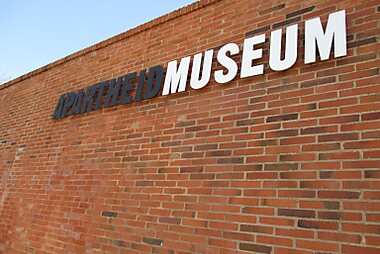

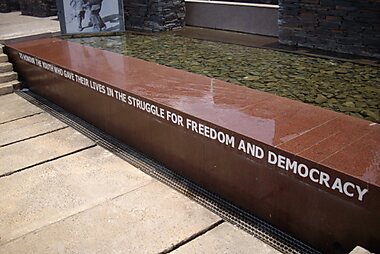
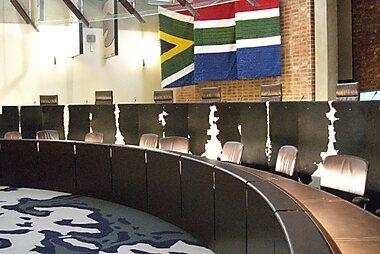
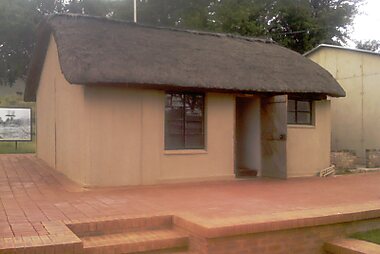


Apartheid Museum walks visitors through apartheid-era South Africa using original identity documents, film footage, and the racially segregated entrances visitors pass through at the start — plan at least two hours.
In Soweto, Mandela House was the family home of Nelson Mandela on Vilakazi Street, the only street in the world where two Nobel Peace Prize laureates have lived. A few blocks away, Hector Pieterson Memorial marks where a 12-year-old boy was shot during the 1976 student uprising, and tells that day's story through photographs and first-hand accounts.
Constitution Hill occupies a former prison complex and now houses South Africa's Constitutional Court; its grounds once held both Mahatma Gandhi, in 1908, and Nelson Mandela, decades later, in separate sections of the old prison.
North of the centre, Liliesleaf Farm was the secret farm where police arrested ANC leaders in 1963, leading to the Rivonia Trial that put Mandela in prison for 27 years.
For a change of pace, Gold Reef City combines an underground gold mine tour with a full theme park built on the site of a former mine.
For the view, ride the elevator to the Top of Africa deck at Carlton Centre, Africa's tallest building for 46 years until 2019 and still one of the best places to see the city's scale.
Featured Lists


Museums
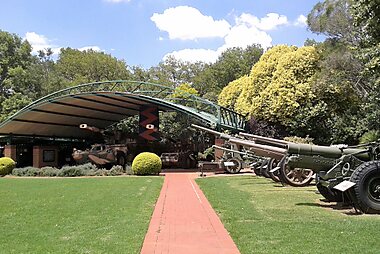
Johannesburg’s museums provide a deep dive into South Africa's sociopolitical evolution and scientific heritage. The Apartheid Museum and Constitution Hill document the struggle for democracy and the nation's constitutional transition. Key sites like Liliesleaf Farm and the Hector Pieterson Memorial mark critical moments in the anti-apartheid movement. Cultural and scientific exploration continues at the Origins Centre, which focuses on ancient human origins, while the National Museum of Military History and James Hall Museum of Transport house extensive collections of military hardware and vintage vehicles.
10 places


What to experience
Johannesburg's best experiences move beyond the museums into the neighborhoods and rituals that define daily life here.
- Walk or cycle through Soweto with a local guide, stopping for a bunny chow or kota at a roadside stall near Mandela House — a very different view of the township than a bus tour gives.
- Browse the stalls at Neighbourgoods Market on a Saturday morning, Johannesburg's best-known artisan and food market.
- Catch a football match at FNB Stadium when the national team or a big local derby is playing — the atmosphere is among the loudest in African football.
- Spend an evening in Maboneng or on Melville's 7th Street, two neighborhoods known for rooftop bars, live music, and a young, mixed crowd.
Tours & Activities
Johannesburg — Map

 Open the interactive map
 Day trips
Johannesburg sits close to some of South Africa's best day trips, from a wildlife park in the morning to a UNESCO fossil site in the afternoon.
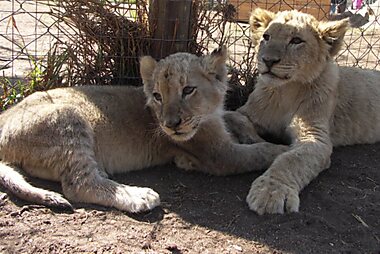
- Lion Park — about 40 minutes by car. A drive-through and walk-through wildlife park with lions, cheetahs, and African wild dogs, in the Cradle of Humankind area.
- Cradle of Humankind (Sterkfontein, Swartkrans, Kromdraai and Environs) — about 45 minutes by car. A UNESCO World Heritage site of limestone caves where some of the world's most important early-hominid fossils were found; the Sterkfontein Caves offer guided underground tours.
- Tshwane (Pretoria) — about an hour by car or the Gautrain. South Africa's administrative capital, with the Union Buildings, jacaranda-lined streets in spring, and the Voortrekker Monument.
- Magaliesberg — about 1 to 1.5 hours by car. A mountain range popular for hiking, hot-air ballooning, and weekend guesthouses; a slower-paced escape from the city.
Where to explore
Johannesburg sits in Gauteng, South Africa's smallest but most densely populated province, alongside a few other destinations worth combining with a city stay.
Tshwane (Pretoria), the country's administrative capital, is close enough for a half-day visit or an easy stop before flying out. West of the city, Cradle of Humankind (Sterkfontein, Swartkrans, Kromdraai and Environs) and the Magaliesberg hills offer a break from the urban pace, with caves, wildlife reserves, and hiking trails.
Getting there
- By air: O.R. Tambo International Airport (JNB), about 20 km east of the centre, is South Africa's main international gateway. The Gautrain runs directly from the airport to Sandton and Park Station in 15–45 minutes depending on the stop; a metered taxi or ride-hailing car takes 30–45 minutes depending on traffic.
- By train: Park Station is the hub for long-distance rail, including Shosholoza Meyl services to Cape Town, Durban, and other major cities, plus the Gautrain to Pretoria and the airport.
- By bus: Long-distance coach operators (Intercape, Greyhound, Translux) connect Johannesburg to most South African cities and neighbouring countries from terminals near Park Station and Rosebank.
Getting around
- Public transit: The Gautrain rapid rail links the airport, Sandton, Rosebank, and Park Station with Pretoria, and is the most tourist-friendly option — buy a rechargeable card at any station. Metrobus and minibus taxis cover more ground but are harder for visitors to navigate without local knowledge. Gautrain
- Taxi / ride-hailing: Uber and Bolt operate widely and are the practical way to get around outside the Gautrain's reach.
- On foot: Johannesburg is spread out and built around cars; walking works well within compact areas like Maboneng or Melville, but not for moving between neighborhoods.
Driving
- Is a car worth it?: Public transit covers the Gautrain corridor, but a rental car or ride-hailing car is genuinely useful for reaching Soweto's spread-out sights, the northern suburbs, and day trips like the Cradle of Humankind.
- Driving side: South Africa drives on the left. If you're used to right-hand traffic, take roundabouts and turns slowly at first.
- Parking: Malls and business hubs like Sandton and Rosebank have secure paid parking, typically attendant-monitored; street parking in the centre is best avoided after dark.
- Restrictions: No congestion charge or low-emission zone applies in Johannesburg.
Food & drink
Johannesburg's food scene runs from street-side braais to some of Africa's most ambitious fine dining, spread across a few distinct pockets rather than one central district.
For something distinctive, head to Neighbourgoods Market on a Saturday morning for local vendors and street food, or seek out a shisanyama — an open-fire meat grill, often attached to a butcher shop — in Soweto for the city's most authentic braai culture. For a wider spread of restaurants and bars, the Maboneng Precinct and Melville's 7th Street are the two areas locals point visitors toward.
Safety & health
Johannesburg has a reputation for crime that is not entirely undeserved, but the vast majority of visits to the main tourist sites and northern suburbs pass without incident. Petty theft and smartphone snatching are the most common risks in busy areas and at traffic lights; keep valuables out of sight and avoid walking alone after dark, especially in the city centre.
Visit Soweto and the inner-city sights with a guide or organized tour rather than alone on foot, and use a booked ride-hailing car or hotel transfer at night rather than hailing a taxi on the street. Tap water is safe to drink throughout the city.
History
Johannesburg did not exist before 1886, when gold was discovered on the Witwatersrand ridge and prospectors' tents turned into a boomtown within a few years. The city's entire layout — its mine dumps, its wealth, its stark inequality — traces back to that gold rush.
Under apartheid, Johannesburg became a focal point of resistance. In 1963, police raided Liliesleaf Farm, arresting ANC leaders who were later tried in the Rivonia Trial. On June 16, 1976, students in Soweto marched against a law forcing Afrikaans-language instruction in schools; police opened fire, and the shooting of 12-year-old Hector Pieterson, memorialized at Hector Pieterson Memorial, became one of the defining images of the anti-apartheid struggle. Constitution Hill, a former prison that once held both Mahatma Gandhi and Nelson Mandela decades apart, is now the seat of South Africa's Constitutional Court — a deliberate symbol of the country's shift from repression to constitutional democracy.
Country facts
Quick practical facts for South Africa at a glance:
- Currency
- South African Rand ZAR R · Card payments · Widely accepted
- Electricity
- 230 V · 50 HzType C / Type D / Type M / Type N
- Languages
- Afrikaans, English, South Ndebele, Swati, Southern Sotho, Tswana, Tsonga, Venda, Xhosa, Zulu
- Tap water
- Safe to drink
- Driving side
- Left
- Calling code
- +27


Johannesburg – Plan Your Days
Turn the places from this guide into a real itinerary, with smart routing, time estimates, and everything you need for a perfect trip.


Related destinations


Data: © OpenStreetMap contributors, Wikidata, Wikipedia, Tripomatic, Official websites, geoBoundaries (CC BY 4.0). Tours by GetYourGuide. We earn commission from bookings. Travel guide generated with AI.