


South Africa
South Africa sits where the Atlantic and Indian Oceans meet, spanning a long coastline, mountain ranges, wine valleys, and some of the continent's best wildlife reserves within a single country. Its recent history is inseparable from apartheid and the transition led by Nelson Mandela, and that story is still visible in museums, memorials, and everyday conversation. Cities like Cape Town, Johannesburg, and Durban each have a distinct character, while smaller towns and reserves offer safari, hiking, and Cape Winelands scenery within a few hours' drive.
The country suits travelers who want to combine wildlife and nature with cities and history in one trip. First-time visitors usually base themselves in Cape Town or the Kruger area, or link both with a longer road trip. English is widely used alongside eleven other official languages, so getting around and communicating is straightforward almost everywhere tourists go.




South Africa – Planning a Trip?
Build your day-by-day itinerary in the Tripomatic app.


Money & payments
Keep some cash for minibus taxis, township tours, small markets, and tips — these are still cash-only in most places. Otherwise, cards cover hotels, restaurants, and fuel. Use ATMs inside malls or bank branches rather than free-standing street machines, especially after dark.
Costs vary sharply by activity: a backpacker budget covers hostels, minibus taxis, and self-catering, while a mid-range trip adds guesthouses, a rental car, and a few guided safaris or wine tastings — the safaris and inter-city flights are what push a budget up fastest.
Featured Lists


Editor's Choice
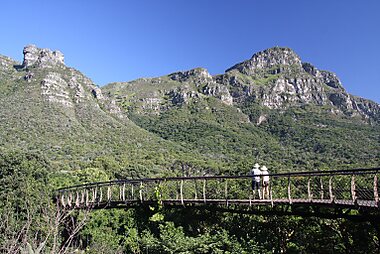
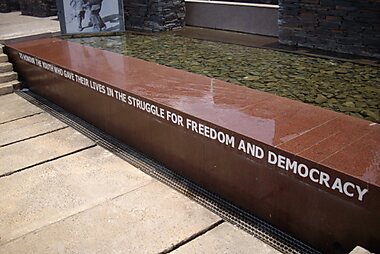
This collection spans South Africa's natural wonders and its complex social history. In Cape Town, Table Mountain provides iconic geological vistas, while Kirstenbosch Botanical Gardens showcases the Cape’s unique floral kingdom. The nation's narrative is preserved through Johannesburg’s Apartheid Museum and Liliesleaf Farm, the former secret headquarters for liberation leaders. Specialized institutions include the Franschhoek Motor Museum's century-old vehicle collection, the Heart of Cape Town Museum detailing the world's first human heart transplant, and the National Museum of Military History, which chronicles the country’s involvement in global conflicts.
8 places


Tours & Activities
South Africa — Map

 Open the interactive map
 Tipping
Tipping is part of the culture, especially at sit-down restaurants, where 10–15% is the norm rather than optional. Petrol station attendants who fill your tank, wash your windscreen, or help with luggage expect a small tip, as do informal parking marshals (car guards) in high-vis vests in most city centers. Safari and tour guides are usually tipped per day, often collected in a shared box at the end of a multi-day trip.
10–15%
round up or ~10%
round up
R20–50 per bag or per night for housekeeping
R100–150 per day (safari or tour guides)
Electricity
South Africa's most common household socket is the large three-round-pin Type M plug, though newer buildings increasingly also fit Type C and N sockets at 230 V / 50 Hz — pack a universal adapter, since a European two-pin (Type C) plug alone often won't fit.
Language
South Africa has twelve official languages, including Zulu, Xhosa, Afrikaans, and South African Sign Language, but English is the language of business, signage, and tourism nationwide. You can travel comfortably with English alone, though a greeting in the local language is always well received, especially outside the main cities.
Staying connected
Prepaid SIMs (Vodacom, MTN, Cell C, Telkom) are sold at airport kiosks and malls, and registration is mandatory — bring your passport, since South African law requires ID for every SIM activation. Modern phones work fine on local networks and no other restrictions apply.
Safety & emergencies
Petty theft and smash-and-grab break-ins are the most common problems for visitors, particularly in city centers, at traffic lights, and in parking lots. Keep valuables out of sight in the car, avoid walking alone after dark in unfamiliar areas, and use a hotel safe rather than carrying your passport around. Violent crime is a real concern in specific areas, but tourist zones, safari lodges, and the main coastal towns are generally safe with normal precautions.
Health
Tap water is safe to drink in cities and major towns. Pharmacies (chemists) are widely available in cities and open long hours, including weekends, and can handle most minor ailments without a prescription.
Malaria is a risk in the low-lying parts of Kruger National Park and neighboring reserves, plus parts of northern KwaZulu-Natal, especially in the wet summer months — check with a travel clinic about antimalarial tablets if your itinerary includes these areas. No vaccinations are mandatory to enter the country, though a yellow fever certificate is required if you're arriving from a country with yellow fever risk.
Visas & entry
Visitors from the EU, UK, US, Canada, Australia, and many other countries can enter visa-free for tourism, usually for up to 90 days, with a valid passport that has at least two blank pages and at least 30 days' validity beyond your departure date. Travelers from countries without a visa-waiver agreement need to apply for a visa in advance through a South African embassy or consulate.
Visa and entry requirements change frequently. Verify current requirements with the official immigration authority or your country's embassy before travel.
Etiquette
Greetings matter: take the time for a proper hello and a brief exchange before getting to business, even in shops and taxis — moving straight to a request can come across as rude. Ask before photographing people, especially in townships, and never photograph police, military sites, or border posts. Bargaining is expected at craft markets and with informal street vendors, but not in shops with marked prices.
Given the country's history, avoid casual jokes about apartheid or race, and be aware that some terms considered acceptable elsewhere are loaded here — when in doubt, let your guide or host set the tone.
Holidays & opening hours
Public holidays can close banks, government offices, and some shops for the day, though malls and restaurants in tourist areas mostly stay open.
Shops generally run Monday–Saturday with shorter hours on Sunday, and malls stay open into the evening; small-town shops may close for an hour at lunch.
Getting around
- By air: domestic flights (FlySafair, Airlink, Kulula) connect Cape Town, Johannesburg, Durban, and other cities faster than the long road distances between them — often the practical choice for a two-city trip.
- By train: the mainline rail network is limited and slow for regular travel; the Gautrain is the exception, a fast, modern link between Johannesburg, Pretoria, and O.R. Tambo Airport.
- By bus: long-distance coaches connect major cities and are a budget-friendly, if slow, alternative to flying or driving.
South Africa drives on the left, like the UK — a detail to keep in mind if you're renting a car and unused to it.
Driving
- Key rules: the legal blood-alcohol limit is low and strictly enforced with roadblocks, especially at night and around holidays. Take extra care driving after dark on rural roads — livestock, pedestrians, and poor lighting are real hazards outside cities.
- Tolls: several national routes charge toll-plaza fees in cash or by card; see the driving details below.
- Parking: paid street parking is common in cities, usually with an informal marshal (car guard) who expects a small tip in addition to any meter fee; guarded lots are worth the small extra cost at night.
- Fuel: stations are attended, not self-service — the attendant fills the tank and cleans the windscreen if asked, and a small tip is customary. Card payment is standard, but carry cash as a backup at smaller rural stations.
- Electric vehicles: charging is still limited outside the main cities, so plan an EV rental route in advance.
Food & drink
Breakfast is often simple — toast, cereal, or a cooked breakfast at guesthouses — while lunch and dinner both lean toward hearty, meat-forward meals. The braai, a social barbecue of grilled meat and boerewors sausage, is close to a national ritual, especially on weekends and public holidays.
Street food and snacks reflect the country's mixed heritage: biltong (dried cured meat) is sold everywhere from garages to farm stalls, while bunny chow — a hollowed loaf filled with curry — is a Durban specialty worth seeking out. Bakeries sell milk tart and koeksisters as everyday sweets.
Restaurants range from casual bistros to fine dining, and eating out is affordable by international standards. Rooibos tea and locally brewed craft beer are common non-alcoholic and alcoholic choices, alongside the country's well-regarded wine.
Where to explore
Major cities: Cape Town pairs mountains, beaches, and the Cape Winelands in one region. Johannesburg is the country's economic hub and a base for exploring its apartheid history. Pretoria, the administrative capital, is a short drive from Johannesburg. Durban on the Indian Ocean coast is known for its beaches and large Indian community. Gqeberha / Port Elizabeth, East London, and Bloemfontein are smaller regional centers worth a stop on a longer road trip.
Wildlife and nature: Kruger National Park is the country's flagship safari destination, with a strong chance of seeing all of the Big Five. uKhahlamba / Drakensberg Park, a UNESCO World Heritage site, offers dramatic mountain hiking in KwaZulu-Natal.
Wine country and coast: Stellenbosch anchors the Cape Winelands with historic estates and tastings. Knysna is a highlight of the Garden Route, with a lagoon, forests, and beaches. Sun City is a resort and casino complex built around its own artificial jungle and water park.
South Africa – Plan Your Trip
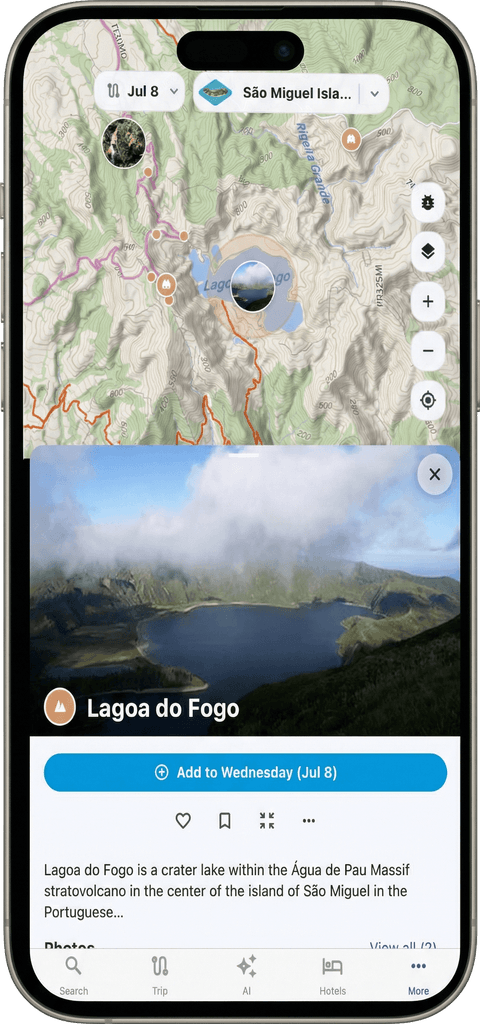
Pick the places you want to see and Tripomatic turns them into a day-by-day route, with smart routing, time estimates, and everything you need for a perfect trip.

Related destinations


Data: © OpenStreetMap contributors, Wikidata, Wikipedia, Tripomatic, Official websites, geoBoundaries (CC BY 4.0). Tours by GetYourGuide. We earn commission from bookings. Travel guide generated with AI.