


Liechtenstein
Liechtenstein is a small alpine principality between Switzerland and Austria. It is about 25 km long and never more than 12 km wide. The capital, Vaduz, sits below Schloss Vaduz, the castle where the ruling prince still lives. Behind the Rhine valley towns, the land rises fast into the Rätikon Alps, reaching 2,599 m at Grauspitz on the Swiss border.
Liechtenstein suits travelers who want to add a rare country to a regional trip without a long detour. It also suits anyone looking for quiet alpine hiking away from busier Swiss and Austrian resorts. Most sights sit close together in and around Vaduz and fit into a half or full day. The mountain villages of Malbun and Steg are worth a longer stay for hiking or skiing.






Liechtenstein – Planning a Trip?
Build your day-by-day itinerary in the Tripomatic app.


Money & payments
Liechtenstein uses the Swiss franc, not the euro, despite bordering two Schengen countries.
Carry some cash for small mountain restaurants, market stalls, and trailhead toilets, which sometimes take coins only. ATMs are easy to find in Vaduz, Schaan, and the larger valley villages, but scarce in Malbun and Steg — withdraw cash before heading up into the mountains.
Featured Lists


Tours & Activities
Liechtenstein — Map

 Open the interactive map
 Tipping
As in Switzerland, service is generally included in restaurant, hotel, and taxi prices, so tipping is a bonus, not an obligation. Most people round up the bill or leave a few extra francs for good service. In bars, leaving nothing is completely normal.
round up or ~5-10%
a few CHF for porters/housekeeping
round up
10-20 CHF for a half-day tour
Electricity
Liechtenstein uses Type C and J plugs at 230 V / 50 Hz, the same as Switzerland. Most modern phone and laptop chargers already handle this range, so only travelers from outside Europe usually need an adapter.
Language
German is the official language. Locally, people speak an Alemannic dialect close to Swiss German, but standard German works everywhere. Most people working in shops, hotels, and tourism also speak English.
Staying connected
Liechtenstein has its own mobile operator, Telecom Liechtenstein, alongside Swiss providers Swisscom and Salt, which also cover the country. A SIM or eSIM bought in Switzerland roams here for free, and the reverse is also true. Coverage is strong across the valley and on most marked hiking trails.
Safety & emergencies
Liechtenstein has one of the lowest crime rates in Europe, and violent crime against tourists is rare. The most common issue is theft from parked cars at trailheads and viewpoints — do not leave valuables visible. In the mountains, check the weather and trail conditions before hiking above Malbun or Steg, since conditions change fast at altitude.
Health
Tap water is safe to drink everywhere, including at marked water sources on mountain huts. Pharmacies are found in Vaduz, Schaan, and the larger villages, and follow standard Central European hours — most close on Sundays. No special vaccinations are required for visiting Liechtenstein.
Visas & entry
Liechtenstein is a Schengen Area member, though it is not part of the European Union. Travelers from the United States, United Kingdom, Canada, Australia, and most of Latin America can enter visa-free for stays of up to 90 days in any 180-day period. Travelers who need a Schengen visa apply through a Swiss embassy or consulate, since Switzerland represents Liechtenstein for visa matters.
There are no border checks between Liechtenstein and Switzerland or Austria — you simply drive or walk across. Passport control happens at your first point of entry into the Schengen Area, for example an airport in Zurich or Vienna.
Visa and entry requirements change frequently. Verify current requirements with the official immigration authority or your country's embassy before travel.
Etiquette
Greetings are formal on first meeting — a handshake and direct eye contact are standard, and people use last names with strangers until invited to switch to first names. Punctuality matters for any appointment or tour booking.
Liechtenstein is still a reigning principality, and locals are generally proud of and respectful toward the prince and his family. Photographing Schloss Vaduz from outside its walls is welcome, but the building itself is a private residence and not open to visitors. In villages and at religious sites, dress modestly and keep noise down, especially on Sundays.
Holidays & opening hours
Liechtenstein's National Day, on 15 August, is the biggest holiday of the year — the reigning prince hosts an open garden party at Schloss Vaduz, and most shops and businesses close. Several other public holidays follow the Catholic calendar and vary in date from year to year.
Most shops close on Sundays and public holidays, and many take a lunch break between 12:00 and 13:30 on weekdays. Restaurants in Vaduz generally stay open through the day.
Getting around
- By train: Trains on the Austrian-run Feldkirch–Buchs line stop at Schaan-Vaduz and Nendeln, both a short bus ride from most of the country. Trains run roughly hourly between Austria and Switzerland. Check ÖBB timetables before you travel.
- By bus: The LIEmobil network connects all eleven communes and links to Feldkirch in Austria and Buchs and Sargans in Switzerland. Buy tickets from the driver, a ticket machine, or the LIEmobil app. See LIEmobil for routes and times.
- By bike: The Rhine Cycle Route (EuroVelo 15) runs the full length of the country on flat, well-signed paths, linking Ruggell in the north to Balzers in the south.
Driving
- Rules to know: The blood alcohol limit is 0.08%, higher than the 0.05% used in neighboring Switzerland and Austria — do not assume the same limit applies once you cross the border. A warning triangle is mandatory. A reflective vest is required in Austria and Switzerland and is worth carrying here too.
- Tolls and vignettes: Liechtenstein itself has no toll roads or vignette. If you reach the country on Swiss or Austrian motorways, you need that country's own vignette for the stretch you drive there.
- Parking: Town centers, including Vaduz, use the blue-zone disc system — set a cardboard parking disc to your arrival time and display it on the dashboard. Discs are free from shops, hotels, and the tourist office.
- Fuel: Stations are self-service and take cards at the pump. Petrol is labeled Bleifrei 95 or Bleifrei 98, and diesel simply Diesel.
Food & drink
Meals follow a Central European rhythm: a simple breakfast of bread, cheese, and cold cuts, a warm lunch around midday, and dinner in the early evening. Sunday lunch with family is still common, especially in the mountain communes.
The national dish is Käsknöpfle, small flour dumplings baked with alpine cheese and topped with fried onions, usually served with apple sauce on the side. Ribel, a cornmeal dish once eaten for breakfast by farming families, has become a specialty at restaurants across the country, often served with coffee or stewed fruit. Rösti, the shredded and pan-fried potato cake shared with Switzerland, appears as a side dish almost everywhere.
For a local drink, look for wine from the prince's own vineyards in Vaduz, sold at the Hofkellerei wine shop and poured in restaurants across the country. Most restaurants are small and family-run rather than chains, and reservations help on weekends.
Where to explore
Liechtenstein has just eleven communes, all reachable from each other in under 30 minutes.
Vaduz is the capital and the country's main draw, with the prince's castle overlooking a compact old town of museums and government buildings. Neighboring Schaan is the largest commune by population and the main transport hub, with the country's principal train station. Planken, the smallest commune, sits on a quiet hillside just above.
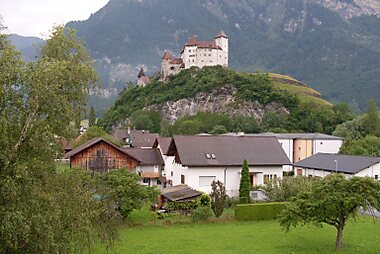
To the south, Triesen and Balzers line the Rhine valley toward the Swiss border, with Burg Gutenberg overlooking Balzers from a rocky outcrop. Above them, Triesenberg climbs into the mountains and gives access to the alpine villages of Malbun and Steg, the country's hiking and skiing base.
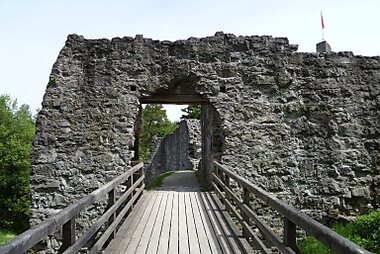
To the north, the flatter Unterland communes of Eschen, Mauren, Gamprin, Ruggell, and Schellenberg are quieter and more rural, with Ruine Neu-Schellenberg marking the old border fortress above the village.


Liechtenstein – Plan Your Days
Turn the places from this guide into a real itinerary, with smart routing, time estimates, and everything you need for a perfect trip.




