


Medina
Medina is Islam's second-holiest city, built around Prophet's Mosque, where the Prophet Muhammad is buried. Millions of Muslims visit each year, most combining it with a pilgrimage to Mecca, roughly 400 km south.
Unlike Mecca, Medina is not entirely closed to non-Muslims. The city itself is open to all travelers, but the sanctuary zone immediately around the mosque is reserved for Muslims only. Outside that boundary, anyone can explore the old town, markets, and historic mosque sites on foot.
Most visitors come on religious trips lasting two to four days. They spend their time praying, visiting sites tied to the Prophet's life, and shopping for dates near the mosque.

Medina – Planning a Trip?
Build your day-by-day itinerary in the Tripomatic app.


When to visit
Winters (November to March) are warm and dry, the most comfortable months for walking around the mosque. Summers (May to September) are extremely hot, often above 40°C.
The busiest period is Ramadan and the Hajj season (Dhul Hijjah), when millions of pilgrims pass through before or after visiting Mecca. Expect much larger crowds and higher hotel prices during these times.
Best time to visit: January, February, March, November, December
Top sights
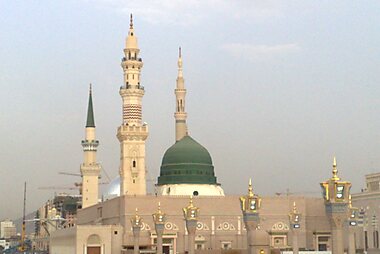
Prophet's Mosque is the second-holiest mosque in Islam, built beside the house of the Prophet Muhammad and expanded many times since. Its green dome marks his tomb.
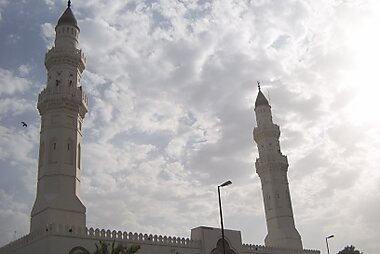
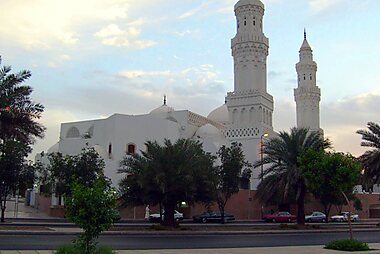
A short taxi ride south, Quba Mosque was the first mosque built in Islamic history. It was founded soon after the Prophet's migration to Medina in 622 CE.
Al-Baqi Cemetery is the city's oldest Islamic cemetery, the resting place of thousands of the Prophet's companions and family members.
Masjid al-Qiblatayn marks the spot where, according to tradition, the direction of prayer changed from Jerusalem to Mecca mid-service.
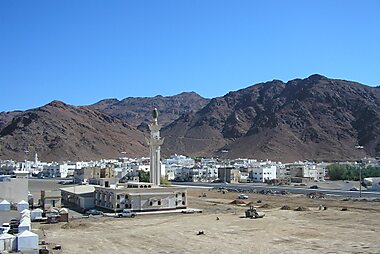
Mount Uhud rises over the site of a major early Islamic battle and is treated as sacred ground by pilgrims.
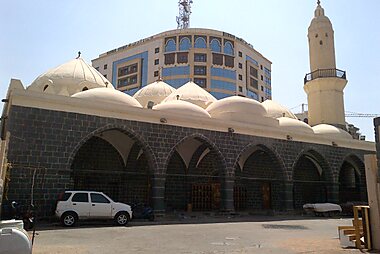
Masjid Ghamama is named for a cloud that tradition says appeared here and brought rain after the Prophet prayed for relief from drought.
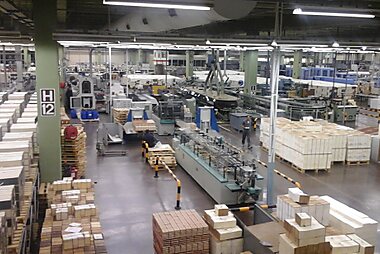
King Fahd Quran Printing Complex prints millions of copies of the Quran each year. It runs occasional guided tours of the printing floor, mainly for Muslim visitors.
Hejaz Railway Museum traces the history of the early 20th-century railway that once linked Medina to Damascus.
Featured Lists


What to experience
A visit to Medina centers on rituals tied to the mosque itself, not sightseeing.
- Praying inside the Rawdah, a small marked area inside Prophet's Mosque believed to be part of Paradise. Access is by timed entry permit, arranged through the Nusuk app.
- Walking to Quba Mosque on a Saturday morning, following the tradition of visiting on foot as the Prophet reportedly did each week.
- Watching the mosque's giant umbrella-like canopies open at dawn and close at night, an engineering feature unique to the site.
Tours & Activities
Medina — Map

 Open the interactive map
 Day trips
Medina sits in a remote stretch of desert, so day trips are limited compared to more central cities. Two options are worth the drive.
Getting there
- By air: Prince Mohammad bin Abdulaziz International Airport (MED) has direct flights from across the Middle East, Africa, and Asia. Capacity increases during Ramadan and Hajj season. It is about 15 km northeast of the centre; a taxi takes 20-25 minutes.
- By train: The Haramain High-Speed Railway runs directly to Mecca, about 2 hours away, with a stop near Jeddah's King Abdulaziz International Airport.
- By bus: Long-distance coaches connect Medina's main bus terminal with Jeddah, Mecca, and Riyadh.
Getting around
- Public transit: Medina has no metro or tram network, and city bus routes are limited. Ride-hailing apps such as Uber and Careem are the easiest way to get around.
- On foot: The area immediately around the Prophet's Mosque is pedestrian-only and easy to explore on foot; most other sights need a taxi.
Driving
- Is a car worth it? Not for the city itself — the historic core is walkable and taxis cover the rest. A car or driver is useful only for day trips to Badr or Yanbu.
- Parking: Multi-storey car parks ring the central Haram zone; expect them to fill fast during Ramadan and Hajj season.
- Restrictions: Vehicle access to the streets closest to the mosque is limited during prayer times and peak pilgrimage periods.
Food & drink
Dates are Medina's signature product. The city grows some of Saudi Arabia's most prized varieties, including Ajwa, and markets near the mosque sell them fresh, dried, or stuffed with nuts.
For a meal, head to the streets and squares just outside the Haram perimeter. Simple restaurants there serve grilled meats, mandi, and Saudi coffee to the steady flow of pilgrims. Carry some cash - smaller stalls and older shops near the mosque don't always take cards.
Safety & health
Medina is one of the safest cities in Saudi Arabia for tourists; violent crime and pickpocketing are rare. The main risks are practical: summer heat that regularly passes 42°C, and crowding during Ramadan and Hajj season.
Drink plenty of water and avoid walking outdoors in the early afternoon between May and September.
History
Medina was known as Yathrib before the Prophet Muhammad's migration here from Mecca in 622 CE. That migration, the Hijra, marks year one of the Islamic calendar. He is buried inside Prophet's Mosque, alongside the religion's first two caliphs.
Three years after the migration, the Prophet's forces fought a major battle against Meccan forces at Uhud Battle Site, just north of the city. The site remains a place of pilgrimage today, along with the graves of those killed in the fighting.
Country facts
Quick practical facts for Saudi Arabia at a glance:
- Currency
- Saudi Riyal SAR · Card payments · Commonly accepted
- Emergency numbers
- 112
- Electricity
- 230 V · 60 HzType G
- Languages
- Arabic
- Tap water
- Safe to drink
- Driving side
- Right
- Calling code
- +966


Medina – Plan Your Days
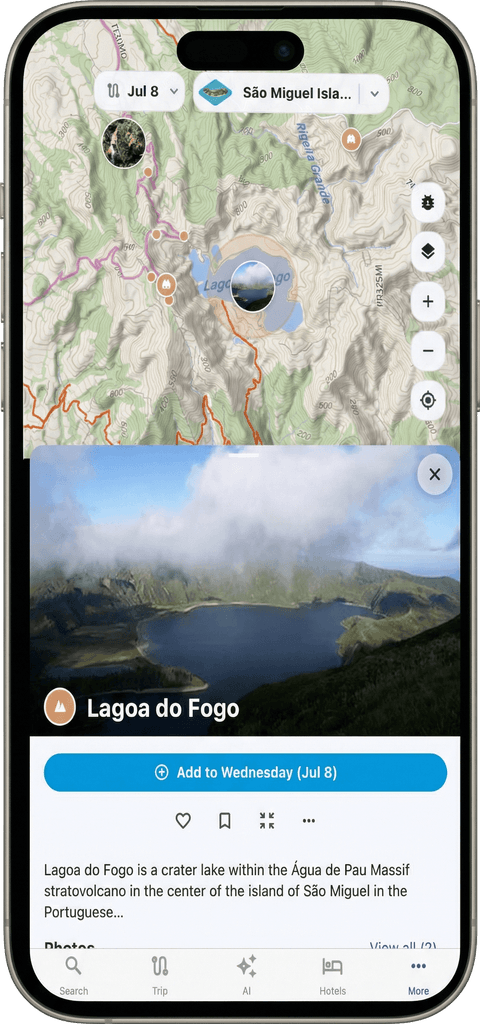
Turn the places from this guide into a real itinerary, with smart routing, time estimates, and everything you need for a perfect trip.

Related destinations


Data: © OpenStreetMap contributors, Wikidata, Wikipedia, Tripomatic, Official websites. Tours by GetYourGuide. We earn commission from bookings. Travel guide generated with AI.