



Saudi Arabia
Saudi Arabia stretches from the Red Sea to the Persian Gulf across most of the Arabian Peninsula. The country opened to leisure tourism in 2019, after decades as a pilgrimage-only destination. Since then it has built new infrastructure fast: restored historic districts, desert resorts, and a growing calendar of festivals.
The kingdom suits travelers drawn to ancient history, desert scenery, and a culture rarely seen by outsiders until recently. Riyadh and Jeddah offer modern city life and Red Sea access, while AlUla and Diriyah preserve some of the peninsula's oldest architecture. Mecca is closed entirely to non-Muslims, and Medina is open to all visitors but reserves its central shrine area for Muslims.

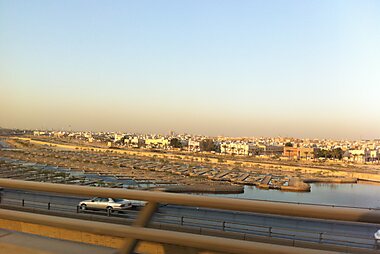

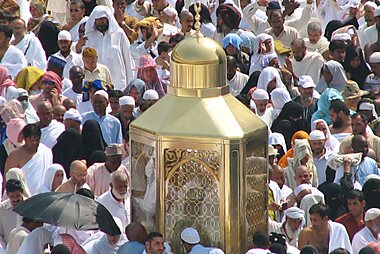

Saudi Arabia – Planning a Trip?
Build your day-by-day itinerary in the Tripomatic app.


Money & payments
Card payments and contactless work well in malls, hotels, and most restaurants. Carry some cash for traditional souqs, small independent shops, older taxis, and rural areas, where cards are less reliable. ATMs are common in cities but scarce along rural highway stretches and in the desert, so withdraw before a long drive.
Featured Lists


Mountains and Viewpoints
Saudi Arabia's diverse topography ranges from the ancient Nabatean tombs carved into the sandstone of Hegra to the high-altitude peaks of the Sarawat Mountains. This collection features Jabal Sawda, the kingdom's highest point, and the dramatic 300-meter cliffs of the Tuwaiq Escarpment. Significant landmarks include the religiously prominent Cave of Hira and Mount Uhud, the snow-dusted heights of Jabal al Lawz near the Jordanian border, and the vast red dunes of the An Nufud al Kabir desert.
7 places

Top Shopping Destinations
Saudi Arabia’s retail landscape spans historic open-air markets and sprawling modern complexes. This selection includes Souk Okaz, a site dating back to the pre-Islamic era reconstructed for cultural festivals, alongside the massive Red Sea Mall and Mall of Arabia in Jeddah. Visitors can find traditional handicrafts at the Thursday Market in Jazan or explore multi-level international retail hubs in Riyadh and Taif, which feature indoor ice rinks and family entertainment centers.
10 placesTours & Activities
Saudi Arabia — Map

 Open the interactive map
 Tipping
10-15%
round up
5-10 SAR/day
10-15%
Tipping is appreciated but not automatic. Restaurants rarely add a service charge, so rounding up or leaving 10-15% for good service is welcome. Taxi and rideshare drivers do not expect a tip, though rounding up is common. Hotel staff and tour guides appreciate a small tip for good service.
Electricity
Saudi Arabia uses Type G plugs, the same as the UK, but at 230 V / 60 Hz. Most travelers will need an adapter.
Language
Arabic is the official language and appears on street signs, menus, and in government offices outside major hotels. English is widely used in business, tourism, and by younger Saudis in cities, though less so in small towns and among older generations. Arabic uses its own script and reads right to left, so learning to recognize a few key words helps with navigation outside tourist areas.
Staying connected
Prepaid SIM and eSIM plans are sold at the airport and by carriers such as STC, Mobily, and Zain. Passport registration is required at the point of sale. Voice and video calls in messaging apps such as WhatsApp generally work without issue. Some websites and streaming services may be blocked or restricted. A small number of travelers use a VPN for this, though it is a personal choice, not a requirement.
Safety & emergencies
Saudi Arabia has a very low rate of violent crime and petty theft against tourists. The main risks for visitors are heat-related: dehydration and heatstroke in summer, especially outside the cities. Flash floods can fill desert valleys (wadis) quickly after rain, so avoid camping or driving through a dry riverbed if a storm is forecast. Traffic is the biggest everyday hazard, and Riyadh and Jeddah both see frequent accidents.
Health
Tap water is treated and meets official safety standards, but most residents and visitors drink bottled or filtered water, which is sold everywhere. Pharmacies are common in cities, and many stay open late. Pharmacists can advise on minor ailments and sell some medicines over the counter that require a prescription elsewhere. No special vaccinations are required for general tourism, though travelers attending Hajj or Umrah must show proof of a meningitis vaccination. Summer heat is the main health risk: stay hydrated and limit outdoor activity during the hottest hours.
Visas & entry
Citizens of about 66 countries can apply for an eVisa online before arrival. It is valid for one year with multiple entries and allows stays of up to 90 days per visit. Citizens of Gulf Cooperation Council countries do not need a visa. Travelers not covered by the eVisa program should contact the nearest Saudi embassy or consulate.
The eVisa also covers Umrah outside the Hajj season. Hajj itself requires a separate visa arranged through an authorized operator, and access to Mecca is restricted around the Hajj period even for eVisa holders.
Visa and entry requirements change frequently. Verify current requirements with the official immigration authority or your country's embassy before travel.
Etiquette
- Dress modestly in public: shoulders and knees covered, for both men and women. An abaya is no longer legally required for women, but loose, non-revealing clothing is still expected outside resorts and hotel pools.
- Inside mosques and near Islamic holy sites, women should cover their hair, and some sites require full-length, loose clothing for all visitors.
- Avoid photographing people, especially women, without asking first, and never photograph government buildings, military sites, or checkpoints.
- Public displays of affection between couples are frowned upon.
- Friday is the main day of prayer; some shops and restaurants pause briefly around midday prayer time.
- Alcohol is illegal to buy, sell, or consume anywhere in the country, including in hotels.
Holidays & opening hours
Islamic holidays follow the lunar calendar, so their Gregorian dates shift each year. Ramadan affects daily life most: many restaurants close during daylight hours, and offices and shops often open later and close earlier. Eid al-Fitr and Eid al-Adha bring public holidays of several days each, when many businesses close and domestic travel gets busy.
Outside these periods, most shops keep long hours, often into the evening, and pause briefly for the five daily prayer times.
Getting around
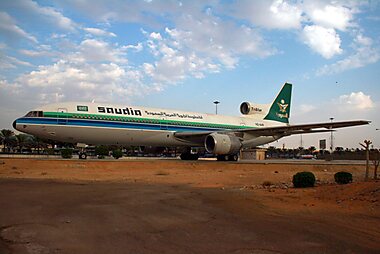
- By air: domestic flights on Saudia, flynas, and flyadeal connect major cities quickly, often faster than driving given the country's size.
- By train: the Haramain High Speed Railway links Jeddah, Mecca, and Medina in under two and a half hours; book at Haramain High Speed Railway. A separate line connects Riyadh to the Eastern Province.
- By bus: SAPTCO runs inter-city coaches to most towns, a budget option for longer overland trips.
Driving
- Speed limits: 120 km/h on most motorways, 80-100 km/h on rural roads, 40-60 km/h in cities. Cameras enforce these strictly and fines are automatic.
- Licence: bring your home driving licence; if it is not printed in Latin script, also carry an International Driving Permit. Digital copies are not accepted at checkpoints.
- Zero tolerance: there is no legal blood-alcohol limit for driving; any alcohol is an offense, consistent with the nationwide alcohol ban.
- Fuel: stations are staffed and take cards; pumps are labeled '91' and '95' for petrol grades and 'diesel' for diesel.
- Parking: free street parking is common outside city centers; larger cities have paid parking zones marked by signs or meters.
- Electric vehicles: charging points are still limited outside Riyadh and Jeddah.
Food & drink
Saudi meals center on rice, grilled or slow-cooked meat, and bread eaten with the hands. Kabsa, spiced rice with chicken or lamb, is the closest thing to a national dish, alongside mandi, meat cooked in an underground pit oven. Breakfast is often simple: flatbread, cheese, dates, and eggs, while lunch is typically the largest meal of the day.
Street food centers on grilled skewers, shawarma, and sambousek (fried pastries). Dates come in dozens of varieties, sold everywhere from supermarkets to roadside stalls. Alcohol is banned nationwide, so drink culture centers on strong Arabic coffee (qahwa), spiced with cardamom and served in small cups, alongside sweet black tea and fruit juices. Restaurants range from simple canteens to elaborate fine dining, and many offer separate family sections for more private seating.
Where to explore
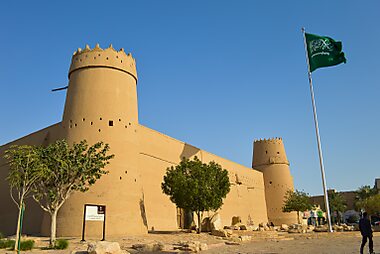
Cities: Riyadh, the capital, mixes glass towers with restored mudbrick forts. Jeddah is the main Red Sea gateway, known for its old coral-stone quarter. Ta'if sits in the mountains above Mecca and draws visitors for its cooler climate and rose farms.
Holy cities: Mecca and Medina are Islam's two holiest sites, each restricted to Muslims either entirely or in their central areas.
Heritage and desert: AlUla holds Nabataean tombs carved into sandstone cliffs, and Diriyah preserves the mudbrick birthplace of the Saudi state, just outside Riyadh.
Eastern Province: Dammam anchors the Gulf coast. Inland, Hofuf sits in the Al-Ahsa oasis, one of the world's largest, known for its palm groves.
South: Abha, high in the Asir mountains, offers a cooler climate and terraced villages, a contrast to the desert lowlands.
Saudi Arabia – Plan Your Trip
Pick the places you want to see and Tripomatic turns them into a day-by-day route, with smart routing, time estimates, and everything you need for a perfect trip.


Related destinations


Data: © OpenStreetMap contributors, Wikidata, Wikipedia, Tripomatic, Official websites, geoBoundaries (CC BY 4.0). Tours by GetYourGuide. We earn commission from bookings. Travel guide generated with AI.