



Mecca
Mecca is the holiest city in Islam and the birthplace of the Prophet Muhammad. At its heart stands Masjid al-Haram, the mosque built around the Kaaba, the cube-shaped structure Muslims worldwide face during daily prayer. Millions travel here every year for Hajj, obligatory once in a lifetime for every Muslim who is able, and Umrah, a shorter pilgrimage many perform more often.
Entry to Mecca is restricted to Muslims. This is Saudi law, checked at checkpoints on every road into the city, and it shapes this whole guide: everything below assumes a Muslim visitor arriving for pilgrimage or a personal visit. A stay here centers on the mosque and its rituals rather than sightseeing in the usual sense, and it is calmest outside the Hajj season and Ramadan.

Mecca – Planning a Trip?
Build your day-by-day itinerary in the Tripomatic app.


When to visit
Winter (December to February) is the most comfortable season, with warm days and cool nights. Spring warms up fast, and summer (April to October) is extreme, often above 40°C in the afternoon; autumn cools back down as winter approaches.
Most trips are timed by faith, not weather. Hajj falls in the Islamic lunar month of Dhu al-Hijjah, which shifts about 11 days earlier every Gregorian year, and requires an official Hajj visa or permit arranged well in advance. Umrah can be performed at any other time of year, though Ramadan is the busiest month for it, when millions combine the pilgrimage with the fasting month.
Best time to visit: January, December
Top sights
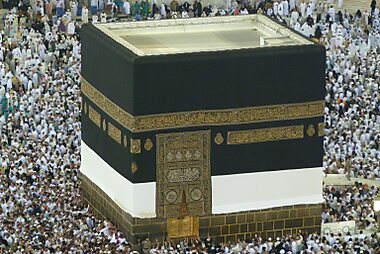
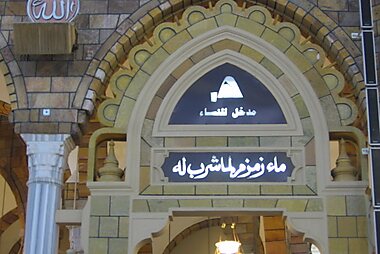

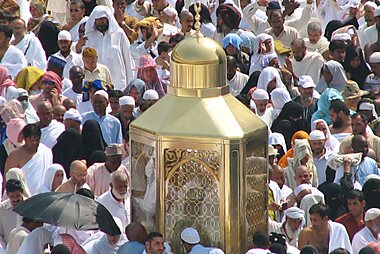
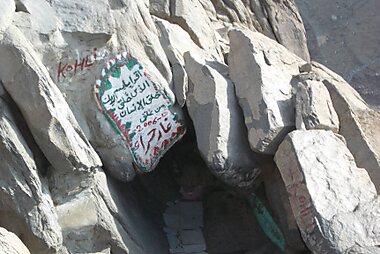

Masjid al-Haram encloses the Kaaba, the cube every Muslim in the world faces in prayer, and can hold over a million worshippers at once during peak pilgrimage days.
Set into the Kaaba's eastern corner, the Black Stone is kissed or pointed to by pilgrims completing tawaf, the ritual of circling the Kaaba seven times.
Maqam Ibrahim marks the stone associated with Abraham and his son Ishmael, said to have been used while building the Kaaba, and stands just a few meters from the Kaaba itself.
Towering over the mosque, Makkah Clock Royal Tower is one of the tallest buildings in the world, topped by a clock face visible for kilometers and housing hotels, a mall, and an Islamic-history museum.
On the edge of the city, Cave of Hira sits on Jabal al-Nour, the mountain where the Prophet Muhammad is said to have received his first revelation; reaching the cave means a steep hour-long climb.
Cave of Thawr, south of the city on Jabal Thawr, is where Muhammad and his companion Abu Bakr are said to have hidden during their flight to Medina.
Mecca Gate is a large ceremonial arch marking the start of the city's holy boundary along the road from Jeddah.
Featured Lists


What to experience
- Performing tawaf: circling the Kaaba seven times, open to any Muslim visitor at any hour of the day or night.
- Drinking Zamzam water, drawn from the well beside the Kaaba and offered free throughout the mosque.
- Hearing the adhan rise from Masjid al-Haram and roll across the whole city five times a day.
- During Ramadan, joining the communal iftar meals laid out across the mosque's courtyards at sunset.
- During Hajj, taking part in the ancient rites at Mina, Arafat, and Muzdalifah alongside millions of pilgrims.
Tours & Activities
Mecca — Map

Day trips
Mecca sits close to Saudi Arabia's Red Sea coast and its cooler mountain highlands, both reachable in a few hours.
- Jeddah — about 1 hour by car or bus. Saudi Arabia's main port city has a Red Sea corniche and Al-Balad, a UNESCO-listed old town of coral-stone merchant houses.
- Ta'if — about 1.5–2 hours by car up the Al-Hada mountain road. Sitting over 1,700 m up, it is noticeably cooler than Mecca and known for its rose farms and mountain viewpoints.
- Medina — about 2 hours by Haramain High Speed Railway. Islam's second-holiest city and burial place of the Prophet Muhammad; like Mecca, parts of it are restricted to Muslims, so check current entry rules before travelling.
Getting there
- By air: fly into King Abdulaziz International Airport (JED) in Jeddah, about 85 km away — Mecca has no airport of its own. During Hajj, JED runs a dedicated Hajj Terminal for pilgrim arrivals. From the airport, reach Mecca by taxi, private transfer, or pilgrim bus in roughly 1–1.5 hours.
- By train: the Haramain High Speed Railway links Jeddah's airport, Jeddah, Mecca, and Medina, and is the fastest way to move between the two holy cities.
- By road: only Muslims may enter Mecca. Checkpoints on every approach road check identity and pilgrimage documents. Non-Muslim travelers passing through the region use separate bypass roads that skirt the city.
Getting around
- Public transit: free or low-cost shuttle buses run constantly between accommodation areas and the Grand Mosque; during Hajj, the Al Mashaaer Al Mugaddassah metro line adds a dedicated connection to Mina, Arafat, and Muzdalifah.
- Taxi and ride-hailing: Uber and the regional app Careem both operate; Careem is the more widely used option locally.
- On foot: the zone immediately around Masjid al-Haram is compact and pedestrianized, but accommodation can be a long walk away, and summer heat makes walking any distance demanding.
Driving
- Car needed?: No. The center is a restricted, largely pedestrianized zone, and most visitors rely on shuttle buses, taxis, or walking. A car only becomes useful for a side trip to Ta'if or Jeddah.
- Parking: multi-story car parks ring the central zone; expect long queues and a walk from the car park to the mosque during Hajj and Ramadan.
- Restrictions: private vehicles are barred from the innermost ring around Masjid al-Haram during peak pilgrimage periods, when only shuttle buses and permit holders can enter.
Food & drink
Food here follows the wider Hejazi and Saudi table, with simple, hearty dishes built to feed large groups of pilgrims quickly.
The most distinctive part of eating in Mecca is how much of it is free: dates and Zamzam water are handed out constantly around the mosque, and worshippers regularly lay out shared meals for strangers nearby, especially at iftar during Ramadan. For a sit-down meal, the streets around Ajyad and Ibrahim Al Khalil Road, just south of the mosque, cluster with inexpensive Hejazi, Turkish, and South Asian restaurants serving the pilgrim crowds.
Safety & health
Mecca is very safe, with heavy security and crowd management around the Grand Mosque and low rates of violent crime. Petty theft can happen in dense crowds, so keep valuables close during tawaf and at the Hajj sites.
The real risks are heat and crowding rather than crime. Summer heat regularly tops 40°C, so pace yourself, use the mosque's misting fans and cooled marble floors, and drink water often. During Hajj and Ramadan peaks, crowd crush is the most serious hazard: follow marshal instructions and move with the flow of the crowd rather than against it.
History
Long before Islam, the Kaaba was already a pilgrimage site for Arabian tribes, and Mecca thrived as a trading town on the caravan route between Yemen and the Levant. The Prophet Muhammad was born here around 570 CE, and received his first revelation in Cave of Hira above the city. Facing persecution, he later hid with his companion Abu Bakr in Cave of Thawr before fleeing to Medina in 622 CE, the migration that marks the start of the Islamic calendar.
Muhammad returned in 630 CE, removed the idols from the Kaaba, and rededicated it to the worship of one God. Successive caliphates, the Ottomans, and the Saudi state have all rebuilt and expanded Masjid al-Haram to hold ever larger crowds, most recently with the Makkah Clock Royal Tower complex completed in 2012.
Country facts
Quick practical facts for Saudi Arabia at a glance:
- Currency
- Saudi Riyal SAR · Card payments · Commonly accepted
- Emergency numbers
- 112
- Electricity
- 230 V · 60 HzType G
- Languages
- Arabic
- Tap water
- Safe to drink
- Driving side
- Right
- Calling code
- +966
Mecca – Plan Your Trip
Pick the places you want to see and Tripomatic turns them into a day-by-day route, with smart routing, time estimates, and everything you need for a perfect trip.


Related destinations


Data: © OpenStreetMap contributors, Wikidata, Wikipedia, Tripomatic, Official websites, geoBoundaries (CC BY 4.0). Tours by GetYourGuide. We earn commission from bookings. Travel guide generated with AI.