



Montenegro
Montenegro is a small country on the Adriatic coast, wedged between Croatia, Bosnia and Herzegovina, Serbia, Kosovo, and Albania. Its coast holds walled medieval towns around a dramatic bay, and its interior climbs fast into mountains, canyons, and glacial lakes. A short drive can take a traveler from a beach to a 2,000-meter peak. It suits travelers who want both relaxed coastal towns and serious hiking on the same trip.
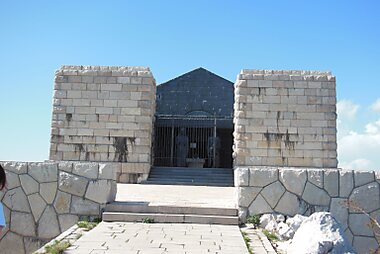
The country's name means "Black Mountain", a nod to its rugged interior. That interior resisted full Ottoman control for centuries, even as the rest of the Balkans fell under Ottoman rule. That defiance shaped national identity. It is embodied by the 19th-century ruler-poet Petar II Petrović-Njegoš. His mountaintop mausoleum on Mount Lovćen is still a national shrine. Montenegro split peacefully from Serbia after a 2006 independence referendum. It joined NATO in 2017 and is now a candidate for European Union membership.




Montenegro – Planning a Trip?
Build your day-by-day itinerary in the Tripomatic app.


Money & payments
Montenegro uses the euro, even though it is not a member of the eurozone or the EU — it adopted the currency unilaterally in 2002.
ATMs are common in every town along the coast and in the larger interior towns, with fewer in small mountain villages. Carry some cash for small guesthouses, family-run konobas, parking machines, and market stalls, especially away from the coast.
Featured Lists

Montenegro's Crown Jewels
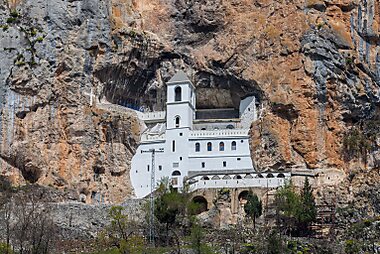
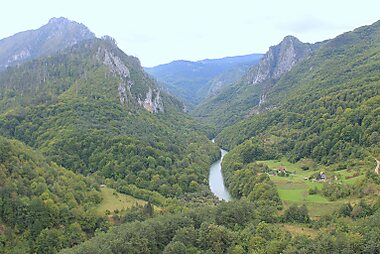
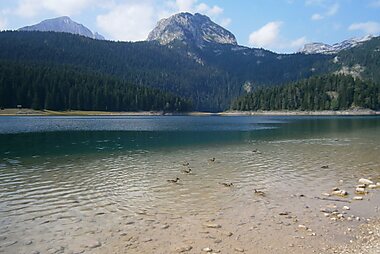
Montenegro’s landscape features a dramatic transition from the Bay of Kotor’s medieval fortifications to the high-altitude glacial lakes of Durmitor National Park. This selection highlights architectural landmarks like the 12th-century St. Tryphon Cathedral and the cliffside Ostrog Monastery. Natural wonders include the 1,300-meter-deep Tara River Canyon and the Cijevna River’s waterfalls. Historical sites span from the Venetian-era Citadela in Budva to the Njegoš Mausoleum atop Mount Lovćen, offering a comprehensive look at the country’s diverse cultural and geographical heritage.
14 places
Editor's Choice Montenegro
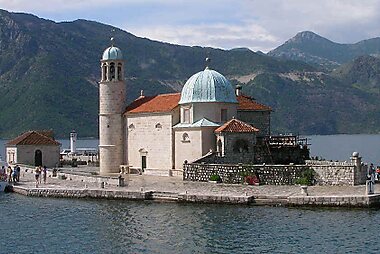
Explore Montenegro's architectural and natural highlights, from the 12th-century Romanesque St. Tryphon Cathedral and the 20th-century Orthodox Church of St Nicolas in Kotor's UNESCO-listed old town to the artificial island of Our Lady of the Rocks. High in the Lovćen mountains, the Njegoš Mausoleum sits atop Jezerski Vrh, housing the remains of the nation's 19th-century ruler. This selection also includes the Tara River Canyon, Europe's deepest gorge, and Galion, a waterfront restaurant overlooking Kotor's harbor and medieval fortifications.
6 places


Montenegro's Spiritual Heritage
Montenegro’s religious landscape features a blend of Eastern Orthodox and Roman Catholic traditions across diverse architectural styles. This collection includes the Ostrog Monastery, carved into a vertical cliff face, and the 12th-century St. Tryphon Cathedral in Kotor, showcasing Romanesque design. From the man-made island of Our Lady of the Rocks to the Brutalist concrete forms in Podgorica, these sites illustrate the evolution of spiritual heritage from medieval monasticism to contemporary architecture.
20 places

Tours & Activities
Montenegro — Map

 Open the interactive map
 Tipping
Tipping is appreciated but not obligatory. In restaurants, rounding up the bill or adding about 10% for good service is common. Bars and cafés don't expect a tip beyond rounding up. Taxi drivers usually get the fare rounded up. Hotel porters and housekeeping welcome a small tip, and tour guides are typically tipped 5–10 EUR per day for a good experience.
round up or ~10%
round up
round up
1-2 EUR for porters/housekeeping
5-10 EUR per day
Electricity
Montenegro uses Type C and F plugs at 230 V / 50 Hz — standard European sockets, so most travelers from Europe need no adapter.
Language
Montenegrin is the official language, closely related to Serbian, Croatian, and Bosnian — speakers of any of the four generally understand each other without difficulty. Both the Latin and Cyrillic alphabets are used; Latin script dominates along the coast and in tourist materials, so navigation is not a problem.
English is widely spoken in coastal tourist towns and by younger Montenegrins. It is less common inland and among older generations, though a few words go a long way.
Staying connected
Montenegro is not in the EU. EU and UK phone plans' "roam like at home" allowances usually do not cover it. Check for out-of-bloc roaming charges before you arrive. Prepaid SIM cards are sold at the airports and by phone shops in every town. Bring your passport, since ID registration is required.
Coverage is solid along the coast and in the main towns, with gaps in remote mountain valleys and national parks.
Safety & emergencies
Montenegro is a safe country for travelers, with low rates of violent crime. The main risks are petty theft in busy tourist areas during the summer season, and traffic — mountain roads are narrow and winding, so drive cautiously and watch for reckless local drivers.
Health
Tap water is generally treated as safe to drink in cities and along the coast, though mineral content and taste vary; bottled water is a reasonable choice if you prefer it, especially in older buildings or rural areas.
Pharmacies (apoteka) are common in every town and clearly marked with a green cross; most stock everyday medicines without a prescription. Montenegro is not in the EU, so the European Health Insurance Card does not apply — travel insurance covering medical treatment is recommended. No special vaccinations are required for entry.
Visas & entry
Citizens of the EU/Schengen area, the UK, the US, Canada, and Australia can enter Montenegro without a visa for short tourist stays, usually up to 90 days. Montenegro is not yet part of the Schengen area, so passport checks apply at the border even when arriving from a Schengen country. Travelers who need a visa should apply in advance at a Montenegrin embassy or consulate.
Visa and entry requirements change frequently. Verify current requirements with the official immigration authority or your country's embassy before travel.
Etiquette
Dress modestly when visiting Orthodox monasteries and churches — shoulders and knees covered for both men and women. Ostrog Monastery, one of the country's most visited pilgrimage sites, enforces this strictly, and photography is often restricted inside the churches.
A handshake is the standard greeting; among friends and family, a kiss on both cheeks is common. Ask before photographing people directly. Bargaining is not customary in shops or restaurants, though it can happen at open-air markets.
Holidays & opening hours
Public holidays can close shops, banks, and some restaurants, especially in smaller towns — coastal tourist areas generally stay open through the summer season regardless.
Most shops open Monday to Saturday, often with a midday break in smaller towns, and many close on Sundays outside the main tourist season. Restaurants along the coast keep long hours in summer.
Getting around
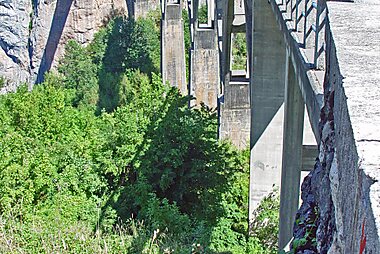
- By train: A single scenic line runs from the coast at Bar through Podgorica and Kolašin toward Serbia. It crosses the Mala Rijeka viaduct, one of the highest railway bridges in the world. It's slow, but the views are worth it. Book through Željeznica Crne Gore, the national rail operator.
- By bus: Intercity coaches connect almost every town, including the coast and the mountains. They are the main way to get around without a car. Buy tickets at the station shortly before departure.
- By air: Domestic flights aren't really needed — the country is small enough that buses and driving cover it well. International flights land at Podgorica and Tivat airports.
Driving
- Key rules: The blood alcohol limit is a strict 0.03% for drivers — effectively zero tolerance. Headlights must stay on at all times, day and night. Winter tires or snow chains are required in mountain areas from November through April. Carry a reflective vest, a warning triangle, and a spare set of bulbs — standard requirements across the region.
- Tolls: There's no nationwide vignette. A few stretches charge a small toll at the barrier — the Sozina Tunnel and the newer motorway section north of Podgorica. Pay by cash or card.
- Parking: Coastal towns fill up fast in summer — use signposted paid lots rather than circling for street parking. Cars are banned inside the old towns of Kotor and Budva; park outside the walls and walk in.
- Fuel: Stations are common along the coast and main roads, less frequent in remote mountain areas — don't let the tank run low before a mountain crossing. Both self-service and attended pumps take cards.
- Electric vehicles: Charging points are still limited outside Podgorica and the main coastal towns; plan ahead if driving an EV into the interior.
Food & drink
Montenegrin cuisine has two distinct traditions that barely overlap: Mediterranean coastal cooking and hearty mountain fare. On the coast, expect fresh fish, grilled squid, and olive oil–heavy dishes similar to neighboring Croatia and Italy. Inland, meals lean on smoked meats, cheese, and cornmeal, shaped by centuries of mountain shepherding.
Breakfast is often light — bread, cheese, and coffee — while lunch is the main meal of the day, especially away from the coast. Dinner tends to be later and more relaxed, particularly in summer. Locals eat at family-run konobas rather than international chains, and portions are generous.
Rakija, a strong fruit brandy, is the traditional welcome drink and aperitif, often homemade. Coffee culture is serious and unhurried — expect to linger over a small, strong cup. Local wine, especially from the Vranac grape, pairs well with both the smoked meats and the grilled fish.
Where to explore
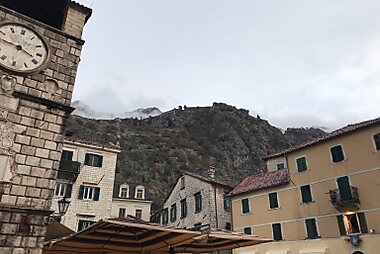
The coast curves around the dramatic Bay of Kotor, often described as Europe's southernmost fjord-like inlet. Kotor has the best-preserved walled old town on the bay, watched over by fortifications climbing the cliff above it. The small village of Perast, a few minutes up the coast, faces the two islets of Our Lady of the Rocks. Nearby Tivat and Herceg Novi round out the bay with a marina-turned-yacht-hub and a spa-town history, respectively.
South along the Adriatic, Budva is the country's main beach resort, with a walled old town of its own and the famous islet of Sveti Stefan just down the coast. Further south, Bar is a working port town, and Ulcinj closes out the coast near the Albanian border with long sandy beaches and an Ottoman-era old town.
The capital and interior center on Podgorica, a modern, low-key capital with little historic architecture left after wartime destruction. Cetinje, the old royal capital, sits in the hills above the bay and keeps a small-town, monastery-and-museum character. Nikšić is the country's second city, more industrial and rarely visited by tourists.
The mountains hold Montenegro's wildest scenery. Durmitor National Park, a UNESCO World Heritage Site around the town of Žabljak, has glacial lakes, the deep Tara River canyon, and extensive hiking trails. Biogradska Gora National Park protects one of Europe's last old-growth forests. Kolašin is a ski and hiking base on the scenic railway line. Near the Albanian border, Plav is the gateway to the jagged Prokletije mountains, one of the least-visited corners of the country. Just inland from the coast, Lake Skadar National Park is the largest lake in southern Europe, shared with Albania. It's known for birdwatching and boat trips through its wetlands.
Montenegro – Plan Your Trip
Pick the places you want to see and Tripomatic turns them into a day-by-day route, with smart routing, time estimates, and everything you need for a perfect trip.


Related destinations


Data: © OpenStreetMap contributors, Wikidata, Wikipedia, Tripomatic, Official websites, geoBoundaries (CC BY 4.0). Tours by GetYourGuide. We earn commission from bookings. Travel guide generated with AI.