



Morocco
Morocco sits where Africa meets Europe, a few kilometers across the Strait of Gibraltar from Spain. Blue-washed mountain towns, red desert cities, Atlantic surf beaches, and Sahara dunes make up a single country with very different regions, connected by a good road and rail network. Marrakesh and Fez hold centuries-old walled medinas still lived in today, while Casablanca and Rabat show a more modern, business-focused side of the country.
Morocco suits travelers who enjoy history, markets, and dramatic landscapes, and who don't mind crowded, maze-like streets in the old city centers. A short trip works well around one or two cities; a longer one can combine the Sahara desert, the Atlas Mountains, and the coast.



Morocco – Planning a Trip?
Build your day-by-day itinerary in the Tripomatic app.


Money & payments
Morocco's currency is the Moroccan dirham. It's a closed currency — travelers can legally bring up to about 2,000 MAD in cash out of the country, but larger amounts require declaration, so avoid changing more than you expect to spend.
Cards work in hotels, larger restaurants, and shops in bigger cities, but cash is still the norm in medinas, souks, taxis, and small-town restaurants. ATMs are common in cities but scarce in rural areas and desert towns, so withdraw enough dirhams before heading out on a multi-day desert or mountain trip.
A budget traveler can get by on a modest daily amount covering a guesthouse bed, street food, and local transport; a mid-range trip adds a private room, sit-down meals, and the odd guided tour or transfer.
Featured Lists


Hidden Gems of Morocco
Explore Morocco's diverse cultural landscape through these five distinct locations. The UNESCO-listed Medina of Tétouan offers a glimpse into northern architectural history along the Martil Valley. In the heart of the medina, traditional tanneries provide elevated viewpoints over ancient leather-dyeing pits. Cultural heritage is preserved in Marrakech at the Boucharouite Museum, specializing in Berber rugs, and the Tiskiwin Museum, which displays theater costumes and props. Along the southern coast, Mirleft Beach provides a secluded retreat featuring white sands sheltered by steep cliffs.
5 places


Campsites & Caravan Sites
This collection of campsites and caravan sites spans Morocco’s diverse landscapes, from the Atlantic coast to the remote dunes of the Sahara. It features historic locations like Fort Bou Jerif, a former French Foreign Legion outpost, alongside desert bivouacs in the Ouzina and Ramlia oases. These sites provide essential infrastructure for overland travelers, including dedicated caravan pitches, traditional Moroccan dining, and tent accommodations situated along key routes like the former Paris-Dakar track and the rugged southern coastline.
9 places

Traditional Markets & Souks
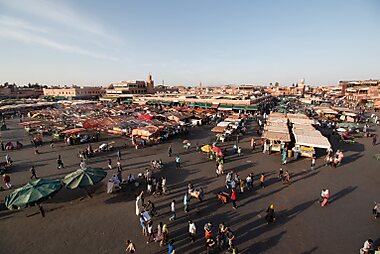
This selection spans Morocco’s historic trade hubs, from the UNESCO-listed Jemaa El-Fna square and the labyrinthine Marrakech Souks to specialized coastal markets. In Essaouira, Souk Jedid features local textiles and household items, while the Ensemble Artisanal showcases regulated Moroccan handicrafts. Agadir's Almassira fish market serves as a primary hub for the daily catch, offering a look at the region’s maritime commerce and traditional seafood selection.
5 placesTours & Activities
Morocco — Map

 Open the interactive map
 Tipping
Tipping is a normal part of daily life in Morocco, especially in restaurants and with guides. Small notes and coins are useful to carry for this.
5-10% or round up
10-20 MAD per bag or per day for housekeeping
round up
50-100 MAD per day
10%
Electricity
Morocco's power supply matches most of continental Europe, so travelers arriving from outside Europe usually only need a plug adapter, not a voltage converter.
Language
Arabic is Morocco's official language, alongside Tamazight (Berber); French is widely used in business, education, and signage, and Spanish is common in the north near Tangier and Tétouan. English is spoken in tourist areas, hotels, and by younger people in cities, but less so in rural areas and smaller souks.
Arabic script reads right to left, so street signs and shop names can be hard to match to a map; French-language signage is usually available alongside it in bigger cities.
Staying connected
Buying a local SIM or eSIM is straightforward at major airports or any phone shop in a city center; bring your passport, since Moroccan operators require ID to register a prepaid SIM. Maroc Telecom, Orange, and inwi all offer affordable data packages.
Voice calls over apps like WhatsApp, FaceTime, and Skype were restricted in Morocco for several years. Check the current status before relying on them for calls, and keep a local SIM as a backup for calling ahead to guesthouses or drivers.
Safety & emergencies
Morocco is generally safe for tourists, and violent crime against visitors is rare. The most common issues are pickpocketing in crowded medina alleys and markets, and unofficial "guides" who offer unsolicited help and then expect payment — politely decline and walk on if you don't want the assistance. Solo women travelers may experience frequent unwanted attention in busy areas; dressing modestly and traveling with confidence helps.
Health
Tap water in Morocco is treated, but many travelers stick to bottled water to avoid stomach upsets, especially outside big cities. Pharmacies are common in cities and marked with a green cross, and pharmacists can advise on minor ailments; larger cities have 24-hour pharmacies on a rotating schedule.
No special vaccinations are required to enter Morocco, though routine vaccinations should be up to date. Travelers heading to rural or desert areas for an extended stay sometimes discuss additional precautions with a travel clinic beforehand.
Visas & entry
Nationals of the EU, UK, US, Canada, Australia, and many other countries can enter Morocco visa-free for tourism, typically for up to 90 days. Travelers who do need a visa can usually apply at a Moroccan consulate in advance; visa-on-arrival is not generally available.
Visa and entry requirements change frequently. Verify current requirements with the official immigration authority or your country's embassy before travel.
Etiquette
Morocco is a Muslim country, and dressing modestly is appreciated, especially outside beach resorts — covering shoulders and knees is a safe default. Non-Muslims are generally not permitted inside working mosques, with a few exceptions such as the Hassan II Mosque in Casablanca, which offers guided tours.
Greetings often involve a handshake and some warm small talk before getting to business; it's polite to accept an offer of mint tea even briefly. Bargaining is expected in souks and with unmetered taxis, but not in shops with marked prices. Ask before photographing people, especially in rural areas, and expect a small tip if you photograph a street performer in a public square.
Holidays & opening hours
Morocco observes both national holidays and the Islamic calendar, including Ramadan, when many restaurants and cafes close during daylight hours and shop hours shift later into the evening; expect a livelier atmosphere after sunset. Some shops close for a long lunch break, and Friday afternoons see reduced hours around prayer time.
Getting around
- By train: ONCF links Casablanca, Rabat, Tangier, Fez, Meknes, and Marrakesh; a high-speed line connects Tangier and Casablanca in about two hours. Book at ONCF.
- By air: domestic flights on Royal Air Maroc and low-cost carriers save time reaching Agadir or the south.
- By bus: CTM and Supratours coaches reach towns without rail service, including Essaouira, Chefchaouen, and desert gateway towns like Merzouga.
- Grand taxis and ride-hailing: shared, fixed-route grand taxis and app-based ride-hailing cover shorter local hops and transfers from stations.
Driving
- Key rules: seatbelts are mandatory in front and back seats, using a handheld phone while driving is banned, and police checkpoints are common on intercity roads — carry your passport and rental documents.
- Tolls: the autoroute network charges tolls collected at barriers — take a ticket on entry and pay by cash or card on exit.
- Parking: informal paid attendants (gardiens) watch over street parking in most city centers for a small fee or tip.
- Fuel: stations are attended, not self-service; pay by cash or card.
- Electric vehicles: charging infrastructure is limited outside big cities, so a combustion rental is still the practical choice for most itineraries.
Food & drink
Breakfast is often simple — flatbread with olive oil, honey, or jam, alongside sweet mint tea or coffee. Lunch is traditionally the main meal of the day, built around a shared tagine or couscous, especially on Fridays. Dinner tends to be lighter, sometimes just soup and bread.
Street food is common in city squares and markets: grilled skewers, fried fish, and msemen (a folded flatbread) are all easy to find and cheap. Sweet treats include sesame-and-honey cookies and a wide range of almond and date pastries, usually served alongside mint tea.
Alcohol is available in licensed restaurants, bars, and hotels in cities and tourist areas, but is not part of everyday local life and is uncommon in small towns; mint tea is the default social drink instead. Locals eat at home, at simple canteen-style restaurants for lunch, and at market stalls for a quick bite, with sit-down restaurants reserved more for evenings out or special occasions.
Where to explore
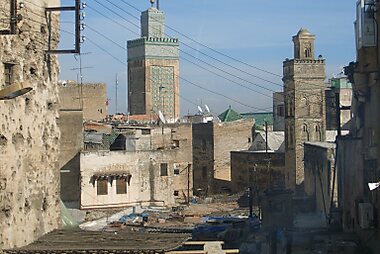
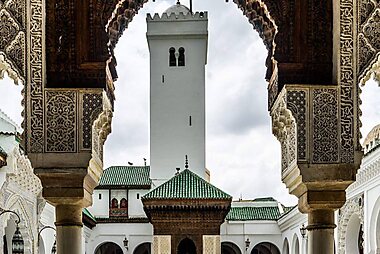
Morocco's most-visited cities each have a different character. Marrakesh is the classic first stop, with its walled medina, souks, and gardens. Fez has the country's oldest and largest car-free medina. Casablanca is the modern business hub and home to the Hassan II Mosque, while Rabat, the capital, is calmer and more orderly.
In the north, Chefchaouen draws visitors with its blue-painted mountain streets, and Tangier sits where the Mediterranean meets the Atlantic, a short ferry ride from Spain. Tétouan nearby has a well-preserved Andalusian-style medina.
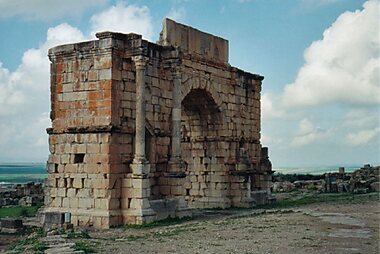
On the coast, Essaouira is a laid-back fishing port known for its ramparts and windsurfing. Inland, Meknes pairs a quieter medina with the nearby Roman ruins of Volubilis, and Ouarzazate is the gateway to the Kasbah of Aït Ben Haddou and the region's film studios. Agadir offers a modern beach-resort base on the Atlantic coast, and Merzouga is the usual starting point for camel treks into the Sahara dunes.
Morocco – Plan Your Trip
Pick the places you want to see and Tripomatic turns them into a day-by-day route, with smart routing, time estimates, and everything you need for a perfect trip.




