



Nassau
Nassau is the capital of the Bahamas and its busiest port. The city sits on the north shore of New Providence, facing a harbour of clear turquoise water. Pastel colonial buildings, old British forts and a busy waterfront make it more than a beach stop.
It suits a short trip that mixes history and the sea. You can climb to an 18th-century fort in the morning and swim at a white-sand beach in the afternoon. Big resorts on Cable Beach and Paradise Island offer comfort. Downtown gives you local food, markets and Junkanoo, the music and parade tradition of the Bahamas.

Nassau – Planning a Trip?
Build your day-by-day itinerary in the Tripomatic app.


When to visit
The best time to visit is from December to April. Days are warm, sunny and fairly dry, and nights are pleasant. From June to October it is hot, humid and rainy. The Atlantic hurricane season runs from June to November, with the highest risk in September and October.
The event to plan around is Junkanoo, a night street parade of costumed dancers, drums, cowbells and horns. The main parades fill Bay Street in the early hours of Boxing Day (26 December) and New Year's Day.
Best time to visit: January, February, March, April, November, December
Top sights



Most sights are in or near the compact downtown, and many are within a 15-minute walk of the cruise port.
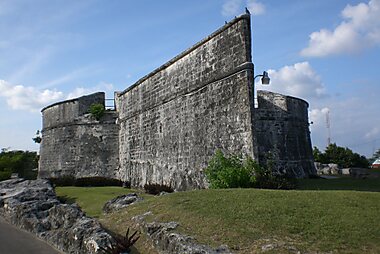
- Fort Fincastle is a small fort from 1793, built in the shape of a ship's bow. It sits on the highest point of the old town and has wide views over the harbour.
- Queen's Staircase is a set of 66 steps cut into solid limestone by enslaved people in the late 18th century. It leads up to the fort and is shaded and cool even at midday.
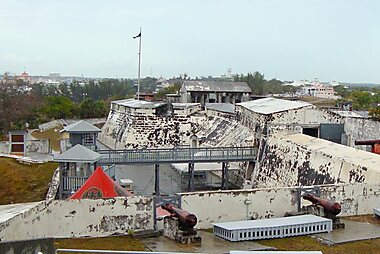
- Fort Charlotte is the largest fort on the island, with a moat, dungeons and tunnels. Its guns never fired a shot in battle.
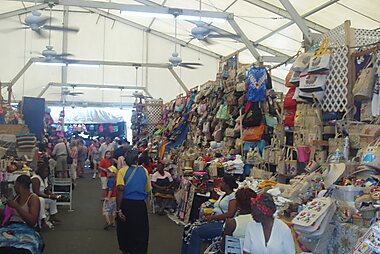
- Straw Market is the main craft market on Bay Street, selling straw bags, hats, wood carvings and souvenirs. Bargaining is normal.
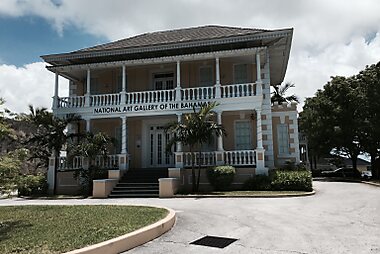
- National Art Gallery of the Bahamas shows Bahamian art from the 20th century to today in a restored 1860s villa.
- Pompey Museum of Slavery & Emancipation tells the story of slavery and emancipation in the Bahamas. It is housed in the Vendue House, a former slave-auction building on Bay Street.
- Cable Beach is a long strip of white sand west of downtown, lined with large resorts. The water is usually calm and good for swimming.
- Cabbage Beach on Paradise Island is a long white-sand beach with bright blue water. There are no lifeguards and the currents can be strong, so swim with care.
Featured Lists


Historic Forts & Museums
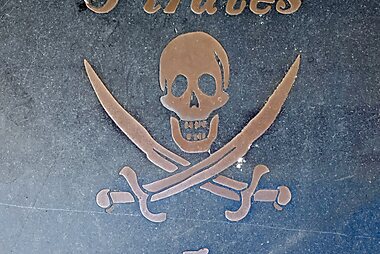
Nassau’s strategic Caribbean location is preserved through its 18th-century British fortifications, including the limestone-carved Fort Fincastle and the expansive Fort Charlotte. This collection highlights the island’s colonial past at the Buena Vista Estate and the 18th-century Balcony House, alongside cultural institutions like the National Art Gallery. Visitors can explore maritime history at the Pirate Museum and view traditional festival costumes at the Junkanoo Expo, providing a comprehensive look at Bahamian heritage and architecture.
10 placesWhat to experience
Some things you can only do in Nassau:
- Watch a Junkanoo parade on Bay Street on Boxing Day or New Year's Day. Crowds gather in the early morning hours, so book a seat in the stands early.
- Spend a weekend evening at Arawak Cay Fish Fry, where locals meet to eat, drink and listen to music.
- Watch the Changing of the Guard at Government House, held at 11 am on the second Saturday of each month with the Royal Bahamas Police Force Band.
- Taste rum at John Watling's Distillery, set in an 18th-century estate house. The tour is free and ends at the tasting bar.
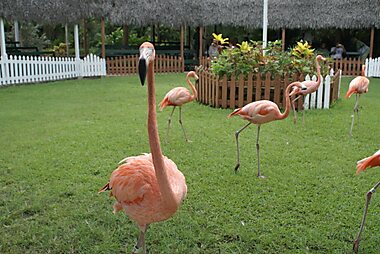
- Watch the flamingo show at Ardastra Gardens, Zoo & Conservation Centre, where trained flamingos, the national bird, march on command several times a day.
Tours & Activities
Nassau — Map

 Open the interactive map
 Day trips
The best day trips from Nassau are by boat. Book with a licensed operator and check the weather before you go.
- Blue Lagoon Island is a private island about 20–30 minutes by boat from Nassau. It has calm beaches and programmes to meet dolphins and sea lions.
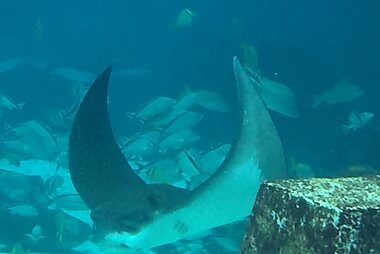
- Rose Island is a long, thin island about 20–30 minutes by boat to the east. It is popular for snorkelling tours on its reefs and for quiet beaches.
- Clifton Heritage National Park is on the west tip of New Providence, about 30–40 minutes by car. It has plantation ruins, forest trails and clear water for snorkelling.
- Harbour Island is a small island famous for its pink sand beach and pretty colonial village. The fast ferry takes about 2.5–3 hours each way, so it makes a long day.
- Exuma is the home of the swimming pigs of Big Major Cay. Full-day speedboat tours and short flights from Nassau make it possible in one day.
Getting there
- By air: Lynden Pindling International Airport (NAS) is about 16 km west of downtown. It has direct flights from many US and Canadian cities and from London. Taxis wait outside the terminals and charge fixed fares. A ride to downtown costs about 36 USD for two people.
- By sea: Nassau is one of the busiest cruise ports in the Caribbean. Ships dock at Prince George Wharf, right next to downtown and Bay Street.
- Between islands: Bahamas Ferries and mail boats connect Nassau with other islands, including Harbour Island, Eleuthera and Andros.
Getting around
- Jitney buses: Private minibuses run on fixed routes from about 6 am to early evening. The fare is about 1.50 USD, paid in cash with exact change, usually when you get off. Route 10 runs from downtown to Cable Beach past the Fish Fry and Fort Charlotte. Getting around Nassau
- Taxis: Taxis have fixed zone fares, not meters. Agree on the price before you get in. Ride-hailing apps are not widely available.
- Water taxi: Small boats cross between downtown and Paradise Island in about 10 minutes for about 7 USD per person.
- On foot: Downtown is compact and easy to walk, but pavements are narrow and traffic is heavy. Cycling is not practical.
Driving
- Is a car worth it?: No for a stay in downtown, Cable Beach or Paradise Island — taxis, jitneys and water taxis cover the main areas. A car helps only if you want to explore the quiet west and south of the island.
- Driving side: Traffic drives on the left, but most rental cars are left-hand drive imports from the US.
- Traffic and parking: Downtown roads are narrow and often jammed, especially when cruise ships are in port. Parking near Bay Street is limited; use a paid car park.
- Paradise Island bridge: A small toll is charged for vehicles going onto Paradise Island.
Food & drink
Conch is the star of Nassau's food. Try it raw as fresh conch salad, fried as cracked conch, or in fritters. Other local favourites are grilled fish, peas and rice, and a guava duff for dessert.
The best place to eat like a local is Arawak Cay Fish Fry, a row of brightly painted restaurants and stands west of downtown. Downtown, the streets just off Bay Street have small Bahamian cafés, while Paradise Island and Cable Beach have the big resort restaurants. Many restaurants add a 15% service charge to the bill, so check before you tip.
Safety & health
The tourist areas of Nassau are generally safe during the day. Crime is a real problem in some residential parts of the city, so use common sense.
- Stay in busy areas at night and avoid walking alone after dark, especially away from Bay Street, Cable Beach and Paradise Island.
- Avoid jet ski rentals from beach operators. There have been reports of assaults and of unsafe or unlicensed operators.
- Watch your belongings in the Straw Market and on crowded beaches, and do not leave valuables in cars.
- Sun and sea: The sun is strong all year. Many beaches have no lifeguards, and currents can be dangerous.
- Tap water in Nassau is treated and considered safe, but many visitors prefer bottled water for its taste.
History
Nassau began as a small English settlement called Charles Town in the 1600s. It was renamed Nassau in 1695 in honour of William III, from the House of Orange-Nassau. In the early 1700s the town became a base for pirates, including Blackbeard. The pirate era ended in 1718 when Woodes Rogers arrived as royal governor. His statue stands in front of the British Colonial hotel today.
Most of what you see downtown comes from the late 1700s and 1800s. The British built Fort Charlotte and Fort Fincastle to defend the harbour, and enslaved workers cut Queen's Staircase. Slavery ended in 1834, a story told at Pompey Museum of Slavery & Emancipation. The pink government buildings around Parliament Square date from the early 1800s. The Bahamas became independent from Britain on 10 July 1973, with Nassau as its capital.
Country facts
Quick practical facts for the Bahamas at a glance:
- Currency
- Bahamian Dollar BSD B$ · Card payments · Widely accepted
- Electricity
- 120 V · 60 HzType A / Type B
- Languages
- English
- Tap water
- Drink with caution
- Driving side
- Left
- Calling code
- +1242


Nassau – Plan Your Days
Turn the places from this guide into a real itinerary, with smart routing, time estimates, and everything you need for a perfect trip.




