



The Bahamas
The Bahamas is a chain of about 700 islands and more than 2,000 small cays stretched across clear water east of Florida. Only around 30 of the islands are inhabited, and each has its own character: casinos and cruise piers in Nassau, quiet fishing settlements on the Family Islands, and pink-sand beaches on Harbour Island. Christopher Columbus made his first landfall in the Americas here, on the island of San Salvador, in 1492.
Most visitors split their trip between Nassau and Paradise Island — home to resorts, casinos and cruise-ship crowds — and the quieter Family Islands (also called the Out Islands), reached by small plane or boat. The Bahamas suits beach lovers, divers and anyone wanting a short flight from the US East Coast. It suits budget travelers less well, since imported goods and inter-island transport both add to the cost of a trip.



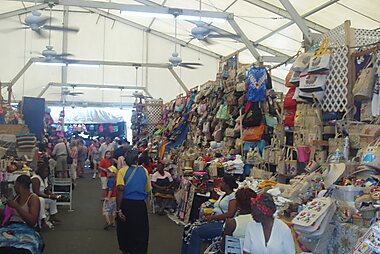
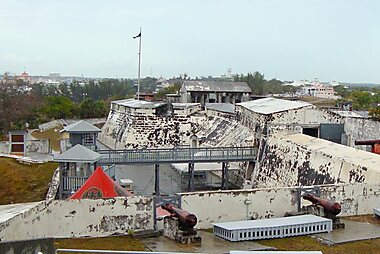

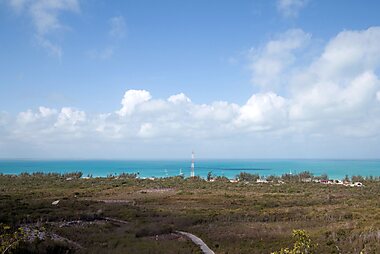
The Bahamas – Planning a Trip?
Build your day-by-day itinerary in the Tripomatic app.


Money & payments
The Bahamian dollar is pegged one-to-one with the US dollar. US dollars are accepted everywhere alongside local currency, and you can spend the two interchangeably. ATMs are common in Nassau and Freeport but scarce on the smaller Family Islands, so carry enough cash before island-hopping. Food, fuel and other imported goods cost more than on the US mainland, since most supplies arrive by boat.
Featured Lists

The Bahamas: Unmissable Essentials
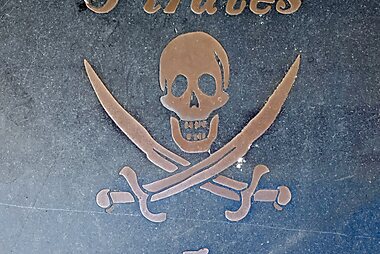
The Bahamas features diverse natural and historical sites, ranging from the submerged Stargate and Guardian Blue Holes on Andros to Pig Beach in Exuma, home to a colony of swimming feral pigs. Historical remnants include the Wallings Castle Ruins on San Salvador and the buccaneer history of Pirate's Well on Mayaguana. Key transportation hubs include Freeport Harbour and Exuma International Airport, while the Union Creek Reserve on Inagua provides a protected research site for green turtles.
12 placesTours & Activities
The Bahamas — Map

 Open the interactive map
 Tipping
Many restaurants automatically add a 15% gratuity to the bill — check before adding another tip on top. Where no charge is added, 15% is standard. Taxi drivers expect a similar 15%, or a rounded-up fare for a short ride. Hotel porters expect $1–2 per bag, and tour guides around $10–20 per person for a half-day trip.
15% (often auto-added)
15%, or round up for a short ride
$1-2 per bag for porters
$10-20 per person, half-day trip
round up or 10-15%
Electricity
The Bahamas uses Type A/B plugs at 120 V / 60 Hz, the same standard as the United States and Canada — travelers from those countries need no adapter.
Language
English is the official language and is spoken everywhere, down to the smallest Family Islands. Everyday conversation often shifts into Bahamian Dialect, an English-based creole with its own rhythm and slang. It is easy to follow once your ear adjusts, and locals switch to standard English automatically when talking with visitors.
Staying connected
Prepaid SIM cards from BTC and Aliv are sold at Nassau and Freeport airports and in shops across the main islands — bring your passport, since ID registration is required at purchase. Coverage is solid on New Providence and Grand Bahama but can drop out on the more remote Family Islands. Most hotels and resorts provide Wi-Fi, and there are no content restrictions to plan around.
Safety & emergencies
The Bahamas is generally safe for tourists who stick to well-traveled areas. Petty theft and occasional pickpocketing happen around cruise terminals and busy beaches in Nassau — keep valuables out of sight. Avoid walking alone at night outside tourist areas, particularly in parts of Nassau away from Bay Street and Paradise Island. The Family Islands are markedly quieter and safer than the capital.
Health
Tap water is treated and safe to drink in Nassau and Freeport. On the smaller Family Islands, water often comes from rainwater cisterns or desalination — stick to bottled water there, which is cheap and widely sold. Pharmacies are easy to find in Nassau and Freeport but scarce elsewhere, so bring any regular medication with you. No special vaccinations are required for entry; make sure routine vaccines are up to date, and pack mosquito repellent for the wetter summer months.
Visas & entry
Citizens of the US, Canada, the UK, the EU and many other countries can enter The Bahamas without a visa for stays of up to 90 days. A valid passport is required — a birth certificate is no longer accepted, even for US citizens. Travelers who do need a visa should apply in advance through a Bahamian embassy or consulate. All visitors should be ready to show proof of onward or return travel.
Visa and entry requirements change frequently. Verify current requirements with the official immigration authority or your country's embassy before travel.
Etiquette
Dress is casual almost everywhere — shorts and sandals are fine outside upscale restaurants and casinos, which expect smart-casual attire in the evening. Swimwear belongs on the beach, not in town; cover up before entering shops, churches or restaurants. Sundays are quiet, since many Bahamians attend church and some smaller shops close. A friendly greeting, such as "good morning" or "good afternoon", is expected before starting a conversation or a transaction, even a quick one.
Holidays & opening hours
Public holidays affect the whole country: government offices, banks and many shops close, and island-hopping flights and ferries often run reduced schedules. The two Junkanoo parade days, Boxing Day (December 26) and New Year's Day, bring street parties and closures that extend beyond the official holiday itself. Shops in Nassau and Freeport generally close early or stay shut on Sundays, and on the Family Islands, hours can be unpredictable outside peak season.
Getting around
- By domestic flight: Bahamasair and smaller carriers like Western Air and Southern Air connect Nassau to most Family Islands. Flights are short (30–60 minutes) but not always daily, so book ahead.
- By ferry: Bahamas Ferries links Nassau to Eleuthera, Abaco and Exuma, a cheaper and scenic alternative to flying for nearby islands.
- By mailboat: government-run mailboats still serve the smaller, less-visited islands, carrying cargo and passengers on a weekly schedule — a slow but authentic way to travel.
- By taxi: metered taxis and set-fare airport transfers are the standard way to get around Nassau and Freeport; rideshare apps have limited or no coverage.
Driving is on the left, even though most cars are American left-hand-drive imports — see the driving section for details.
Driving
- Rental cars: widely available in Nassau, Freeport and on the larger Family Islands; book ahead in high season.
- Key rule: remember to drive on the left, even in a left-hand-drive American car — stay alert at roundabouts and when pulling out of driveways.
- Roads: paved and in reasonable condition on New Providence and Grand Bahama; often unpaved or patchy on the smaller islands.
- Fuel: stations are attended, not self-service, and take cash or card; pumps are simply labeled "Gasoline" and "Diesel" — American terms, not "petrol".
- Parking: mostly free and informal outside downtown Nassau, where metered street parking and paid lots are common.
Food & drink
Bahamian food centers on conch, the large sea snail found throughout local waters. It shows up raw and marinated in citrus as conch salad, deep-fried as cracked conch, or in fritters and chowder — cracked conch with peas and rice is close to a national dish. Fish, lobster and other seafood are grilled, fried or stewed, often alongside peas and rice, macaroni and cheese, and plantains.
Breakfast can be as simple as johnnycake, a dense, slightly sweet fried bread, or as filling as stewed fish with grits. Casual weekend fish fries — informal gatherings around grills near the water — are the best way to try local food without a restaurant markup. Arawak Cay in Nassau, known locally as "Fish Fry", is the best-known example. It is really a strip of stalls rather than one venue.
Rum is the local spirit of choice, often mixed into a Bahama Mama or Goombay Smash, and Kalik and Sands are the two Bahamian beers worth trying. For something sweet, look for guava duff, a steamed guava pastry served with a rum-butter sauce.
Where to explore
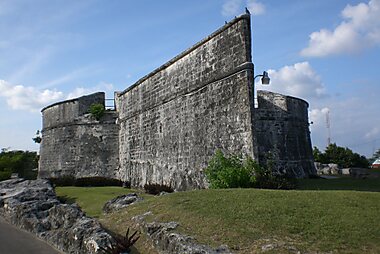
New Providence and Paradise Island — New Providence is home to the capital, Nassau, where Fort Fincastle and the Queen's Staircase recall its colonial history. Neighboring Paradise Island holds the Atlantis resort and the country's casinos.
Grand Bahama — Freeport is the second city, built around a free-trade zone. Garden of the Groves and Lucayan National Park, with its underground cave system, sit a short drive from downtown.
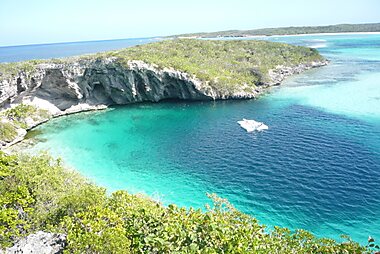
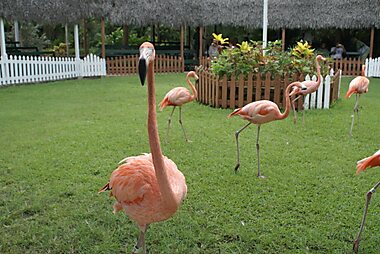
The Family Islands — quieter and less developed than the capital. Exuma is known for the swimming pigs of Pig Beach and the snorkeling at Thunderball Grotto; Harbour Island for its pink-sand beach and golf carts instead of cars; Great Abaco for boating and a strong sailing community; Andros for bonefishing and blue holes; Cat Island for Mount Alvernia, the country's highest point; Long Island District for Dean's Blue Hole; Bimini for sport fishing close to Florida; and Inagua for Inagua National Park and one of the world's largest flamingo colonies.
The Bahamas – Plan Your Trip
Pick the places you want to see and Tripomatic turns them into a day-by-day route, with smart routing, time estimates, and everything you need for a perfect trip.




