



Roskilde
Roskilde sits on a fjord about 30 km from Copenhagen. It played a central role in Danish history for centuries, despite its modest size today. Danish monarchs have been buried inside Roskilde Cathedral, a UNESCO World Heritage cathedral, for more than 500 years. Nearby, Viking Ship Museum displays original Viking ships pulled from the fjord, alongside a working boatyard where craftspeople build and sail replicas using historic methods.
Once a year, fields on the edge of town host Roskilde Festival, one of Europe's largest music festivals. Roskilde works well as a day trip from Copenhagen, but staying a night lets you see the cathedral, the harbour, and the old town without rushing. It suits travelers who want deep history without the crowds of the capital.

Roskilde – Planning a Trip?
Build your day-by-day itinerary in the Tripomatic app.


When to visit
Summers are warm with long daylight hours — the best time for the harbour and the cathedral square. Spring and early autumn are quieter and mild, good for sightseeing without festival crowds. Winters are cold and dark, with a chance of snow.
Plan around Roskilde Festival, held over eight days at the end of June and start of July. It's among Europe's largest music festivals, drawing well over 100,000 visitors. Hotels fill up and prices rise across the region during the festival, so book well ahead — or visit another time if you prefer a quiet trip.
Best time to visit: July, August
Top sights
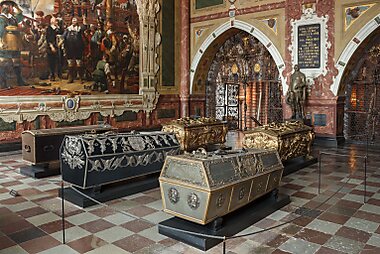

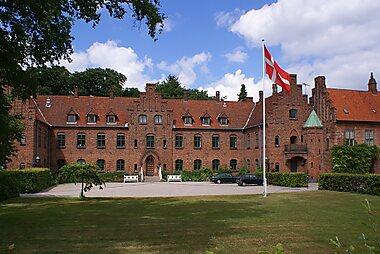
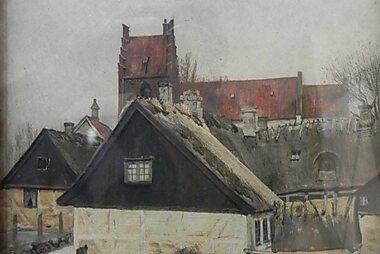
Roskilde Cathedral has been the royal burial church of Danish monarchs for more than 500 years, and its 800 years of architectural styles earned it UNESCO World Heritage status. Walk among the ornate royal chapels, including the tomb of Christian IV.
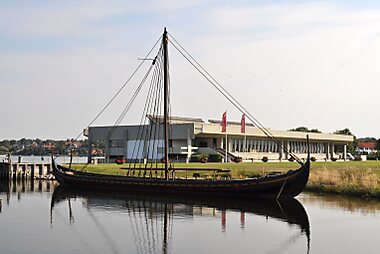
At Viking Ship Museum, Viking ships raised from the fjord form the centerpiece of Denmark's national ship museum. The outdoor boatyard still builds and sails wooden replicas using Viking-age techniques, and you can join a short sailing trip in summer.
St Jørgensbjerg Church is one of Denmark's oldest standing stone buildings, with a nave dating to around 1080. It's a quiet stop a short walk from the harbour.
The ruins of St. Catherine's Priory, a 13th-century Dominican priory, sit in the old town near the cathedral. Little remains above ground, but the site marks one of Roskilde's oldest religious foundations.
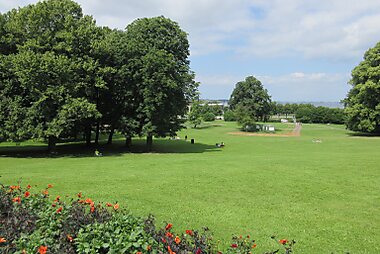
Byparken, a park founded in 1915, links the cathedral to the fjord shore — a good place to rest between sights.
Ragnarock Museum traces Danish pop and rock history from the 1950s onward, inside a building covered in gold-toned pyramid panels.
Featured Lists

What to experience
- Sail a Viking ship: From May to September, the Viking Ship Museum's boatyard runs short trips on the fjord aboard reconstructed Viking ships, rowed and sailed as the originals were.
- Catch Roskilde Festival: For eight days each summer, fields outside the city fill with campers and concertgoers for one of Europe's largest music festivals — plan well ahead if you want to join in.
- Walk or cycle along Roskilde Fjord: Trails follow the fjord shore north of the city, past Boserup Forest, with views back toward the cathedral spires.
- Browse the Christmas market: Each December, Stændertorvet, the main square, fills with stalls for Roskilde's festive Christmas market.
Tours & Activities
Roskilde — Map

Day trips
Roskilde makes a good base for day trips into the countryside, and it's a fast train ride from Copenhagen if you want to explore the capital instead.
- Lejre (~20 min by car) — home to Sagnlandet Lejre, an open-air museum where staff recreate Stone Age, Iron Age, and Viking life, and to Ledreborg Slot, an 18th-century baroque manor with formal gardens. A relaxed half-day trip into rural Zealand.
- Frederikssund (~30-40 min by car or bus) — a fjord town known for its open-air Viking Play, staged over several weeks each summer in an outdoor amphitheater. Also a good base for walks along Roskilde Fjord.
- Copenhagen (~25-30 min by train) — Denmark's capital is a fast ride away, with Tivoli Gardens, Nyhavn, and the National Museum among the highlights. Works well as a half-day or full-day trip.
Getting there
- By air: The nearest airport is Copenhagen Airport (CPH), about 40 km away. A direct regional train runs to Roskilde in around 35-45 minutes; a taxi takes roughly the same or a little longer depending on traffic.
- By train: Roskilde station is a major rail junction on Zealand. Trains to Copenhagen run frequently, several times an hour, and take about 25-30 minutes; westbound trains connect to Odense and the rest of Denmark.
- By bus: Regional buses link Roskilde to nearby towns, including Lejre and Frederikssund.
Getting around
- Public transit: Local buses connect the station to outlying neighborhoods, though most sights are within walking distance of the center. Pay with the DOT Mobilbilletter app or a Rejsekort travel card; check routes and times with Rejseplanen.
- Taxi: Uber operates in Denmark, alongside local taxi apps. A taxi rank also waits outside the train station.
- On foot and by bike: The old town, cathedral, and harbour are all walkable from the station. Roskilde is flat and bike-friendly, with rental bikes available near the station.
Driving
- Is a car worth it?: Not for the city center — the main sights sit within a 10-minute walk of each other. A car helps for day trips into the surrounding countryside.
- Parking: Paid parking operates in the center on weekdays; pay by app or at a ticket machine. Free parking is usually available a short walk from downtown, near the station.
- Restrictions: None beyond standard paid zones — Roskilde has no congestion charge or low-emission zone.
Food & drink
Roskilde's food scene leans toward New Nordic and Danish classics — smørrebrød (open sandwiches), fresh seafood from the fjord, and seasonal produce from the surrounding farmland.
For a concentrated choice of cafés and restaurants, head to the streets around Stændertorvet and Skomagergade in the old town, or to Musicon, a former industrial quarter south of the center that's now home to breweries, food halls, and creative venues.
Safety & health
Roskilde is a safe city with very low rates of violent crime. The main risk for travelers is petty theft — keep an eye on bags and phones at the train station and, especially, during Roskilde Festival, when temporary crowds create more opportunity for pickpockets.
Cyclists share many streets with cars in the town center; watch for bike traffic when crossing, especially near the station.
History
Roskilde was one of medieval Denmark's most important cities. According to legend, it was founded by the Viking king Harald Bluetooth in the 10th century. It served as Denmark's capital and largest city for much of the Middle Ages, and its bishops and monasteries made it a center of religious power on Zealand.
Construction of Roskilde Cathedral began in the late 12th century on the site of an earlier wooden church. It became the burial church of Danish monarchs, a tradition that has continued for more than 500 years, with each period adding chapels in the architectural style of its time.
The Viking ships displayed in Viking Ship Museum were deliberately sunk in the fjord around 1070 to block a navigation channel and defend the city — a reminder that Roskilde's harbour was strategically vital long before the ships were rediscovered and raised in 1962.
St Jørgensbjerg Church predates the cathedral itself; parts of its nave were built around 1080, making it one of the oldest surviving stone buildings in Scandinavia.
Country facts
Quick practical facts for Denmark at a glance:
- Currency
- Danish Krone DKK kr · Card payments · Widely accepted
- Emergency numbers
- 112
- Electricity
- 230 V · 50 HzType C / Type E / Type F / Type K
- Languages
- Danish
- Tap water
- Safe to drink
- Driving side
- Right
- Calling code
- +45


Roskilde – Plan Your Days
Turn the places from this guide into a real itinerary, with smart routing, time estimates, and everything you need for a perfect trip.




