

Copenhagen
Copenhagen is Denmark's capital and largest city, built on the islands of Zealand and Amager. It faces Sweden across the narrow Øresund strait. Bishop Absalon built a fortress on the harbor in 1167, and the settlement grew into Denmark's capital by the 15th century.
Around 650,000 people live in the city itself, with over 1.3 million in the greater metropolitan area. Copenhagen mixes royal palaces and canal-front houses with modern architecture. Cycling is part of daily life, and the compact center is easy to explore on foot or by bike. The city is also known as the birthplace of New Nordic cuisine, a movement that reshaped how the world cooks with local, seasonal ingredients.

Copenhagen – Planning a Trip?
Build your day-by-day itinerary in the Tripomatic app.
When to visit
Copenhagen has warm summers and cold, dark winters. June through August bring the mildest weather and the longest days. The Copenhagen Jazz Festival fills the city with concerts every July. Winter days are short and often wet, but Tivoli Gardens runs a festive Christmas market from mid-November. Pack layers and a waterproof jacket in any season — rain can arrive without warning.
Best time to visit: July, August
Top sights
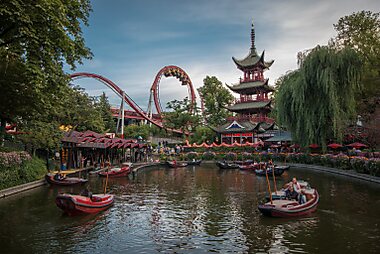
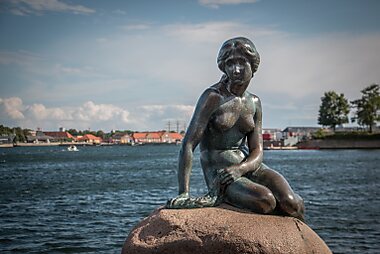
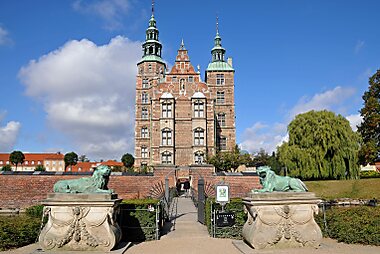
- Nyhavn is a 17th-century canal lined with colorful townhouses, restaurants, and old sailing ships. It's one of the most photographed spots in the city.
- Tivoli Gardens is a historic amusement park and garden in the city center, open since 1843. Its evening lights and gardens draw families and couples alike.
- The Little Mermaid is a small bronze statue on the harbor, inspired by a Hans Christian Andersen fairy tale. It draws large crowds despite its modest size.
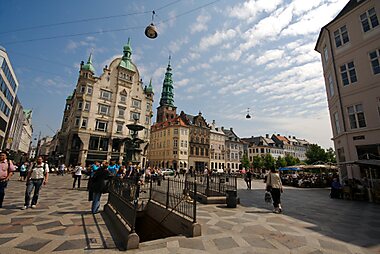
- Strøget is one of Europe's longest pedestrian shopping streets, running through the old town from City Hall Square to Kongens Nytorv.
- Rosenborg Castle is a Renaissance castle built by King Christian IV. It houses the Danish crown jewels and royal treasures.
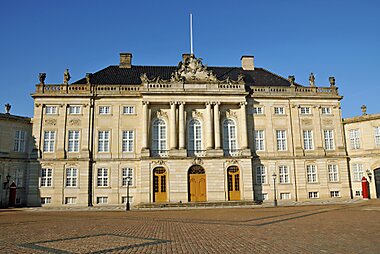
- Amalienborg is the winter home of the Danish royal family, made up of four palace buildings around an octagonal square. The changing of the guard takes place daily, around noon.
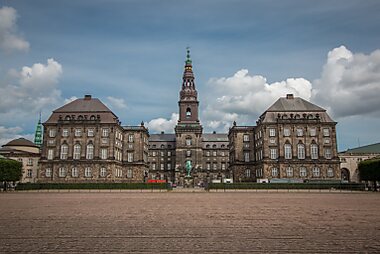
- Christiansborg Palace sits on the site of Copenhagen's original 12th-century fortress. It now houses the Danish parliament and the royal reception rooms.
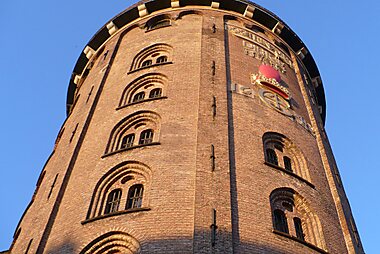
- Round Tower is a 17th-century tower built by Christian IV as an astronomical observatory. A spiral ramp, not stairs, leads to the top.
Featured Lists

Copenhagen Essentials
Copenhagen’s cityscape is defined by its historic maritime character and royal heritage. This collection features the world-renowned Tivoli Gardens, established in 1843, and the iconic Little Mermaid sculpture. Explore the seat of Danish power at Christiansborg Palace, the crown jewels at Rosenborg Castle, and the 17th-century Round Tower observatory. Cultural highlights include the neoclassical Ny Carlsberg Glyptotek and the expansive National Museum of Denmark, while the star-shaped Kastellet fortress and the spiral spire of the Church of Our Saviour offer distinct architectural landmarks.
15 places
Copenhagen's Historic Landmarks
Copenhagen’s heritage unfolds through this collection of royal sites and civic landmarks. Explore the city's origins at the 800-year-old ruins beneath Christiansborg Palace or the 15th-century Church of the Holy Ghost. The selection features architectural highlights like the rococo Amalienborg Palace and the unique Elephant Gate at the Carlsberg brewery. Historic public spaces range from Gammeltorv, the city’s oldest square, to the grand Kongens Nytorv and the mythological Gefion Fountain. A functional 19th-century windmill and the Danish Jewish Museum complete this survey of Danish history.
11 places


Iconic Churches of Copenhagen
Copenhagen’s skyline is defined by its historic spires and grand domes. This collection highlights the city's architectural diversity, from the massive copper dome of the Marble Church to the unique brick expressionism of Grundtvig’s Church. Discover the spiral tower of the Church of Our Saviour, the neoclassical interior of the Church of Our Lady cathedral, and the naval heritage of the Church of Holmen. The list also includes the Gothic Revival St. Alban’s and the Russian Orthodox Alexander Nevsky Church, showcasing a rich variety of styles and denominations.
14 places


Top Entertainment Venues
Copenhagen’s entertainment scene spans centuries of architectural and cultural history. The Royal Danish Theatre operates across the historic Old Stage, the modern glass-fronted Playhouse, and the neo-futurist Opera House on the harbor front. Within Tivoli Gardens, the Concert Hall and Glass Hall host seasonal performances. Unique venues include the Tycho Brahe Planetarium with its IMAX dome and Østre Gasværk Teater, situated inside a repurposed industrial gasholder. For contemporary music, Vega in Vesterbro serves as a premier venue, while the 1886 Circus Building and the colorful Palads cinema offer distinct historical settings for film and live shows.
11 places
Artistic Bridges and Statues
Copenhagen's urban landscape is defined by a blend of historical monuments and modern engineering. This collection features iconic bronze works like The Little Mermaid and the underwater Agnete and the Merman alongside the Neoclassical treasures of the Thorvaldsen Museum. The city's maritime character is showcased through innovative pedestrian crossings, including the five-masted Cirkelbroen and the sleek Inner Harbour Bridge. From 18th-century stone structures to contemporary social spaces, these sites highlight the evolution of Danish public art and architectural design.
14 places


Copenhagen Food & Drink
Explore Copenhagen’s culinary landscape through its most defining establishments. This selection spans from the city's oldest bakery, Sankt Peders Bageri (est. 1652), and the historic Konditori La Glace (est. 1870), to modern Michelin-starred venues like Kadeau and Kokkeriet. Sample traditional Danish flavors at Grøften, located in Tivoli Gardens since 1874, or visit Sømods Bolcher to see candy handmade using century-old techniques. The list also features contemporary New Nordic dining at Höst and Restaurant Barr, alongside local favorites like Lagkagehuset and Nørrebro Bryghus.
12 placesAudio Guides – Copenhagen
Explore on foot with a self-guided audio tour that narrates each stop as you reach it.


Hear Copenhagen's audio tours
1 walk in Audio Guides by Tripomatic


What to experience
- CopenHill is a waste-to-energy plant topped with a public ski slope, hiking trail, and climbing wall.
- Swim in the harbor at Havnebadet Islands Brygge, a free public bathing area on the Islands Brygge waterfront. Water quality is monitored and safe for swimming.
- Visit Freetown Christiania, a self-governing neighborhood founded by squatters in 1971. Photography is restricted in parts of the area — check posted signs.
- Take a canal boat tour from Nyhavn to see the city's waterfront landmarks from the water.
Tours & Activities
Copenhagen — Map

 Open the interactive map
 Day trips
- Dragør is a small fishing town about 30 minutes south of Copenhagen by bus, known for its yellow half-timbered houses and thatched roofs.
- Klampenborg, a short train ride north, is home to Dyrehavsbakken, one of the world's oldest amusement parks, and the Dyrehaven deer park next to it.
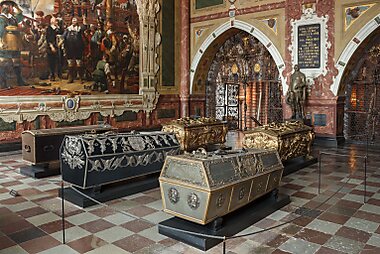
- Roskilde is about 30 minutes from Copenhagen by train. Its Roskilde Cathedral is a UNESCO World Heritage site and the burial place of Danish monarchs.
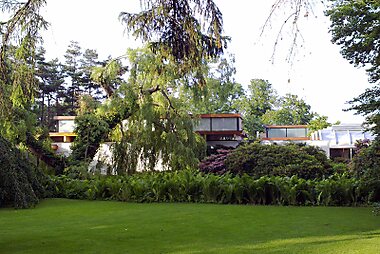
- Humlebæk, north along the coast, is home to Louisiana Museum of Modern Art, a modern art museum set in a sculpture garden overlooking the Øresund strait.
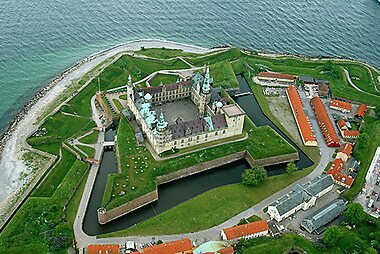
- Helsingør is about 45 minutes north by train. Its Kronborg Castle is a UNESCO World Heritage site, famous as the setting for Shakespeare's Hamlet.
- Malmö, Sweden's third-largest city, is about 40 minutes away by train across the Øresund Bridge.
Where to explore
Frederiksberg is an independent municipality that sits entirely inside Copenhagen's urban area. It has its own city hall and parks, including Frederiksberg Gardens next to Copenhagen Zoo, but is easy to reach on foot or by metro from the center.
Getting there
- By air: Copenhagen Airport (Kastrup) is Scandinavia's busiest airport, about 20 minutes from downtown by metro.
- By train: Copenhagen has direct rail links to Hamburg, Stockholm, and Malmö across the Øresund Bridge. DSB, Danish national rail
- By bus: Long-distance buses connect Copenhagen with other Scandinavian and European cities, usually at a lower cost than the train.
Getting around
- Metro and S-train: A driverless metro and an S-train network cover the city and suburbs. Pay directly with a contactless bank card or phone at metro stations and on trains — no separate transit card is needed. DOT journey planner
- Bike: An extensive network of separated bike lanes makes cycling a common way to get around. Rental bikes are widely available.
- Walking: The historic center is compact and mostly flat, making it easy to cover on foot.
- Taxi: Metered taxis are available throughout the city and at taxi stands.
Driving
- A car isn't necessary in central Copenhagen — public transit, walking, and cycling cover the city well.
- Parking in the center is metered and limited; several streets are pedestrian-only.
- Copenhagen has a low-emission zone covering the city center. Older diesel vehicles may need a sticker or be restricted.
Food & drink
Danish food centers on smørrebrød, open-faced rye bread sandwiches topped with fish, meat, or cheese. Copenhagen is also the birthplace of New Nordic cuisine, a movement that emphasizes local, seasonal ingredients and reshaped how the world cooks with Scandinavian produce.
For a casual meal, Torvehallerne, a covered food market near Nørreport station, has dozens of stalls to choose from.
Safety & health
- Copenhagen is a safe city with low rates of violent crime. Normal precautions against pickpocketing apply in busy tourist areas.
- Bike lanes are heavily used — always look before stepping into one, even when it looks empty.
- Tap water is safe to drink everywhere in Denmark.
History
Bishop Absalon built a fortress on Copenhagen's harbor in 1167, and the settlement grew around it. By the 15th century, Copenhagen had become the capital of Denmark. King Christian IV expanded the city dramatically in the 17th century, building Rosenborg Castle, Round Tower, and much of the historic core that survives today.
In 1807, the British Navy bombarded Copenhagen during the Napoleonic Wars, destroying much of the city center and seizing the Danish fleet.
Country facts
Denmark is a small, prosperous Nordic country known for its history, design, and welfare model.
- Currency
- Danish Krone DKK kr · Card payments · Widely accepted
- Emergency numbers
- 112
- Electricity
- 230 V · 50 HzType C / Type E / Type F / Type K
- Languages
- Danish
- Tap water
- Safe to drink
- Driving side
- Right
- Calling code
- +45


Copenhagen – Plan Your Days
Turn the places from this guide into a real itinerary, with smart routing, time estimates, and everything you need for a perfect trip.