



Shanghai
Shanghai is China's largest city and its financial capital, a place where colonial-era architecture faces a futuristic skyline across the same river. Most visitors spend their time moving between the two: the historic Bund on the west bank, and the glass towers of Pudong on the east.
The city works well for a first trip to China. Signage, metro announcements, and many restaurant menus include English, and Shanghai is generally the easiest Chinese city to navigate without speaking Mandarin. It suits travelers who want a taste of modern China's scale and ambition alongside genuine history, good food, and an active nightlife scene, rather than a slow-paced or rural experience.

Shanghai – Planning a Trip?
Build your day-by-day itinerary in the Tripomatic app.


When to visit
Spring (April–May) and autumn (October–November) are the best times to visit, with mild temperatures and less humidity. Summer is hot, muggy, and prone to sudden thunderstorms, while winter is cold and damp with little snow.
The Shanghai leg of Formula 1's Chinese Grand Prix is typically held in March at the Shanghai International Circuit, drawing large crowds and pushing up hotel prices around race weekend — worth planning around if you're a fan, and worth avoiding otherwise.
Best time to visit: April, May, October
Autumn afternoons regularly reach the low-to-mid 20s °C with far less rain than summer, making it the most comfortable season for walking the Bund and exploring on foot.
Top sights
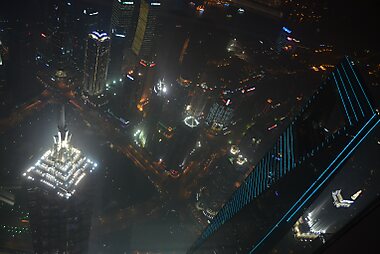

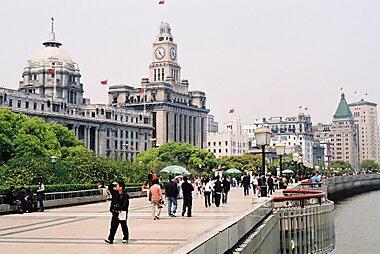
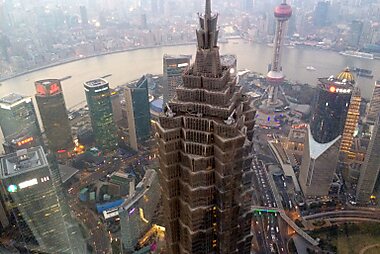
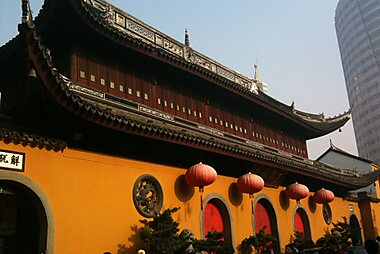
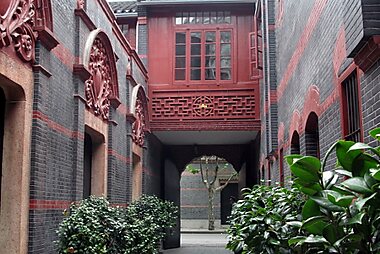
The Bund is Shanghai's most famous stretch, a mile of early-20th-century banks and trading houses lining the Huangpu River. Walk it at dusk for the best view of the skyline lighting up across the water.
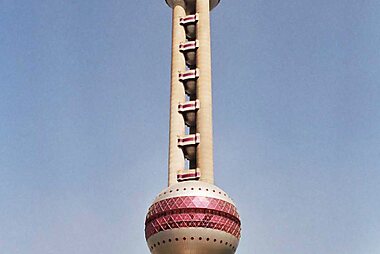
Directly across the river, Shanghai Tower, Oriental Pearl tower, and Jin Mao Tower form the Lujiazui skyline. The first is mainland China's tallest building, with an observation deck near its summit; the second's distinctive spheres have been a city symbol since the 1990s.
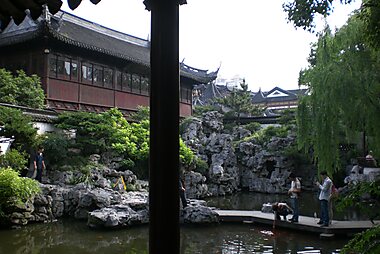
Yu Yuan Garden is a classical Ming-dynasty garden of pavilions, rockeries, and koi ponds, tucked behind the busy bazaar that shares its name.
Nanjing Road Pedestrian Street is a pedestrian-only shopping strip running from the Bund inland, lined with department stores and old-established snack shops — busy day and night.
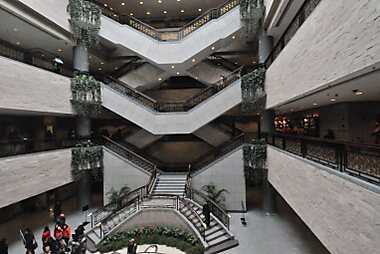
Shanghai Museum holds one of the world's best collections of ancient Chinese bronzes, ceramics, and calligraphy, and is free to enter.
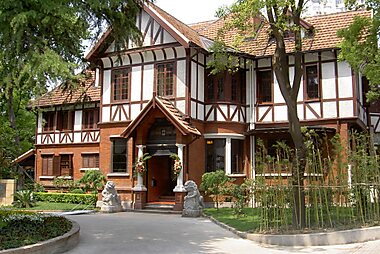
French Concession is the former French Concession, a leafy quarter of tree-lined lanes, restored 1920s villas, and boutique cafés — a slower-paced contrast to the skyscrapers.
Featured Lists


Shanghai Historical Sites
Shanghai’s architectural timeline spans centuries, from the 10th-century Longhua Pagoda to the futuristic Oriental Pearl Tower. This collection features Western religious architecture like the Gothic Xujiahui Cathedral and the hilltop Basilica of Our Lady of She Shan. It also highlights the city's industrial and cultural heritage, including the Art Deco 1933 slaughterhouse, the historic Huangpu Theatre—the birthplace of China's national anthem—and the Gutzlaff Signal Tower, once a critical maritime weather station on the Bund.
8 places


What to experience
A few things are worth building an evening or afternoon around, beyond simply sightseeing:
- Take an evening cruise on the Huangpu River — boats depart near the Bund and give the best view of the skyline lit up on both banks at once.
- Catch a Chinese acrobatics show; Shanghai's troupes are internationally known for daring stunts, including riding motorcycles inside a metal sphere.
- Sip tea in the century-old Huxinting Teahouse, on a zigzag bridge inside the Yu Garden bazaar.
- Watch the sunset from a rooftop bar along the Bund, with the Pudong skyline as backdrop.
Tours & Activities
Shanghai — Map

 Open the interactive map
 Day trips
Shanghai sits within easy reach of some of China's most rewarding smaller cities and water towns, thanks to a dense high-speed rail network.
- Suzhou — ≈25–30 min by high-speed train from Hongqiao. Famous for its UNESCO-listed classical gardens and canal-lined old streets; easily the best single day trip from Shanghai.
- Hangzhou — ≈45 min–1 hour by high-speed train. Home to West Lake, a UNESCO World Heritage cultural landscape ringed with temples, pagodas, and walking paths.
- Zhujiajiao — ≈1 hour by metro or bus. A well-preserved water town with stone bridges and canal boat rides, much closer than Suzhou's canals if you only have half a day.
- Wuzhen West Scenic Zone — ≈1.5–2 hours by bus or car. A larger, more polished water town of canals and Ming- and Qing-era buildings, popular for an overnight stay as well as a day visit.
Where to explore
Shanghai splits into two very different halves along the Huangpu River.
- Huangpu District is the historic core on the west bank — the Bund, Yu Garden, Nanjing Road, and most of the older city all sit here.
- Pudong is the financial district on the east bank, home to the Lujiazui skyline, Shanghai Disneyland, and Pudong International Airport.
Further out at the mouth of the Yangtze, Shanghai Yangtze River Estuary Chinese Sturgeon Nature Reserve protects wetlands used by migratory birds and juvenile Chinese sturgeon — a niche stop for wildlife enthusiasts, well outside the usual city itinerary.
Getting there
- By air: Most international flights land at Shanghai Pudong International Airport (PVG), about 40 km from the city centre. The Maglev train covers the trip to Longyang Road metro station in 8 minutes (¥40–50), or take Metro Line 2 directly into the centre in around an hour for a few yuan. Shanghai Hongqiao International Airport (SHA), closer in at 13 km, mainly handles domestic and some regional flights and connects by Metro Lines 2 and 10.
- By train: Hongqiao Railway Station, next to the domestic airport, is the hub for high-speed rail to Suzhou, Hangzhou, Nanjing, and Beijing. Shanghai Railway Station, in the city's north, also serves many of the same lines.
- Visa-free transit: Citizens of over 50 countries can enter visa-free for up to 240 hours (10 days) when transiting through Shanghai's airports or cruise terminal on the way to or from a third country — useful for a short stopover, but confirm current eligibility and the exact rules before you travel, since they change periodically.
Getting around
- Metro: An extensive, easy-to-use network and the fastest way to cross the city. Pay with the Alipay or WeChat Pay mini-program ride QR code (both apps let foreign visitors link an international Visa or Mastercard), or buy a rechargeable Shanghai Public Transportation Card at any station. Shanghai Metro
- Taxi / ride-hailing: Metered taxis are affordable but few drivers speak English, so have your destination written in Chinese characters. Didi is the dominant ride-hailing app and works well with a linked foreign card.
- On foot: The Bund, Nanjing Road, and the French Concession are all walkable on their own, though distances between different districts usually call for the metro.
- Internet access: Google, Facebook, Instagram, WhatsApp, and most Western social media and messaging apps are blocked. Install a VPN before you arrive if you need them — it cannot be downloaded once you're already on the mainland network.
Driving
- Is a car worth it?: No. Traffic is heavy, road rules and signage take getting used to, and foreign driving licences are not valid in China without a Chinese permit and translation. The metro, taxis, and ride-hailing apps cover the city far more easily.
- Parking: Not a concern if you skip renting — stick to public transport and taxis instead.
- Restrictions: Self-drive car rental for foreign tourists is rare and complicated; hiring a car with a local driver is the practical alternative if you need one for a day trip.
Food & drink
Shanghainese cooking leans sweeter and richer than the rest of China, built around soy sauce, sugar, and rice wine. Look for xiaolongbao (soup dumplings), shengjianbao (pan-fried buns with a crisp base), and hongshao rou (red-braised pork belly). Hairy crab, served steamed with ginger and vinegar, is a local obsession every autumn.
For a concentrated taste of the local food scene, head to Tianzifang, a warren of restored lane houses packed with small restaurants, teahouses, and snack stalls. Yunnan Road South, near the Bund, is another good bet for cheap, well-known local dishes.
Safety & health
Shanghai is one of the safer big cities in Asia for tourists, with low rates of violent crime. Petty theft is uncommon but not unheard of on crowded metro trains. The main scams to watch for are "art students" or "tea ceremony" invitations near tourist sites like the Bund and Nanjing Road, where a friendly stranger leads you to an overpriced tea house or gallery and pressures you to pay a large bill.
Tap water is not safe to drink — stick to bottled or boiled water, which is available everywhere.
History
Shanghai's modern history began in 1842, when the Treaty of Nanking opened it as a treaty port after the First Opium War. Britain, France, and the United States each carved out a concession along the river, and the foreign-run city that grew there financed the grand banks and trading houses still standing along The Bund.
By the 1920s and 1930s Shanghai was Asia's most cosmopolitan city, nicknamed the "Paris of the East," with a glamorous but sharply unequal mix of foreign wealth, organized crime, and revolutionary politics. The Chinese Communist Party held its first congress here in 1921, at a site now preserved as Site of the First Congress of the CPC.
The foreign concessions ended with the Japanese occupation during the Second World War and the 1949 Communist victory, after which Shanghai's growth stalled for decades. That changed in 1990, when Pudong — then mostly farmland across the river — was designated a special economic zone. The skyline of Shanghai Tower and its neighbors is the direct result, and the city has grown into China's financial capital in the decades since.
Country facts
Quick practical facts for China at a glance:
- Currency
- Chinese Yuan CNY ¥ · Card payments · Cash preferred
- Emergency numbers
- 110 Police
- Electricity
- 220 V · 50 HzType A / Type C / Type I
- Languages
- Chinese
- Tap water
- Not safe to drink
- Driving side
- Right
- Calling code
- +86
Shanghai – Plan Your Trip
Pick the places you want to see and Tripomatic turns them into a day-by-day route, with smart routing, time estimates, and everything you need for a perfect trip.




